Key Points:
- Nvidia reported record first-quarter revenue of $81.6 billion, representing an 85% year-over-year surge.
- The chipmaker expects next-quarter revenue to rise to $91 billion, beating the Wall Street consensus of $87.2 billion.
- CEO Jensen Huang announced that standalone Vera CPUs are ramping up, opening a massive $20 billion market.
- Due to the rapid adoption of agentic AI, demand is expanding rapidly beyond hyperscalers to neoclouds and enterprises.
Nvidia released its fiscal first-quarter earnings report on Wednesday, May 20, 2026, delivering spectacular results that prove the artificial intelligence boom continues to accelerate. The company crushed Wall Street’s expectations, showcasing a massive surge in demand for both its specialized computing chips and its expanding hardware ecosystem.
The Silicon Valley giant posted record quarterly revenue of $81.6 billion. This staggering figure represents an 85% jump from the same period last year and comfortably beats the company’s previous guidance of $78 billion. Profits remained incredibly strong as well, with GAAP earnings per diluted share coming in at $2.39, while non-GAAP earnings reached $1.87 per share.
Looking ahead, Nvidia expects the strong momentum to continue into the next quarter. The company projected revenue of $91 billion for the upcoming quarter ending in July, marking a massive 95% year-over-year increase. This forecast easily surpassed the consensus estimate of $87.2 billion from Wall Street analysts, proving that the global build-out of artificial intelligence infrastructure shows no signs of slowing.
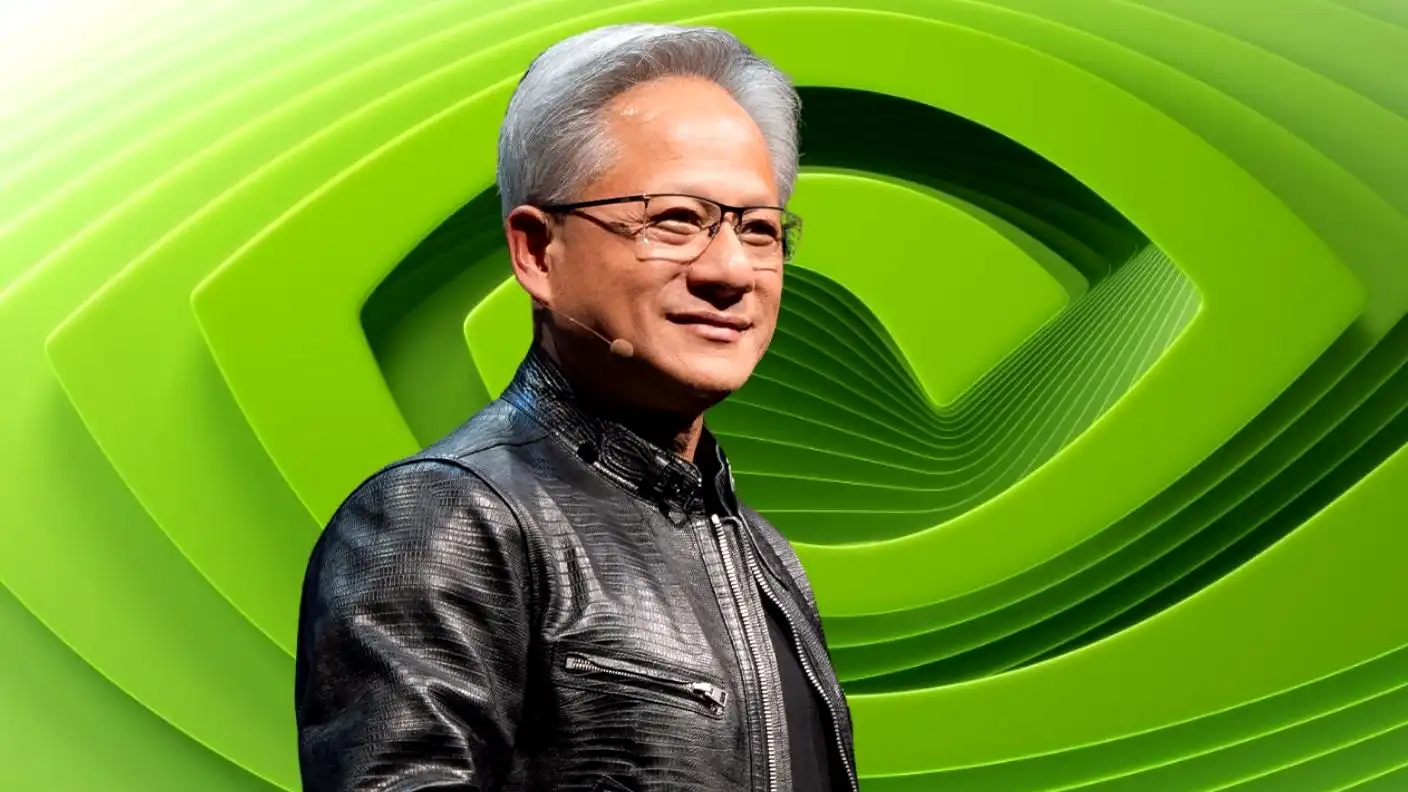
While the world primarily knows Nvidia for its dominant graphics processing units (GPUs) like Grace Blackwell, CEO Jensen Huang highlighted a major new multi-billion-dollar business driver. Standalone central processing units (CPUs), particularly the newly launched Vera CPUs, are opening up a massive $20 billion market opportunity for the company. Nvidia recently delivered the first batch of these powerful processors to major players like OpenAI, Anthropic, SpaceX, and Oracle, establishing an early lead in the CPU space.
Huang explained that the tech industry is currently experiencing a major inflection point driven by the rise of “agentic AI.” These are advanced artificial intelligence agents capable of completing complex tasks with limited human supervision. This rapid shift to automated, agent-based systems has supercharged demand for computing capacity, pushing cloud rental rates for Nvidia’s popular H100 chips up by 20% year-to-date and for A100 chips by 15%.
The all-important data center division drove the bulk of Nvidia’s record-breaking quarter, generating $75.2 billion in revenue. This represents an impressive 92% increase compared to last year. Hyperscale customers, such as Microsoft, Amazon, and Google, accounted for exactly half of this revenue at $37.9 billion. Meanwhile, the other half came from a rapidly growing cohort of AI cloud providers, industrial firms, and enterprise customers, who purchased $37.4 billion in hardware.
Nvidia’s hardware roadmap remains highly aggressive to keep its lead against rising competition. The company confirmed that production shipments of its next-generation Vera Rubin chips are firmly on track for the third quarter of this year. Looking further ahead, the company plans to launch its Rubin Ultra chip in 2027, followed by the highly anticipated Feynman architecture in 2028. This long-term pipeline ensures that the company remains at the absolute center of the largest infrastructure expansion in human history.
Financial analysts argue that this persistent shortage of computing capacity could force global technology giants to more than triple their capital expenditures over the next five years. To support these massive requirements, companies are aggressively building out “AI factories” to process digital tokens. Because of this endless demand, firms like Morningstar recently raised their fair value estimate for Nvidia’s stock to $280, indicating that shares remain highly undervalued despite their massive gains over the past year.
With its products firing on all cylinders and its hardware ecosystem expanding into CPUs, networking, and software, Nvidia has made its competitive moat virtually unassailable. While other tech companies struggle with high inflation and economic scarcity, the semiconductor juggernaut continues to break records. The spectacular first-quarter report card proves that the artificial intelligence supercycle is not only progressing as planned but is actually accelerating into its most profitable phase yet.