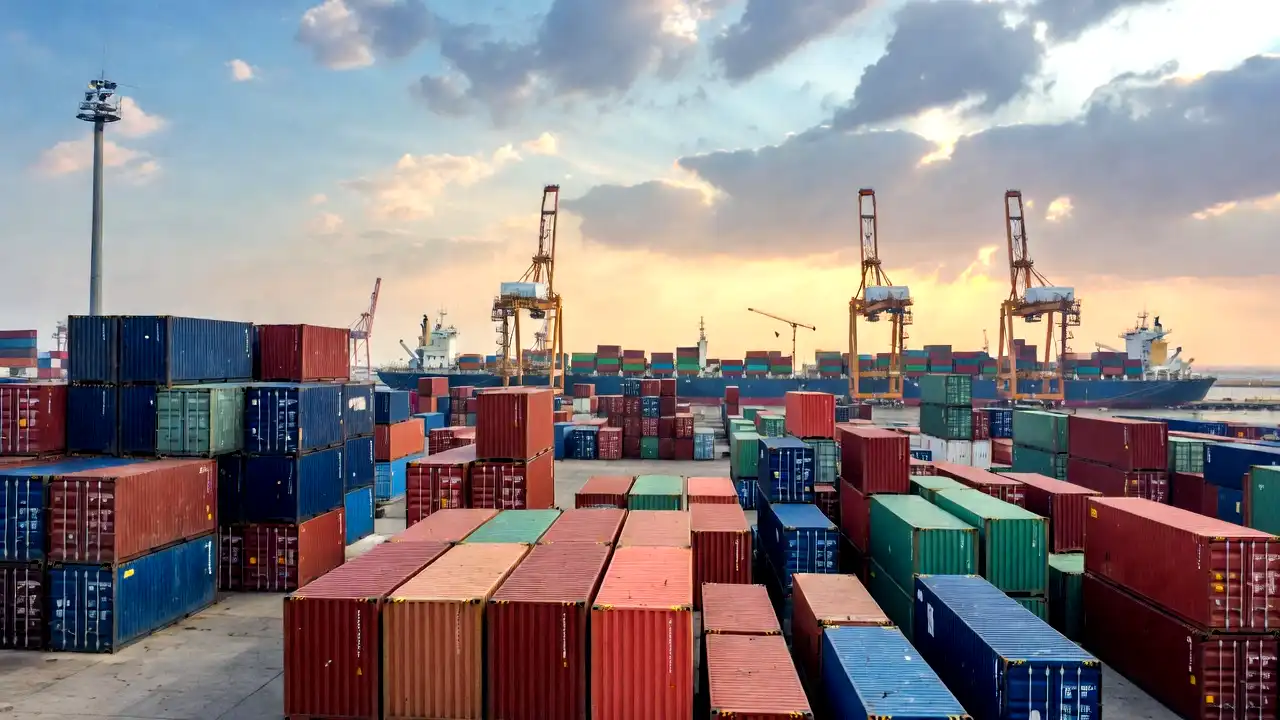
A historic trade war is preparing to redraw the economic map of North America. In August 2026, the long-standing, multi-billion-dollar trading relationship between the United States and Canada reached its most critical and volatile phase. The Canadian business community and government are bracing for a massive, unprecedented round of 50% U.S. tariffs on nearly $20 billion worth of Canadian imports, scheduled to take effect at 12:01 a.m. on Wednesday, August 19, 2026.
The trade escalation is the direct result of three proclamations signed last month by U.S. President Donald Trump, who invoked Section 338 of the Tariff Act of 1930 to penalize what Washington calls Canada’s ongoing discrimination against American products. Despite three weeks of intense, late-stage negotiations in Washington, D.C., between Canada’s Minister of Trade Dominic LeBlanc, Chief Negotiator Janice Charette, and U.S. Trade Representative Jamieson Greer, the two sides remain at a total impasse, raising fears of an imminent trade war.
The proposed 50% tariffs target a wide range of essential Canadian goods, spanning dairy products, alcoholic beverages, motor vehicles, cement, clothing, and sports equipment. Because the commercial supply chains of North America are deeply integrated, with parts and materials crossing the border multiple times before final assembly, the sudden imposition of these trade barriers threatens to trigger massive job losses, disrupt manufacturing, and drive up retail prices for consumers on both sides of the border.
The Section 338 Weapon: Resurrecting Depression-Era Trade Powers
To implement these sweeping, high-rate tariffs, the Trump administration has bypassed standard trade channels and resurrected a powerful, seldom-used trade weapon from the early twentieth century.
The Legal Precedent of the Tariff Act of 1930
The administration’s trade proclamations rely on Section 338 of the Tariff Act of 1930, a Depression-era statute famously known as the Smoot-Hawley Tariff Act. This powerful, unilateral trade law authorizes the President of the United States to impose punitive tariffs of up to 50% on any foreign nation that is found to be discriminating against American commerce or placing U.S. exporters at an unfair disadvantage relative to other trading partners.
By utilizing this historical statute, the executive branch can implement immediate, high-rate duties without requiring congressional approval or submitting to lengthy international trade reviews.
The administration has argued that Canada’s restrictive domestic quotas and provincial trade barriers have systematically shut out American farmers, spirit makers, and auto manufacturers from the Canadian market, justifying the use of these emergency, punitive tariffs to level the playing field.
Why CUSMA-Compliant Goods Are Not Exempt
The most concerning aspect of the new tariff regime for the business community is that the 50% duties will apply to all covered Canadian goods regardless of whether they comply with the United States-Mexico-Canada Agreement, the landmark free-trade deal widely known as CUSMA.
Traditionally, CUSMA-compliant goods are exempt from unilateral tariffs, providing North American businesses with a predictable, duty-free trading environment.
By explicitly applying the Section 338 tariffs to CUSMA-compliant goods, the administration is effectively sidelining the free-trade agreement, creating a severe precedent that threatens the very stability of the North American trade bloc.
The U.S. Trade Representative’s office confirmed that the new levies will target nearly $20 billion worth of annual imports, representing approximately 5.2% of the $383 billion in goods the United States imported from Canada in 2025, leaving major industrial sectors with no legal shield to protect their shipments.
The Major Sticking Points: Dairy, Alcohol, and the Auto Squeeze
The ongoing negotiations in Washington, D.C., have run into a series of highly difficult, structural sticking points, with both sides digging in on key trade disputes that have irritated bilateral relations for decades.
The High Tariffs of Canada’s Dairy Supply Management
The primary source of friction in the agricultural sector remains Canada’s highly protected, state-sanctioned dairy supply management system. The United States has long complained that Canada utilizes this system to shield its domestic dairy farmers from foreign competition, restricting the volume of American milk, cheese, and butter that can enter the country.
According to the U.S. Trade Representative’s annual report, any U.S. dairy imports that exceed Canada’s strict quota limits are subjected to prohibitively high tariff rates:
- U.S. cheese imports exceeding the quota face an enormous tariff rate of 245%.
- U.S. butter imports exceeding the quota face an even larger tariff rate of 298%.
- Bipartisan lawmakers in the United States argue that these high rates effectively block American farmers from competing fairly, demanding that Canada dismantle its supply management system as a precondition for any trade deal.
The Canadian dairy lobby, led by the Dairy Farmers of Canada, has fiercely opposed any concessions, urging Prime Minister Mark Carney’s government to protect the supply management system.
They argue that dismantling the system would flood the domestic market with subsidized American dairy, destroying local farming communities and undermining Canada’s food security, leaving negotiators at a total impasse on the issue.
Provincial Liquor Bans and the Retail Alcohol Lockout
The second major trade irritant is the regulatory barriers imposed by Canada’s provincial liquor control boards, which hold a monopoly over the sale and distribution of alcoholic beverages in almost every province.
U.S. officials argue that these provincial boards systematically discriminate against American wine, beer, and spirits, favoring local producers and restricting market access for U.S. brands.
This dispute turned highly volatile last year when, in retaliation for initial U.S. tariffs, all Canadian provinces took the drastic step of pulling American alcoholic products from retail shelves entirely.
The United States has demanded that its wine, beer, and spirits be immediately and permanently returned to all Canadian retail markets as part of any comprehensive trade agreement.
However, because provincial liquor boards operate independently from the federal government, Ottawa is struggling to persuade individual provincial premiers to lift these bans, creating a major administrative roadblock in the Washington talks.
The Complex Integration of Automotive Supply Chains
The third and most economically significant sticking point centers on the highly integrated North American automotive manufacturing sector. Under the previous trade frameworks, automotive parts and materials routinely cross the Canada-U.S. border multiple times before a finished vehicle rolls off the assembly line, requiring seamless, tariff-free logistics.
To pressure Canadian manufacturers to use more American components, the Trump administration has proposed a selective, high-rate tariff on Canadian-made vehicles, while offering a preferential rate ranging from 7.5% to 15% depending on the percentage of American steel, aluminum, and parts utilized during assembly.
Canadian negotiators have rejected this proposal, warning that implementing such a complex, tiered tariff structure would paralyze the automotive supply chain.
They contend that forcing manufacturers to track and audit the origin of every individual component would drive up production costs, reduce the global competitiveness of the North American auto sector, and ultimately increase sticker prices for American consumers, proving that a commiserate response is needed to protect the industry’s integrated balance sheets.
The Broader Strategic Leverage: Softwood Lumber and the F-35 Review
As the tariff deadline looms, the Canadian government is attempting to leverage its substantial defense and resource assets to pressure Washington into a compromise, turning the trade negotiations into a multi-layered national security discussion.
Pierre Poilievre’s Softwood Lumber Mandate
The trade talks are also being shaped by intense domestic political pressures in Canada. Conservative leader Pierre Poilievre has made it clear that any new, long-term trade deal with the United States must include the complete removal of U.S. tariffs on Canadian softwood lumber, which have burdened local forestry communities in British Columbia and Quebec for years.
Poilievre argued that the Canadian government must show strong, unyielding leadership in Washington, refusing to sign any agreement that leaves Canadian lumber producers vulnerable to unilateral trade barriers.
By demanding the removal of the lumber tariffs as a non-negotiable condition for a deal, the opposition is placing immense pressure on Prime Minister Carney’s negotiating team, leaving them with very little room to make concessions on other key sectors like dairy or alcohol.
Bypassing the F-35 Fighter Jet Procurement
To strengthen its negotiating position, the Canadian government has quietly introduced its massive military procurement programs into the trade discussions, utilizing its national defense budget as a powerful diplomatic lever.
In March 2025, in response to rising trade tensions with the Trump administration, Prime Minister Carney launched a comprehensive review of Canada’s planned, multi-billion-dollar purchase of F-35 fighter jets from the United States.
National Defence Minister David McGuinty recently admitted that the F-35 procurement is actively being examined by the Canadian negotiating team as part of the broader trade talks in Washington.
By suggesting that Canada could cancel or scale back its planned purchase of American fighter jets, the government is sending a clear warning to U.S. defense contractors and policymakers.
This leverage proves that the trade dispute is no longer just about commercial goods; it has become an integrated national security discussion, where the future of the continent’s joint defense programs is being used to protect Canadian workers and industries, representing a major capital pool where even a minor 1.5% margin improvement in trade terms can save the national treasury billions of dollars over the next decade.
The “Watchful Waiting” Trap: Why Businesses Are Betting on TACO
Despite the looming Wednesday deadline, many Canadian businesses and logistics firms have adopted a highly unusual, passive approach to the impending trade barriers, choosing to wait out the storm rather than rushing to beat the clock.
The Lack of Front-Loading in Cross-Border Logistics
Under normal trade conditions, when a major tariff increase is scheduled to take effect on a specific date, importers will scramble to “front-load” their shipments.
They will hire extra transport trucks, purchase additional cargo space on trains, and rush as much inventory across the border as possible before the tariff takes effect, hoping to build up a substantial, untaxed inventory reserve.
In the lead-up to the August 19 deadline, however, U.S.-Canada border crossings have remained remarkably quiet, with no significant increase in shipping volumes.
Janine Harker, President of the Canadian Society of Customs Brokers, revealed that business owners have systematically avoided front-loading their shipments.
She explained that importers have settled into a process of watchful waiting, choosing to plan for the potential tariffs to the extent possible, but strictly avoiding any premature, expensive logistical rushes before the official, final direction of the negotiations is announced.
The Speculative Bet on Trump Always Chickens Out (TACO)
This passive, “watchful waiting” posture is being driven by a highly speculative, risky bet within the Canadian business community regarding the negotiation style of the U.S. president.
Many corporate executives and industry leaders have coined a humorous, yet highly significant acronym to describe the president’s historical pattern of trade negotiations: TACO, which stands for Trump Always Chickens Out.
John Corey, who heads the Freight Management Association of Canada, explained that many business owners view the president’s extreme 50% tariff threats as a classic, high-stakes negotiating tactic designed to force concessions at the eleventh hour, rather than a permanent policy commitment.
He pointed to several unfulfilled trade threats over the past year, including a highly publicized vow late last month to impose massive tariffs on Canada due to wildfire smoke drifting across the border, which the administration quietly dropped days later.
While this “TACO” theory has prevented widespread panic in the business community, trade specialists and former diplomats warn that relying on the assumption that the president is bluffing is an exceptionally dangerous gamble.
If the administration does not back down, and the 50% tariffs take effect at 12:01 a.m. on Wednesday, unprepared businesses will face immediate, catastrophic cost increases that could paralyze their cross-border shipping and lead to rapid, widespread corporate failures, proving that playing chicken with the world’s largest economy is a high-risk venture.
Reorienting the North American Trade Alliance
The looming Wednesday tariff deadline represents a historic, critical inflection point for the North American trade alliance. By preparing to impose a massive 50% tariff on nearly $20 billion of Canadian goods under Section 338 of the Tariff Act of 1930, the United States government is demonstrating that it is willing to dismantle free-trade agreements and disrupt integrated global supply chains to protect its domestic commerce.
While Canadian negotiators in Washington, D.C., continue to fight for a comprehensive, bipartisan compromise, the outstanding disputes over dairy supply management, provincial liquor bans, and automotive content have left both nations at a difficult, unresolved impasse.
As Prime Minister Mark Carney prepares to speak directly with the president, and as the regional business community bets on the risky “TACO” theory, the future of the continent’s economic partnership remains highly volatile.
How successfully the two allied nations navigate this trade crisis over the coming days will determine not only the immediate survival of thousands of cross-border businesses and jobs, but also the long-term stability, integration, and security of the entire North American economy for decades to come.