Key Points:
- SpaceX officially filed its S-1 prospectus to go public on Nasdaq, targeting a historic valuation of $1.75 trillion to $2 trillion.
- Through a dual-class share structure, Elon Musk will control 85.1% of the company’s total voting power.
- Special Class B shares ensure that Musk can be removed from leadership only by a vote of the shares he personally controls.
- By incorporating in Texas, SpaceX leverages state laws that establish high barriers against shareholder lawsuits.
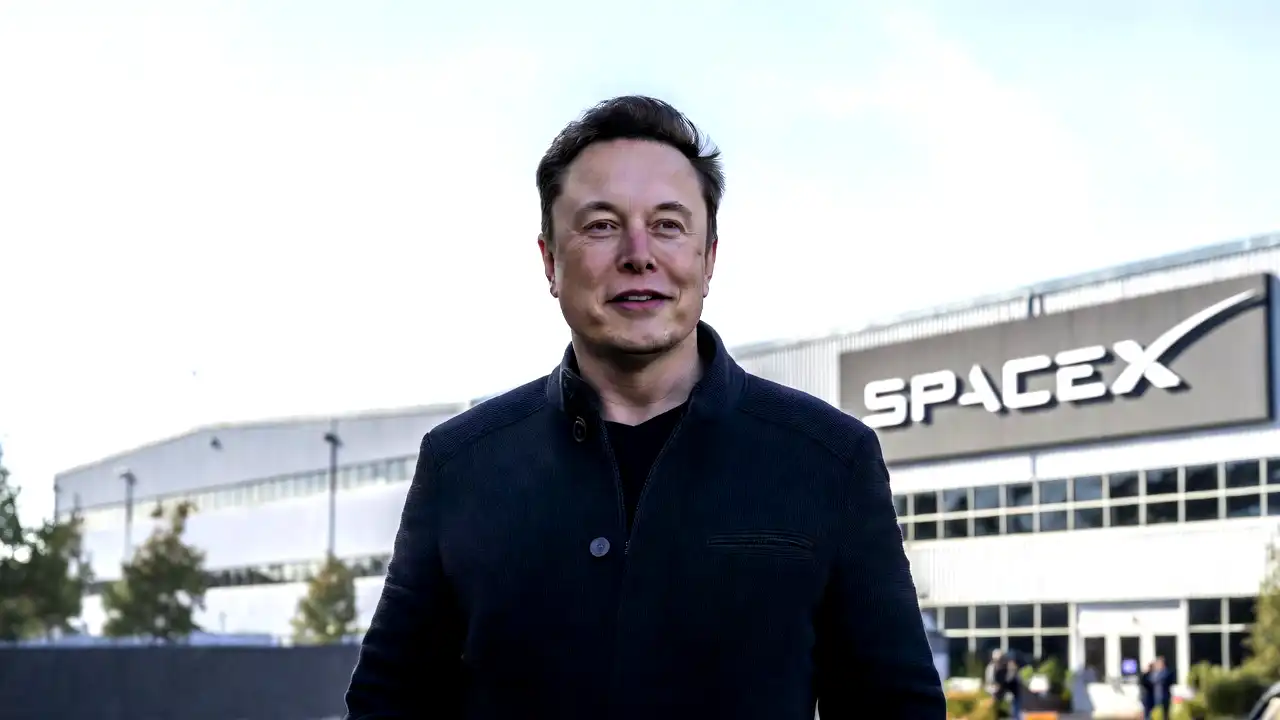
SpaceX officially kicked off its public journey on Wednesday by filing its highly anticipated S-1 registration statement with the Securities and Exchange Commission. The rocket, satellite, and artificial intelligence giant plans to list on the Nasdaq under the symbol SPCX. While the planned public offering could raise to $75 billion—completely smashing Saudi Aramco’s previous $29.4 billion record—the real story lies inside the company’s governance structure. The filing reveals that CEO Elon Musk has designed an absolute corporate fortress, cementing an unprecedented, lifetime grip on the company.
To secure this ironclad control, SpaceX will adopt a dual-class share structure at its debut. Public investors will buy Class A common stock, which grants just one vote per share. Meanwhile, company insiders will hold Class B common stock, which carries a massive 10 votes per share. According to the SEC filing, Musk owns 12.3% of the outstanding Class A shares and an overwhelming 93.6% of the super-voting Class B shares. This split guarantees that Musk will hold a massive 85.1% of SpaceX’s total voting power.
This voting structure effectively guarantees that nobody can ever fire Musk from his company. Under traditional corporate rules, a board of directors holds the formal authority to remove a chief executive. However, SpaceX’s legal documents state that only a majority vote of Class B shareholders can remove Musk from his positions as CEO, chief technical officer, and board chairman. Because Musk personally controls 93.6% of those Class B shares, his firing would require him to vote against himself.
The financial structure of Musk’s holdings gives him immediate, massive power. Unlike traditional corporate setups that issue stock options or restricted stock units (RSUs) that take years to vest, SpaceX issued Musk’s shares as restricted stock. This means Musk can immediately and permanently wield the immense voting power of these shares for as long as he remains employed by the company.
This fortress-like corporate governance structure is a direct response to the immense frustrations Musk has faced running Tesla Inc. In its 16 years as a public company on Wall Street, the electric-vehicle maker has been a lightning rod for shareholder lawsuits, short-seller attacks, and activist calls for Musk’s dismissal. At one point, Musk even complained that he genuinely dislikes running a public company because of the constant outside interference.
The lessons of his past legal defeats are written all over the SpaceX filing. In 2018, the Securities and Exchange Commission forced Musk to step down as Tesla’s chairman and pay a $20 million fine over his infamous “going private” tweet. More recently, a Delaware court voided his historic $56 billion Tesla compensation package after a shareholder lawsuit. Determined to prevent a repeat of these scenarios, Musk has structured SpaceX to keep public shareholders almost entirely powerless.
In another strategic move, Musk officially relocated SpaceX’s corporate headquarters from Hawthorne, California, to Starbase, Texas, in 2024. Just like Tesla, the space giant is now officially incorporated under Texas state law. This is a critical detail because Texas corporate law features significantly higher legal barriers to limit derivative shareholder litigation. This shield makes it incredibly difficult for activist investors to file lawsuits against management or challenge executive pay packages in court.
If completed, the SpaceX IPO will be an absolute behemoth, redefining the public markets. The company’s target valuation sits between $1.75 trillion and $2 trillion. To support this valuation, the company revealed rapid growth, generating $18.7 billion in revenue in 2025. However, heavy investments in the massive Starship rocket program, Starlink’s broadband network, and its newly acquired xAI artificial intelligence unit also led to a $4.94 billion annual loss last year.
This extreme concentration of power has already drawn fierce criticism from major institutional investors. In a joint letter on May 13, several large public pension funds urged the SpaceX board to reconsider the dual-class system. They argued that the structure forces public shareholders to take on the majority of the economic risk without a corresponding voice in how the company is run. Because SpaceX’s massive valuation makes its eventual inclusion in an index a near certainty, passive index funds will be forced to buy the stock regardless of their governance concerns.
Ultimately, the SpaceX IPO marks a new era for corporate governance on Wall Street. By utilizing super-voting shares, immediate restricted stock voting power, and favorable Texas laws, Elon Musk has established himself as the permanent, unchallenged ruler of the world’s most valuable private space empire. Investors wanting a piece of the space revolution must accept a simple reality: they are buying the economics, but Musk owns the keys.