
Key Points:
- Chicago Fed President Austan Goolsbee warned that policymakers might raise interest rates if inflation worsens.
- Three Federal Reserve officials dissented at the late April meeting, demanding the central bank keep the option to hike rates open.
- The ongoing US war in Iran caused a massive energy shock, driving oil prices to $115 per barrel and pushing gasoline prices past $4.50 a gallon.
- Goolsbee expressed deep concern that price pressures are spreading far beyond the energy sector and into everyday goods and services.
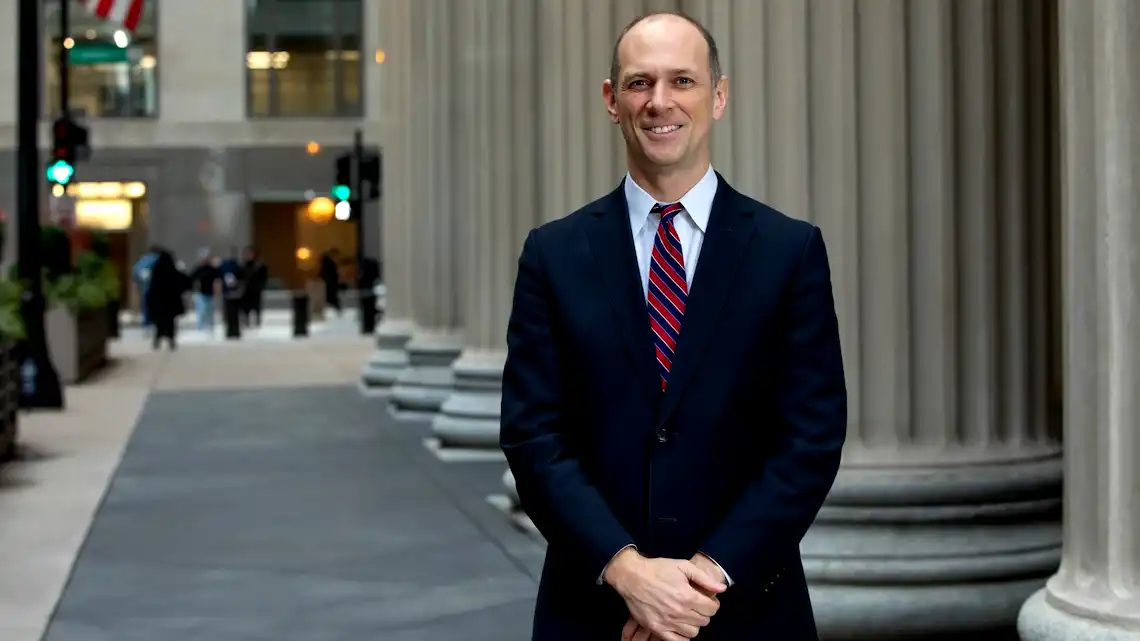
Federal Reserve Bank of Chicago President Austan Goolsbee made it clear on Friday that the central bank might need to raise interest rates again. Speaking during an interview on Bloomberg Television, Goolsbee shocked some viewers by refusing to rule out a rate hike. He told the hosts he simply cannot view the current economic landscape as one where rate cuts are the only option on the table. Instead, he believes the Federal Reserve must keep every tool ready to fight off a new wave of rising prices.
A massive energy price shock lies at the center of this sudden shift in tone. The ongoing US war in Iran has severely disrupted global oil supplies over the last 60 days. Crude oil prices quickly spiked past $115 per barrel, sending shockwaves through the American economy. Regular unleaded gasoline now averages $4.50 a gallon nationwide, and diesel prices hit $5.20 a gallon. These rising fuel costs force trucking companies, airlines, and manufacturers to pass their higher costs directly on to everyday consumers.
Goolsbee admitted he feels extremely anxious about how fast these costs are bleeding into the rest of the economy. He warned that price pressures now extend far beyond the gas pump. When energy costs jump, everything from groceries to clothing becomes more expensive to produce and transport. Recent data show that overall inflation jumped by 0.5% in just one month, dashing hopes that the central bank had finally beaten the inflation crisis. Goolsbee noted that these broad price increases make a near-term rate reduction almost impossible to justify.
This harsh reality hit the boardroom during the Federal Reserve meeting at the end of April. Policymakers ultimately voted to keep the benchmark interest rate unchanged at a 22-year high of 5.25%-5.50%. For months, Wall Street investors expected the central bank to start lowering borrowing costs by the summer. However, the rapidly changing global conflict forced officials to completely rewrite their game plan and hold rates steady to prevent even more inflation from taking root.
The April meeting also revealed growing division and panic inside the central bank. Three officials openly dissented against the official statement’s language. The original draft suggested the central bank’s next move would likely be a rate cut. The dissenting members refused to sign off on that promise. They argued the Federal Reserve must loudly signal that the next action could easily be a rate hike if the Middle East conflict continues to drive up energy costs.
Even though Goolsbee does not hold a voting seat on monetary policy this year, he publicly aligned himself with the spirit of those dissenters. He confirmed on Friday that he views both rate cuts and rate hikes as completely viable options for his colleagues. He explained that a responsible central bank cannot lock itself into a single path when an unpredictable war is actively rewriting the rules of the global economy.
Goolsbee’s remarks highlight a massive turnaround for the entire Federal Reserve. Just three months ago, Chairman Jerome Powell hinted that policymakers might deliver up to three rate reductions before the year ended. Markets rallied, and the Dow Jones Industrial Average added nearly 2,000 points on the good news. Today, that optimism is entirely gone. Fed officials now realize they must tackle a brand new inflation threat before they can even think about offering relief to borrowers.
This shift in policy means American consumers will face crushing borrowing costs for much longer than anyone predicted. The average rate for a 30-year fixed mortgage recently climbed back up to 7.4%, pricing millions of young families out of the housing market. Credit card interest rates remain stuck above 21%, while the average interest rate on a new-car auto loan now stands at a painful 8.5%. If the Federal Reserve actually pulls the trigger on a rate hike, these numbers will climb even higher.
The central bank officially aims to keep inflation at a steady 2.0% annual rate. Right now, the consumer price index sits stubbornly at 3.8% and shows signs of climbing back above 4.0% by next month. Goolsbee stressed that the Fed will not stop fighting until it pushes that number back down to its target, regardless of how much pain higher interest rates cause in the short term.
Investors now look toward the next Federal Reserve meeting with growing fear. Analysts at major banks predict a 30% chance that officials will raise rates by a quarter percentage point. While Goolsbee will not cast a vote, his loud warnings on Bloomberg Television serve as a massive wake-up call. The era of cheap money remains a distant dream, and Americans must brace for higher costs as the global energy crisis drags on.