

Key Points:
- The Shenzhou-21 crew landed safely in the Shenzhou-22 return capsule on May 29, 2026, after a record-breaking 210 days in orbit.
- Due to space debris damage to another vehicle, the mission marked the first time Chinese astronauts returned on a different ship from the one they launched on.
- During their stay, the crew completed three spacewalks and installed advanced space debris protection shields on the Tiangong space station.
- Commander Zhang Lu, Wu Fei, and Zhang Hongzhang returned in good health, touching down at the Dongfeng landing site in Inner Mongolia.
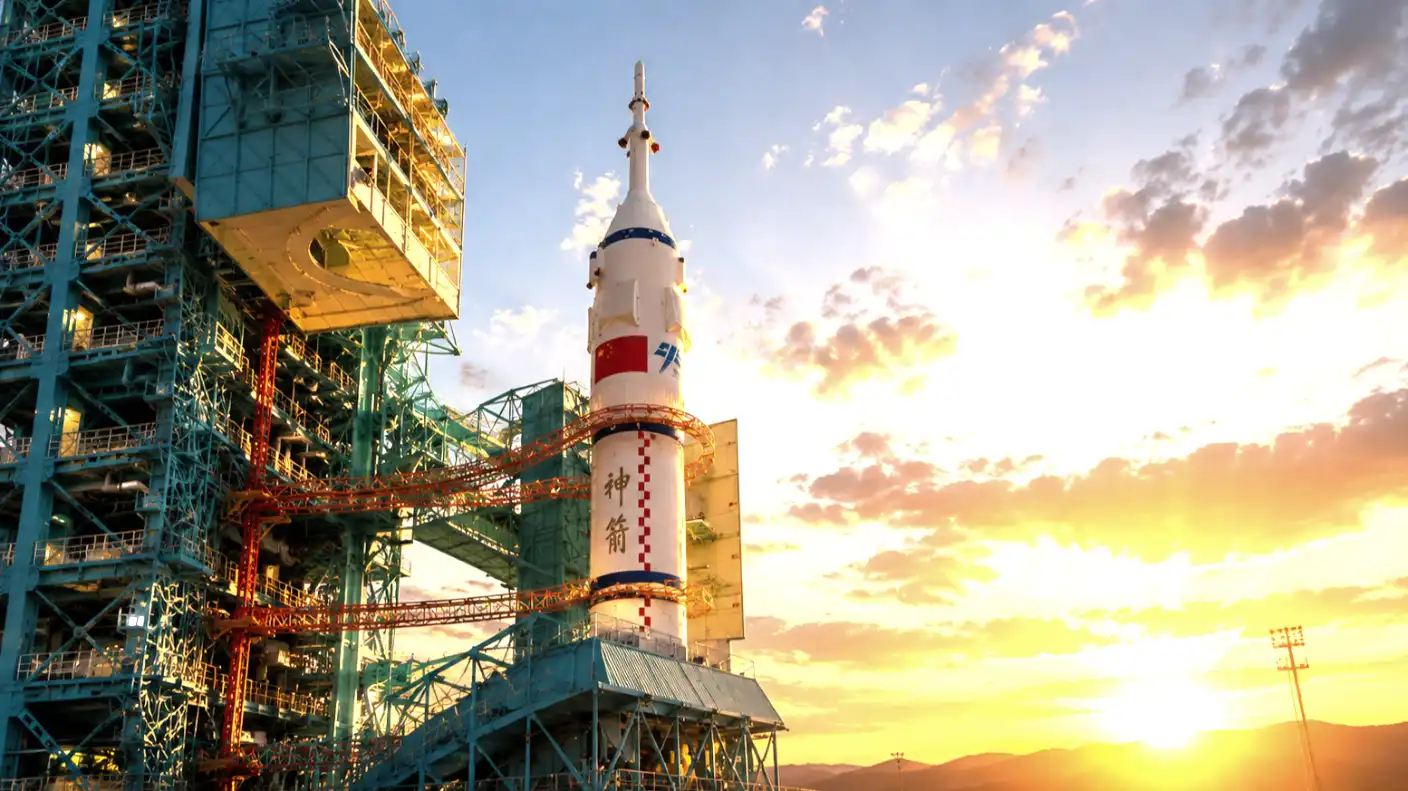
In a dramatic and highly successful conclusion to an unprecedented orbital rescue mission, the three astronauts of China’s Shenzhou-21 expedition safely returned to Earth on Friday, May 29, 2026. The China Manned Space Agency (CMSA) confirmed that the Shenzhou-22 return capsule, carrying the crew, touched down successfully at the Dongfeng landing site in the Inner Mongolia Autonomous Region at 8:11 p.m. Beijing Time. On-site medical teams quickly verified that mission commander Zhang Lu, Wu Fei, and Zhang Hongzhang remained in excellent health, completing a mission defined by cosmic crisis management and historic firsts.
The returning crew has officially rewritten the record books of Chinese space exploration. Having entered the Tiangong space station on November 1, 2025, the team spent a record-breaking 210 days in low Earth orbit. This 210-day mission updates the national record for the longest single-crew expedition by Chinese astronauts. During their seven-month orbital stay, the crew conducted three extensive extravehicular activities (spacewalks), managed complex cargo transfers, and executed dozens of scientific experiments in microgravity physics, aerospace medicine, and space materials science.
However, the true history of this mission lies in the extraordinary, high-stakes aerospace logistics that forced the crew to return in a completely different spacecraft than the one they rode into orbit. In November 2025, a sudden, high-speed space debris impact severely damaged the return capsule window of the docked Shenzhou-20 spacecraft, rendering it unsafe for atmospheric reentry. To rescue the stranded Shenzhou-20 crew, the CMSA executed an emergency reshuffle of its orbital assets, kicking off a series of unprecedented maneuvers.
To save the Shenzhou-20 crew, the CMSA ordered the Shenzhou-21 crew to sacrifice their own ride home. On November 14, 2025, the intact Shenzhou-21 spacecraft undocked from its module, replaced the damaged Shenzhou-20 ship, and safely escorted the stranded crew back to Earth. This selfless maneuver left the newly arrived Shenzhou-21 crew stranded on the space station without a return vehicle. To resolve this national emergency, teams on the ground executed the country’s first-ever emergency spacecraft launch, blasting the unmanned Shenzhou-22 rescue vehicle into orbit on November 25, 2025, to serve as their new ride home.
Having witnessed a physical debris strike firsthand, the Shenzhou-21 crew prioritized orbital safety and protection during their 210-day stay. Working closely with researchers on the ground, the astronauts conducted complex spacewalks to install advanced, heavy-duty space debris protection shields across vulnerable modules of the Tiangong space station. They also carefully inspected the exterior windows and docking ports and implemented real-time technological upgrades, resulting in a 1.5% decrease in structural risk margins, to ensure that future micrometeoroid or space-junk impacts would not cause similar structural emergencies.
The final descent sequence began at 7:20 p.m. on Friday, when the Beijing Aerospace Control Center transmitted the formal return command from the ground. The Shenzhou-22 return capsule separated smoothly from its orbital module, initiated its deorbit burn, and plunged through the atmosphere. Ground-based search and recovery teams tracked the capsule’s trajectory in real time and arrived at the desert landing site within minutes of touchdown to assist the three spacefarers.
Upon exiting the capsule, mission commander Zhang Lu expressed great pride, stating, “One person’s sea of stars, a nation’s unwavering devotion.” In a heartwarming gesture, Zhang brought back a fresh apple grown on the space station, upon which he had written the Chinese characters for “peace.” He dedicated the space-grown fruit to China’s scientific and technical workforce ahead of National Science and Technology Workers’ Day. Crewmate Wu Fei, the youngest Chinese astronaut to ever complete an orbital mission, vowed to use his historic experience as motivation to continue serving the nation’s manned space program.
This high-stakes orbital rescue and the maintenance of the Tiangong space station highlight the immense capabilities of China’s rapidly expanding space program. Backed by an annual civil space budget that global analysts estimate exceeds $12 billion, the country is actively building its presence in low Earth orbit. By successfully coordinating an emergency launch, swapping active spacecraft, and extending a single-crew mission to 210 days under extreme conditions, the CMSA has proved that its domestic technology and ground-control systems are highly resilient and capable of managing the complex challenges of long-duration spaceflight.
As the Shenzhou-21 crew begins their post-flight recovery and medical rehabilitation, their successful return marks a triumphant chapter in the history of space exploration. The mission proved that when confronted with the hazardous realities of space debris, a unified, agile ground-and-space coordination system can successfully overcome the most complex emergencies. By successfully safeguarding its astronauts and hardening its orbital laboratory against debris, China has secured a reliable foundation for its next grand objective: landing astronauts on the lunar surface by 2030.