Key Points:
- South Korea will launch its next-generation medium satellite No. 4 from California this July.
- A SpaceX Falcon 9 rocket will carry the 500-kilogram spacecraft into orbit.
- The government plans to use the satellite to monitor agricultural health and track forest resources.
- Officials from the Korea Aerospace Administration completed final hardware checks before shipping the device next month.
The Korea Aerospace Administration announced exciting news on Thursday regarding the national space program. South Korea will launch a brand-new Earth-observation satellite from the United States this July. The agency partnered with SpaceX to carry the valuable payload into orbit. A Falcon 9 rocket will lift off from the Vandenberg Space Force Base, which sits in Santa Barbara County, California.
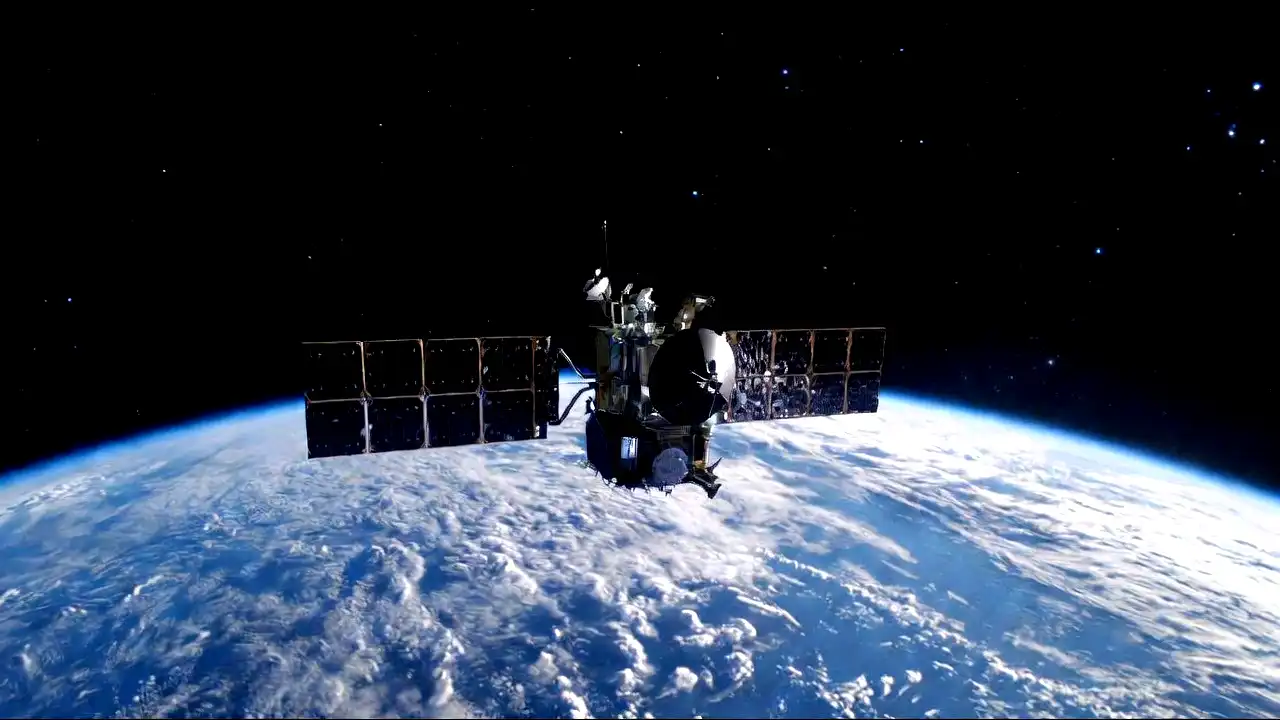
Engineers call this new spacecraft the next-generation medium satellite No. 4. It marks a major milestone for South Korea’s aerospace industry. The government created a specific initiative to standardize a versatile 500-kilogram Earth-observation platform. By building a standard platform, engineers can swap out different cameras and sensors without redesigning the entire spacecraft every single time. This specific launch marks the 4th time the country has used this standard 500-kilogram design.
The government built this new satellite to perform very specific jobs from space. Once it reaches orbit, the spacecraft will focus heavily on agricultural monitoring. The onboard cameras will capture high-resolution images of farmland across the country. Experts will use these images to track crop health, estimate harvest yields, and spot early signs of drought. This data provides farmers and policymakers with the precise information they need to protect the national food supply.
Beyond farming, the satellite will also keep a close eye on natural landscapes. The space agency stated that forest resource observation is the spacecraft’s second primary mission. South Korea features dense, mountainous forests that require constant monitoring. The new satellite will help officials track dangerous wildfires, measure deforestation, and study how climate change affects native tree species over time.
Before a satellite can leave the planet, it must pass rigorous safety tests. On Thursday, officials from the Korea Aerospace Administration traveled to Korea Aerospace Industries’ headquarters to inspect the hardware. The massive manufacturing facility is located in Sacheon, a city about 375 kilometers south of Seoul. Top engineers and government leaders held a major meeting to review every single detail of the spacecraft.
The inspection team wanted to ensure the satellite works perfectly before it leaves the country. Starting next month, shipping crews will carefully pack the delicate 500-kilogram machine into a secure transport container. They will fly the equipment across the Pacific Ocean directly to the launch site in California. Once the satellite arrives at Vandenberg Space Force Base, American and South Korean teams will work together to mount it atop the Falcon 9 rocket.
Choosing the SpaceX Falcon 9 rocket makes perfect sense for this mission. The American aerospace company offers a highly reliable launch service that safely delivers payloads into space every week. By using a proven commercial rocket, the South Korean government saves millions of dollars compared to building a custom launch vehicle. The Falcon 9 also provides a smooth ride, which protects the sensitive optical equipment bolted inside the satellite.
The medium satellite program completely changed how South Korea approaches space exploration. In the past, scientists built custom satellites from scratch for every new mission. That old process wasted years and cost massive amounts of money. Today, the standardized platform allows workers at Korea Aerospace Industries to build new satellites on a much faster timeline. The success of the first 3 models proved that this efficient manufacturing strategy actually works.
The newly formed Korea Aerospace Administration uses missions like this to prove its value to the public. The government established the agency to organize the growing national space sector and compete with other global powers. Launching a 4th medium satellite shows that South Korea can maintain a steady, reliable space program. The agency plans to share the data from this satellite with universities, research labs, and private companies across the country.
The countdown to July now begins for the engineering teams in Sacheon. Over the next few weeks, they will finalize their software code and finish their final hardware tweaks. When the Falcon 9 rocket finally roars to life in California, it will carry years of hard work into the sky. The data this satellite sends back down to Earth will help South Korea protect its natural resources for decades to come.