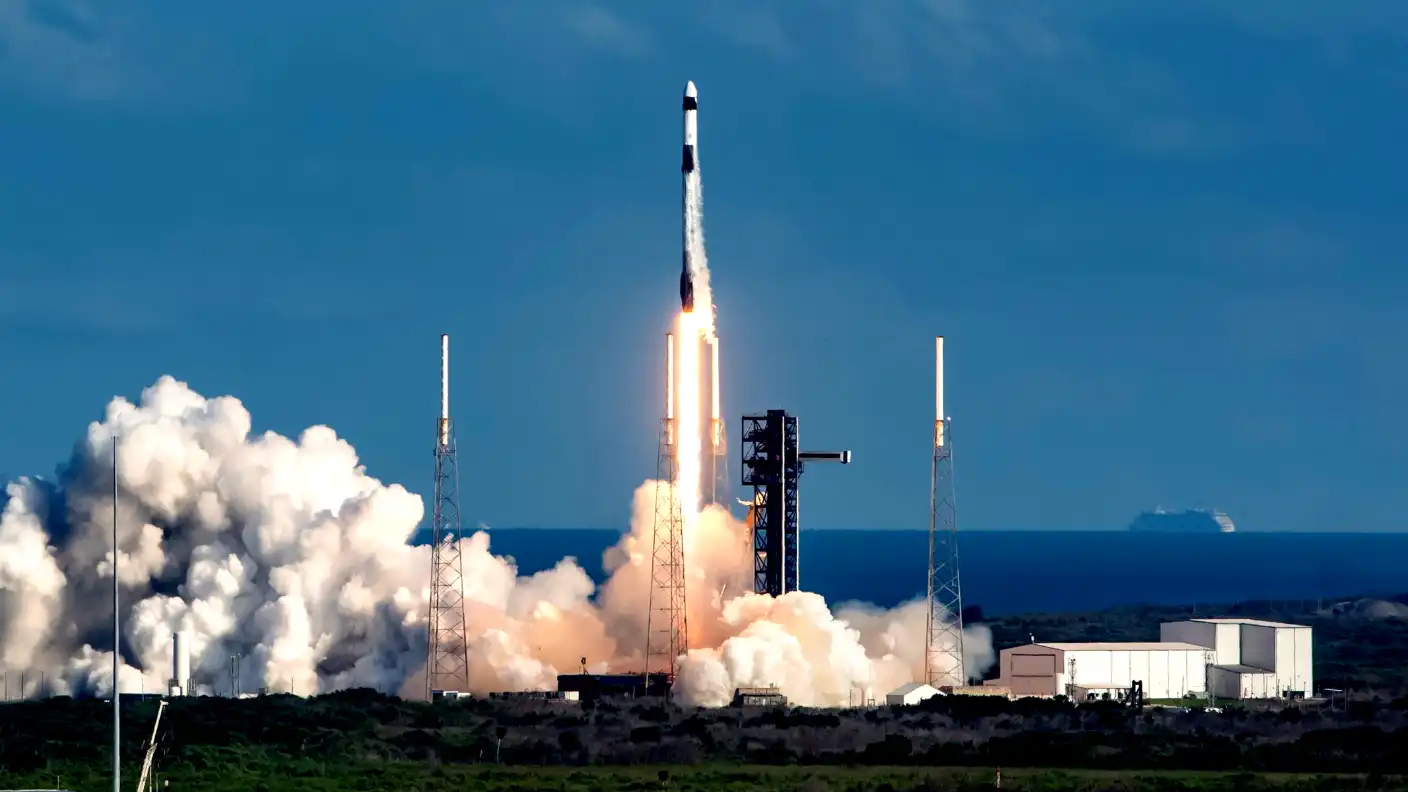
Key Points:
- SpaceX plans to execute 10,000 rocket launches every single year within the next 5 years.
- The Federal Aviation Administration requires the company to prove better flight reliability before approving the massive expansion.
- SpaceX completed 170 launches in 2025 and placed roughly 2,500 new satellites into orbit.
- The aerospace company eventually wants to deploy 1 million satellites to gather solar energy for artificial intelligence data centers.
SpaceX set a massive new goal for its rocket program this week. The aerospace company wants to execute exactly 10,000 launches each year over the next 5 years. However, government regulators stand directly in the way of this massive expansion. The head of the Federal Aviation Administration announced on Wednesday that officials will demand much better flight reliability before they approve such a dramatic increase in daily rocket traffic.
Federal Aviation Administration Administrator Bryan Bedford recently met face-to-face with SpaceX President Gwynne Shotwell. During their meeting, Shotwell revealed the company’s ambitious 5-year vision to the government regulator. To understand the sheer scale of this stretch goal, observers only need to look at recent flight data. In 2025, SpaceX conducted exactly 170 launches and deployed roughly 2,500 satellites. Jumping from 170 flights to 10,000 flights means the company must launch nearly 27 rockets every single day of the year.
Company Chief Executive Officer Elon Musk confirmed similar ambitions during a recent video interview with Forbes. Musk proudly noted that his company already controls 10,000 satellites currently orbiting the planet. He stated he eventually wants to launch 10,000 communications satellites per year. While Musk did not specify an exact timeframe for his satellite goal during the interview, his numbers align perfectly with the rapid-launch timeline that Shotwell presented to regulators.
Bedford spoke to reporters after a public aviation forum and made the government’s position very clear. He stated that the regulatory agency needs to see much greater reliability from the rocket manufacturer. The Federal Aviation Administration holds the ultimate authority over the skies. The agency licenses every single commercial space launch in the country. Regulators also take specific steps to streamline key hurdles for space companies while ensuring the industry operates safely.
Protecting everyday citizens remains the top priority for the agency. The government imposes strict flight restrictions during every rocket launch to ensure space accidents do not interfere with regular passenger air traffic. The agency constantly reviews safety data from all prior launches to better understand the exact risks involved. To address these safety concerns, officials bar commercial airplanes from flying through certain areas when a rocket blasts off. Bedford admitted that clearing the airspace this often can heavily disrupt normal travel.
Because 10,000 launches would require constant airspace closures, the two leaders had to discuss long-term logistical planning. Bedford explained the main purpose of his meeting with Shotwell. He wanted to review the agency’s current constraints and figure out what planners can do right now to accommodate such a massive stretch goal. The two leaders had a very frank conversation about the physical challenges of managing the sky.
Bedford summarized the meeting by stating both sides have a lot of hard work to do. He admitted the government agency will have to push its own limits to handle the paperwork and logistics. At the same time, he made it clear that the aerospace company must push its technical reliability to near perfection. Reporters reached out to SpaceX for comment on the meeting, but the company did not immediately respond.
Currently, the regulatory agency processes paperwork fast enough to keep up with the rocket industry. Bedford noted that his agency is not the limiting factor for space launches right now. However, he issued a stern warning about the near future. He expects his agency to eventually become the main bottleneck simply because the government does not put enough funding into the commercial space team.
The push for more rocket flights ties directly into national political goals. Bedford noted that President Donald Trump desperately wants American astronauts to return to the moon before the end of 2028. Reaching the lunar surface requires massive heavy-lift rockets and frequent supply missions. Bedford added that the government must work closely with private industry to unlock the innovation required to achieve that ambitious timeline.
SpaceX plans to use these thousands of new rocket launches to build out an unprecedented network in space. In January, the company announced it wants to launch a massive constellation consisting of 1 million satellites. These machines will orbit the Earth and harness energy directly from the sun. The company plans to beam this solar power back down to the surface to run massive artificial intelligence data centers.