Key Points:
- Major U.S. companies hold a record $2.2 trillion in cash while aggressively spending new capital on business growth.
- Capital expenditures surged by 21.2% in the final quarter of 2025 to reach a massive $1.2 trillion.
- Financial analysts project company profit margins will expand to roughly 15.3% over the next 12 months.
- Strong free cash flow protects major technology and healthcare leaders from rising interest rates and energy shocks.
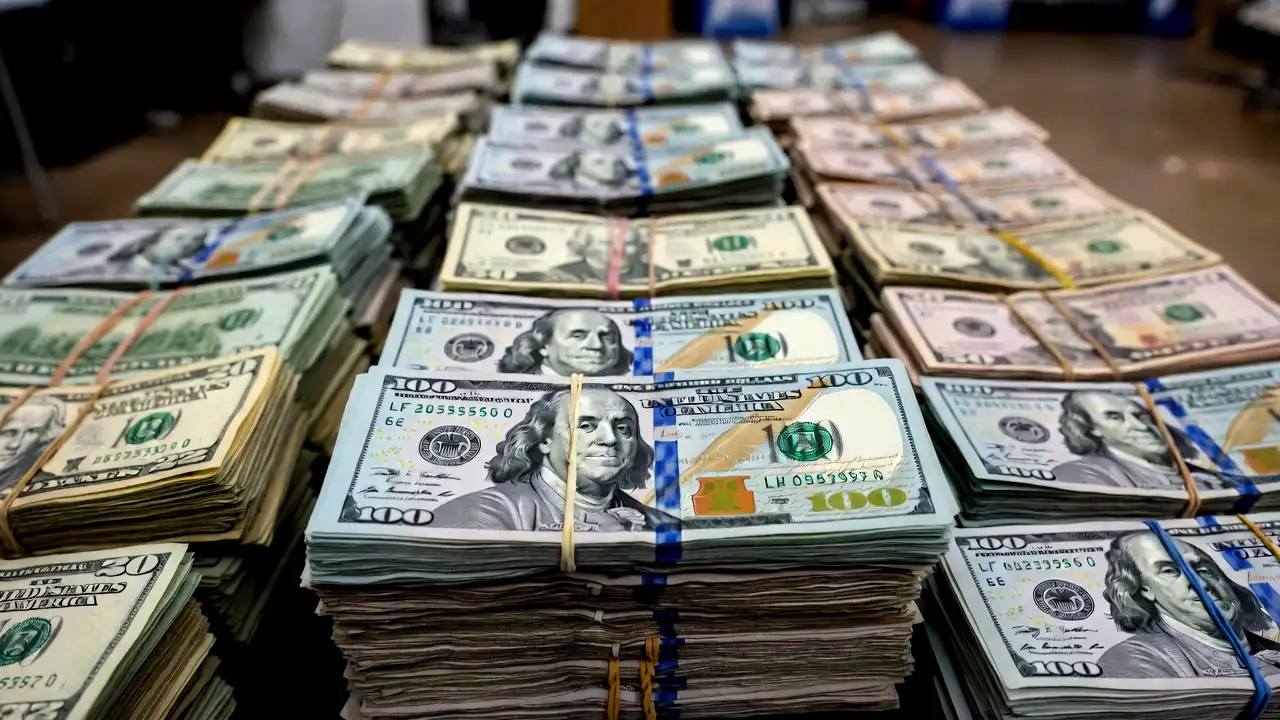
Large American companies currently sit on mountains of cash. A recent report from Morgan Stanley shows that the top companies in the Russell 1000 index now hold a combined $2.2 trillion in cash. However, these businesses refuse just to let that money sit idle in bank accounts. Instead, corporate leaders funnel record amounts of capital straight into new growth projects.
The financial numbers reveal a clear trend. While companies held unprecedented levels of cash at the end of 2025, the cash-to-enterprise-value ratio actually dropped significantly. It recently hit a 20-year low of just 3.8%. This low percentage indicates that company executives aggressively reinvest almost every new dollar of operating cash flow into their daily operations.
A massive jump in capital expenditures drives this spending spree. During the final quarter of 2025, companies spent $1.2 trillion on physical infrastructure and long-term projects. This represents a huge 21.2% increase compared to the same period the previous year. Business leaders clearly feel confident about the future. They choose to prioritize long-term scale and expansion rather than holding onto extra cash for short-term safety.
This aggressive investment cycle highlights strong optimism inside corporate boardrooms. Wall Street analysts agree with this positive outlook. Current market estimates project that net profit margins for these major companies will expand to roughly 15.3% over the next 12 months. Companies believe these expensive new projects will eventually generate massive profits, even as global political tensions create uncertainty in the broader economy.
Morgan Stanley highlighted a specific group of cash-rich companies that stand out from the crowd. These leaders boast market valuations exceeding $50 billion. The list features major technology and healthcare names like ServiceNow, Vertex Pharmaceuticals, and CrowdStrike. These specific businesses hold incredibly strong balance sheets. Financial experts believe these companies possess the exact financial armor needed to survive any sudden stock market crashes or prolonged economic corrections.
Steady cash generation provides a crucial safety net for these market leaders. Across the Russell 1000, companies generate a combined $1.6 trillion in free cash flow. This massive stream of incoming money effectively insulates strong firms from the rising cost of borrowing capital. Because they fund their own growth, they can easily maintain their aggressive investment plans regardless of what the central bank decides to do with interest rates.
Investors watch these free cash flow numbers very closely. Right now, the free cash flow yield holds steady at 2.8%. Market analysts view this 2.8% yield as a historical floor, providing a valuation cushion for high-quality stocks. Basically, it gives buyers confidence that the stock price has a solid foundation.
Because of this dynamic, investors increasingly favor companies that show strong potential for future cash generation. Tech businesses like DoorDash and Cloudflare attract heavy attention right now. Analysts expect both companies to deliver significant growth in free cash flow over the remainder of 2026. Buyers want to own businesses that consistently bring in more cash than they burn.
The optimistic case for the stock market remains firmly intact. As long as corporate America successfully turns its operating cash into profitable growth without hurting its profit margins, stock prices should continue to perform well. The strategy of heavy spending looks very smart under current economic conditions.
However, a major test looms for these companies and their $2.2 trillion cash piles. A persistent energy shock in the Middle East continues to push oil and gas prices higher. If this crisis lasts through the second half of the year, it could force inflation to stay higher for much longer than anyone expects. These massive corporations must prove they can navigate higher costs while still delivering the aggressive growth they promised to their shareholders.