
Key Points:
- U.S. and South Korean negotiators concluded a two-day security meeting in Seoul to advance agreement frameworks made during their October 2025 summit.
- Seoul is actively seeking a major revision to the 2015 “123 Agreement” to secure long-term, preapproved U.S. consent for domestic uranium enrichment.
- The high-level bilateral talks also focused on supporting South Korea’s ambitious plans to build conventionally armed, nuclear-propelled submarines.
- Progress on the security pacts was previously delayed by legal roadblocks over a planned $350 billion South Korean investment in the United States.
High-level security and technology discussions between the United States and South Korea reached a critical juncture on Wednesday, June 3, 2026. Senior diplomats from Washington and Seoul concluded a crucial two-day bilateral summit in the South Korean capital, focusing on some of the most sensitive elements of their mutual defense alliance. At the top of the agenda was South Korea’s ambitious bid to secure advanced sovereign nuclear capabilities, including domestic uranium enrichment and spent nuclear fuel reprocessing. These negotiations represent a vital next step toward implementing the historic security frameworks that the presidents of both nations agreed upon during their bilateral summit last October.
The high-stakes talks brought together a powerful roster of defense, foreign policy, and nonproliferation officials from both sides of the Pacific. Allison Hooker, the U.S. Under Secretary of State for Political Affairs, led the American delegation after arriving in Seoul on Monday. Joining Hooker on the trip were several key security strategists, including Ivan Kanapathy, Senior Director for Asia at the National Security Council (NSC), and Matthew Napoli, Deputy Administrator for Defense Nuclear Nonproliferation at the National Nuclear Security Administration. South Korea’s National Security Adviser, Wi Sung-lac, led the host delegation, coordinating directly with his U.S. counterparts to align their joint strategic objectives.
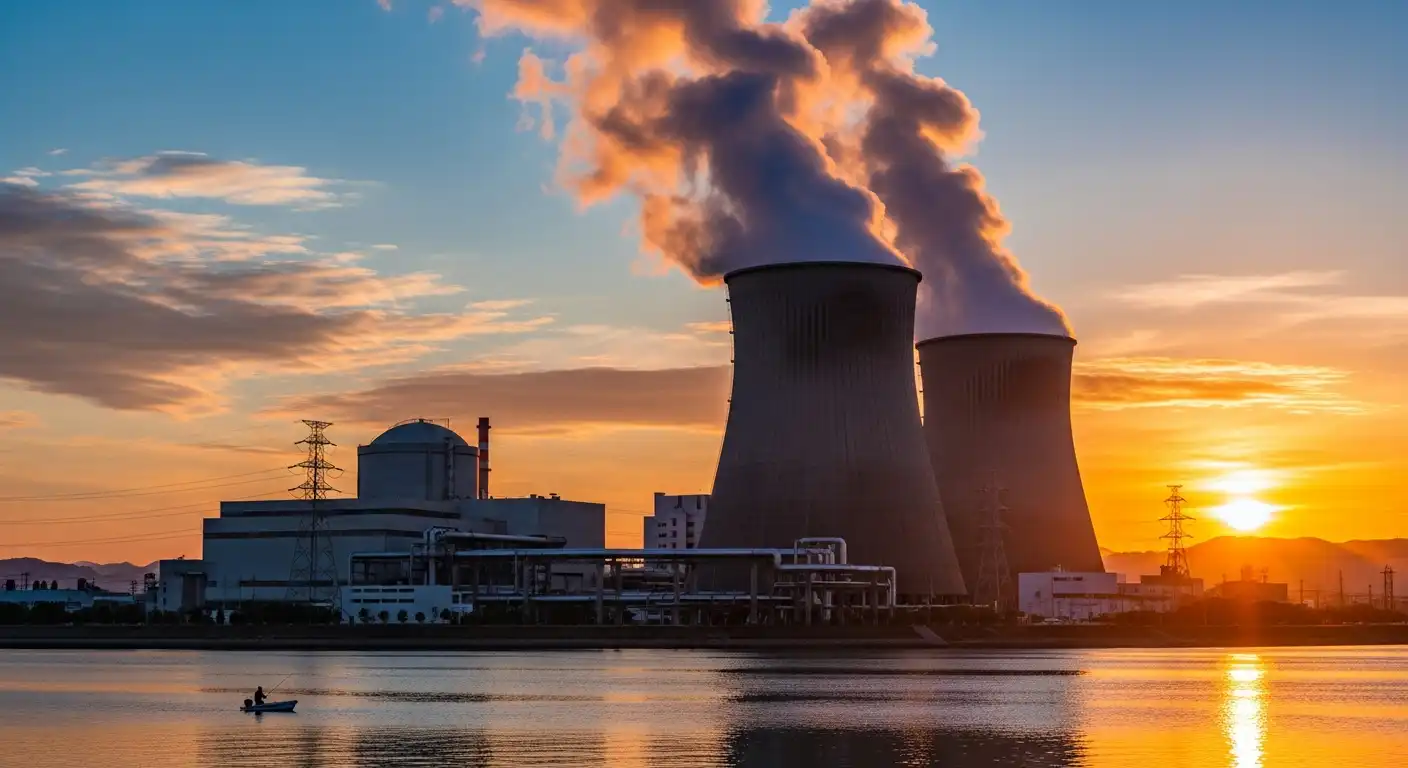
Wednesday’s discussions focused heavily on the highly sensitive issue of civil nuclear fuel cycle capabilities, which requires a major overhaul of the existing legal framework. Currently, the 2015 bilateral nuclear energy cooperation pact, commonly referred to as the 123 Agreement, strictly prohibits South Korea from enriching uranium or reprocessing spent nuclear fuel without explicit, written U.S. consent. Local nuclear experts argue that this restriction severely limits South Korea’s ability to manage its growing stockpiles of spent reactor fuel and secure its domestic energy grid. Seoul’s negotiators are aggressively lobbying to revise this decades-old pact to obtain “advance consent”—a preapproved, long-term permission structure that would grant South Korea sovereign control over its peaceful nuclear fuel cycle.
While Wednesday’s meetings tackled civilian nuclear fuel processing, the delegations spent Tuesday focusing almost exclusively on a highly ambitious, next-generation military program. Under a joint fact sheet published last year, the United States formally committed to supporting South Korea’s plans to design and construct conventionally armed, nuclear-propelled submarines. Developing a nuclear-powered submarine fleet is a major strategic priority for Seoul, as these ultra-quiet vessels can remain submerged indefinitely, providing a powerful deterrent against hostile regional activity. Integrating this propulsion technology into South Korea’s naval forces represents a profound shift in the regional balance of power, closely mirroring the technical assistance the U.S. is providing to Australia under the AUKUS alliance.
Following her high-level meeting with Wi Sung-lac on Tuesday, Allison Hooker took to social media to highlight the broad strategic depth of the ongoing discussions. In a public post on X, Hooker stated that she had discussed working closely with South Korean counterparts to make concrete, measurable progress on bilateral nuclear cooperation. She also emphasized that their wide-ranging discussions underscored a fundamental, modern geopolitical reality: economic security is national security. This perspective reflects the growing consensus in Washington and Seoul that securing critical supply chains, advanced semiconductors, and sovereign nuclear energy systems is just as important as deploying physical military hardware.
The high-profile security talks took place several months later than originally scheduled due to a series of domestic legislative and corporate complications. The initial October summit agreement rested on a massive, reciprocal economic commitment: a planned $350 billion South Korean corporate investment in U.S. manufacturing, semiconductor, and clean-energy sectors. However, political gridlock and regulatory delays within South Korea’s national parliament slowed down the legislative approval process for the investment package. This economic pause directly stalled the parallel security negotiations, proving that in the modern era of industrial policy, large-scale financial commitments remain tightly bound to national defense agreements.
In addition to the investment delays, growing political tension over the treatment of U.S. businesses in Seoul has further complicated the bilateral relationship. Washington has repeatedly raised serious concerns about what it views as discriminatory and unfair regulatory treatment of the U.S.-listed e-commerce giant Coupang Inc. in South Korea. Local antitrust regulators have subjected the Seattle-founded e-commerce leader to intense scrutiny and heavy financial fines, triggering active lobbying from U.S. trade representatives who argue that the measures unfairly target foreign-listed companies. This corporate trade friction has added a layer of diplomatic static, contributing to the slower-than-expected progress of the broader security negotiations.
This economic and security friction arrives as South Korea’s technology industry experiences an unprecedented boom. Driven by the global artificial intelligence supercycle, South Korean semiconductor champions like Samsung and SK Hynix are posting record-breaking earnings, with SK Hynix’s market capitalization recently crossing the $1 trillion mark. However, because these hardware suppliers account for roughly 1.5% of the global advanced machinery market, their operational security remains a paramount concern for both Washington and Seoul. Securing the physical supply of these high-performance microchips requires a highly stable, geopolitically secure regional environment, making a successful, long-term U.S.-South Korea defense partnership an absolute necessity for global technology supply chains.
Ultimately, the successful conclusion of the two-day security talks in Seoul represents a vital step forward for the U.S.-South Korea alliance. By tackling highly sensitive issues like uranium enrichment, spent fuel reprocessing, and nuclear submarine technology, the two nations are building a highly resilient, modern defense framework. While corporate disputes over Coupang and legislative delays on the $350 billion investment package will continue to require careful diplomatic management, the fundamental security bond remains robust. As the global technological cold war continues to accelerate, the unified coordination between Washington and Seoul proves that the future of democratic defense will depend on securing both advanced silicon and sovereign nuclear energy.