Key Points:
- Shanghai will host the 2026 World AI Conference and High-Level Meeting on Global AI Governance.
- The National Development and Reform Commission announced the summit, scheduled for this July.
- The conference will focus on strengthening international regulatory cooperation and managing safety risks.
- China advocates for a multilateral, people-centered approach to prevent digital blockades.
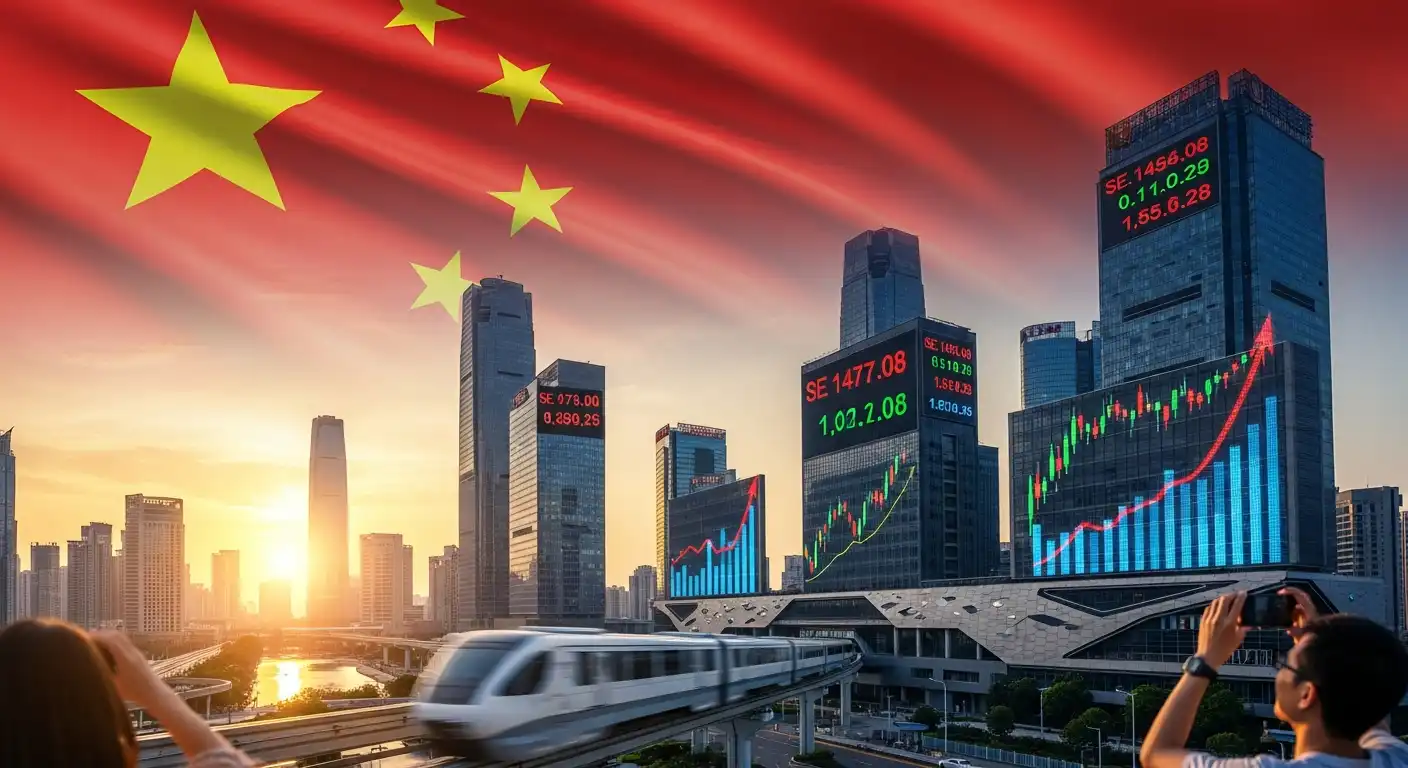
China to Host 2026 World Artificial Intelligence Conference (WAIC) and the High-Level Meeting on Global AI Governance in Shanghai this July, marking a pivotal moment in the accelerating battle to define the rules of the road for the intelligent era. Zhou Haibing, the deputy head of the National Development and Reform Commission (NDRC), announced the upcoming summit during a high-profile press conference in Beijing. The massive conference arrives at an incredibly tense moment in global technology relations, as national governments increasingly treat advanced software models as critical national security assets and seek to restrict cross-border collaboration.
The Beijing administration intends to use the prestigious Shanghai summit as a major platform to champion its own vision of multilateral, inclusive, and UN-centered global technology governance. Zhou emphasized that managing artificial intelligence risks is a common, highly urgent issue that bears directly on the shared future of humanity. He asserted that the country firmly upholds the principles of openness and inclusiveness, actively contributing homegrown solutions to establish a balanced international regulatory framework that respects the sovereignty and development rights of all participating nations.
The upcoming July summit occurs against the backdrop of a deepening technological Cold War between Washington and Beijing. Just recently, the U.S. Department of Commerce implemented unprecedented, highly disruptive export controls that ordered AI giant Anthropic to suspend all foreign national access to its newly launched Claude Fable 5 and Claude Mythos 5 models. This unilateral ban, which effectively locked out European and Asian researchers overnight, has triggered widespread alarm globally. By hosting a major international summit on global governance, Beijing wants to offer a highly visible, multilateral alternative to Washington’s restrictive, border-based technology policies.
The Shanghai conference will directly advance the principles outlined in the Global AI Governance Initiative, which the Chinese government originally introduced at the Belt and Road Forum in October 2023. This policy framework advocates for a highly democratic, people-centered approach that prioritizes “AI for good” while actively opposing any attempts to use technology to maintain geopolitical hegemony or enforce digital blockades. State planners argue that all nations, regardless of their economic or military strength, must have an equal voice in drafting international standards for risk prevention, data privacy, and algorithmic transparency.
Beyond high-level diplomatic discussions, the massive exhibition halls in Shanghai will showcase China’s rapid progress in bridging the gap between digital reasoning and physical action. Attendees expect major domestic tech champions, including Alibaba, Tencent, Baidu, and Huawei, to unveil their latest breakthroughs in “embodied AI” and bipedal robotics. The exhibition will likely focus on Alibaba’s newly launched Qwen Robot Suite—a three-tiered vision, navigation, and manipulation model designed specifically to power physical robots—alongside Unitree’s highly agile humanoid systems and custom AI silicon from local designers.
A state-guided campaign to build out a self-sufficient local hardware supply chain supports this domestic technology boom. As U.S. chip bans restrict access to foreign graphics processors, Chinese cloud operators and state-funded data centers are actively phasing out imported hardware. This domestic substitution cycle allowed local chip designers to capture a massive 41% of China’s total AI accelerator server market last year. The upcoming conference will provide a major showcase for these homegrown processors, including the advanced Zhenwu M890 chips from Alibaba’s semiconductor subsidiary, T-Head, proving that the local ecosystem can survive independently of Western hardware.
To ensure these data-driven technological advancements do not lead to systemic disruptions, the summit will feature dedicated panels focused on joint regulatory cooperation and safety risk prevention. Zhou confirmed that the host nation remains deeply committed to fulfilling its responsibilities as a major country by actively exploring cooperative frameworks for AI regulation. He noted that the Department of War and other regulatory bodies will work closely with international partners to manage potential safety risks, prevent algorithmic bias, and establish clear guidelines to govern the deployment of autonomous systems in high-risk areas.
The choice of Shanghai as the host city highlights the municipal government’s long-term ambition to establish itself as the premier high-tech gateway for the Asia-Pacific region. The local government has rolled out a series of supportive guidelines and tax incentives to build out its artificial intelligence and semiconductor packaging industries. By coordinating these regional efforts with national ministries, the city wants to construct a highly resilient digital economy. The upcoming July summit will provide local startups and academic institutes with a direct opportunity to pitch their innovations to international venture capital funds and build global partnerships.
The historic gathering in Shanghai marks a permanent turning page for global technology governance and the future of international cooperation. By successfully choosing a path of open, multilateral dialogue over unilateral borders and technological blockades, the host nation is attempting to build a highly sustainable framework for the intelligent era. As the formal sessions prepare to kick off next month, the success of the summit will determine whether the international community can successfully coordinate its safety standards to protect human prosperity or if the technological divide will continue to fracture the global digital economy.