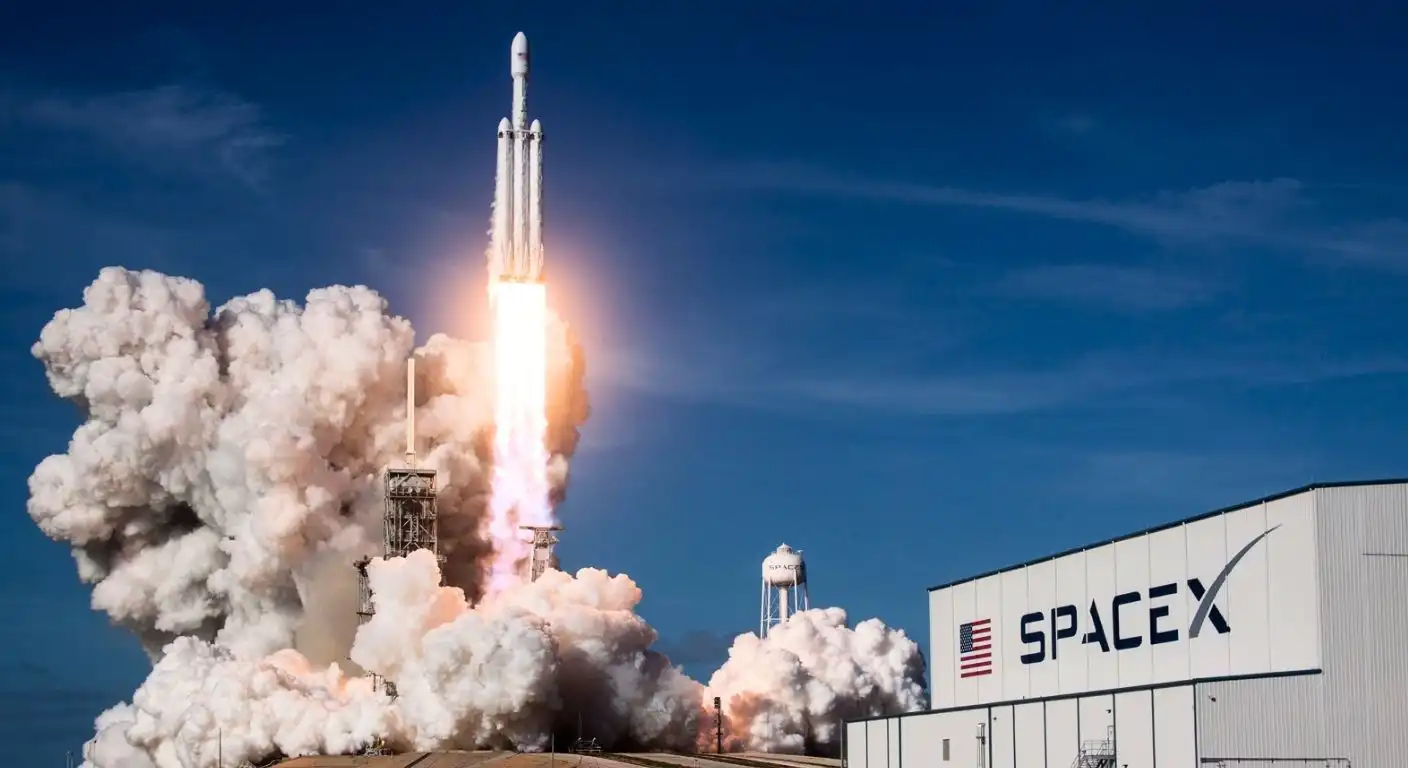
The financial curtain surrounding the most closely guarded corporate capital structures has officially lifted. In mid-August 2026, the second-quarter 13F filing season pulled back the veil on the ownership of Space Exploration Technologies Corporation, widely known as SpaceX. The regulatory disclosures submitted to the Securities and Exchange Commission have revealed a stunning reality: the rocket and satellite giant is backed by some of the most prominent, influential institutions in global finance, academia, and technology, with Google, Nvidia, AMD, and Harvard University all disclosing multi-billion-dollar stakes.
This unprecedented level of visibility arrives at a highly sensitive time for the recently listed aerospace leader. On August 6, 2026, the company’s first major post-initial public offering share lockup expired, legally freeing up to 911.5 million insider-held shares valued at approximately $105 billion. While public markets initially braced for a massive wave of insider selling that could crash the stock, the share price demonstrated remarkable resilience, holding above its $135 IPO price and proving that the largest shareholders are choosing to hold their positions for long-term growth.
The disclosure of these massive institutional positions has completely changed the market narrative. SpaceX is no longer being analyzed merely as a speculative rocket startup or a niche satellite provider. Instead, the company has established itself as an indispensable, systemically important technological utility. Backed by the deepest pockets on Wall Street and the world’s most elite research institutions, the company’s physical infrastructure is transforming into a primary asset class of the digital age.
Harvard’s Blockbuster $2 Billion Disclosure
The most surprising and highly discussed disclosure in the recent 13F filing window came from the world’s most famous academic endowment. Harvard Management Company, which manages Harvard University’s multi-billion-dollar wealth, revealed an extraordinary investment in the newly listed aerospace giant.
Dominating the Ivy League’s U.S. Equity Portfolio
According to Harvard’s regulatory filing, the university’s endowment held a staggering $2.2 billion stake in SpaceX at the end of the second quarter, comprising approximately 12.94 million shares of the company’s stock.
This massive position is not just a minor portfolio hedge; it represents more than half of Harvard’s entire reported U.S. equity portfolio.
The concentration of wealth in a single company is unprecedented for a highly conservative, Ivy League endowment. By making SpaceX its single largest public equity holding by a wide margin, Harvard Management Company is signaling to the global investment community that it views the commercial space and satellite sectors as highly stable, long-term compounders.
The cash flows generated by the company’s global satellite internet constellation, Starlink, offer the steady, predictable inflation-adjusted returns that university endowments need to support their academic budgets, turning a high-tech rocket builder into a premier defensive utility.
The Strategic Shift of Academic Capital to Aerospace Assets
The massive scale of Harvard’s position has forced other institutional fund managers to re-evaluate their asset allocation strategies. Historically, university endowments invested primarily in low-risk government bonds, real estate, and diversified blue-chip mutual funds.
Today, however, the rapid acceleration of the digital economy has forced these institutional pools to seek out alternative assets that can provide structural growth.
By committing over $2 billion to SpaceX, Harvard is proving that the physical infrastructure of the modern age—the launching pads, the low-Earth-orbit satellites, and the global communication networks—has become a vital, non-negotiable component of any long-term wealth preservation strategy.
This academic endorsement provides the company with immense institutional credibility, helping to anchor its stock price during periods of public market volatility.
Google, Nvidia, and AMD: Big Tech’s Massive SpaceX Footprint
While Harvard leads the academic backing, the world’s largest technology corporations have also disclosed massive, multi-billion-dollar holdings on SpaceX’s capital table, demonstrating how deeply the aerospace giant has integrated itself into the global technology ecosystem.
Google’s Ninety-Four Billion Dollar Legacy Holding
The largest institutional shareholder of SpaceX by a wide margin is Google’s parent company, Alphabet Inc. According to the company’s Form 10-Q filing, Alphabet disclosed owning a massive block of 551.2 million Class A shares, carrying an extraordinary valuation of approximately $94.2 billion at the end of the second quarter.
This massive holding is the result of an extraordinarily successful, decade-long corporate investment. In January 2015, Google and investment giant Fidelity together poured $1 billion into the young company, with Google contributing approximately $900 million. At the time, the space startup was valued at a modest $12 billion to $15 billion.
By holding onto its shares through the company’s massive growth phase and its subsequent $86 billion June 2026 initial public offering, Alphabet has realized an extraordinary 100-fold return on its initial investment, marking one of the most successful venture investments in corporate history.
Nvidia and AMD Partnering in the High-Altitude Compute Layer
The 13F filing season also revealed that leading semiconductor designers Nvidia Corporation and Advanced Micro Devices have secured direct equity stakes in the company.
While these chipmakers are traditionally viewed as competitors in the silicon market, their shared investment in SpaceX highlights a highly strategic, technological alignment.
SpaceX’s rapidly growing Starlink constellation and its newly constructed artificial intelligence infrastructure division rely heavily on high-end processing chips to manage real-time satellite communication, optimize data routing, and process massive geospatial datasets.
By holding equity stakes in the aerospace leader, these chip designers are ensuring that their hardware remains tightly integrated with the world’s most advanced satellite network, securing a vital, high-altitude compute layer that will power the global communication networks of the next century.
The Mechanics of the Ninety-Six Percent Lockup and the August Sixth Unlock
The disclosure of these massive institutional holdings occurred exactly as the company navigated its first major post-IPO share unlock on August 6, 2026, which represented a critical test of market liquidity.
Decoupling the Legal Release from Immediate Sellability
During the initial weeks following its June listing, SpaceX operated on a highly restricted public float. To protect the stock price from immediate volatility, the company’s underwriters locked up approximately 96% of the total outstanding shares, making only a tiny fraction of the stock available for public trading.
When the first major lockup expiration arrived on August 6, making up to 911.5 million shares legally eligible for sale, many retail traders feared that a massive wave of insider dumping would crash the stock below its $135 IPO price.
However, the stock defied these bearish expectations, rising over 5% on the unlock day and continuing to rally over the following sessions.
As market analysts pointed out, the legal release of the shares did not translate into an immediate logistical supply.
Under the company’s complex, multi-layered ownership structure, only about 20% of the newly eligible shares (approximately 182 million) were actually free to trade on day one, with the remaining shares tied up in administrative transfers and employee clearing accounts, preventing any sudden, disorderly selling pressure.
The Staggered Unlock Schedule Extending to June 2027
To prevent a massive, sudden market overhang from artificially depressing the stock price, the company’s underwriting syndicate designed a highly structured, staggered unlock schedule.
Rather than releasing all insider shares on a single day, the restrictions will continue to lift gradually in seventeen separate tranches over the next several months.
This staggered structure ensures that the market has ample time to absorb the newly available supply.
Furthermore, the most significant milestone on the horizon is scheduled for June 2027, which is when the lockup restrictions expire on Elon Musk’s personal holding of 6.42 billion shares.
By keeping the vast majority of the company’s shares restricted through a multi-stage schedule, the underwriters have successfully neutralized the threat of insider dumping, allowing long-term institutional buyers to accumulate shares gradually and support the stock’s transition to a highly stable, high-volume trading asset.
Evaluating the Financial Foundation: Starlink’s Profitable Connectivity Shield
The resilience of the stock during the historic share unlock is also supported by the company’s exceptional second-quarter financial performance, which proved that the business has built a highly robust, cash-generative foundation.
Starlink’s Operating Income Offsetting Launch and AI Losses
For the second quarter, SpaceX reported that its total revenue rose to a robust $7.81 billion, comfortably beating consensus Wall Street estimates.
The star performer of the quarter was the Connectivity (Starlink) division, which includes consumer broadband, enterprise satellite contracts, and specialized Starshield national security services.
The Connectivity division generated an extraordinary $1.656 billion in operating income during the quarter. This robust cash generation was enough to offset more than 92% of the combined $1.799 billion in operating losses from the Space Exploration (launch) and Artificial Intelligence divisions.
While the company continues to spend heavily to develop its massive Starship launch system and build out high-performance AI data centers, the steady, recurring subscription revenues from its global satellite network are providing a powerful financial shield, ensuring the company can fund its long-term research programs without needing to borrow heavily or dilute its shareholders.
The Bullish Target Prices of Morgan Stanley and UBS
Following the stellar earnings report and the successful navigation of the first share unlock, prominent Wall Street research shops issued highly bullish updates on the stock.
Morgan Stanley reiterated its Overweight rating and a $300 target price under its long-term bull case, while UBS maintained a Buy rating and a $210 target price.
Both firms highlighted that Starlink is currently on the cusp of a major growth inflection, fanned by the upcoming deployment of its next-generation V3 satellites.
These advanced satellites will deliver direct-to-cell capabilities and significantly higher data throughput, allowing the company to capture a massive share of the global mobile communications market.
For institutional investors, this long-term growth potential, combined with the company’s absolute monopoly over global rocket launch services, makes SpaceX a highly unique, defensive growth asset, justifying their multi-billion-dollar investments and securing the company’s place at the absolute peak of the global technology landscape.
Securing the Legacy of Global Innovation
The completed publication of the second-quarter 13F filings represents a historic turning point for the global investment community. By revealing that major institutions like Harvard University, Google, and Nvidia hold massive, multi-billion-dollar stakes in the company, the regulatory disclosures have permanently changed the market’s perception of SpaceX.
The successful navigation of the first major share unlock on August 6, combined with Starlink’s exceptional $1.656 billion in quarterly operating income, proved that the company’s physical and digital networks are built on a highly resilient, cash-generative foundation.
As the staggered lockup schedule continues to expand the public float, and as the company prepares to scale its next-generation V3 satellite network, this massive concentration of institutional capital will ensure that the aerospace giant remains well-capitalized and secure.
The historic disclosures of 2026 have permanently anchored the future of global innovation in the physical, real-world assets of space and connectivity, ensuring that SpaceX will continue to serve as the undisputed leader of the global digital economy for decades to come.