

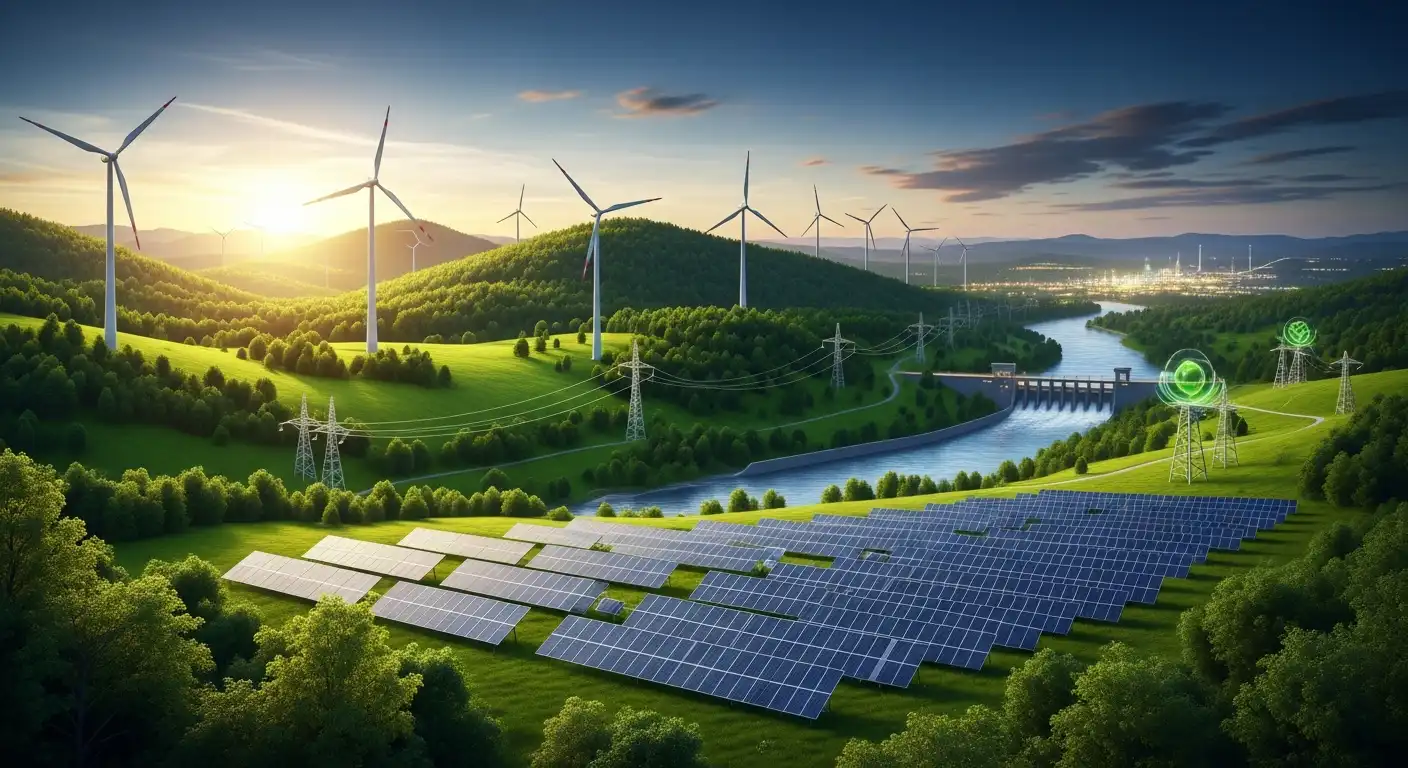
The geopolitical and industrial coordinates of the clean energy transition have shifted permanently. In August 2026, the Canadian federal government joined forces with the provincial leadership of Quebec and Newfoundland and Labrador to announce a monumental energy pact. The signing of the Definitive Cooperation and Implementation Agreement marks a historic milestone in resource development, establishing a unified, multi-billion-dollar framework to completely redevelop and expand the Churchill Falls and Gull Island hydroelectric projects in the remote wilderness of Labrador.
The total scope of the combined investments, which include massive hydro, onshore wind, and transmission developments, is valued at nearly $70 billion. Described by Prime Minister Mark Carney as the largest clean energy investment in North American history, the mega-deal will nearly triple the current generating capacity of the Churchill River basin, providing enough zero-emission electricity to power, heat, and cool the homes of Toronto, Montreal, and Vancouver combined.
The historic pact represents a major, long-sought triumph for the people of Newfoundland and Labrador, who have spent nearly sixty years living under the shadow of a deeply lopsided, post-colonial energy contract. By replacing the notorious 1969 Churchill Falls agreement, which saw Quebec capture the vast majority of the profits from one of the continent’s largest power assets, the new deal ensures that Newfoundland will finally become the primary beneficiary of its own resources. The agreement also provides Hydro-Québec with the massive, secure baseload power it needs to fuel its own domestic industries and support clean energy exports to the northeastern United States.
The Core of the Payout: Forty-Nine Billion Dollars in Net Present Value
The financial framework of the newly announced Definitive Cooperation and Implementation Agreement represents an extraordinary scale of capital mobilization, designed to maximize the economic returns of both provinces while protecting the long-term interests of local taxpayers.
Breaking the Thirty-Six Billion Dollar Barrier of the 2024 MOU
Under the terms of the new agreement, the total financial benefit to the province of Newfoundland and Labrador has been calculated at an extraordinary $49 billion in Net Present Value (NPV). This represents a massive, multi-billion-dollar increase from the $36 billion estimated in the non-binding Memorandum of Understanding signed between the two provinces in December 2024.
The previous 2024 agreement, negotiated under former leadership, fell apart when Premier Tony Wakeham took office in October 2025. Wakeham rejected the MOU as structurally inadequate, arguing that it failed to provide the people of Newfoundland and Labrador with fair value or complete sovereignty over their resources. He sent negotiators back to the table, forcing a fresh round of high-stakes, tense discussions. The resulting $49 billion deal represents a major victory for Wakeham’s cabinet, proving that the province can successfully demand more value, more power, and more control over its physical wealth.
Unlocking the Ten-Billion-Dollar Federal Financing Envelope
To help both provinces bridge their massive capital investment requirements and reduce the financial risk of constructing these immense, remote energy facilities, the Canadian federal government has stepped in as an active financial partner. Prime Minister Mark Carney announced that Ottawa is committing up to $10 billion in clean energy financing and debt guarantees to support the projects.
This federal support is critical, as constructing advanced run-of-river generating stations and long-distance transmission lines in the subarctic terrain of Labrador is exceptionally expensive, requiring billions of dollars in upfront capital.
By having the federal government guarantee the financing for the massive Gull Island project, the developers can secure the required credit lines at highly competitive interest rates.
Furthermore, the federal package includes up to $6.5 billion in direct, non-governance investments through the Canada Growth Fund, ensuring that the project can scale up quickly to meet the country’s national decarbonization goals, where even a 1.5% margin improvement can yield massive savings.
Powering the East Coast Grid: Ten Gigawatts of Clean Energy
The physical and electrical scale of the proposed projects is almost unprecedented, representing a massive technological expansion that will double Hydro-Québec’s current import capabilities and provide a secure, low-cost source of electricity for the entire eastern seaboard.
Tripling Churchill Falls and Developing Gull Island
The core of the physical development plan focuses on two major hydroelectric sites along the Churchill River in Labrador. The agreement secures access to a total potential of over 10,000 megawatts (10 gigawatts) of clean, reliable electricity for Hydro-Québec—equivalent to doubling its current imports from the region.
The project incorporates several key engineering components:
- Churchill Falls Upgrades: Upgrading the 11 existing turbine-generator units at the base power plant, which will increase its capacity by approximately 550 megawatts, with a further 1,100-megawatt plant extension planned for 2035.
- Gull Island Power Plant: Constructing a brand-new, 2,250-megawatt run-of-river power station at Gull Island, with commissioning planned for 2034.
- Firm Power Security: Out of the 10,000 MW total potential, 6,915 MW is secured as firm, continuous baseload power, providing Hydro-Québec with a highly stable energy portfolio to support its domestic grid for the next 50 years.
The cost of this electricity has been set at a highly competitive, fixed rate of just 6¢ per kilowatt-hour, representing a massive saving compared to other clean energy alternatives.
With projected generation costs for new projects expected to surpass 17¢/kWh after 2035, securing 10 gigawatts of power at 6¢/kWh is an extraordinary financial victory for Hydro-Québec, ensuring that it can continue to deliver North America’s cheapest electricity to its domestic consumers.
The Two-Thousand-Megawatt Onshore Wind Expansion
In a major addition to the previous 2024 MOU, the new agreement also incorporates a massive, federally backed 2,000-megawatt onshore wind energy project in Labrador. This wind expansion represents a highly strategic attempt to diversify the region’s renewable energy mix.
Under the terms of the deal, the federal government will invest directly in the construction of the wind project, with the exact location currently under study by Newfoundland and Labrador Hydro.
The agreement specifies that Newfoundland and Labrador will receive an additional 400 megawatts of power directly from this wind project.
Combined with the 360 megawatts of additional hydropower secured under the new deal, the province will receive a total of 760 megawatts more overall power than was promised in the original 2024 MOU, giving it the necessary energy reserves to support massive industrial developments, including critical mining projects in the Labrador Trough.
Turning the Page on the Darkest Chapter: Redesigning the 1969 Power Contract
The primary significance of the new agreement is its ability to finally resolve a decades-long, highly bitter geopolitical feud between Quebec and Newfoundland and Labrador, which has fanned generations of resentment and political bad blood.
Resolving the Decades-Long Feud and the 150 Percent Pricing Premium
The dispute dates back to the notorious 1969 Churchill Falls Power Contract. Under that 50-year agreement, which runs until 2041, Newfoundland and Labrador was forced to sell almost all of the power generated by Churchill Falls to Hydro-Québec at a fixed, rock-bottom price that was never adjusted for inflation.
While Hydro-Québec reaped billions of dollars in profits by selling this cheap electricity to domestic consumers and exporting it to the United States, Newfoundland was left with virtually zero financial return from its own resource.
The new agreement permanently turns the page on this dark chapter, replacing both the 1969 contract and the 2024 MOU with a highly equitable, modern partnership.
Newfoundland and Labrador will maintain complete optionality in how its allotted power from the base plant is deployed, with the choice to either keep the power for its own industrial development or sell it back to Hydro-Québec.
If the province chooses to sell its power, Hydro-Québec has agreed to purchase the electricity at an extraordinary 150 percent price premium over the base PPA prices, ensuring that Newfoundland finally receives fair value for its resources.
Securing Crucial Transmission Rights to New York and Massachusetts
The second major victory for Newfoundland and Labrador is the inclusion of secure transmission rights through Quebec’s high-voltage power grid. Historically, Quebec’s monopoly over the only transmission lines connecting Labrador to the rest of North America prevented Newfoundland from exporting its power directly to lucrative markets in the United States.
Under the new agreement, Hydro-Québec has agreed to allow its neighbor to utilize its extensive high-voltage transmission lines to export up to 985 megawatts of surplus power directly to key markets in New England and New York.
This access represents a massive strategic breakthrough, allowing Newfoundland to bypass the Quebec monopoly and sell its clean energy directly to high-paying American buyers, providing the province with an independent, multi-billion-dollar source of export revenue.
The Impending Election and the Fragility of the Deal
While the announcement of the $70 billion energy agreement represents a major triumph for all three governments, political analysts warn that the deal remains a non-binding agreement in principle, and its final implementation faces significant political hurdles over the coming months.
The agreement specifies that negotiators have until March 31, 2027, to hammer out the final, legally binding definitive agreements.
However, the political calendar in Quebec could easily complicate this timeline.
Quebec Premier Christine Fréchette must call a provincial election by October 5, 2026, and the upcoming campaign has introduced an immense layer of uncertainty into the deal.
The leading opposition party in Quebec, the Parti Québécois, has already expressed strong opposition to the agreement, criticizing the 150% price premium and the transmission concessions as an unnecessary giveaway that harms Quebec’s financial interests.
Fréchette’s Coalition Avenir Québec government remains committed to implementing the deal, arguing that the province desperately needs the 10 gigawatts of reliable energy to support its own transition away from fossil fuels, but if a new, more nationalistic government takes power in October, it could easily tear up the non-binding agreement.
Newfoundland Premier Tony Wakeham has acknowledged this risk, stating that he cannot control what happens in Quebec but remains confident that the “win-win-win” nature of the deal will ultimately convince any future government to support its execution.
Reorienting the North American Grid
The completed signing of the non-binding Churchill Falls agreement represents a landmark milestone in the history of North American energy development. By committing to a massive, $70 billion clean energy investment program featuring over 10 gigawatts of hydro and wind power, the governments of Canada, Quebec, and Newfoundland and Labrador have built an unassailable baseline for the continent’s green transition.
While the upcoming provincial election in Quebec and the March 2027 definitive agreement deadline introduce significant near-term political risks, the strategic and economic benefits of the deal are immense.
The agreement permanently turns the page on decades of bitter, post-colonial division, providing Newfoundland with a historic $49 billion net present value payout and direct transmission access to the United States, while securing a reliable, low-cost source of clean electricity for Hydro-Québec.
By combining federal capital, provincial resources, and advanced engineering, the partners are constructing the largest clean energy project in North American history, ensuring that the physical systems of the net-zero era can successfully power, heat, and cool the continent’s major capitals for the next fifty years.






