As your business scales, the cracks in your entry-level accounting software begin to show. The manual consolidations, the endless spreadsheet exports, and the lack of real-time visibility that were once minor annoyances become major operational bottlenecks. This is the precise moment when finance teams start searching for a true financial management system, and Sage Intacct is consistently at the top of that list.
Endorsed by the AICPA, Sage Intacct is not just another accounting package; it is a cloud-native, best-in-class financial platform designed for modern, service-based organizations. In this review, we’ll dive deep into its core features, its unique “best-in-class” philosophy, and its ideal user profile to help you determine if this is the ERP to power your company’s next stage of growth.
What is Sage Intacct?
Sage Intacct is a cloud-native Enterprise Resource Planning (ERP) and financial management software designed for small to mid-sized businesses. Unlike traditional ERPs that try to be a jack-of-all-trades, Intacct focuses on being a master of one: financials. It provides deep, sophisticated accounting capabilities, from multi-entity consolidations to automated revenue recognition, all delivered through a modern web browser.
As the first and only financial management solution endorsed by the American Institute of Certified Public Accountants (AICPA), it carries a seal of approval that speaks to its robustness and compliance. It is built for dynamic, growing organizations—particularly in sectors like SaaS, non-profits, professional services, and healthcare—that have outgrown the limitations of QuickBooks but don’t need the manufacturing and inventory complexity of a massive Tier 1 ERP.
Key Features and Capabilities
Sage Intacct’s architecture is built around providing finance teams with automation, visibility, and control. The platform’s core strengths lie in its ability to handle complex accounting scenarios with ease, freeing up your team from manual data entry to focus on strategic analysis.
Core Financials and a Dimensional General Ledger
The foundation of Intacct’s power is its innovative general ledger. Instead of a rigid, hard-coded chart of accounts, Intacct uses “dimensions” to tag transactions, allowing you to slice and dice your financial data in virtually unlimited ways without cluttering your GL.
- Multi-Dimensional Reporting: Tag transactions by project, department, location, employee, or any custom dimension to get granular, real-time insights.
- Automated Processes: Streamline accounts payable, accounts receivable, and cash management with intelligent workflows and approvals.
- Continuous Close: Get a “soft close” at any point during the month, eliminating the chaotic month-end scramble for financial data.
Multi-Entity and Global Consolidations
For organizations with multiple business units, subsidiaries, or international operations, Sage Intacct is a game-changer. It was built from the ground up to handle the complexities of a multi-entity structure, automating processes that would otherwise take days of spreadsheet work.
- Push-Button Consolidations: Consolidate hundreds of entities with different currencies and fiscal periods in minutes, not days.
- Automated Inter-Company Transactions: Eliminate the manual reconciliation of transactions between your different business units.
- Centralized Control: Manage payables and receivables centrally while giving local entities the autonomy they need to operate.
Real-Time Reporting and Dashboards
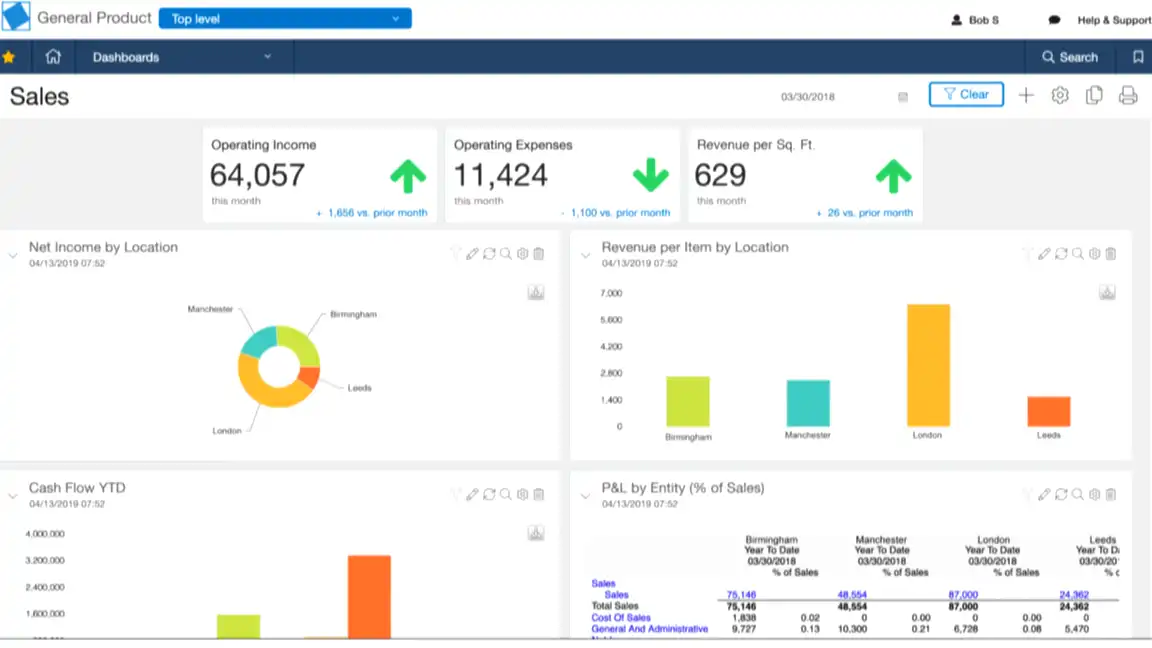
One of Intacct’s most celebrated features is its ability to deliver real-time, actionable data to the people who need it. The reporting engine is powerful and flexible, allowing you to build custom reports and role-based dashboards without needing an IT specialist.
- Role-Based Dashboards: Provide every user—from the CFO to the project manager—with a customized view of the KPIs that matter to them.
- Drill-Down Capabilities: Start with a high-level KPI on a dashboard and click all the way down to the source transaction document.
- Financial and Operational Data: Combine financial data with operational metrics (e.g., SaaS churn rates, billable hours) for a complete view of business performance.
Usability and Interface
As a modern cloud application, Sage Intacct’s interface is clean, browser-based, and organized around user roles. The dashboard is the central hub of the user experience, designed to present a “single source of truth” with graphical charts, performance cards, and reports.
While the day-to-day navigation is intuitive for finance professionals, it is important to note that the initial setup and configuration are not DIY projects. Implementing Intacct correctly requires a deep understanding of accounting principles and the system’s architecture, which is why it is sold and implemented through a network of certified partners.
The “Best-in-Class” Philosophy
Unlike all-in-one ERP suites that try to handle every business function (often with mediocre results), Sage Intacct subscribes to a “best-in-class” approach. It focuses on providing world-class financial management and encourages users to integrate it with other best-of-breed solutions via its open API.
This means you can connect Intacct seamlessly with your existing systems, creating a customized tech stack that fits your business perfectly.
- CRM: Deep, bi-directional integration with Salesforce is a hallmark of the platform.
- Payroll: Connects with leading providers like ADP and Paychex.
- Budgeting & Planning: Integrates with dedicated Corporate Performance Management (CPM) tools.
Pros and Cons
Sage Intacct is a formidable financial platform, but its focused nature means it is not the right fit for every type of business. It is crucial to weigh its deep accounting prowess against its deliberate lack of certain operational modules before making a decision.
Pros:
- Deep Accounting Functionality: The dimensional GL and multi-entity capabilities are unmatched in the mid-market.
- AICPA Endorsement: Provides unmatched credibility and assurance for finance and accounting professionals.
- Real-Time Visibility: The reporting and dashboard engine is powerful, flexible, and delivers instant insights.
- Open API: The best-in-class approach allows you to build a tech stack that works for you without being locked into a single vendor.
Cons:
- Not an All-in-One ERP: Lacks native modules for manufacturing, advanced inventory, and supply chain management.
- Complex Pricing: Pricing is quote-based and can be complex, often requiring a significant investment.
- Requires an Implementation Partner: You cannot simply buy it online and set it up yourself; a partner is essential for a successful rollout.
Who is Sage Intacct Best For?
Sage Intacct excels in service-based industries where the core operational challenge is financial complexity rather than physical inventory. It is the ideal solution for organizations that are experiencing rapid growth and hitting the limits of their current accounting software.
Here are the specific profiles that will get the most value out of Sage Intacct:
- Organizations Outgrowing QuickBooks: Companies that need multi-entity, multi-currency, and sophisticated reporting capabilities.
- SaaS and Subscription Businesses: With its powerful revenue recognition and contract management modules.
- Non-Profits and Foundations: With strong fund accounting, grant management, and compliance features.
- Professional Services: Project-based businesses that need to track time, billing, and project profitability in real-time.
Conclusion
Sage Intacct is a top-tier financial management platform that delivers on its promise of providing automation, insight, and control to modern finance teams. It is not trying to be the one-stop-shop ERP for every business, and that is its greatest strength.
If your business is a manufacturing or distribution company with complex inventory needs, you may need a more traditional ERP. However, if you are a growing, multi-entity, service-based organization drowning in spreadsheet consolidations and manual processes, Sage Intacct is arguably the best cloud financial system on the market today.