

Key Points:
- Linkerbot wants to reach a $6 billion valuation in its next funding round to expand operations.
- The two-year-old company currently controls more than 80% of the global robotic hand market.
- Factories will soon double production to build exactly 10,000 robotic hands every single month.
- Manufacturers attach these dexterous hands to existing factory arms to save hundreds of thousands of dollars.
Chinese robotics startup Linkerbot wants to double its overall worth in the near future. The Beijing company designs and builds highly complex robotic hands for humanoid machines. Executives announced they will seek a massive $6 billion valuation during their next round of funding. This bold goal comes right after the company finished a successful funding round last week. That recent investment valued the young startup at exactly $3 billion. The company did not reveal exactly when they will launch the new funding round or if they plan to go public on the stock market.
The two-year-old tech unicorn has already attracted some heavy hitters in the financial world. Early supporters include Alibaba spin-off Ant Group and the famous HongShan Group. During the latest funding event, major state-backed players joined the team. The Zhongguancun Science Park Fund, Bank of China Asset Management, and Fosun Capital all threw money behind the robotic hand maker. These powerful investors see massive potential in a company that currently dominates its specific niche.
Right now, Linkerbot holds an incredible 80% share of the global market for high-degree-of-freedom robotic hands. Chief Executive Officer Alex Zhou wants to push that advantage even further. He told reporters that his company plans to double its manufacturing output very soon. Currently, the company produces almost 5,000 robotic hands every month. Zhou expects that number to jump to 10,000 units a month as demand continues to explode across the industrial sector.
Investor interest in the Chinese humanoid robotics industry reached new heights this year. Competitors like Unitree recently showcased their own staggering technological advances on national television. Unitree even filed for a public stock offering in March, asking for a $7 billion valuation. However, Linkerbot takes a very different approach than its rivals. While other companies try to build robots that fold laundry or do simple household chores, Linkerbot focuses entirely on high-value human craftsmanship.
Zhou explained that his team does much more than just manufacture plastic and metal fingers. They want to capture and replicate the entire library of complex human skills. To do this, the company created a special software platform called LinkerSkillNet. Zhou claims this system holds the largest real-world manipulation dataset on the planet. The platform records human movements and converts them into reusable software code. So far, the system has learned and mastered more than 500 distinct physical skills.
The complexity of a human hand creates massive headaches for robot engineers. Georg Stieler, a technology consultant, pointed out that the hand remains the most difficult part of any humanoid machine. Even billionaire Elon Musk admitted that designing the hands for the Tesla Optimus robot took up more than half of his entire engineering team’s effort. Musk recently promised hthat is newest robot would match human dexterity, but Linkerbot has already achieved this difficult goal.
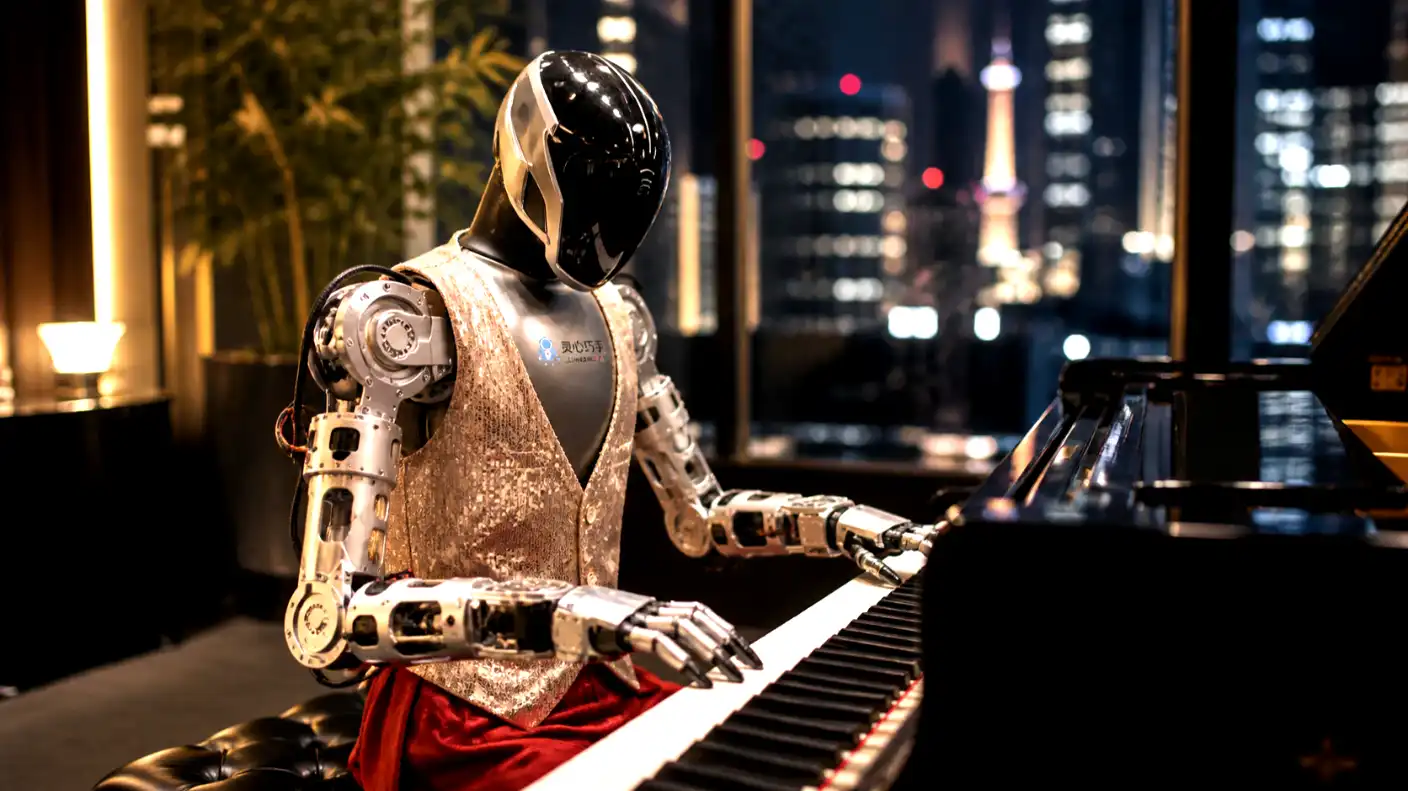
Zhou grew up watching the Japanese animated series Doraemon, about a robotic cat with an infinite supply of handy gadgets. That childhood inspiration drives his current vision for the company. He wants his robotic hands to play the piano, give deep tissue massages, and eventually perform delicate dental surgery. Zhou believes these advanced skills offer at least triple the financial value of basic factory labor.
The hardware fully supports his ambitious claims. Linkerbot hands can rapidly twist screws, pick up soft objects without crushing them, and easily thread a tiny needle. The company sells these agile hands to top humanoid robot makers and massive foreign industrial companies. A strict non-disclosure agreement prevents Zhou from naming these big clients.
The basic O6 light-weight model shows exactly why factory bosses love these products. The physical hand weighs just 370 grams, yet it can lift and carry a massive 50-kilogram load. Zhou called this extreme strength-to-weight ratio a major advantage for modern industrial applications. The company builds all the critical components inside its own factories, including the joint modules and tiny motors. Engineers use specialized self-lubricating polymers that resist chemical corrosion on the factory floor.
Linkerbot employs more than 400 workers across five different factories located in Beijing and Shenzhen. These facilities stay incredibly busy as the company expands. Engineers are currently developing new intelligent assembly lines in which robotic hands actually build other robotic hands. Beyond heavy industry, top global universities and research institutes buy these hands to run their own advanced science experiments.
A major financial roadblock stops most factory owners from buying full humanoid robots. Analysts say leading industrial models from companies like AgiBot and UBTech cost between $100,000 and $150,000 per unit. Most businesses simply cannot afford to spend that much money on a single machine. Linkerbot solves this exact problem by selling just the hands.
Zhou noted that Chinese factory owners think very practically about their money. These business leaders realized they do not need a robot with legs to handle most assembly-line work. Instead of buying an expensive full-body humanoid, they buy a pair of Linkerbot hands. They mount these nimble fingers directly onto the old robotic arms they already own. This simple trick saves them a fortune while giving them the precise dexterity they need to build modern products.






