Key Points:
- South Korean and European Union officials held their 2nd policy dialogue in Seoul to discuss global supply chain stability.
- Vice Industry Minister Moon Shin-hak asked the European Union to include Korean companies in its new Industrial Accelerator Act.
- The 2 economic powers agreed to launch new cooperation projects across 3 main sectors, including green energy and healthcare.
- South Korea highlighted the billions of dollars its companies invested in European battery manufacturing infrastructure.
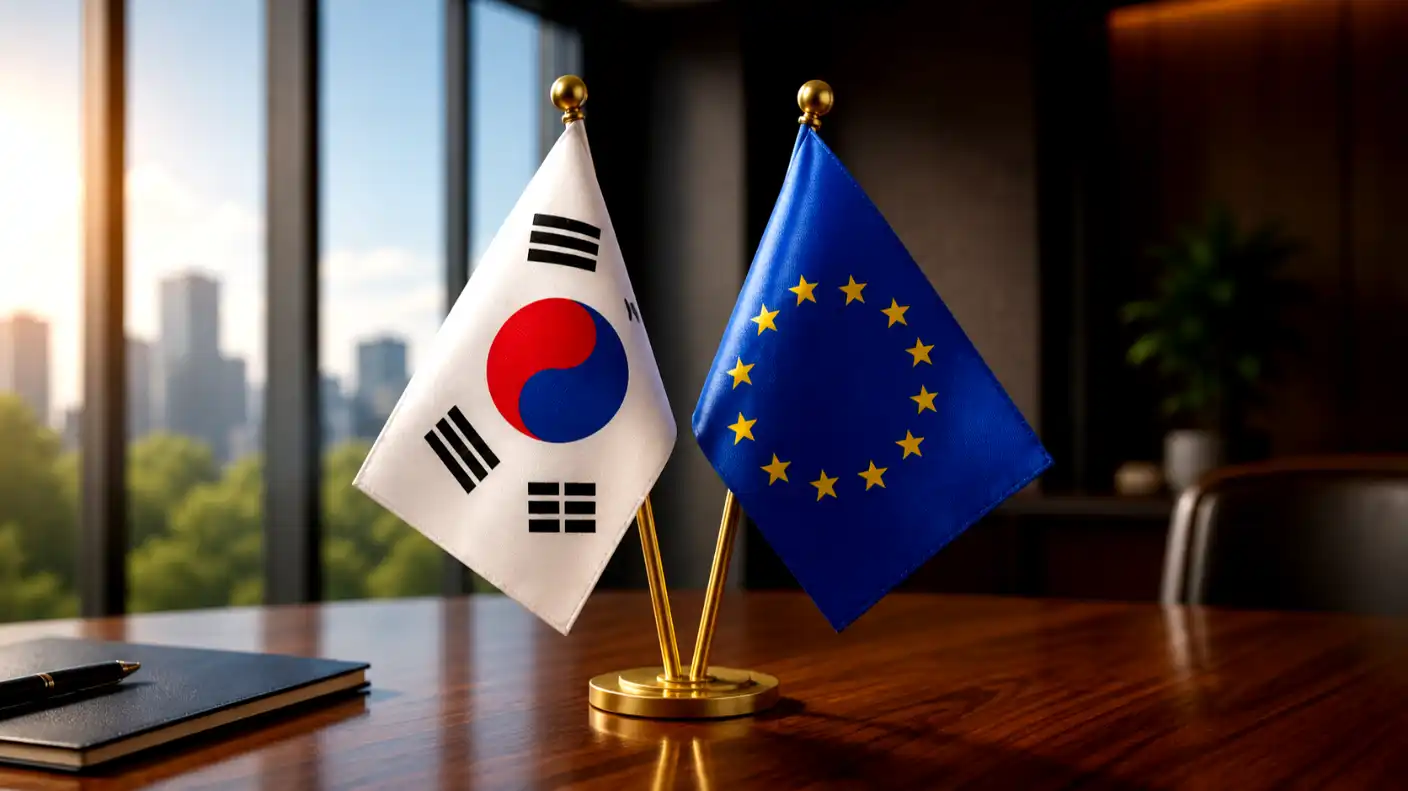
South Korea and the European Union held a major policy dialogue this Thursday in Seoul. The 2 major economic powers met to discuss new ways to deepen their bilateral supply chain cooperation. Global supply chains face massive pressure right now due to heightened geopolitical uncertainties worldwide. To protect their economies, both regions seek steady access to strategic industries and raw materials.
Vice Industry Minister Moon Shin-hak represented South Korea at the gathering. He sat down with Kerstin Jorna, who serves as the directorate-general for the internal market, industry, entrepreneurship, and small businesses for the European Union. The Ministry of Trade, Industry, and Resources hosted this important Korea-EU supply chain and industrial policy dialogue. This gathering marked exactly the 2nd official meeting of its kind between the two sides.
During the talks, the officials focused heavily on expanding bilateral cooperation across several strategic industries. They spent significant time discussing the critical minerals market and the booming battery sector. Electric vehicles and modern electronics require thousands of tons of these rare materials every single year. Both sides want to increase corporate investment between their regions to secure these resources. By encouraging companies to invest across borders, the officials hope to enhance overall supply chain stability.
These new measures will directly boost the industrial competitiveness of both South Korea and the European Union. To achieve these goals, Moon and Jorna agreed to find and fund new cooperation projects. They identified 3 primary sectors for future collaboration. These sectors include green energy initiatives, digital technology advancements, and healthcare improvements. The leaders plan to use various partnership platforms to connect their businesses. They specifically highlighted the EU Business Hub as a primary tool to launch these new joint ventures.
Despite the friendly atmosphere, the South Korean delegation brought up some serious economic concerns. Moon directly addressed his government’s concerns about a recent push by the European Union. European leaders currently want to legislate the new Industrial Accelerator Act. They designed this specific act to aggressively promote and protect products made inside the 27 member states of the European Union.
South Korean officials worry this new legislation might unfairly exclude foreign companies from the European market. Moon asked the major economic bloc to reconsider how it designs its modern industrial policies. He urged European leaders to create rules that strengthen supply chain cooperation with South Korea rather than building invisible trade walls. Moon emphasized that open trade policies will ultimately benefit both economies and keep prices low for everyday consumers.
The conversation then shifted to the highly competitive battery sector. South Korean technology companies currently operate massive factories across Europe. Moon highlighted the billions of dollars in investments that Korean firms recently poured into the regional battery manufacturing infrastructure. These massive financial commitments help Europe transition toward electric vehicles and renewable energy much faster than it could alone.
Because of these heavy investments, Moon called for the European Union to expand the role of Korean companies in future energy projects. He specifically pointed to the European Union’s upcoming battery energy storage project. South Korea wants its companies to secure a larger share of these lucrative contracts. Moon argued that giving Korean firms a fair chance at these contracts reflects their 100 percent commitment to the European market.
Moon wrapped up the dialogue by reminding the attendees of the strong bond between the two regions. He stated that South Korea and the European Union stand together as strategic partners. He noted that both sides share fundamental universal values. Moon specifically listed freedom, human rights, and the strict rule of law as the core principles that bind the 2 partners together.
Beyond shared political values, Moon pointed out the strong economic match between the two regions. He described South Korea and the European Union as natural economic cooperation partners. He believes they hold strong complementary potential, especially in advanced manufacturing industries and complex supply chain sectors. South Korea offers top-tier technology and fast production capabilities, while Europe provides a massive consumer market and strict quality standards.
Both delegations left the Thursday meeting with a clear plan for the future. They will continue to share information and align their industrial strategies. As global trade becomes more unpredictable, these regular policy dialogues help South Korea and the European Union protect their vital industries. By working together, they plan to secure their economic futures and build a more resilient global market for the next 10 years and beyond.