Key Points:
- Bangladesh’s central bank launched a 600 billion-taka ($5 billion) economic stimulus package to boost private sector business activities.
- The multi-billion-dollar program expects to create employment opportunities for more than 2.5 million people.
- The fund splits into a 410 billion-taka refinancing portion and a 190 billion-taka direct central bank support fund.
- Specific allocations target critical areas, including 200 billion taka for the closure of factories and 5 billion taka for technology startups.
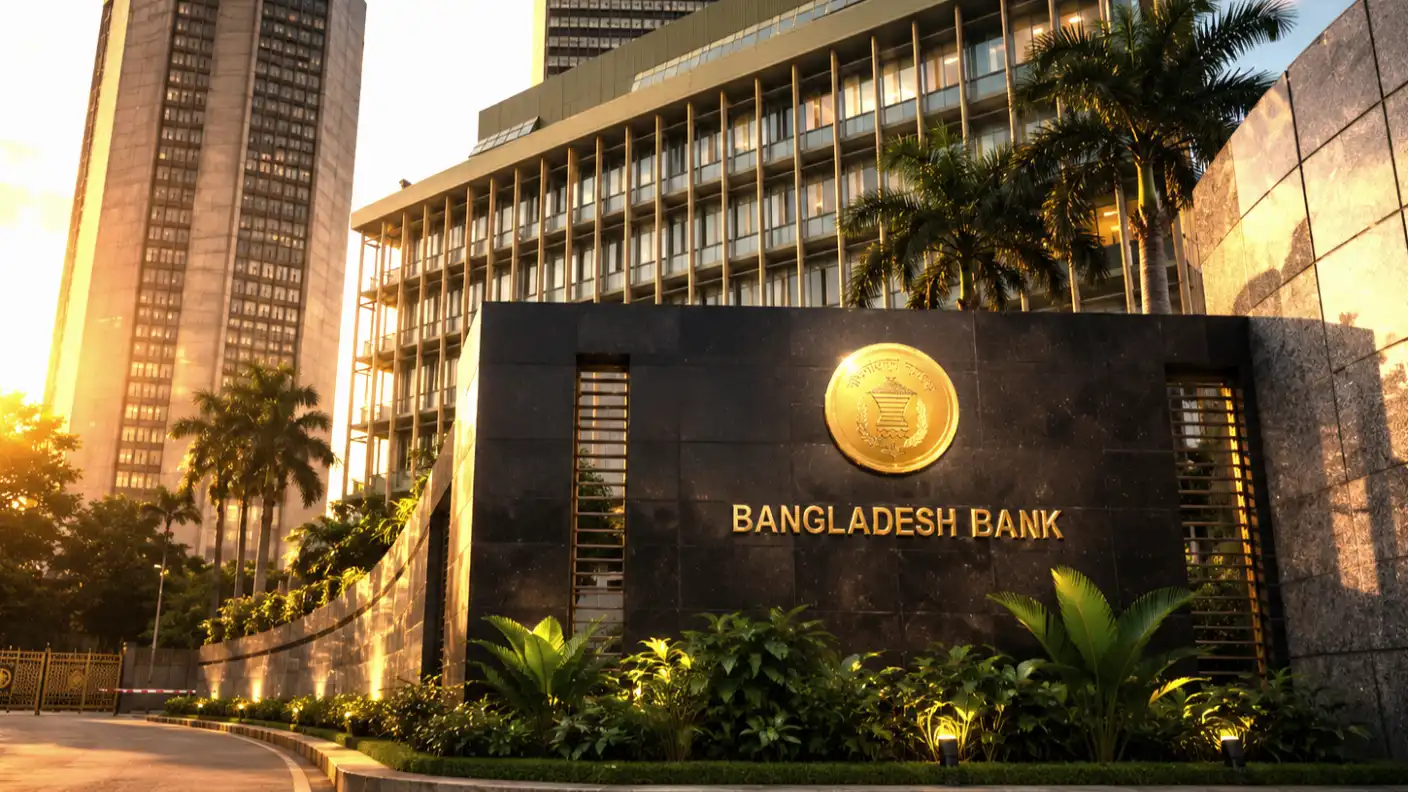
Bangladesh’s central bank has launched a massive 600 billion-taka ($5 billion) refinancing and support package to revive its slowing economy. Bangladesh Bank Governor Md Mostaqur Rahman announced the major economic stimulus package at a press conference in Dhaka on Saturday, May 23, 2026. The landmark initiative aims to restore industrial production, restart shuttered factories, support small businesses, and rebuild business confidence amidst a multi-year economic slowdown.
The central bank expects the multi-billion-dollar program to create employment opportunities for more than 2.5 million people once fully operational. Over the last three years, the nation’s economic momentum has steadily declined. Bangladesh’s gross domestic product (GDP) growth rate historically stood at 5.8% before dropping to 4.2%. Current projections indicate GDP growth will slow further to 3.7% for the current fiscal year. Severe pressure on the banking sector, rising non-performing loans, and high interest rates have discouraged small-scale entrepreneurs from expanding their businesses.
To finance this massive stimulus, Bangladesh Bank designed a two-part funding structure. The first component is a 410 billion-taka refinancing fund. The central bank will raise this money from commercial banks that currently hold excess liquidity. The regulator will secure these funds through long-term deposits of at least three years, offering banks an attractive 10% interest rate. Local banking executives noted that lending funds to the central bank through this scheme is highly profitable compared to lending in the interbank call money market, which currently yields only 4% to 5%.
The remaining 190 billion taka will come from Bangladesh Bank’s own financial reserves, backed by a formal government guarantee. This portion of the stimulus acts as a direct support fund, targeting specific high-priority areas and vulnerable sectors that commercial lending often overlooks. By combining excess commercial liquidity with the central bank’s own capital reserves, the government hopes to efficiently distribute credit across the entire economy without triggering inflation.
The central bank has mapped out exact allocations for the 410 billion-taka refinancing portion. The largest single slice of 200 billion taka will go directly toward reviving closed factories and service-sector enterprises, which officials estimate could create up to 200,000 jobs. Additionally, the agricultural sector and rural economic development projects will receive 100 billion taka. Another 50 billion taka will support cottage, micro, small, and medium enterprises (CMSMEs), while export diversification and agricultural hub developments in the country’s northern region will each receive 30 billion taka.
Meanwhile, the 190 billion-taka direct support fund targets specific export-driven and high-potential sectors. The package allocates 50 billion taka for pre-shipment credit refinance and another 50 billion taka for micro-entrepreneurs. Traditional export sectors like leather goods, frozen fish, and fish exports will each receive 20 billion taka. Crucially, the central bank has set aside 100 billion taka (or portions thereof) for specific welfare targets, including a dedicated 10 billion taka to fund green investments, overseas employment programs, and jobs for unemployed youth, to bring young professionals back into the workforce.
Technology and innovation will also receive a direct boost from the stimulus package. Bangladesh Bank has allocated 5 billion taka specifically for startups to strengthen the local technology ecosystem. This comes as a major relief to tech entrepreneurs who have struggled to secure early-stage capital amid tightening credit conditions. In addition, the central bank is providing 5 billion taka to support the local creative economy. Unlike the other allocations, the central bank will distribute the creative economy funds as grants through its Corporate Social Responsibility (CSR) program rather than as loans.
This massive stimulus package represents a critical turning point for the South Asian nation as it seeks to stabilize its financial sector. The country’s key export industries, including garments, textiles, steel, ceramics, and information technology, have all suffered severe blows in recent years. By providing low-cost financing and targeted cash injections, Bangladesh Bank is taking a proactive step to restore industrial output, boost domestic consumer demand, and put the national economy back on a path toward stable growth.