Key Points:
- Hyundai Motor Group created dedicated units for its software-defined factory (SDF) strategy and robotic component procurement.
- The group plans to build facilities to produce 30,000 humanoid robots annually by 2028 and deploy 25,000 across its plants.
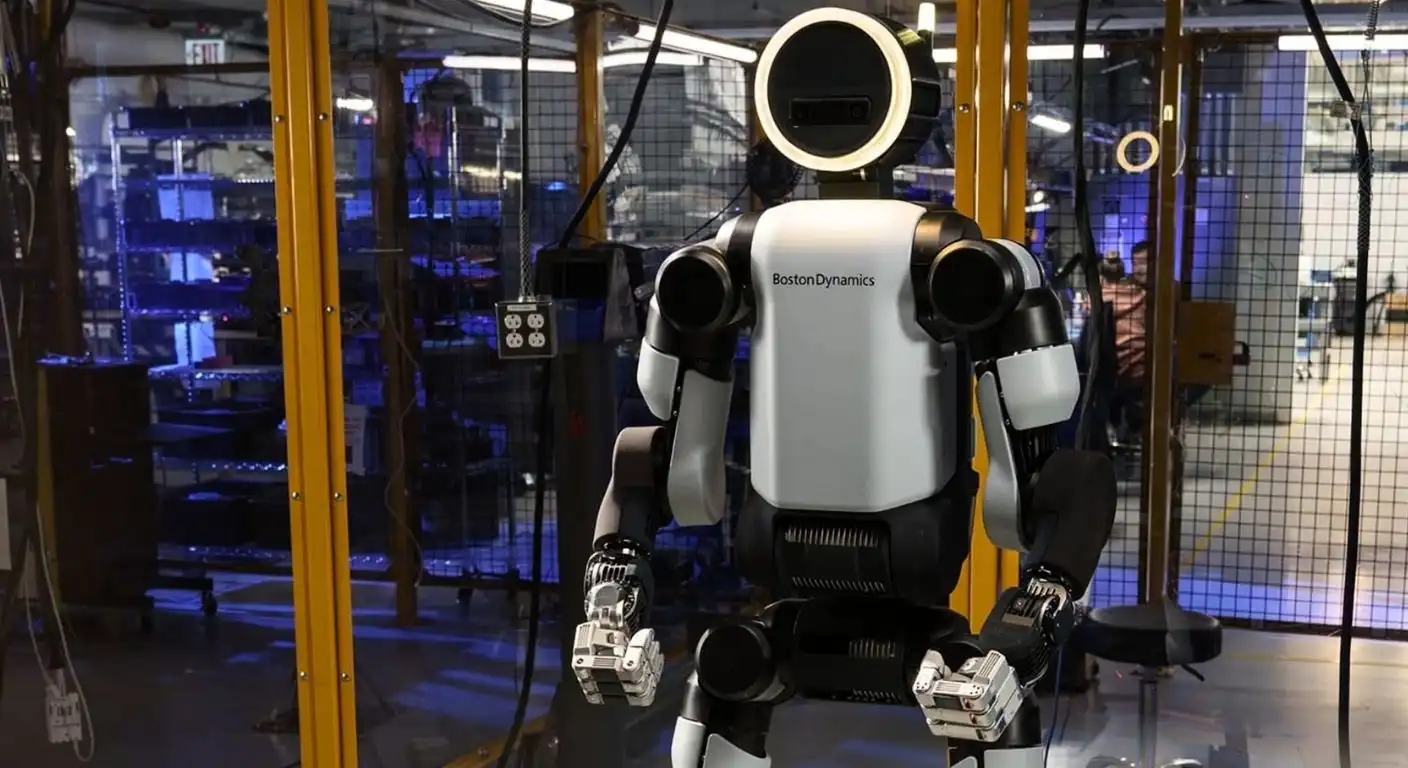
- Boston Dynamics’ Atlas humanoid robot will start parts sequencing at Hyundai’s Georgia Metaplant in 2028, expanding to assembly by 2030.
- Hyundai Mobis will collaborate with Boston Dynamics to mass-produce six key components for the next-generation Atlas robot.
Hyundai Motor Group has launched two highly specialized units to accelerate its transition toward fully automated car manufacturing. According to industry sources on Monday, May 25, 2026, the South Korean automotive conglomerate established these divisions to advance its software-defined factory (SDF) strategy and streamline the procurement of robotic parts. The strategic restructuring directly supports Hyundai’s broader, multi-billion-dollar roadmap to deploy advanced humanoid robots across its global production networks.
To lead the high-tech factory initiative, the group recently created a dedicated leadership position overseeing the SDF rollout. Hyundai appointed Alpesh Patel, the current chief innovation officer at the Hyundai Motor Group Innovation Center Singapore, to fill this new role. A software-defined factory operates as an advanced manufacturing ecosystem in which artificial intelligence (AI) fully manages and controls production lines, quality inspection, and logistics operations through software rather than traditional manual controls.
This organizational shakeup lays the groundwork for an ambitious scaling plan. Hyundai previously announced a massive industrial target to establish facilities capable of producing 30,000 humanoid robots annually by 2028. Under this program, the automaker plans to deploy 25,000 of these advanced machines across its active Hyundai Motor Company and Kia Corporation manufacturing plants. This target represents one of the largest corporate commitments to physical AI in the global manufacturing sector.
The primary workhorse of this automated workforce will be Atlas, the next-generation humanoid robot developed by Boston Dynamics, a U.S.-based subsidiary of Hyundai. Unveiled earlier this year at the Consumer Electronics Show (CES) 2026, the fully electric Atlas will begin its industrial career at the Hyundai Motor Group Metaplant America in Georgia starting in 2028, where it will handle complex parts sequencing operations. The company expects the robot’s role to expand to high-precision parts assembly work by 2030, before gradually deploying the machines to new factories in India and South Korea.
To ensure the financial viability of this massive fleet, Hyundai also created a new office dedicated entirely to procuring robotics components. The group appointed Soh Hyun-seong, the former head of strategic planning at Beijing Hyundai, to lead this purchasing unit. As Boston Dynamics transitions Atlas from an experimental prototype to mass production, the new procurement division will focus on strengthening supply chains, sourcing low-cost raw materials, and improving overall manufacturing cost competitiveness to reduce the retail price of each humanoid unit.
Achieving these aggressive production goals requires deep collaboration with existing automotive supply chains. To secure high-quality hardware, Boston Dynamics requested Hyundai Mobis, the group’s massive auto parts affiliate, to collaborate on the project. Under the agreement, Hyundai Mobis will handle the mass production of six key mechanical and electrical components for the next-generation Atlas robot, leveraging its existing high-volume manufacturing lines to lower production costs.
The automotive industry has traditionally used static, pre-programmed robotic arms to handle repetitive heavy-lifting tasks. However, the introduction of mobile, AI-powered humanoid robots like Atlas represents a major paradigm shift. Humanoid robots can navigate complex factory floors, use advanced hand-eye coordination to sort small components, and work safely alongside human employees, increasing overall plant productivity by up to 20% compared to traditional, non-automated factories.
As Hyundai continues to build out its software-defined factories, the integration of AI and physical robotics will redefine global manufacturing standards. By combining Boston Dynamics’ cutting-edge robotics research with Hyundai Mobis’ high-volume production capabilities, the group is establishing a highly vertically integrated robotics business. If successfully executed, this dual software-and-hardware strategy will enable Hyundai to build a resilient, highly automated manufacturing network capable of weathering global labor shortages and market fluctuations.