Key Points:
- President Donald Trump signed a landmark executive order on April 18, 2026, to fast-track research, review, and medical access to psychedelic compounds.
- Personal outreach from podcaster Joe Rogan and Health and Human Services Secretary Robert F. Kennedy Jr. heavily prompted the administration’s policy reversal.
- The directive targets the chronic veteran suicide crisis, where over 6,000 veterans have died by suicide annually for more than two decades.
- The policy shift establishes fast-tracked FDA review pathways via priority vouchers and expands clinical trials under the landmark Right to Try Act.
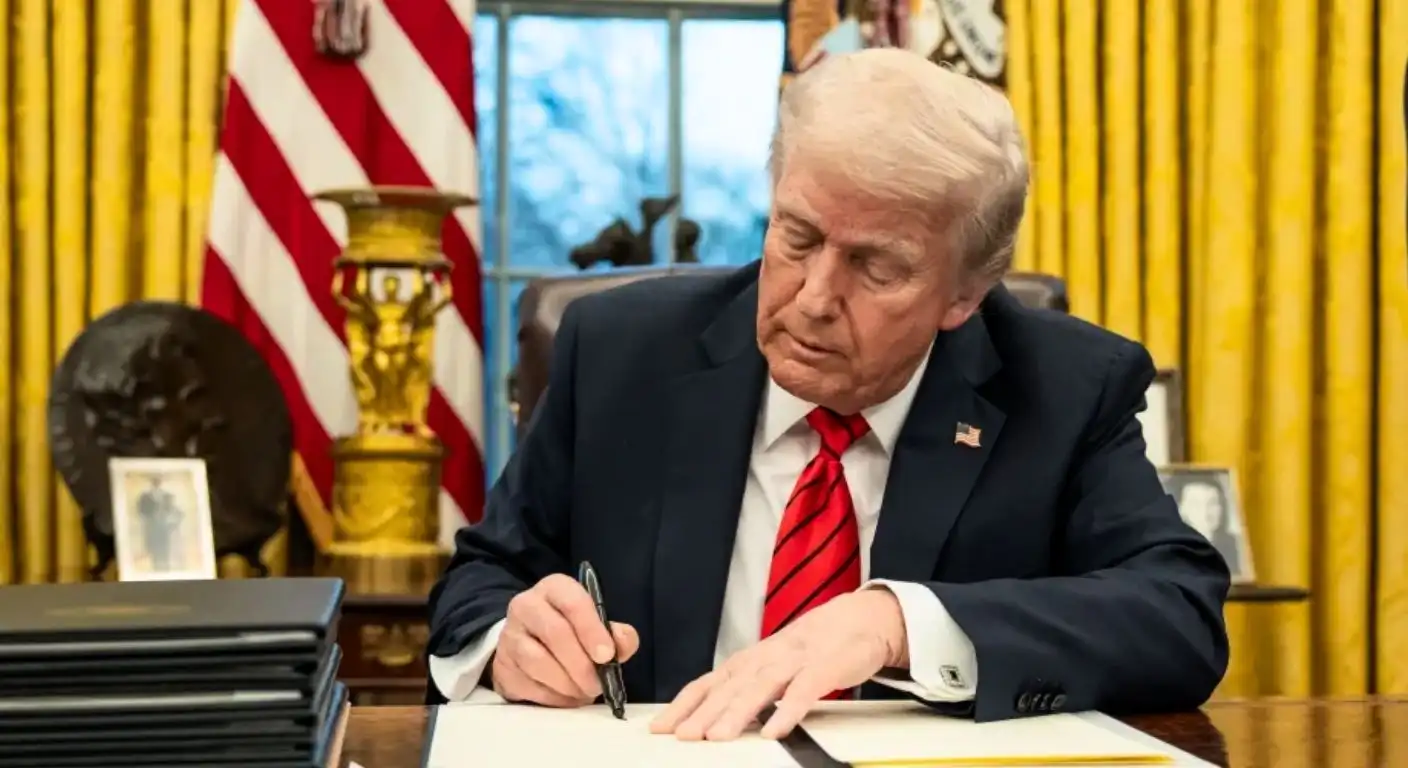
The federal government has initiated a dramatic and highly unexpected shift in its domestic drug policy, opening up regulated pathways for substances that once occupied the absolute fringes of medicine. On April 18, 2026, President Donald Trump signed a sweeping executive order titled “Accelerating Medical Treatments for Serious Mental Illness.” The directive orders federal agencies, including the Food and Drug Administration (FDA) and the Drug Enforcement Administration (DEA), to fast-track research and patient access to psychedelic compounds like ibogaine, psilocybin, and MDMA. This sudden turnaround represents a significant policy reversal for an administration that previously maintained a highly conservative, law-and-order stance on drug enforcement.
The momentum behind this historic policy shift stems from intense behind-the-scenes lobbying and personal outreach from prominent cultural figures. Sources close to the White House revealed that popular podcaster Joe Rogan played a critical role in changing the president’s mind. Rogan reportedly sent direct text messages to Trump, sharing detailed clinical data on the psychoactive plant extract ibogaine and its potential to combat the nation’s devastating opioid and PTSD crises. This informal advocacy found strong institutional support within the administration from newly appointed Health and Human Services (HHS) Secretary Robert F. Kennedy Jr., who has long advocated for alternative, outside-the-box solutions to the nation’s systemic chronic health challenges.
At the heart of the administration’s new urgency lies a devastating national security crisis: the mental health of military veterans. For more than 20 years, the United States has recorded more than 6,000 veteran suicides annually, a rate more than twice that of the non-veteran adult population. Traditional psychiatric treatments, such as heavy doses of selective serotonin reuptake inhibitors (SSRIs) and pain-managing opioids, have repeatedly failed to deliver long-term recovery, often leaving patients in cycles of relapse. Marie Phelan, a U.S. Army veteran who served in Iraq in 2003, represents a growing number of service members who have found relief through alternative means. Phelan had never heard of MDMA before finding a flyer for a clinical trial, but she credits the therapy with completely lifting a cold, listless blanket of trauma from her life.
Scientific support for these therapies has also advanced rapidly, providing policymakers with robust data to justify the policy change. A prominent 2024 study from Stanford University analyzed the effects of the African root extract ibogaine on combat veterans suffering from traumatic brain injuries (TBIs). TBIs represent a leading cause of severe depression, anxiety, and suicide among veterans. The Stanford researchers found that a single guided dose of ibogaine led to dramatic, lasting reductions in psychiatric symptoms with no serious adverse side effects. This study caught the attention of conservative lawmakers and veteran advocates, who realized that the federal government was actively blocking potentially life-saving treatments.
The newly signed executive order systematically dismantles the strict regulatory blockades that have starved researchers of funding and legal access for more than half a century. Most classic psychedelics have remained classified as Schedule I controlled substances since the 1970s, making clinical research incredibly difficult to execute. Trump’s directive utilizes his landmark Right to Try Act—enacted during his first term—to establish an immediate legal pathway for desperately ill patients to access investigational psychedelics like ibogaine before formal FDA approval. The FDA and DEA must coordinate to issue handling licenses to researchers and physicians, ensuring that red tape no longer prevents dying patients from trying experimental options.
To speed up the commercialization of these therapies, FDA Commissioner Marty Makary announced that the agency is issuing Commissioner’s National Priority Vouchers (CNPV) to three prominent companies developing psychedelic medicines: Compass Pathways, the Usona Institute, and Transcend Therapeutics. These vouchers act as a regulatory fast-track, allowing developers to compress the standard FDA review timeline from 10 to 12 months to just 1 to 2 months. This represents the first time in history that the FDA has offered such expedited treatment to psychedelic-based drugs, signaling that the federal government is prioritizing mental health innovation over historical stigma.
The policy shift also includes substantial financial backing to accelerate clinical developments. The executive order directs the Secretary of HHS to allocate $50 million through the Advanced Research Projects for Health (ARPA-H) program. This federal capital will directly match investments made by state governments, such as the research consortium that Texas established last year to fund localized ibogaine trials. By offering federal matching grants, the administration is encouraging a decentralized network of state-level clinical research, reducing dependence on large pharmaceutical conglomerates and accelerating the generation of objective, scientific data.
Following the White House directive, federal agencies have quickly mobilized to implement the president’s goals. The Department of Veterans Affairs (VA) announced its first-ever clinical trial involving MDMA-assisted therapy at the VA Providence Healthcare System. The trial aims to enroll 80 veterans diagnosed with co-occurring PTSD and alcohol use disorder, comparing the therapeutic outcomes of MDMA-assisted psychotherapy against a placebo. This rapid action marks a massive shift for the VA. This institution has traditionally taken a highly conservative approach to clinical treatments and represents a major victory for advocacy groups like the Veterans of Foreign Wars (VFW).
Unsurprisingly, the sudden political and regulatory support has triggered a massive investment boom in the biotechnology sector. Publicly traded psychedelic medicine developers have seen their market valuations jump as investors realize the financial potential of accelerated drug approvals. Companies like Compass Pathways and Mind Medicine, which have spent millions of dollars lobbying Washington policymakers for guidance over the last five years, are now positioned to lead a multi-billion-dollar therapeutic market. While safety advocates warn that regulators must carefully monitor these powerful psychoactive substances to prevent cardiotoxicity and other health risks, the financial and clinical momentum behind the psychedelic revolution appears unstoppable.