Key Points:
- SoftBank Group Corp. surpassed Toyota Motor Corp. on June 1, 2026, to become Japan’s most valuable listed company, ending the carmaker’s 23-year reign.
- The tech investment giant’s market capitalization reached 47.2 trillion yen ($296 billion), propelled by a 10.3% surge in its share price on Monday.
- Key drivers include a massive new €75 billion ($87.3 billion) French AI infrastructure plan and SoftBank’s lucrative 13% stake in OpenAI, the creator of ChatGPT.
- The historic shift marks the formal handover of Japanese corporate leadership from post-war industrial manufacturing to an AI-driven licensing and investment model.
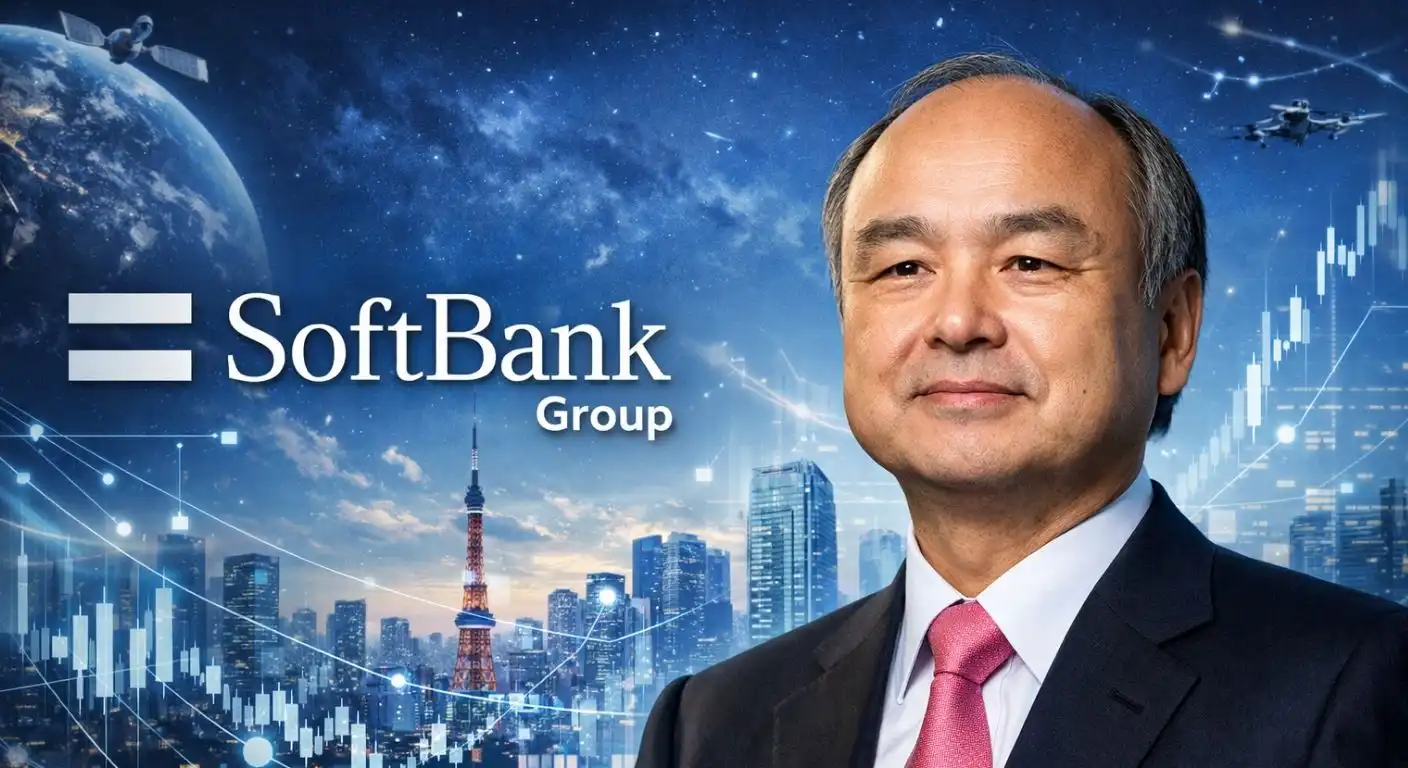
A monumental corporate transition took place on Monday, June 1, 2026, as SoftBank Group Corp. officially overtook Toyota Motor Corp. as Japan’s most valuable listed company. This historic shift ends the automaker’s uninterrupted 23-year reign at the pinnacle of the Japanese corporate hierarchy. Driven by a relentless global artificial intelligence boom, SoftBank’s stock skyrocketed during Monday trading, cementing a symbolic “changing of the guard” in the world’s fourth-largest economy.
In Monday’s trading sessions, SoftBank’s shares jumped by as much as 13% intraday before closing up 10.3% at a record high of 8,546.0 yen. This explosive rally single-handedly added 618 points to the tech-heavy Nikkei 225 average, which broke above the historic 67,000-point mark for the first time. The surge propelled SoftBank’s total market capitalization to approximately 47.2 trillion yen, which equals roughly $296 billion. Meanwhile, Toyota’s shares fell by 4.8%, shrinking the auto giant’s valuation to 45.7 trillion yen and forcing it to yield the corporate crown.
This transition carries deep symbolic weight that extends far beyond daily stock market fluctuations. Toyota has anchored the top spot of Japan’s market capitalization rankings since 2003, serving as the global face of Japan’s post-war manufacturing and export-led economic miracle. SoftBank’s ascension officially shifts the country’s economic focus. The corporate center of gravity has officially shifted from the physical assembly line to an advanced model of artificial intelligence, software licensing, and venture investment led by visionary billionaire Masayoshi Son.
The primary catalyst for Monday’s massive rally was a blockbuster weekend announcement from founder Masayoshi Son. Speaking to the French weekly newspaper La Tribune Dimanche on Saturday, Son pledged to invest up to €75 billion (approximately $87.3 billion) over the next five years to build a vast, advanced network of AI computing clusters and data centers in France. This massive infrastructure program, which includes an initial €45 billion ($53 billion) commitment, represents SoftBank’s largest-ever AI investment in Europe. It underscores Son’s aggressive strategy to build the physical foundations required for superintelligence.
Beyond infrastructure, investors are increasingly pricing SoftBank as a highly liquid, public proxy for ChatGPT developer OpenAI. SoftBank has committed roughly $65 billion cumulatively to OpenAI over a series of highly competitive private funding rounds, including a massive $22.5 billion investment on December 31, 2025. This aggressive funding strategy has secured SoftBank a substantial 13% pro-forma stake in the AI powerhouse. With OpenAI reportedly preparing for a blockbuster U.S. initial public offering (IPO) targeting a historic trillion-dollar valuation, SoftBank’s look-through stake alone could soon be worth more than $130 billion.
The massive valuation surge also reflects SoftBank’s high-value exposure to the semiconductor chipmaking supply chain through its 90% ownership of British chip designer Arm Holdings. Arm’s stock has more than tripled in value so far in 2026, boosting SoftBank’s balance sheet. Earlier on Monday, at the Computex conference in Taipei, graphics card giant Nvidia unveiled a host of next-generation processors for Windows PCs built on Arm’s high-efficiency architecture. Because Arm generates its revenues chiefly from licensing fees for its core chip designs, this widespread industry adoption represents an immense financial windfall for SoftBank’s crown jewel.
Adding to the bullish sentiment, investors are highly anticipating the potential public listings of two of SoftBank’s most prominent portfolio companies: OpenAI and clean energy developer SB Energy Corp. Analysts at JPMorgan and Nomura Research Institute note that these impending U.S. listings will allow SoftBank to unlock massive amounts of liquidity, which Masayoshi Son can immediately redeploy into frontier-level artificial intelligence projects. This continuous cycle of capital recycling has driven SoftBank’s stock price up by nearly 73% year-to-date, making it the single best-performing large-cap stock in Japan.
The divergence between the two Japanese corporate titans highlights how rapidly global capital flows are reshaping Japan’s equity landscape. While SoftBank rides a wave of pure AI optimism, macroeconomic headwinds and geopolitical tensions continue to weigh heavily on Toyota and the broader automotive export sector. High energy costs, volatile raw material supplies, and a shifting global electric vehicle landscape have dragged Toyota’s share price down by more than 10% this year. These physical supply chain challenges have made SoftBank’s digital, asset-light investment model appear far more resilient to global portfolio managers.
Ultimately, SoftBank’s ascent to become Japan’s most valuable company marks a defining milestone for the global artificial intelligence boom. By replacing a traditional automotive manufacturing giant at the top of the national hierarchy, SoftBank has proved that technology and investment are the true drivers of modern economic growth. As Masayoshi Son continues to deploy billions of dollars into global AI infrastructure and next-generation software platforms, the Japanese investment giant is not just keeping pace with the digital revolution—it is actively shaping the future of global technology.