Key Points:
- U.S. crude exports reached a historic record of 5.6 million barrels per day in May 2026, surpassing the previous record of 5.2 million set in April.
- The closure of the strategic Strait of Hormuz amid the ongoing Middle East conflict has blocked approximately 20% of the world’s oil supplies.
- A wide WTI-Brent price discount of up to $20.69 per barrel has made U.S. crude highly competitive and economically attractive for foreign buyers.
- Japan led a massive surge in Asian imports, boosting its purchases of U.S. crude by 32% month-on-month to reach a record 808,000 barrels per day.
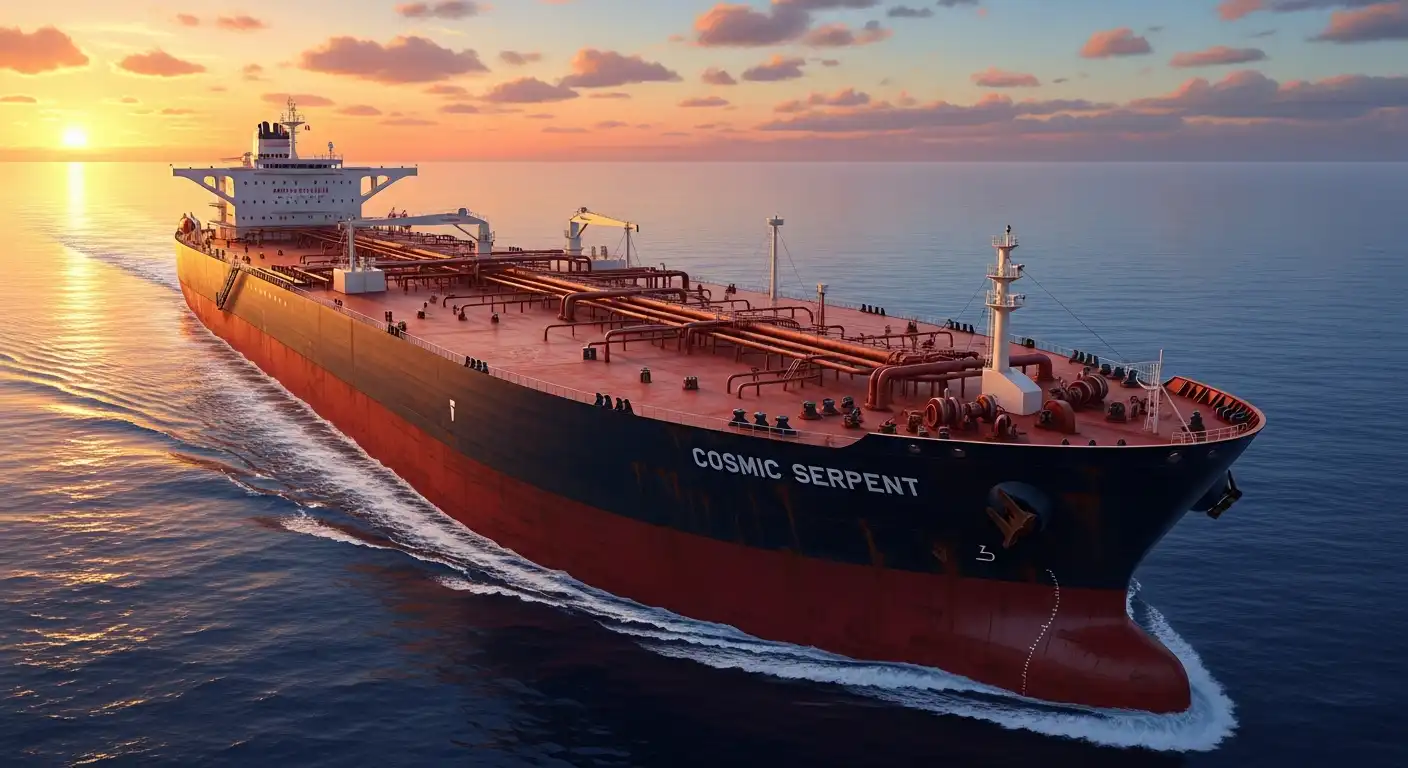
The global energy landscape is undergoing its most profound structural disruption in modern history, pushing American oil producers into an unprecedented dominant role. According to ship-tracking data released on Monday, June 1, 2026, U.S. crude oil exports climbed to an all-time historic record of 5.6 million barrels per day (bpd) in May. This massive export surge comes as the intensifying military conflict in the Middle East severely curtails traditional oil shipments, forcing refiners across Asia and Europe to aggressively scour the globe for alternative energy supplies.
The primary driver behind this sudden realignment of the global oil trade is the ongoing war involving the United States, Israel, and Iran. Since the outbreak of active hostilities at the end of February 2026, global energy supply chains have suffered their worst disruption in history. The conflict has effectively closed the strategic Strait of Hormuz, a critical maritime chokepoint through which approximately 20%—or one-fifth—of the world’s daily oil and gas supplies typically pass. With Persian Gulf shipping routes entirely blocked by naval clashes and security risks, global refiners face an immediate, severe supply deficit.
This massive global supply squeeze has dramatically widened the pricing spread between West Texas Intermediate (WTI), the U.S. oil benchmark, and Brent, the global benchmark. Because Middle East supply disruptions have pushed international Brent prices higher at a much faster rate than domestic U.S. crude, WTI has traded at a steep, historic discount. In March, this spread widened to a staggering $20.69 per barrel in favor of Brent—the largest discount recorded in 13 years. By April, when traders negotiated the bulk of May’s physical export contracts, the WTI-Brent discount averaged a highly lucrative $8.86 per barrel, making U.S. crude extraordinarily cheap and economically viable for foreign refiners to ship across the oceans.
This highly attractive pricing has turned Asian refiners into the largest buyers of American crude for the second consecutive month. Ship-tracking estimates compiled by data analytics firm Kpler show that Asia imported a record 2.45 million bpd of U.S. crude in May. Leading this Asian purchasing spree was Japan, a resource-poor nation that historically relies on the Middle East for the vast majority of its crude imports. To bypass the Strait of Hormuz blockade, Japanese refiners expanded their imports of U.S. grades to a record of 808,000 bpd in May, representing a massive 32% month-on-month jump.
European refiners emerged as a very close second, importing 2.4 million bpd of U.S. crude in May to feed their industrial plants. European companies have spent the last four years restructuring their supply networks following the European Union’s ban on Russian seaborne crude imports. Having already established logistics pipelines to import American oil, European refiners easily scaled up their purchases in May to replace lost Middle Eastern barrels, using cheap, light-sweet U.S. crude to maintain steady production rates at major refining hubs in Rotterdam and the Mediterranean.
To handle this unprecedented export volume, U.S. port operators have pushed their physical infrastructure to the absolute limit. Gulf Coast shipping hubs, particularly the Port of Corpus Christi in Texas, have experienced record-breaking traffic. Port officials reported that between 50 and 60 massive oil tankers are currently docking at U.S. ports every single day—double the average volume recorded last year. While the Port of Houston handled the bulk of the domestic light sweet crude demand, Corpus Christi managed approximately half of all outbound shipments, operating around the clock to prevent maritime traffic jams.
The massive export surge also drew significant support from the U.S. Strategic Petroleum Reserve. To stabilize international energy markets and cap domestic gasoline prices ahead of November’s crucial congressional elections, President Donald Trump authorized a series of emergency crude releases from the underground storage facilities in Texas and Louisiana. This emergency oil release provided U.S. Gulf Coast refiners and exporters with a highly flexible supply cushion, allowing them to fulfill record-breaking international export contracts without starving domestic American refineries of necessary feedstock.
Despite the spectacular success of these U.S. export operations, global energy analysts warn that even record-high American production cannot fully offset the massive losses from the Middle East. Kpler’s historical trade database reveals that total seaborne oil exports to Asia dropped to just 14.8 million bpd in April, representing a massive decline of nearly 10 million bpd from pre-war January levels. While the U.S. exported roughly 2.18 million bpd more to Asia in May than it did in January, this increase represents only a fraction of the total Middle Eastern shortfall. This massive, lingering deficit means that global inventories are dropping rapidly, keeping upward pressure on oil prices.
Ultimately, the record-breaking export of 5.6 million bpd of U.S. crude in May 2026 illustrates America’s established role as the ultimate guarantor of global energy security. By leveraging its vast domestic shale reserves, extensive port infrastructure, and favorable benchmark price discounts, the United States has successfully extended a vital lifeline to European and Asian economies. However, as the geopolitical conflict in the Middle East shows no signs of an imminent resolution, the global energy supply chain will remain highly fragile. For now, the physical flow of oil confirms a simple truth: in an increasingly unstable world, the global economy relies on American oil to keep the wheels of industry turning.