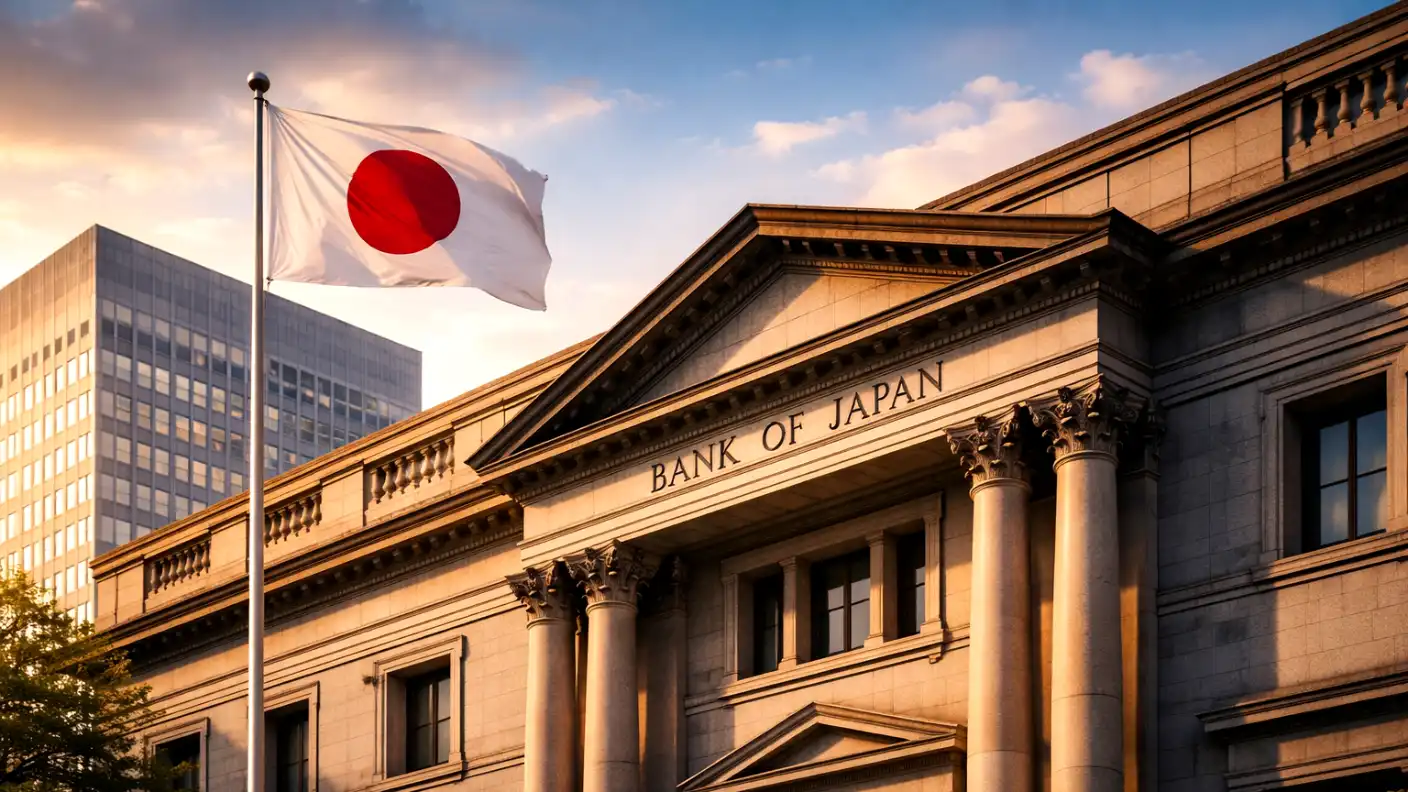
Key Points:
- The Bank of Japan faces growing pressure to raise interest rates at its upcoming June 15–16, 2026, meeting to defend the weakening yen and curb inflation.
- Despite a massive 11.73 trillion yen ($74 billion) government forex intervention, the yen remains weak, trading near the critical 159–160 range against the US dollar.
- A divisive 6-3 split vote at the BOJ’s late-April meeting revealed a growing hawkish faction pushing to raise the policy rate from 0.75% to 1.00%.
- Economists warn that raising rates could trigger a global yen carry trade unwind, risking widespread liquidations in international equities and cryptocurrencies.
The global financial community is keeping a close, anxious eye on Tokyo as the Bank of Japan (BOJ) faces one of its most difficult policy decisions in years. With the Japanese yen languishing near historic lows against the US dollar and domestic price pressures rising, economists warn that a Bank of Japan rate hike in June has become highly likely. The central bank’s Governing Council is scheduled to meet on June 15–16, 2026, to determine the trajectory of national interest rates, with market participants currently pricing in a 74%-80% probability of an immediate interest rate increase.
This mounting policy pressure follows the apparent failure of Japan’s record-breaking currency market interventions. Official data from the Ministry of Finance reveals that Japanese authorities executed a massive yen-buying operation totaling a record 11.73 trillion yen, which equals roughly $74 billion, between April 28 and May 27, 2026. While the massive currency intervention represented roughly 1.5% of Japan’s total foreign exchange reserves, the physical purchase barely moved the needle over the long term. The yen firmed temporarily following the massive central bank purchases, only to surrender most of those gains and drift back into the weak 159-160 range, proving that direct market interventions cannot successfully defend a currency when interest rate differentials with the United States remain so vast.
The internal dynamics of the BOJ’s governing board further support these rate hike expectations. At its late April monetary policy review, the central bank held its key policy rate at 0.75%. However, this decision came via a highly divisive 6-3 split vote, marking the widest margin of dissent under Governor Kazuo Ueda’s leadership. Three hawkish board members broke ranks to demand an immediate rate hike, signaling that they want to push the benchmark rate toward 1.00% to combat rising consumer prices. This visible internal division has convinced markets that a major policy shift is imminent.
The primary catalyst driving this market shift is the persistent threat of imported inflation. The BOJ recently revised its core inflation forecast for fiscal year 2026 upward to 2.8%, largely due to the economic fallout from the ongoing war in the Middle East. For a resource-poor nation like Japan, which relies almost entirely on imports for its fossil fuel needs, the effective closure of the strategic Strait of Hormuz has severely disrupted the steady flow of crude oil and petroleum products. This supply-side shock has driven global Brent crude past $98 a barrel, making Japan’s energy imports prohibitively expensive and forcing up consumer utility bills across the country.
However, Governor Ueda must navigate a highly fragile domestic economy as he considers raising interest rates. Official government data released on Monday showed that Japanese corporate capital spending in the first quarter of 2026 registered near-zero year-on-year growth, edging up by a microscopic 0.047% to 18.81 trillion yen. This sudden deceleration in business investment proves that Japanese companies remain highly cautious about spending money amid global macroeconomic uncertainty. While the tech and semiconductor sectors are posting record-breaking sales, other areas of the economy are struggling, meaning that raising borrowing costs too quickly could accidentally push the country into a deeper recession.
Navigating this economic minefield requires delicate political coordination. Governor Ueda recently held a private, high-level meeting with newly elected Prime Minister Sanae Takaichi to discuss the national economic outlook. Takaichi, a longtime advocate of loose monetary policy, urged the central bank to take appropriate monetary action while remaining mindful of the government’s ongoing efforts to cushion families from the blow of rising living costs. While Ueda told reporters that the two did not discuss the specific possibility of a June interest rate hike, they agreed to continue communicating closely, signaling that the BOJ must manage its policy shifts with extreme political sensitivity.
The consequences of a potential BOJ rate hike extend far beyond Japan’s borders, as a sudden yen rebound could trigger a massive, global “carry trade” unwind. Under the traditional carry trade strategy, international hedge funds and asset managers borrow massive sums of money in yen at near-zero interest rates, and convert those funds into high-yielding assets such as U.S. Treasuries, global equities, or cryptocurrencies. If the BOJ begins aggressively raising interest rates, the cost of servicing these yen-denominated loans rises. This forces international investors to rapidly liquidate their riskier global positions to repay their cheap loans, potentially triggering a high-velocity sell-off across international markets.
The global cryptocurrency market has already demonstrated extreme sensitivity to these shifting yen dynamics. In late April, when the BOJ hinted at a hawkish shift, Bitcoin and major altcoins experienced sharp liquidations as leverage-heavy traders rushed to de-risk their portfolios in anticipation of yen strength. If Governor Ueda delivers a surprisingly hawkish speech at his upcoming address on June 3, or if the board executes a rate hike on June 15-16, the sudden shock could trigger a massive wave of liquidation, proving that modern digital asset markets remain deeply bound to traditional central bank policies.
Ultimately, the Bank of Japan’s upcoming June policy meeting represents a critical turning point for the country’s economic history. Governor Ueda must thread an incredibly narrow needle: he must defend the yen to curb import-driven inflation without raising rates so aggressively that he crushes domestic corporate investment and triggers a global carry trade panic. While European recovery plans and massive tech investments are shielding the broader global economy, Japan must establish its own path to fiscal stability. As the June 15-16 meeting draws near, the financial world will watch closely to see if Tokyo can successfully navigate this high-stakes monetary transition.