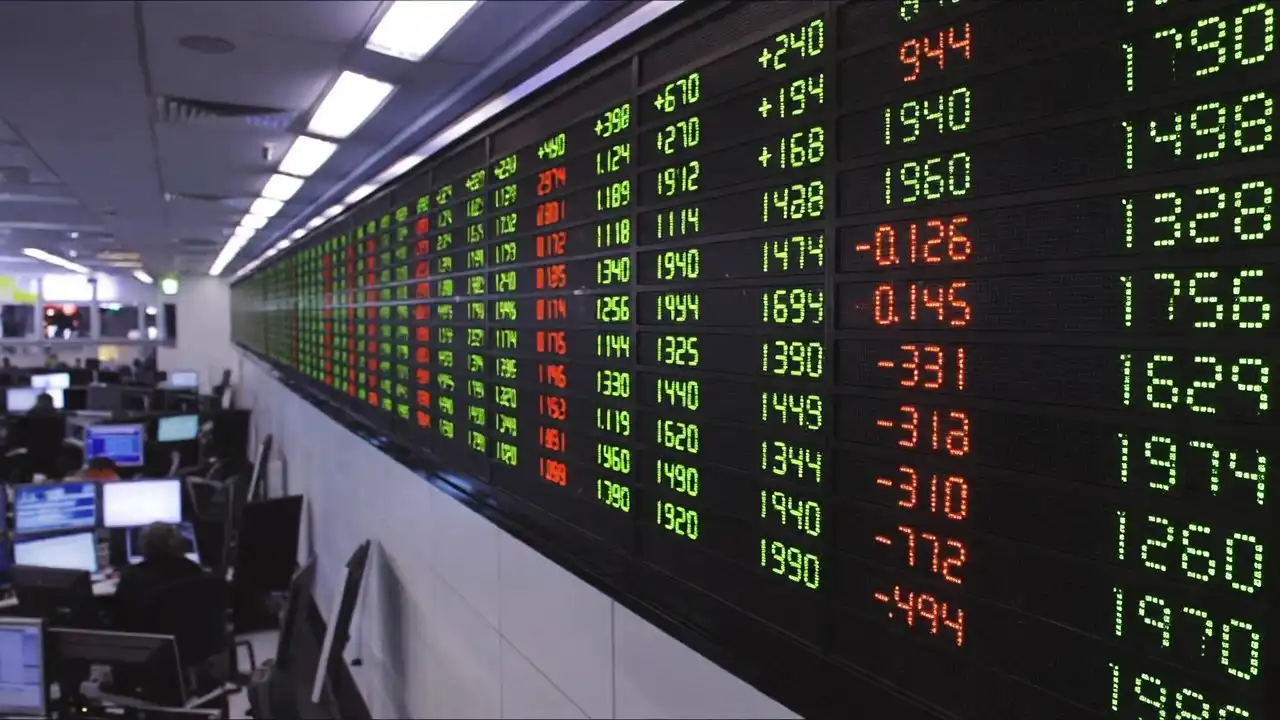
KOSPI market concentration has emerged as a major driving force in South Korea’s financial ecosystem, reshaping how retail and institutional investors allocate capital on the Seoul bourse. This comprehensive exploration examines the intricacies of market polarization, detailing its fundamental mechanics, key components, recent trends, notable impacts on broader indices, and its structural effect on corporate valuations across alternative industries.
Understanding KOSPI Market Concentration
In a healthy capital market, a rising benchmark index typically signals a broad-based economic expansion. However, the recent behavior of the Korea Composite Stock Price Index (KOSPI) shows a different structural pattern. In recent weeks, South Korea’s primary stock index has risen, but the vast majority of individual listed companies have seen their share prices decline.
This behavior highlights the phenomenon of market concentration. When a benchmark index uses a market-capitalization weighting system, a company’s size determines its influence on the index’s overall performance. If a tiny group of ultra-large companies experiences massive growth, their upward movement can easily drag the entire index higher. This upward movement in the index can mask the fact that hundreds of other listed companies are losing value at the same time. In South Korea, a booming global demand for artificial intelligence hardware has funneled immense amounts of capital into semiconductor manufacturers, creating a dual-track market in which a few winners carry a long line of decliners.
Key Components of Market Concentration
Several core mechanisms sustain and accelerate this lopsided distribution of market wealth:
- Market-Capitalization Weighting: Cap-weighted indices, such as the KOSPI, calculate index movements by multiplying each company’s share price by its outstanding shares. As a result, the largest corporations exert a disproportionate influence on the index.
- Passive Indexation Inflows: Modern investment relies heavily on exchange-traded funds (ETFs) and index funds. When a global fund manager buys a KOSPI-tracking portfolio, the automated trading systems direct the vast majority of those dollars into the top-weighted stocks, bypassing smaller companies entirely.
- Global Sector Specificity: Market cycles are rarely uniform. The ongoing technological revolution has concentrated global corporate profits primarily within the semiconductor supply chain, leaving traditional manufacturing, chemical, and retail sectors starved of comparable demand.
- Liquidity Polarization: Active traders prefer highly liquid stocks with high daily trading volume to minimize transaction costs. This preference creates a self-reinforcing loop in which capital leaves smaller listings and pools into the largest stocks, making smaller shares even harder to trade.
Recent Developments in South Korea’s Capital Markets
The daily trading data from the Korea Exchange (KRX) provides a clear picture of this financial divergence. During the two-week trading period from May 26 through Friday, June 5, 2026, the main KOSPI exchange recorded highly polarized participation. Over these ten days, an average of only 210 stocks advanced each day. In contrast, an average of 586 stocks declined daily, while the remaining listings closed flat.
This means that nearly three out of every four stocks on the main board lost ground, even as the overall index moved through a strong rally.
The Double-Digit Rise of Semiconductor Heavyweights
The primary force behind this concentration is the exceptional performance of South Korea’s two leading semiconductor manufacturers: Samsung Electronics Co. and its chief rival, SK hynix Inc. Driven by the global rush for high-bandwidth memory (HBM) and next-generation AI processing chips, both companies have enjoyed spectacular growth.
During the identical two-week period, shares of top-cap Samsung Electronics rose by 13.72%. At the same time, SK Hynix shares surged by 14.32%. Because of their massive individual market caps, these two giants single-handedly lifted the KOSPI, making the overall market appear robust even as most listed companies were losing value.
Evolution into Common Underlying Assets
This trend has changed how institutional analysts evaluate these corporate giants. Noh Dong-gil, a market analyst at Shinhan Securities, pointed out that the current level of concentration goes far beyond mere investor sentiment. He noted that Samsung Electronics and SK hynix have evolved beyond their traditional roles as simple market leaders.
Today, these two companies serve as “common underlying assets” packaged across a wide variety of financial products. Because modern investment instruments, structured notes, and derivative options use these stocks as their primary building blocks, any general passive investment flowing into South Korea automatically pours a massive share of its funds back into these exact two companies.
Retail Capital Repatriation (The Seohak Ant Shift)
This intense semiconductor rally has also fundamentally altered the behavior of South Korean retail investors, traditionally called “Seohak Ants” (Western Sea Ants) because of their historic preference for buying tech shares in the United States. Recognizing the massive returns available at home, these traders are rapidly bringing their capital back to the domestic market.
According to data compiled by the Korea Securities Depository (KSD), South Korean retail investors net sold $793.67 million worth of foreign stocks during the first week of June 2026 alone. This massive sell-off represents over 1 trillion won, leaving overseas brokerage accounts to return to the Seoul bourse.
This repatriation is not a brief shift. It represents a continuous three-month trend:
- April: Retail investors net sold $468.92 million in overseas equities.
- May: Net selling of foreign equities accelerated to $939.77 million.
- June: Net sales of $793.67 million in the first week indicate that the repatriation trend is reaching its highest weekly volume of the year.
This return of retail cash has acted as a crucial cushion. While foreign institutional investors have been net sellers on the KOSPI to book profits after a blistering year, South Korean retail investors have aggressively bought the dip, pouring their capital directly into local semiconductor leaders.
Notable Impacts on the Broader Bourse
The extreme concentration of capital inside a few mega-caps has created a series of remarkable trading anomalies. Daily logs from the Korea Exchange highlight how the overall index can completely lose touch with the broader market’s actual performance.
The Extreme Disconnect of May 27
On May 27, the KOSPI index jumped by an extraordinary 2.55% in a single day. To an outside observer, this would look like a day of market-wide celebration. However, exchange records show that only 72 individual stocks actually advanced that day. The remaining hundreds of listed companies closed lower or flat. The massive 2.55% index gain was driven entirely by a tiny elite of top-cap semiconductor shares, proving that the index could soar even as the vast majority of local businesses lost value.
The Broad-Market Rise of May 22
By comparison, on May 22, the KOSPI index posted a very modest gain of just 0.41%. Despite this tiny upward movement in the index, a massive 713 individual stocks advanced during the session. On this day, the vast majority of South Korean businesses were gaining value, yet because the mega-cap semiconductor companies did not join the rally, the overall index barely moved. This session showed that the KOSPI can remain stagnant even when the broader economy is experiencing widespread growth.
Inverse Market Trajectories on Down Days
The disconnect became even clearer on Thursday, June 4, when the KOSPI index dropped by 1.84%. Despite the index closing down nearly 2%, trading on the floor was highly positive for most businesses. A total of 400 individual stocks advanced, outnumbering the 389 decliners. Because a few massive chip giants experienced profit-taking, they dragged the entire index down, even though more than half of the listed companies on the exchange ended the day with gains.
Structural Challenges in Market Polarization
While the semiconductor boom has successfully pushed the KOSPI to record heights, this extreme reliance on just two companies leaves the entire South Korean financial system highly vulnerable to sudden, violent shocks.
Systemic Vulnerability to Tech Cycle Shocks
When a nation’s stock market acts as a two-track system, any minor disruption in the global technology sector can trigger a severe national financial crisis. If Samsung and SK Hynix experience a pullback, the entire index collapses, regardless of how well other sectors are performing. This structure exposes South Korean household wealth to extreme volatility, as millions of retail portfolios are now directly tied to the highly cyclical global semiconductor supply chain.
Small-Cap Valuation Discounts
This intense concentration of capital has also starved other vital sectors of the South Korean economy of much-needed liquidity. While the tech-heavy KOSPI has broken records, the small-cap KOSDAQ index—which represents the country’s promising start-ups in biotechnology, green energy, and advanced materials—has struggled to maintain momentum. Starved of both domestic retail cash and foreign institutional capital, these smaller businesses are finding it increasingly difficult to raise capital, threatening the long-term diversity and health of the South Korean economy.
Future Trends in South Korean Stock Investing
As the risks of extreme market concentration become more apparent, both regulators and market participants are seeking ways to restore balance to the domestic exchange.
Government-Led Corporate Value-Up Initiatives
To address the severe valuation discounts affecting non-tech sectors, South Korea’s financial regulators are implementing structural reforms. The government’s “Corporate Value-Up Program” encourages listed companies to improve corporate governance, increase dividend payouts, and boost shareholder returns. By offering tax incentives to compliant firms, regulators hope to attract institutional capital back to traditional industries like banking, automotive manufacturing, and utilities, reducing the market’s extreme reliance on tech giants.
Diversification and Passive Rebalancing
Over the long term, index providers and fund managers are expected to adjust their weighting models to prevent individual stocks from completely dominating local portfolios. If statutory limits are imposed on maximum index weights, passive funds will be forced to redirect excess capital away from Samsung and SK hynix toward promising mid-cap companies. This passive rebalancing could help distribute liquidity more evenly across the market, creating a healthier and more resilient financial ecosystem.
Conclusion
The recent behavior of the KOSPI highlights a fundamental shift in how modern financial markets operate. Driven by index-based passive investing, algorithmic trading, and highly speculative retail products, capital is flowing into the largest and most liquid assets at an unprecedented rate, completely ignoring the broader economic reality. While the semiconductor boom has delivered remarkable returns to those holding top-tier tech shares, it has also created a highly polarized market that operates on two completely different tracks. For long-term investors, navigating this concentrated landscape requires a careful approach, recognizing that index-level gains do not represent a broad-based domestic economic expansion.