Key Points:
- Intel Chief Executive Officer Lip-Bu Tan has successfully stabilized the iconic chipmaker through aggressive structural cuts and operational streamlining.
- Since taking the helm in March 2025, Tan flattened corporate bureaucracy and laid off 34% of the company’s global workforce.
- A major twist in the artificial intelligence race has triggered a CPU revival, breathing new life into Intel’s core central processing unit business.
- The company sold non-core assets, such as Altera, for $8.75 billion to focus entirely on its engineering and manufacturing roots.
A historic corporate turnaround is taking shape in Silicon Valley as one of the world’s most iconic technology pioneers battles its way back from the edge of obscurity. On Sunday, June 7, 2026, a comprehensive report from CNN Business revealed that the Intel AI turnaround strategy under Chief Executive Officer Lip-Bu Tan has successfully halted the company’s decades-long financial bleeding. After years of losing market share to rivals such as Nvidia, AMD, and Qualcomm, Intel was on the brink of a catastrophic downfall. However, a major, unexpected twist in the artificial intelligence race is now breathing fresh life into the company’s core businesses, giving the legendary semiconductor pioneer a credible shot at a historic rebirth.
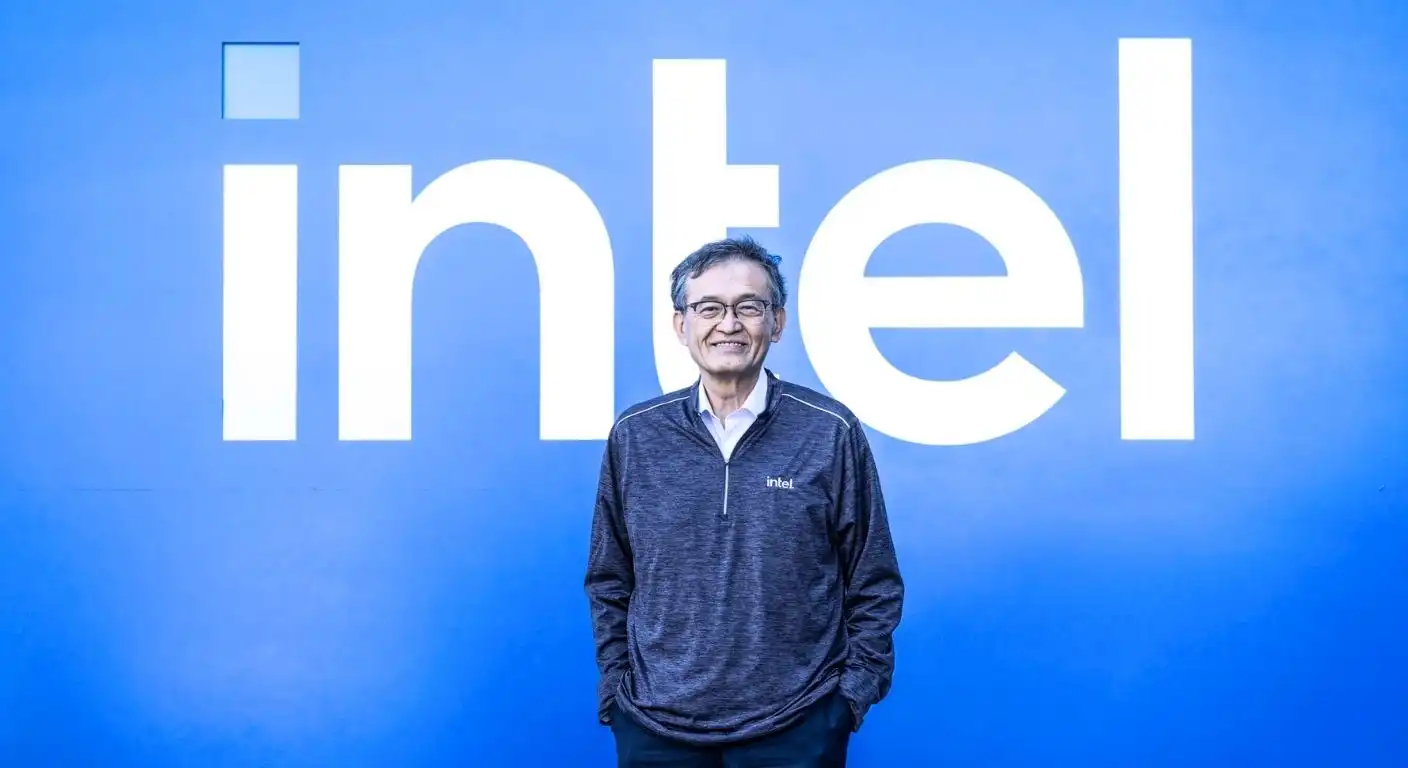
The roots of this survival story date back to March 2025, when Intel’s board of directors brought in Lip-Bu Tan to lead the company. Tan, a 66-year-old Malaysia-born executive who previously spent a dozen years turning Cadence Design Systems into a highly profitable software giant, took the helm when Intel was in desperate need of a turnaround. Applying his signature, high-discipline playbook, Tan moved quickly to simplify Intel’s bloated corporate structure. In his first public comments in April 2025, Tan acknowledged the scale of the challenge, warning shareholders that there were numerous areas to improve and no quick, easy fixes.
To stabilize the ship, Tan immediately initiated some of the most aggressive cost-cutting measures in the technology sector’s history. Over the past year, the chief executive has laid off approximately 34% of Intel’s global workforce, flattened corporate bureaucracy, and consolidated decision-making. He also made the highly difficult decision to pause the company’s multi-billion-dollar manufacturing expansions in Germany and Poland, redirecting that precious capital back into domestic research and development. These severe structural adjustments have successfully cut the company’s annual overhead by billions of dollars, helping to restore its financial stability.
As part of his relentless focus on Intel’s core competencies, Tan has systematically divested non-essential business units. Late last year, Intel finalized the sale of its programmable chip division, Altera, to a consortium of private equity buyers for $8.75 billion. While this transaction represented a significant accounting loss—given that Intel paid nearly $17 billion to acquire Altera in 2015—the sale provided the company with an immediate cash cushion. This massive liquidity boost allowed the company to pay down its debts and fund the development of its next-generation manufacturing technologies.
Under Tan’s leadership, Intel has returned to its historical roots as a pure engineering company. During his keynote address at the Computex trade show in Taipei last week, Tan told a packed crowd of developers and analysts that he decided from Day 1 to put engineering back at the center of everything the company does. To enforce this, he restructured the corporate hierarchy so that every major engineering department reports directly to him. This hands-on engineering focus has restored technical discipline across the company’s development pipelines, significantly reducing the manufacturing errors and delays that previously plagued its advanced products.
The unexpected twist that could save Intel from its structural decline is a major, industry-wide revival of the central processing unit (CPU). For the past three years, investor attention has focused almost exclusively on graphics processing units (GPUs) designed by Nvidia to train massive AI models. However, developers are realizing that as AI models transition from training to local deployment, CPUs are essential for coordinating data prepping and running smaller, localized AI workloads. Dan Nystedt, vice president of private investment firm TriOrient, noted that this CPU revival could save the company, especially since the vast majority of Intel’s business has historically relied on CPU sales.
This technological reality recently led to a landmark, highly lucrative partnership with its primary market rival. In October 2025, Intel and Nvidia finalized a historic, multi-year agreement to pair Intel’s advanced x86 CPU architecture and advanced packaging systems with Nvidia’s market-leading accelerated computing platforms. Under this strategic deal, the companies will co-develop high-performance server clusters designed to run next-generation AI workloads with unprecedented speed. The announcement of this alliance triggered a massive wave of investor optimism, sending Intel’s stock soaring by more than 23% on the day.
Intel’s turnaround has also received vital, long-term support from national policymakers. As part of a broader effort to secure the country’s domestic technology supply chains during President Donald Trump’s second term, the U.S. government has prioritized domestic semiconductor manufacturing. Under the federal Chips Act, Intel has secured billions of dollars in direct grants and loans to construct advanced fabrication facilities in Ohio and Oregon. While the company’s custom manufacturing foundry business has struggled to attract external clients, this federal backing ensures it can continue refining its production processes without facing immediate financial distress.
Despite this impressive progress, market analysts warn that the company is not completely out of the woods. The global semiconductor landscape remains highly competitive, with TSMC still manufacturing 90% of the world’s most advanced chips, and AMD aggressively taking market share in the lucrative data center segment. Financial analysts note that even a minor 1.5% delay in the rollout of Intel’s next-generation manufacturing process could allow competitors to lock in their leads permanently. However, many experts agree that Tan’s swift restructuring has successfully stopped the bleeding, moving the company from an intensive care unit to a general ward.
Ultimately, the evolving story of Intel’s turnaround shows that the future of the technology industry is far more complex than simple software hype would suggest. By focusing on its engineering heritage, executing tough structural cuts, and capitalizing on the unexpected CPU revival, the semiconductor giant is building a highly resilient business model designed for the digital age. As the company continues to deploy its advanced packaging technologies and collaborates with industry leaders like Nvidia, its comprehensive turnaround proves that legacy brands can successfully rewrite their futures, ensuring that the physical brain of the computing world remains securely under its control.