Key Points:
- China’s total goods trade reached 20.68 trillion yuan, or $2.88 trillion, during the first five months of the year, representing a 15.3% year-on-year increase.
- May saw a massive acceleration in exports, surging 19.4% as global tech giants rushed to secure advanced semiconductors and artificial intelligence servers.
- The country’s cumulative trade surplus reached $451.7 billion through May, driven by robust performance in both the export and import sectors.
- Double-digit import growth of 24.5% highlights resilient domestic demand, industrial upgrading, and rising business investments across the country.
A powerful surge in global high-tech demand and robust domestic industrial activity have propelled the world’s second-largest economy to a stellar trade performance. Official customs data showed that China’s foreign trade continued to post solid, double-digit growth during the first five months of the year, demonstrating remarkable resilience despite a highly complex and fragmented global economic environment. The total value of goods trade reached an immense 20.68 trillion yuan, approximately $2.88 trillion, representing a highly impressive 15.3 percent expansion compared to the same period last year.
The underlying details of the five-month trade report reveal a highly balanced and healthy expansion across both outbound and inbound commerce. National exports rose by 11.8 percent year-on-year to reach 11.91 trillion yuan, while imports experienced an even sharper acceleration, climbing 20.5 percent to reach 8.77 trillion yuan. This synchronized expansion in both directions demonstrates that China’s domestic market remains highly active, refuting the narrative that the country’s trade surplus relies entirely on sluggish domestic consumer demand.
The pace of international trade expansion accelerated sharply in May. In U.S. dollar terms, national exports surged by 19.4 percent year-on-year, marking a crucial jump from the 14.1 percent growth rate recorded in April. Concurrently, imports climbed by 27.4 percent in May, up from 25.3 percent in the prior month. This rapid growth pushed the country’s monthly trade surplus to an expanded $105.43 billion. In comparison, the cumulative trade surplus for the first five months of the year reached a staggering $451.7 billion, providing a massive financial shield for the country’s foreign exchange reserves.
Global trade experts attribute this stellar export performance to an insatiable, highly aggressive international demand for advanced high-tech products and China’s growing competitiveness in advanced manufacturing. The rapid-fire buildout of global data centers and artificial intelligence networks has created a critical, supply-constrained market for advanced electronics. This trend received strong validation from the World Trade Organization’s latest Goods Trade Barometer, which showed that global trade in electronic components has risen firmly above its long-term historical trend, directly benefiting China’s extensive electronics manufacturing hubs.
The immense scale of this high-tech export boom is particularly visible in the semiconductor and server sectors. A survey of 32 economists conducted by Reuters confirmed that rising international demand for semiconductors, specialized AI servers, and related digital components has become the primary driver of the country’s export growth. Global technology firms are aggressively importing these critical components to build their advanced computing networks, enabling Chinese hardware manufacturers to capture a dominant share of global artificial intelligence infrastructure spending.
While exports continue to grab global headlines, the rapid, double-digit growth in imports highlights a highly resilient and upgrading domestic economy. Year-to-date imports rose by a robust 24.5 percent, driven largely by increased purchases of raw industrial commodities, advanced manufacturing equipment, and key electronic components. This rising import volume indicates that Chinese factories are operating at a highly active, high-capacity pace, investing heavily in advanced technological upgrades and retooling their assembly lines to support the country’s long-term transition toward high-quality, high-tech manufacturing.
To maintain this trade momentum amid rising geopolitical tensions and Western tariff pressures, Chinese exporters are actively diversifying their international markets. The country has steadily expanded its trade corridors with emerging economies across Southeast Asia, the Middle East, and South America, reducing its historical dependency on North American and European markets. This strategic diversification ensures that even if Western governments impose highly restrictive trade barriers, the overall flow of Chinese exports of advanced manufacturing and green technology remains stable and highly profitable.
These regional developments align perfectly with the strategic objectives of the country’s newly launched 15th Five-Year Plan, which spans from 2026 to 2030. The national economic blueprint explicitly prioritizes the expansion of high-value digital trade, industrial automation, and green manufacturing. To protect their margins, companies are investing heavily in domestic component production and automated supply chains. Even a minor 1.5% change in global trade tariffs can alter industrial margins, prompting the country to aggressively pursue high-value domestic component production to ensure total self-reliance in critical technologies.
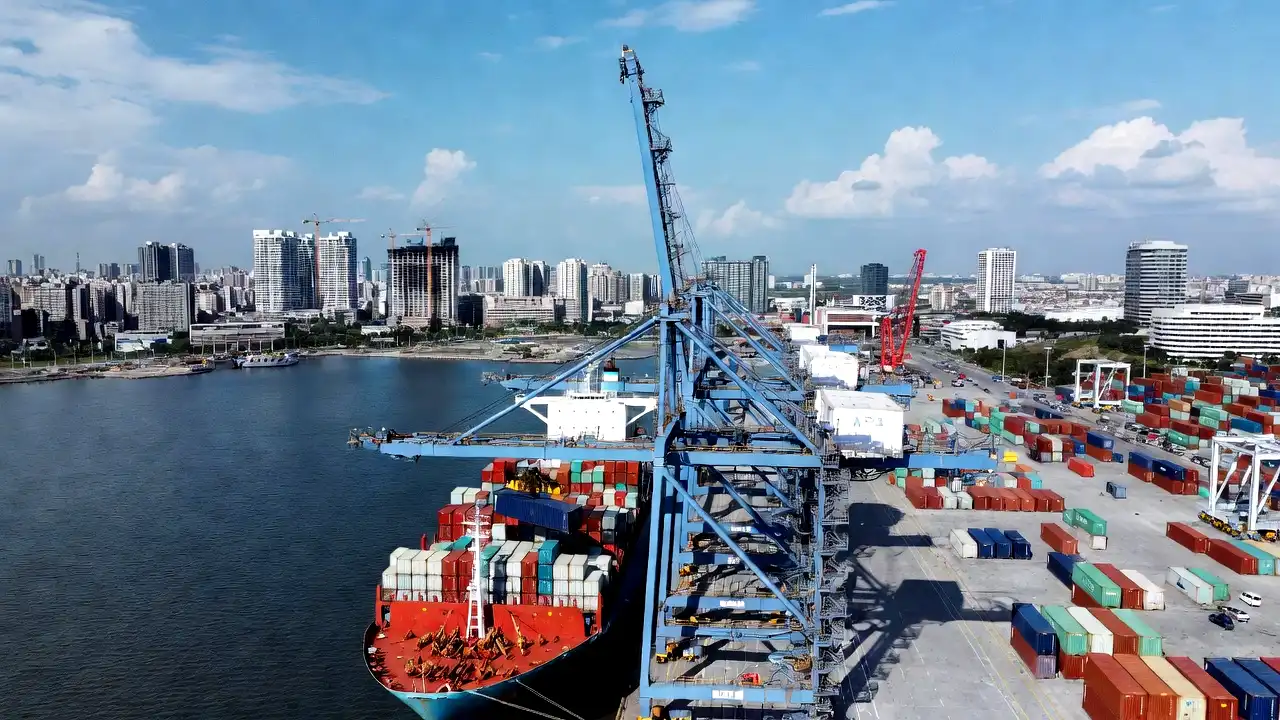
To support these massive, multi-billion-dollar cargo volumes, coastal municipalities are investing heavily in next-generation, fully automated transport infrastructure. At the major northern shipping hub of Tianjin Port, the newly expanded intelligent container terminal utilizes self-driving droids, automated gantry cranes, and AI-powered route planning to load and unload massive cargo vessels with incredible speed. With municipalities allocating over $1 billion to construct these automated, zero-emission smart ports, shipping efficiency has reached historic highs, allowing Chinese exporters to bypass traditional logistics bottlenecks and get their products to global markets faster.
In the end, the extraordinary 15.3 percent trade expansion during the first five months of 2026 highlights the deep, structural resilience of the Chinese economy. By growing its high-tech exports, scaling up its domestic imports, and expanding its trade routes across emerging markets, the nation has defended its position as the undisputed anchor of the global supply chain. As the automated logistics networks at Tianjin Port and other major coastal gateways continue to scale up over the coming years, this robust trade engine will play a critical role in securing the country’s economic vitality, ensuring that its industrial sector remains a dominant and highly competitive force in the digital age.