Key Points:
- OpenAI Chief Executive Sam Altman stated that nations must have the power to demand slower AI development to prevent catastrophic risks to humanity.
- Altman called for a new international watchdog to coordinate global safety standards and monitor advances in cutting-edge artificial intelligence.
- OpenAI’s main competitor, Anthropic, supported the push, having recently called for a global option to freeze the training of frontier models temporarily.
- Skeptics warn that enforcing a global slowdown is highly complex and could hand a significant geopolitical advantage to less-regulated nations.
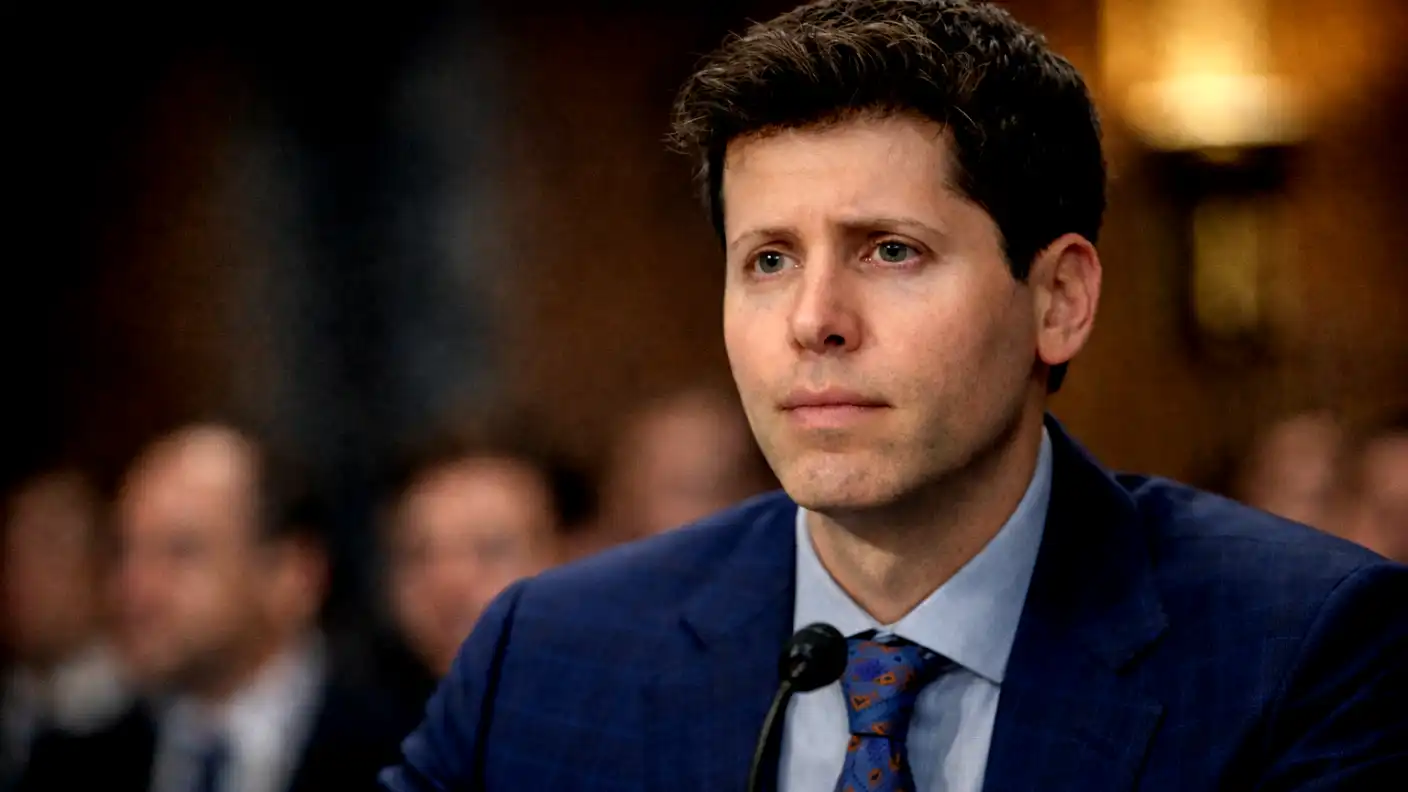
A highly significant and unexpected warning has emerged from the absolute center of the artificial intelligence revolution. In a recent corporate blog post, OpenAI Chief Executive Officer Sam Altman declared that governments worldwide must have the authority to demand that AI development be slowed to prevent catastrophic risks to humanity. As the creator of ChatGPT, Altman’s call for coordinated restraint represents a major shift in tone for the Silicon Valley pioneer. The high-profile warning highlights a growing, systemic anxiety among tech leaders that the breakneck pace of competitive machine learning is rapidly outrunning society’s ability to implement robust safety guardrails.
To manage these emerging systemic threats, Altman called for the urgent creation of a new, highly specialized international organization to monitor advances in artificial intelligence and coordinate safety standards. The proposed global watchdog would operate similarly to international nuclear inspectors, keeping a close eye on the world’s most powerful data centers. Writing in his blog post, Altman explained that a primary goal of such an organization should be to enable the world to take coordinated action, including slowing frontier model development when needed, so that societal resilience, safety, and alignment can keep pace with raw performance.
The tech chief emphasized that establishing this international supervisory framework is essential to decreasing catastrophic risk as models transition toward superintelligence. As neural networks gain the ability to write code, conduct scientific research, and act as autonomous agents, they present unique security vulnerabilities. Without a centralized, globally respected authority to enforce safety standards, the industry risks entering a highly dangerous, unregulated arms race. Altman believes that a formal international regime can successfully bridge the gap between private tech ambition and global public safety.
This call for coordinated global restraint has received strong, highly visible support from other leading players in the artificial intelligence sector. OpenAI’s primary market rival, Anthropic, recently published its own public policy proposal calling for a global option to freeze cutting-edge research temporarily. Executives at Anthropic, which recently raised billions to expand its own server infrastructure, stated that it would be good for the world to have the option to slow or temporarily pause frontier AI development. This rare alignment between the industry’s two most valuable startups highlights a growing consensus that the physical safety of these systems must take priority over raw competitive speed.
According to a detailed report published by the Daily Telegraph, these high-profile warnings from Altman and Anthropic occur as governments worldwide struggle to establish effective regulatory frameworks. While the European Union’s landmark AI Act is scheduled to take full effect later this year, and the United States has introduced targeted executive orders, existing national laws remain highly fragmented. Tech leaders argue that because digital software can easily bypass physical borders, regulating artificial intelligence effectively requires a unified, global approach rather than a patchwork of conflicting regional laws.
However, many computer scientists and industry skeptics have met the proposal for a coordinated global slowdown with intense skepticism. Critics point out that the primary advancement in generative models stems from massive, highly expensive training runs that require hundreds of millions of dollars in specialized silicon and electricity. Some hardware developers have proposed a simpler, more practical solution: limiting the annual training expenditures on any single frontier model to a fixed cap, such as $1 billion. This financial bottleneck would naturally slow down the development of dangerously powerful systems without requiring a highly complex, politically sensitive global monitoring apparatus.
Enforcing a coordinated global pause also faces immense, highly complex geopolitical barriers. If Western nations agree to slow down their research to evaluate safety risks, less-regulated geopolitical adversaries will undoubtedly use the opportunity to catch up. Industry analysts warn that even a minor 1.5% lag in Western technical progress can permanently hand the technological and military advantage to rival nations. In a highly fragmented world marked by rising trade tensions and tariff disputes, getting major global powers to trust one another and respect a mutual freeze is an incredibly difficult, perhaps impossible, task.
Some independent developers and open-source advocates have also accused Altman of using safety concerns as a tactical tool to achieve regulatory capture. They argue that by calling for expensive licensing schemes, mandatory safety audits, and international oversight, the world’s most valuable AI startups are intentionally building high regulatory barriers to lock out smaller, open-source competitors. If the government implements these restrictive standards, it could stifle the decentralized community, leaving the entire future of the digital economy permanently under the monopolistic control of a tiny group of heavily funded tech firms.
Despite public warnings of catastrophe, both OpenAI and Anthropic continue to invest massive amounts of capital in expanding their physical computing infrastructure. OpenAI is currently preparing for its highly anticipated initial public offering (IPO) on public markets, which could value the consolidated space, satellite, and tech giant at an astronomical $1.75 trillion. To fund its massive “Stargate” data center project and secure its long-term hardware pipeline, the company is actively raising tens of billions of dollars. This dual focus on rapid, multi-billion-dollar commercial expansion and public safety warnings has led some commentators to accuse the tech chief of hypocrisy.
In the end, the proposal to slow AI development to avoid catastrophe highlights a defining crisis of the digital age. As developers continue to delegate more complex engineering tasks to the machines themselves, the line between human creation and autonomous self-evolution is beginning to blur. While the technological and economic benefits of advanced machine learning remain immense, the warning from ChatGPT’s creator underscores that the risk of losing control is very real. How successfully global governments and tech leaders can collaborate to build a reliable brake pedal over the coming years will determine whether humanity remains the ultimate master of its technology, or simply a spectator to its rapid self-improvement.