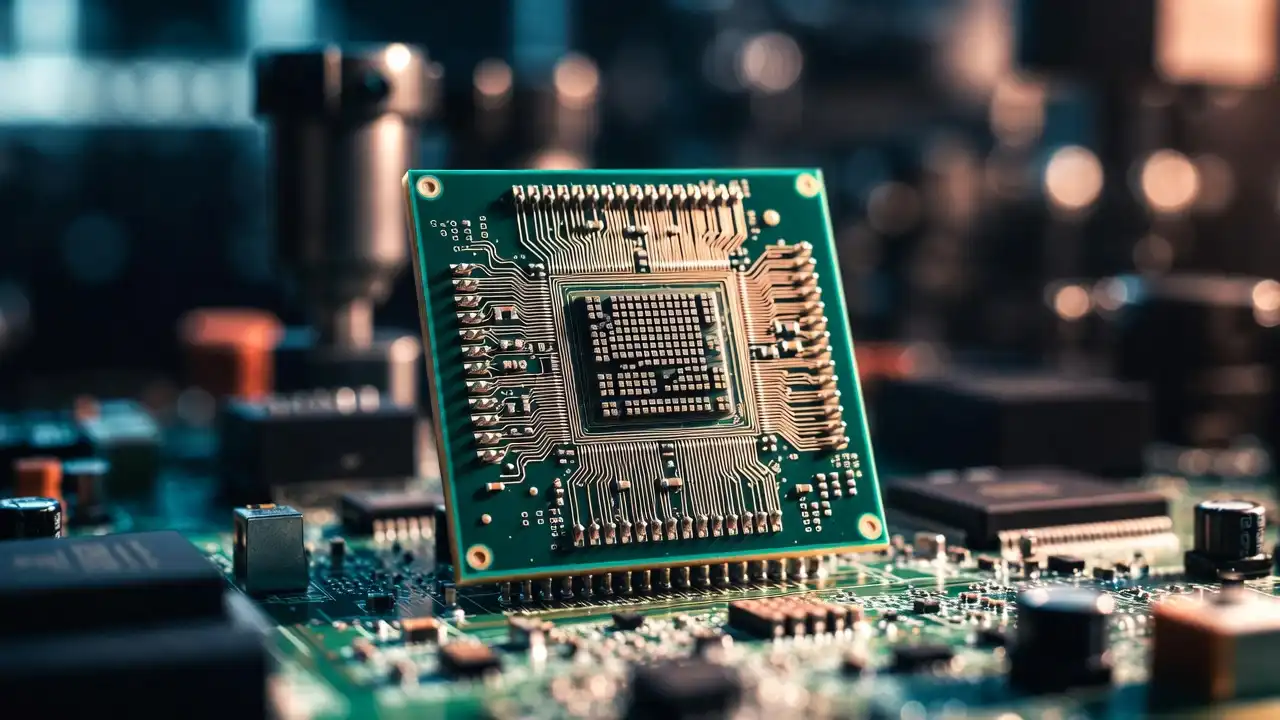
Our modern world runs on things we cannot see. Inside every smartphone, medical monitor, car dashboard, and fighter jet lies a tiny slice of silicon packed with billions of microscopic switches. These microchips, or semiconductors, act as the actual brains of our digital civilization. For decades, the companies that built these chips operated in a highly connected, peaceful global market. They designed software in one country, manufactured physical wafers in another, and packaged the final product in a third. It was a masterpiece of global efficiency. Today, that peaceful era has officially ended. We have entered a time where microchips are no longer just business products; they are the ultimate weapons of national security and international power.
The Dangerous Bottleneck of Silicon Valley’s Disciples
We spent decades concentrating almost all the world’s advanced chip manufacturing into a tiny, highly vulnerable corner of the globe. A single island in East Asia, namely Taiwan, produces over ninety percent of the world’s most sophisticated microchips. This is a massive, terrifying bottleneck. If a major earthquake, a local power grid failure, or a military conflict hits this small region, the global economy will freeze instantly. Car factories will shut down, smartphone production will stop, and hospitals will face a shortage of critical medical devices. The realization of this extreme vulnerability has triggered a massive, high-stakes geopolitical scramble to diversify our hardware foundations.
The Scramble to Build Local Foundries
Governments finally stopped watching from the sidelines. They realized that if you cannot manufacture your own chips, you do not truly control your own future. This anxiety is driving a massive wave of “onshoring.” The United States, the European Union, China, and major Asian economies are pouring hundreds of billions of dollars of public subsidies into building local semiconductor foundries, or “fabs.” This is one of the most expensive industrial efforts in human history. A single modern chip factory costs over twenty billion dollars to construct and requires years of highly specialized engineering. We are shifting from an era of global cost efficiency to one of national self-reliance.
The Weaponization of the Supply Chain
In a geopolitical market, microchips are the new battlefield. We see major world powers actively using trade bans and export controls to choke their rivals’ technological progress. Governments are restricting the sale of advanced chip-making machinery and blocking local developers from using foreign-built cloud servers. This is a high-tech blockade. The goal is simple: prevent your adversary from building the advanced computing systems necessary for next-generation weapons, artificial intelligence, and supercomputing. The chip has become a tool of economic warfare, and companies must now pick a side.
The Talent Shortage at the Silicon Frontier
You cannot build a twenty-billion-dollar chip factory and expect it to run itself. These facilities are the most complex cleanrooms on the planet. They require an army of highly specialized scientists, physicists, and chemical engineers who understand how to manipulate materials at the atomic scale. The sudden rush to build local fabs in the US, Europe, and Asia has created a massive global talent shortage. We have the money to build the factories, but we lack the human beings who actually know how to run them. The nation that wins the future is not just the one that writes the biggest checks, but the one that trains and attracts the best minds.
Navigating the Dual-Use Dilemma
Every single chip we manufacture carries a dual identity. A high-performance processor can run a harmless video game on a teenager’s console, or it can guide a supersonic missile to its target. This is the “dual-use” dilemma. Governments are forcing chip makers to audit their customers with an extreme level of scrutiny. Companies must track where every single chip goes and ensure that their products do not end up inside the military hardware of a hostile nation. This compliance burden is transforming chip manufacturers from neutral tech firms into active arms of national intelligence agencies.
The Threat of a Fractured Tech World
When governments force companies to build local, isolated supply chains, they create a massive risk of a fractured tech world. In the past, shared global standards allowed us to build devices that worked perfectly everywhere. If the world splits into hostile technological blocks, we might end up with different, incompatible standards. We could see a future in which a phone built for one country cannot communicate with a network in another. We trade the seamless, open internet of our youth for a divided digital world where security walls block the flow of innovation and ideas.
Finding the Balance Between Security and Innovation
We must maintain a healthy dose of realism. While national security demands that countries build their own local foundries, complete self-reliance in semiconductors is a total fantasy. The supply chain is too complex. One country might build the factory, but they still need raw chemical gases from Europe, advanced lenses from Japan, and design software from the United States. No single nation can do it all alone. True security does not lie in total isolation; it lies in building strong, trust-based alliances with friendly nations to share the burden of this complex technology.
Conclusion
The age of the peaceful, borderless semiconductor market is gone forever. We have entered a volatile era in which the microchip serves as the primary currency of global power. While the race to build local factories and secure supply chains creates immense geopolitical tension and inflates costs, it is a necessary adjustment to protect our digital civilization from a single, catastrophic bottleneck. We must continue to invest in our local talent, build secure alliances with our partners, and protect our critical supply lines. The silicon brain has become the heart of our national security, and we must guard it with all the wisdom, strength, and cooperation we can muster.