Key Points:
- Japan successfully launched H3 rocket No. 6, carrying six small satellites into orbit.
- The mission debuted the “30 configuration,” a low-cost variant with no solid rocket boosters.
- The flight marks the first domestic launch powered solely by liquid-fuel engines.
- The successful return to flight follows a painful mission failure last December.
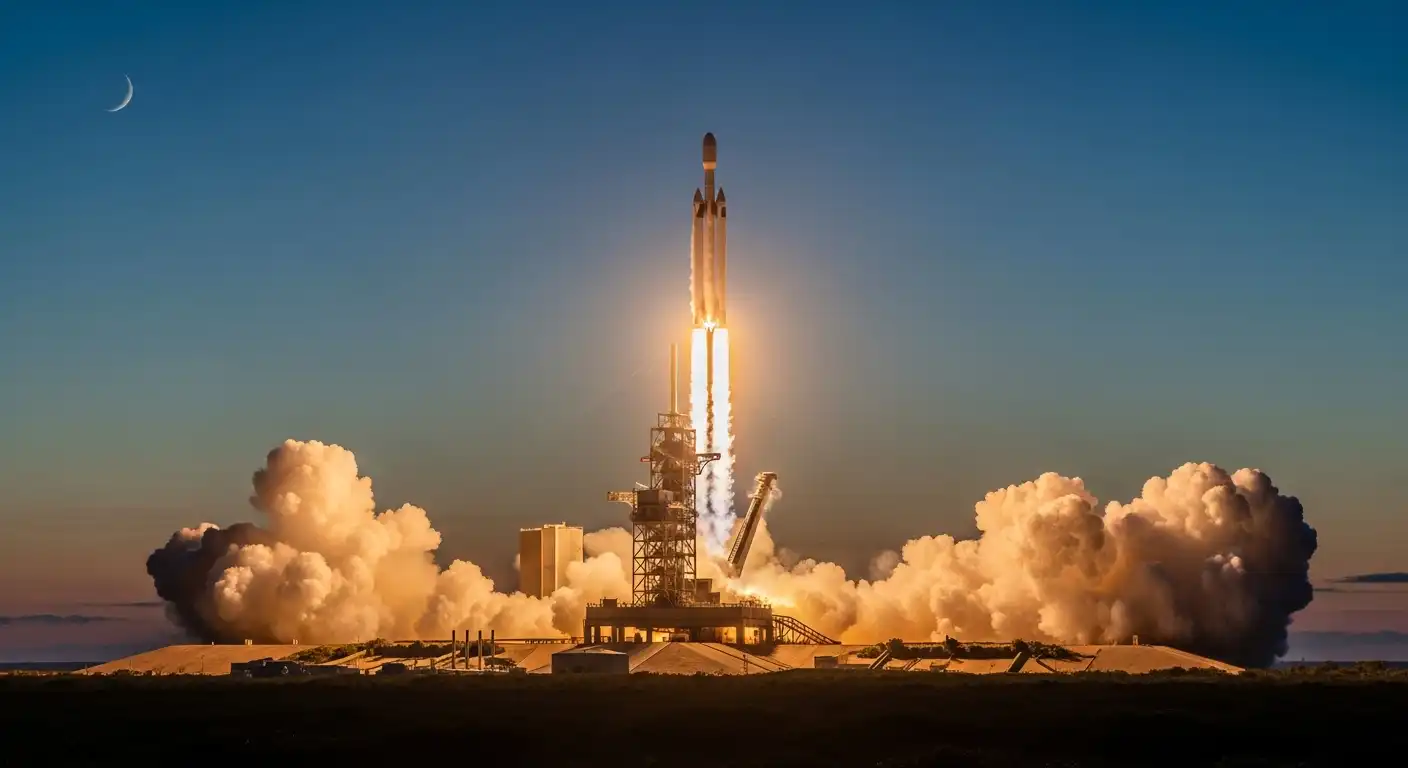
Japan has successfully launched its flagship next-generation rocket, marking a crucial return to flight after a disappointing mission setback late last year. The heavy-lift vehicle lifted off from the Yoshinobu Launch Complex at the Tanegashima Space Center in southwestern Japan, successfully delivering a payload of small satellites into low Earth orbit. This mission represents a historic milestone for the country’s space program, as it debuted a highly simplified, cheaper version of the launch vehicle designed to boost Japan’s commercial competitiveness in the global space market.
The mission, designated as Flight 6, marked the highly anticipated debut of the rocket’s new “30 configuration.” Unlike previous iterations that relied on side-mounted solid rocket boosters to assist with liftoff, this simplified model operates solely on three main liquid-fuel LE-9 engines. By eliminating the solid rocket boosters entirely, aerospace engineers managed to create a significantly lighter and far less expensive version of the vehicle. This successful test completes the planned lineup of three distinct launch configurations, giving space planners more flexibility when bidding for commercial satellite contracts.
The rocket soared into the morning sky after a two-day weather delay, performing as planned throughout its ascent. Approximately 16 minutes after liftoff, the vehicle reached its planned target orbit and successfully released its payload of six small microsatellites developed by domestic universities and private startups. These small satellites include the Tokyo Institute of Science’s “Umitsubame” satellite, which will use an advanced high-performance camera to observe global oceans, and Shizuoka University’s “Shiraito” satellite, designed to test innovative electromagnetic technologies to remove hazardous space debris from orbit.
The development of the H3 family represents a direct response to the rapidly changing dynamics of the global space transport market. Currently dominated by private American giants like SpaceX, the commercial launch sector has faced intense price competition in recent years. By simplifying the rocket’s architecture and incorporating consumer-grade automotive components, co-developers at the country’s space agency and Mitsubishi Heavy Industries aim to reduce the cost of each launch to approximately $50 million. This competitive pricing structure is essential for Japan to secure a stable, independent, and commercially viable transport capability for national security and scientific missions.
This successful return to flight represents a vital victory for Japan’s aerospace sector, which has faced severe setbacks over the past few years. The program’s last attempted mission, Flight 8, failed nearly six months ago, in December 2025, when a technical malfunction with the satellite mount prevented a critical navigation satellite from reaching its intended orbit. That failure forced engineers to suspend all upcoming launches to conduct a rigorous root cause investigation and introduce new hardware safety parameters to protect future payloads.
Similar engineering challenges have plagued the program’s early history. The rocket’s inaugural flight in March 2023 ended in disaster when the second-stage engine failed to ignite, forcing mission controllers to issue a self-destruct command. Additionally, the development timeline was further delayed after engineers discovered a system issue during an intense engine combustion test. By systematically resolving these intricate propulsion and electrical issues, space engineers have successfully matured the platform into a reliable, flexible transport system.
Securing a stable, independent space launch capability remains a core priority for Japan’s long-term national security and climate-monitoring strategies. The country plans to phase out its reliable but expensive predecessor, the H-IIA rocket, later this year. This means the newly validated platform must take over all future missions, including launching quasi-zenith navigation satellites and deploying government reconnaissance payloads. The success of the liquid-only configuration proves that the nation can manage these highly sensitive operations without relying on foreign launch providers.
The successful deployment of Flight 6 has officially opened a fresh chapter for Japan’s space program. No longer hindered by previous engine failures and design setbacks, the country’s flagship launch vehicle has demonstrated the versatility needed to thrive in a highly competitive era of commercial spaceflight. As state space planners prepare to scale up the launch frequency to six to eight missions annually, the newly proven low-cost configuration will serve as the workhorse of the fleet, helping to bridge geopolitical divides and secure Japan’s position as a major technological powerhouse in the modern space race.