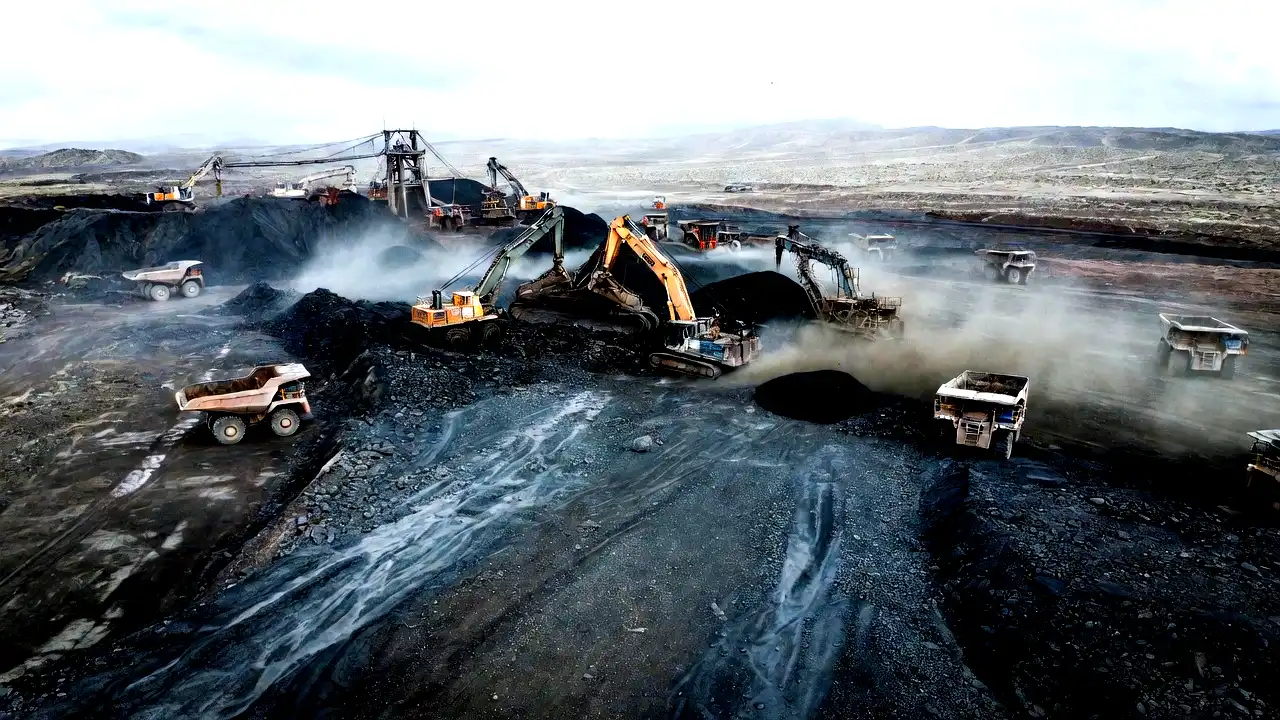
The geopolitical battle for artificial intelligence dominance is fought on two completely different fronts: advanced software laboratories in Silicon Valley and physical mineral processing facilities in East Asia. While the United States and its allies continue to implement strict export controls on advanced graphics processing units (GPUs) and lithography tools, China is aggressively deploying its own highly effective economic weapon.
By utilizing its near-monopoly over the world’s critical mineral supply chain, Beijing is systematically targeting the raw materials needed to manufacture next-generation hardware.
The primary focus of this technological tug-of-war has shifted to a niche, highly critical metal: indium. The Chinese government has significantly stepped up its customs scrutiny and paperwork audits over exports of refined indium metal.
Because China currently produces nearly 70% of the world’s indium, this sudden tightening has triggered intense anxiety among international technology companies, who fear that raw indium will soon be added to Beijing’s formal export control register.
This comprehensive analysis explores how China’s tightening indium export checks threaten the physical infrastructure of the global AI hardware boom, examines the critical role of indium phosphide in high-speed optical transceivers, details the historic diplomatic efforts by tech CEOs to lobby Beijing, and maps out the broader geopolitical implications of China’s newly enacted supply-chain security framework.
Understanding the Role of Indium in Artificial Intelligence
To understand why a relatively obscure metal like indium has become such a critical strategic asset, one must look at how modern high-speed electronics are constructed. Indium is a highly specialized, ultra-soft post-transition metal that does not exist in concentrated deposits. Instead, chemical refineries must extract indium as a minor byproduct of zinc and tin smelting, a highly complex metallurgical process that requires years of specialized technical expertise and massive industrial infrastructure.
Historically, indium’s primary commercial application was in the consumer electronics sector. Refiners used the metal to produce indium tin oxide (ITO) thin films, which serve as the transparent, electrically conductive layers inside liquid crystal displays (LCDs) and touchscreen panels for smartphones and televisions.
It was also used to manufacture low-temperature, lead-free solder alloys. However, the rapid expansion of generative artificial intelligence has completely transformed the metal’s economic profile, turning it into an indispensable component of high-speed optical communications.
Key Components of Indium’s Role in Next-Generation Tech
The physical construction and operational maintenance of modern AI data centers rely on several critical technical components:
- Indium Phosphide (InP) Substrates: The foundational compound semiconductor wafers used to manufacture high-speed photonic chips and optical transceivers.
- High-Speed Optical Communications: Directing lasers and light signals inside AI data centers to transmit gigabytes of data between GPU clusters in microseconds.
- Low-Temperature Solder Alloys: Providing highly reliable, stress-tolerant thermal interface materials for advanced packaging of massive microprocessors.
- Critical Mineral Watchlists: The official designations by Western security organizations flagging indium’s extreme supply risk.
- Bilateral Export Control Registers: The national security databases used by regulators to monitor, limit, and approve cross-border mineral flows.
The Silicon Chokepoint: Why Indium Phosphide is the Heart of AI Data Centers
The primary reason why indium is so vital to the artificial intelligence boom is its role in manufacturing indium phosphide (InP) substrates. To run complex, multi-agent AI models, data center developers must connect tens of thousands of high-performance GPUs in massive parallel computing clusters.
But as these clusters grow, traditional copper cables can no longer transmit data fast enough over long distances, creating a severe latency bottleneck that slows down the entire system.
To solve this latency issue, developers rely on optical interconnects—systems that convert electrical signals into light beams using high-speed lasers, transmitting data across the data center through fiber-optic cables at the speed of light. Indium phosphide is the irreplaceable semiconductor material used to manufacture these high-speed lasers, photodetectors, and photonic integrated circuits (PICs).
InP-based transceivers can handle data transmission speeds exceeding 800 Gbps and 1.6 Tbps, making them the absolute lifeblood of the global AI hardware boom.
When Beijing officially placed indium phosphide on its export control register in February 2025, it dealt a massive blow to the optical communications market, causing prices for specialized wafers to surge.
Now, by tightening its customs checks on the raw indium metal needed to synthesize these InP substrates, China is targeting the very roots of the Western technology supply chain, demonstrating its ability to throttle the manufacturing of next-generation AI hardware.
Analyzing the Tightened Export Checks on the Ground
The operational impact of this increased customs scrutiny is already being felt by international buyers on the ground, who report that the process of securing refined indium metal from China has become highly challenging.
For the first time, a major European buyer of indium metal was asked by Chinese customs officials to disclose highly sensitive information regarding their end users, including their physical locations and specific commercial applications. This level of due diligence mimics the restrictive measures typically reserved for formal, state-controlled export registers, allowing the Chinese government to track exactly where its minerals are being deployed.
At the same time, a major North American buyer reported that customs clearances, which previously took less than 24 hours under standard trading procedures, have stretched into several days due to aggressive paperwork audits. The buyer described the current operational atmosphere as incredibly “tense,” noting that even minor clerical errors in customs documents can now result in shipping delays.
By collecting this detailed end-user data, China’s Ministry of Commerce (MOFCOM) is systematically mapping out the global tech supply chain, identifying exactly which Western companies rely on its minerals, and building a targeted list of strategic chokepoints to exploit during future diplomatic negotiations.
The Beijing Lobbying Mission: Tech CEOs Take Action
The severe threat that these mineral blockades pose to the United States technology sector has forced the world’s most powerful corporate executives to take direct, extraordinary action.
President Donald Trump traveled to Beijing for a high-profile diplomatic summit designed to address ongoing trade tensions. To protect their supply chains, Trump was joined by a delegation of elite tech leaders, including Tesla and SpaceX CEO Elon Musk and Nvidia CEO Jensen Huang.
Notably, the CEO of Coherent—a major, Nvidia-backed manufacturer of optical chips and laser systems—joined the delegation specifically to raise the issue of the indium phosphide supply bottleneck.
While the White House subsequently announced that China agreed to “address U.S. concerns” regarding some heavy rare earth elements, the ongoing tightening of raw indium checks proves that Beijing has no intention of surrendering its mineral leverage.
By agreeing to minor, temporary concessions on highly visible rare earths while quietly expanding its restrictions on niche materials like indium, antimony, and graphite, China is successfully outmaneuvering Western trade negotiators, maintaining its near-monopoly on the building blocks of the digital economy.
Sovereign Supply Chains and the 15th Five-Year Plan
The tightening of indium export checks is not an isolated, short-term regulatory decision. It is part of a highly coordinated, long-term national security strategy designed to protect China’s industrial interests.
On March 31, the State Council of the People’s Republic of China officially promulgated the “Provisions on the Security of Industrial and Supply Chains” under State Council Order No. 834. This landmark legislation represents the country’s first dedicated supply-chain security framework, integrating export controls, security reviews, and trade countermeasures under a single, unified national security mandate.
The law gives the government broad powers to restrict or halt the export of any raw material if it determines that the supply chain security of the nation is under threat.
Under its newly launched 15th Five-Year Plan, which runs through 2030, Beijing is systematically using this unified framework to execute its economic statecraft. By controlling not just where minerals are mined, but where they are chemically refined and transformed into industrial inputs, China has built an incredible competitive advantage.
The Western technology sector can spend billions of dollars to build new semiconductor factories, but as long as those factories remain dependent on Chinese-refined minerals like indium, gallium, and germanium, Beijing will continue to dictate the speed and direction of the global technological revolution.
Conclusion
The sudden tightening of indium export checks by Chinese customs serves as a powerful, realistic reminder that the global artificial intelligence boom is deeply dependent on physical, geological realities. By requiring detailed end-user disclosures and executing rigorous paperwork audits on raw indium metal, Beijing is demonstrating its ability to throttle the manufacturing of the high-speed indium phosphide substrates that serve as the physical heart of AI data centers. While the high-profile diplomatic missions of Elon Musk and Jensen Huang show that tech giants are desperate to secure these supply chains, China’s newly enacted supply-chain security legislation under State Council Order No. 834 ensures that Beijing will continue to use its mineral dominance as a primary instrument of economic statecraft. Until Western nations can invest the billions of dollars needed to build their own domestic refining and chemical processing facilities, the physical mind of artificial intelligence will remain hostage to China’s critical mineral chokepoints, proving that in the modern technology race, control over raw materials is the ultimate form of sovereign power.