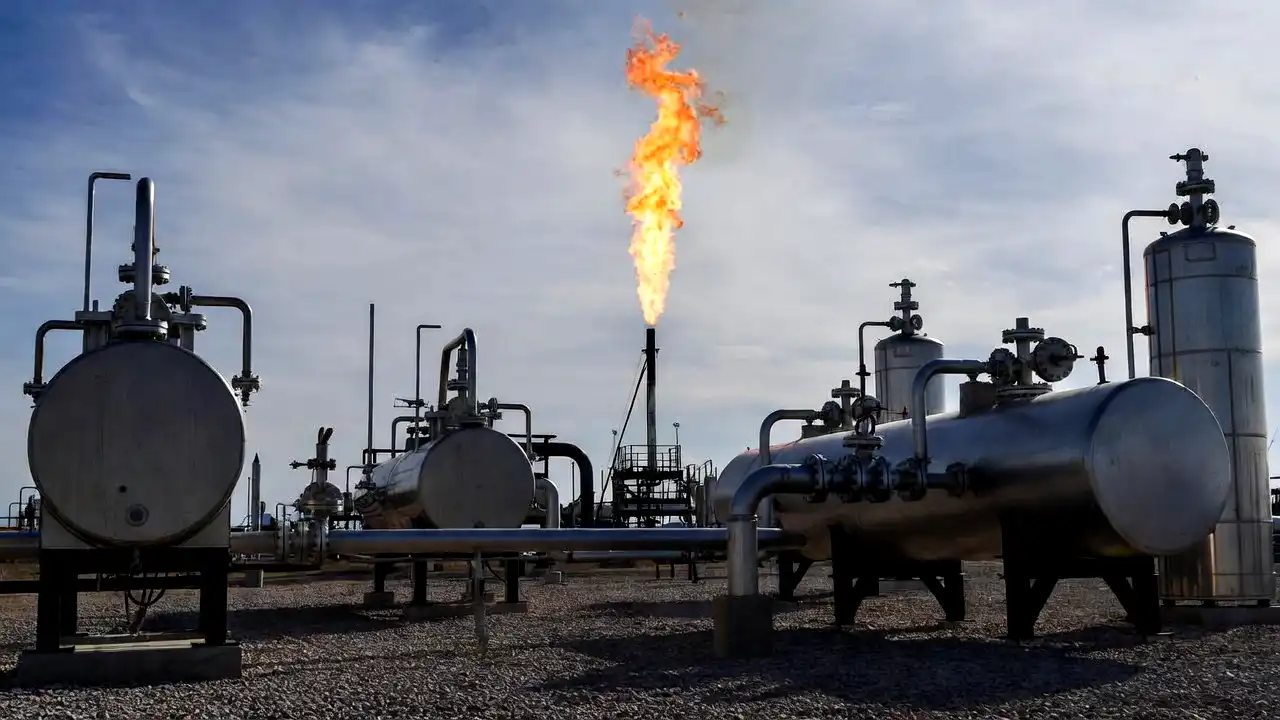
The energy landscape of the United States is going through a quiet but seismic shift. For 75 years, petroleum has reigned as the primary energy source powering the American economy. First capturing the top spot in 1950 when it overtook coal, oil has fueled the nation’s transportation systems, industrial factories, and suburban expansion for three-quarters of a century. However, that long-standing era of oil dominance is officially coming to a close. Energy consumption metrics and corporate production trends indicate that natural gas is on track to surpass petroleum as the country’s most consumed energy source by 2030.
The gap between these two fossil fuels has already narrowed to almost nothing. According to the latest data from the U.S. Energy Information Administration (EIA), natural gas accounted for a massive 36% of total U.S. energy consumption in 2025, sitting just one percentage point behind petroleum’s 37% share. Driven by the technological breakthroughs of the shale revolution, domestic gas production has surged over the past decade, driving down prices and positioning the fuel as the primary engine of the nation’s electricity grid. As the United States accelerates its transition toward an electrified economy, natural gas is emerging as the dominant fuel of the twenty-first century.
The Historical Evolution of the American Energy Mix
The impending transition at the top of the U.S. energy mix represents a rare, historic reordering of the nation’s industrial foundation. Over the past two centuries, the United States has undergone only a handful of these fundamental energy transitions, with each shift reflecting major changes in technology, transportation, and industrial capability.
The history of American energy is defined by distinct, consecutive eras:
- The Age of Wood and Horses: Throughout the early 19th century, wood was the primary source of thermal energy, while draft animals provided the physical labor necessary to move goods and cultivate land.
- The Transition to Coal: In the late 19th century, the rapid expansion of railway networks and the rise of heavy manufacturing pushed coal ahead of wood, fueling the American industrial revolution.
- The Rise of Petroleum: By the middle of the 20th century, the automobile revolution, the construction of the interstate highway system, and advancements in oil refining pushed petroleum to the top of the energy mix, starting an era of oil dominance that began in 1950.
- The Age of Electrification: In the late 2020s, the nation is entering a new era defined by rapid electrification, digital data processing, and artificial intelligence. This modern era is being driven primarily by cheap, abundant domestic natural gas.
This historical evolution is particularly visible in the electricity sector, where natural gas has systematically displaced other fossil fuels. Coal’s share of U.S. electricity generation has plummeted from approximately 50% in 2000 to under 20% today, as utilities shut down aging facilities due to strict environmental rules and low-cost gas competition. Between 2011 and 2020, utility companies retired or converted more than 100 coal-fired power plants to natural gas, permanently reshaping the nation’s power grid and setting the stage for gas to take over as the dominant energy source.
The Numbers Behind the Natural Gas Surge
The transition from an oil-driven economy to one powered primarily by natural gas is backed by massive capital investments and highly supportive production metrics. According to comprehensive forecasts completed by energy consultancy ICF, total U.S. natural gas demand is projected to rise by 25% by 2030, reaching an extraordinary 138 billion cubic feet per day (Bcf/d).
This massive demand increase is being driven by two primary engines:
- Liquefied Natural Gas (LNG) Exports: Expected to account for approximately 60% of the total demand increase through 2030, as global buyers scramble to secure reliable American gas.
- Power Generation: Projected to drive roughly 22% of the demand growth, as utility companies construct new gas-fired power plants to support a rapidly expanding electrical grid.
The epic scale of this gas boom is clearly visible in the Permian Basin of West Texas and Southeast New Mexico. Between 2021 and 2025, natural gas production in the Permian Basin surged by an extraordinary 60%, reaching 27.6 Bcf/d. In comparison, crude oil production in the same region grew by a more modest 39% over the same period. While oil production remains near historic highs, the physical volume of natural gas being extracted has grown significantly faster, providing a massive, low-cost supply buffer that is restructuring the global energy market.
The Double-Digit Growth of LNG Exports to Europe and Asia
The primary driver of the long-term natural gas demand surge is the rapid construction of massive Liquefied Natural Gas export terminals along the U.S. Gulf Coast. Over the past decade, advanced hydraulic fracturing and horizontal drilling technologies unlocked vast shale reserves, transforming the United States from a net energy importer into the world’s largest exporter of LNG.
This export capacity has become a critical strategic asset during a period of intense global geopolitical volatility. Following the energy crises and pipeline cutoffs in Europe, American LNG has emerged as the essential energy lifeline keeping European industries running and homes heated. This international demand is projected to double by the end of the decade as more liquefaction facilities reach commercial operation. According to Shell’s annual LNG outlook, U.S. feedgas for LNG plants is projected to comprise a massive 23% of total U.S. gas production by 2035, demonstrating that domestic natural gas has evolved into a highly valuable, globally traded commodity that carries immense geopolitical influence.
The Extreme Power Demands of AI Data Centers and Electrification
The second primary engine driving the natural gas consumption boom is the rapid electrification of the domestic economy. The U.S. electrical grid is facing unprecedented demand growth, driven by two highly energy-intensive trends: the widespread adoption of electric vehicles and the construction of massive artificial intelligence data centers.
Modern AI data centers, which house tens of thousands of advanced processors to train and run generative models, require an extraordinary, continuous supply of baseline electricity. While renewable energy sources like wind and solar are expanding rapidly, their inherent weather-dependence and the lack of large-scale battery storage mean they cannot provide the constant, 24/7 reliability required to keep advanced computer servers running without interruption.
This grid reliability bottleneck has forced utility providers to turn to natural gas as the only viable solution. Natural gas-fired power plants can ramp up production within minutes to cover renewable fluctuations, keeping the grid stable. According to Ira Joseph, a senior research associate at Columbia University’s Center on Global Energy Policy, natural gas dominates the power sector simply because it is so inexpensive and abundant, making it the most sensible and cost-effective fuel to power the digital age.
The Crypto Angle: Bitcoin Mining Meets Stranded Gas
The abundance of cheap domestic natural gas has also fostered highly creative, non-traditional partnerships between energy producers and digital asset developers. One of the most interesting examples of this industrial crossover is the growing use of stranded natural gas to power mobile Bitcoin mining operations.
In remote drilling locations where physical pipeline infrastructure does not exist, oil and gas producers have historically had to flare—or burn off—excess natural gas because there was no economical way to transport it to consumer markets. This practice of flaring represents a major source of carbon emissions and wasted energy.
Bitcoin miners solved this environmental and financial bottleneck:
- Miners park mobile, containerized shipping units filled with high-density ASIC mining rigs directly at remote well sites.
- The miners purchase the excess, stranded gas directly from the operator at extremely low prices, using specialized on-site generators to convert the gas into local electricity.
- This local electricity powers the energy-intensive mining rigs, turning what was literally going up in smoke into valuable digital currency.
- Because energy costs are the single largest input determining Bitcoin mining profitability, this access to cheap, stranded gas has built a highly profitable, off-grid business model that helps oil companies reduce their carbon footprint while securing a reliable revenue stream.
This creative integration shows that natural gas is no longer just a utility fuel, but a highly flexible, decentralized power source capable of supporting the most advanced segments of the digital economy.
The Flatlining Demand for Gasoline and Oil’s Strategic Re-Rating
While natural gas continues to set new consumption records, the demand for petroleum in the United States has entered a period of structural stagnation. This flatlining demand is the primary reason why natural gas is poised to take over as the nation’s leading energy source.
The structural headwinds facing the oil sector are concentrated in the transportation industry:
- Stagnant Gasoline Demand: Gasoline consumption, which has historically been the largest single domestic driver of oil demand, has permanently leveled off due to improving vehicle fuel efficiency standards and the growing adoption of hybrid and electric vehicles.
- Two Abundant Fuels: This transition does not mean that the U.S. oil industry is collapsing. U.S. crude oil production remains near historic highs, and the domestic energy picture is one of two abundant fuels operating at peak capacity rather than one completely replacing the other.
- The Transition to Power: However, because natural gas continues to win the growth race in utility power generation and international industrial exports while oil demand remains flat, the overall balance of the U.S. energy hierarchy is permanently shifting in favor of gas.
This reordering of the energy mix will have significant implications for corporate valuations and investment strategies. Wall Street is increasingly re-rating the natural gas sector, with major gas-focused producers—including EQT Corporation, Expand Energy, Range Resources, and Antero Resources—experiencing robust long-term growth as they prepare to supply the high-volume demand of the next decade.
Strategic Implications for the Global Energy Market
The rise of the United States as a natural gas-focused superpower will have profound implications for global geopolitics and trade. For decades, U.S. foreign policy was heavily influenced by its dependence on foreign oil imports, forcing Washington to maintain close, complex relationships with oil-producing nations in the Middle East.
Today, those traditional dependencies have disappeared. By producing more natural gas and oil than any other country, the United States has achieved complete energy independence, giving it immense diplomatic leverage over energy-importing regions like Europe and Asia. The ability of the U.S. to export massive volumes of LNG allows it to act as a global energy stabilizer, providing a secure alternative to Russian gas or Middle Eastern oil. This strategic advantage will ensure that natural gas remains a primary tool of American diplomacy and economic power for decades to come, proving that the nation that controls the flow of global energy will ultimately control the rules of the international order.
Conclusion
The projected transition of natural gas to surpass oil as the primary energy source in the United States by 2030 represents a historic, once-in-a-generation shift in the nation’s industrial foundation. After a 75-year run where petroleum powered the country more than any other fuel, the structural demands of the modern era—driven by booming LNG exports, high-density AI data centers, and the rapid electrification of the economy—have placed natural gas firmly at the top of the energy hierarchy.
Supported by a 25% projected increase in demand to 138 Bcf/d and backed by the rapid growth of the Permian Basin, gas-focused producers are well-positioned to supply the high-volume needs of the next decade. While the transition will introduce significant challenges for utility grids and municipal planners, the environmental benefits of displacing coal and the economic advantages of cheap, abundant domestic gas are clear. As the nation enters this highly automated, electrified era, the rise of natural gas will ensure that the United States possesses the clean, reliable, and independent energy foundation necessary to secure its technological and economic future.