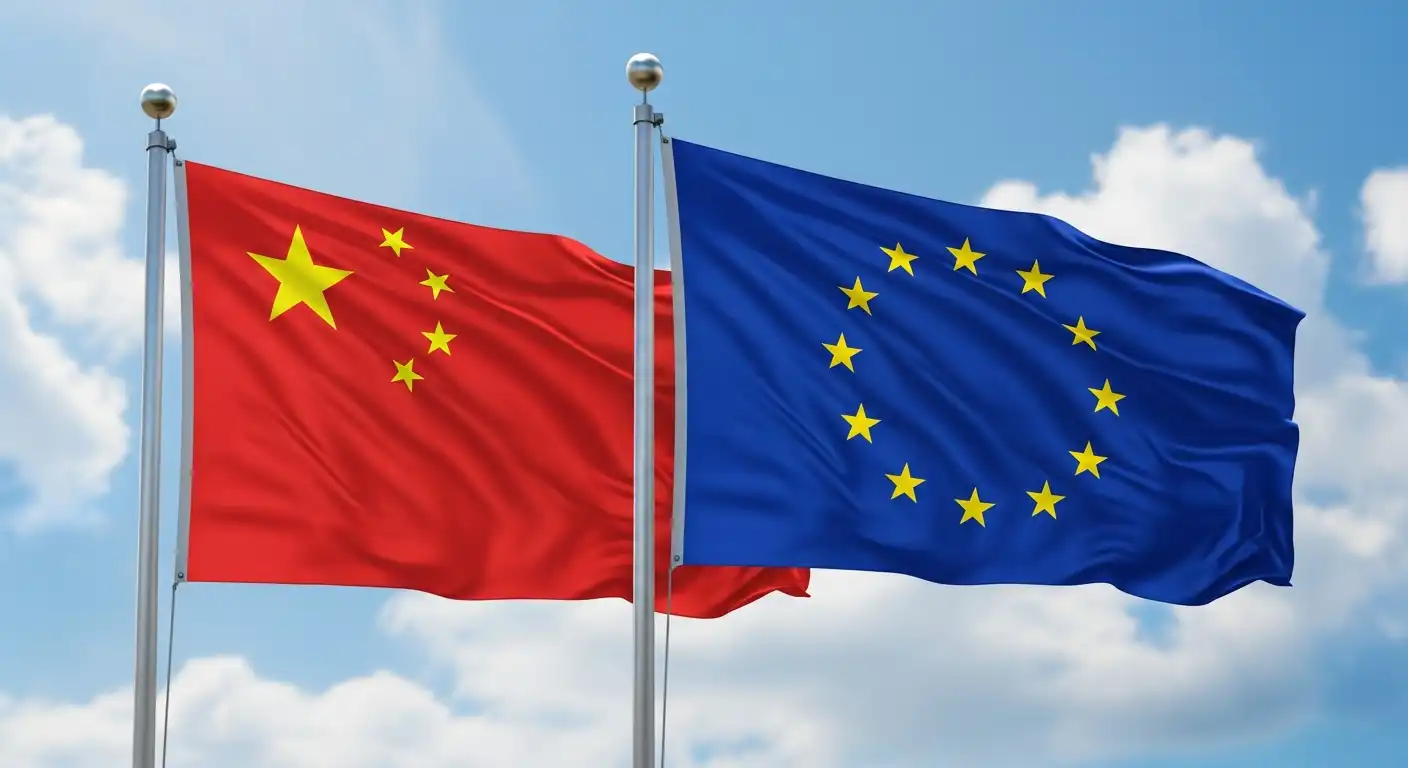
In the complex world of global diplomacy, business often speaks louder than politics. This reality was on full display in Stockholm as Chinese Foreign Minister Wang Yi embarked on a high-stakes tour of the Nordic region. Amid growing trade disputes and geopolitical tensions between Beijing and Brussels, China’s top diplomat made a strategic move. He bypassed the formal bureaucratic halls of the European Union headquarters to meet directly with one of Europe’s most influential business dynasties.
During his visit, Wang Yi met with Jacob Wallenberg, the chairman of the board of Sweden-based holding giant Investor AB. The meeting highlights a critical pivot in China’s foreign policy. As the European Union moves to erect new trade barriers and limit its reliance on Chinese manufacturing, Beijing is actively courting individual European corporate giants and family-controlled conglomerates. The Wallenberg family represents the unofficial royalty of Swedish industrial finance. Through Investor AB, the family controls or holds major stakes in global corporations such as Ericsson, ABB, AstraZeneca, Atlas Copco, and SEB.
During their discussions in Stockholm, Wang Yi urged the Swedish business community to play an active role in keeping economic relations open. He encouraged Wallenberg to influence the Swedish government to pursue a “rational and pragmatic” policy toward China. In response, Jacob Wallenberg expressed strong confidence in China’s long-term economic prospects, stating that closer economic ties remain vital for both Sweden and Europe. This analysis explores the deeper economic currents driving the Wang-Wallenberg meeting, the widening trade gap between Europe and China, and the geopolitical chess match playing out across individual European capitals.
Unpacking the Wang-Wallenberg Meeting in Stockholm
Choosing Jacob Wallenberg as a key diplomatic contact carries high symbolic and strategic value. In Sweden, the Wallenberg name carries immense industrial weight. The family-led holding company, Investor AB, manages a portfolio of companies that together make up a significant portion of Sweden’s gross domestic product and employ hundreds of thousands of people worldwide.
The Legacy of Sweden-China Commercial Ties
The relationship between the Wallenberg empire and the Chinese market is not a recent development. Investor AB companies were among the very first European corporations to enter China following the country’s landmark economic reform and opening-up period in the late 20th century. For instance, telecommunications giant Ericsson has operated in China for over 130 years, building out critical telephone and cellular networks across the nation.
Similarly, ABB, a global leader in power and automation technology, has invested billions of dollars in Chinese manufacturing facilities, research centers, and local engineering talent over several decades. These companies do not view China merely as a low-cost manufacturing hub. Instead, they see it as an indispensable consumer market and a vital node in their global supply chains. For these multinational corporations, any sudden decoupling or escalation of trade conflicts would result in severe financial damage.
Recognizing this deep history, Wang Yi praised the Wallenberg family’s pioneering role in bridging the gap between Sweden and China. He emphasized that China’s ongoing modernization process will continue to yield substantial opportunities for foreign investors who are willing to integrate into the domestic economy.
Sweden’s Strategic Stance on China
Despite these deep commercial ties, the political relationship between Stockholm and Beijing has encountered significant friction in recent years. Geopolitical differences, disputes over domestic human rights, and changing security dynamics in northern Europe have strained bilateral relations.
Sweden’s recent historic accession to the North Atlantic Treaty Organization (NATO) has further complicated the situation. By formally aligning itself with Western defense structures, Sweden has committed to a collective security framework that increasingly views China’s global ambitions with suspicion. Additionally, the Swedish public’s perception of China has grown more cautious, prompted by state-level security warnings regarding foreign espionage and cyber threats.
During his visit to Stockholm, Wang Yi also met with Swedish Prime Minister Ulf Kristersson and Foreign Minister Maria Malmer Stenergard. In these meetings, the Chinese delegation stressed the importance of rebuilding mutual trust and maintaining a correct mutual perception. Wang Yi noted that a stable and prosperous China provides the global economy with much-needed certainty, especially at a time of widespread international instability. Prime Minister Kristersson reaffirmed Sweden’s commitment to dialogue, indicating that while differences remain, Stockholm supports constructive engagement between Europe and China to manage disputes responsibly.
The EU-China Trade Deficit and the Struggle for Balance
While individual corporate leaders advocate for cooperation, the broader economic relationship between the European Union and China is facing severe structural strains. The primary source of tension is a massive and rapidly growing trade deficit that European policymakers argue is fundamentally unsustainable.
Breaking Down the €360.6 Billion Deficit
According to trade data, China’s goods trade surplus with the European Union recently reached a record €360.6 billion, which is equivalent to nearly $390 billion. This surplus represents a 15% increase compared to the previous year, showing that despite repeated warnings from Brussels about the need to diversify and balance trade, the gap is widening.
European officials argue that this imbalance is not simply the result of natural market forces. Instead, they point to state-directed subsidies in China that have created overcapacity in key industrial sectors, particularly in green technologies like solar panels, wind turbines, and electric vehicles. When Chinese domestic demand slowed down following a prolonged real estate crisis, factories began exporting their surplus production to international markets at prices that European competitors struggled to match. This flood of cheap imports prompted the European Commission to initiate trade investigations and implement protective tariffs, most notably on Chinese-manufactured electric vehicles.
The October Deadline for Tangible Results
To address these rising tensions, top trade officials from both sides have engaged in intensive negotiations. European Union trade chief Maros Sefcovic held focused discussions in Brussels with Chinese Commerce Minister Wang Wentao. The talks aimed to find concrete solutions to the widening trade gap and the impact of Beijing’s export controls.
Sefcovic emphasized that the status quo is no longer an option for Europe. The two sides agreed to establish dedicated working groups to tackle key issues, including trade balance mechanisms, export controls, intellectual property protection, and World Trade Organization (WTO) reform. Both parties have set a clear deadline, aiming to deliver tangible, measurable results by October. This timeline puts immense pressure on trade negotiators to find a compromise that protects European industrial interests without triggering a full-scale trade war.
Beijing’s “Divide and Engage” Strategy in Europe
Faced with an increasingly unified and defensive front from the European Commission in Brussels, China has adopted a sophisticated diplomatic strategy. Rather than negotiating solely with the central EU bureaucracy, Beijing is engaging directly with individual European capitals and corporate leaders.
This strategy leverages the natural divisions within the 27-member European Union. Different member states have vastly different economic relationships with China, leading to conflicting views on how to manage ties with Beijing. For example, France has been a vocal supporter of a firm, defensive stance, pushing for tariffs on electric vehicles and advocating for Europe to build its own industrial champions. French policymakers believe that Europe must reduce its strategic dependencies on foreign powers to achieve true geopolitical autonomy.
In contrast, Germany, the European Union’s largest exporter, is highly cautious about provoking retaliatory measures from Beijing. German automotive giants like Volkswagen, BMW, and Mercedes-Benz rely on the Chinese market for a large share of their global sales and profits. Any retaliatory tariffs from China would devastate these companies and drag down the broader German economy. Similarly, countries like Sweden, with its highly open, export-dependent economy, are hesitant to support protectionist policies that could disrupt international supply chains.
By holding high-level meetings with leaders in Sweden, Denmark, Finland, Norway, and Austria, Foreign Minister Wang Yi is attempting to build a coalition of “rational and pragmatic” partners within Europe. Beijing hopes that by offering market access and investment opportunities to individual nations, it can encourage these capitals to lobby Brussels against implementing harsher trade restrictions.
The Technology War and Europe’s Sovereignty Push
The economic conflict between Europe and China is not confined to traditional manufacturing; it is increasingly focused on the high-tech industries of the future. As artificial intelligence, advanced semiconductors, and cloud computing become critical to national security, the European Union is taking active steps to protect its digital sovereignty.
The European Commission recently unveiled the “European Technological Sovereignty Package.” This comprehensive legislative initiative covers key areas like semiconductor production, artificial intelligence safety, cloud data storage, and open-source software development. The goal of this package is clear: the EU wants to reduce its structural dependencies on both the United States and China.
A key target of the package is to double Europe’s global semiconductor market share to 20% by 2030. Currently, the continent relies heavily on advanced chips designed in the US and manufactured in Asia. By subsidizing domestic chip factories and funding advanced research, Brussels hopes to secure its supply of the silicon that powers everything from smartphones to military hardware.
For Chinese technology firms, this sovereignty push represents a significant barrier to entry. The new regulations place strict compliance and data localization requirements on non-European technology suppliers. This makes it much harder for Chinese telecom equipment makers, cloud providers, and software firms to operate within the European single market. Analysts believe that these digital barriers will continue to grow as Western intelligence agencies raise concerns about the security of critical digital infrastructure.
Conclusion and Future Outlook
The meeting between Chinese Foreign Minister Wang Yi and Investor AB Chairman Jacob Wallenberg in Stockholm highlights the deep tension between geopolitical competition and corporate pragmatism. While political leaders in Brussels and Washington warn of the risks of overdependence on China, the leaders of Europe’s largest industrial empires remain firmly committed to the Chinese market.
For Jacob Wallenberg and the global corporations controlled by his family, China is too large and too advanced to ignore. Decoupling from the world’s second-largest economy would not only mean losing access to hundreds of millions of consumers, but it would also cut these firms off from China’s highly sophisticated and unmatched supply-chain ecosystems.
As the October deadline for trade negotiations approaches, the pressure will continue to mount on both European and Chinese policymakers. The high-stakes negotiations will determine whether the two economic giants can establish a sustainable, balanced trading relationship or if they will slide further into a destructive cycle of tariffs and trade restrictions. Ultimately, the future of Europe-China relations will depend on whether the pragmatism championed by business leaders like the Wallenbergs can prevail over the growing geopolitical division of the modern world.