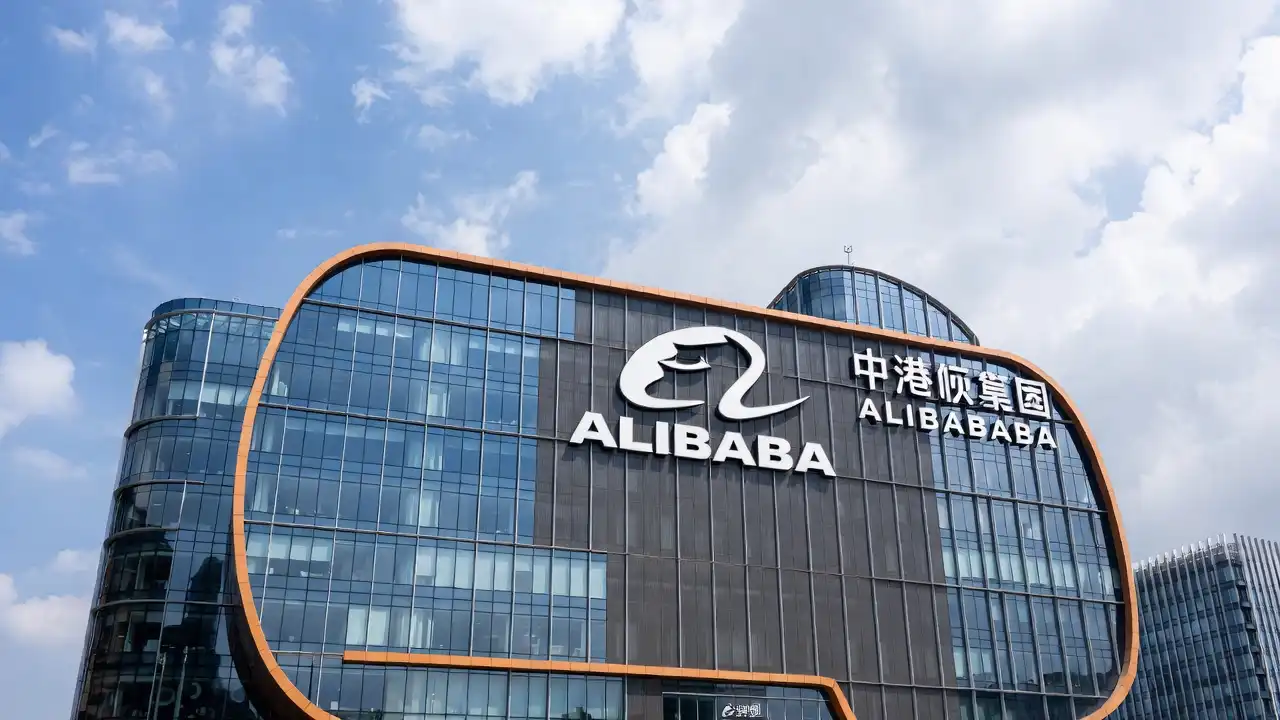
A federal judge in San Jose, California, has granted Alibaba Group Holding Ltd. a temporary reprieve from a sweeping new United States defense law. The court order, issued on July 5, 2026, temporarily blocks the Pentagon from applying a strict lobbying ban against the Chinese technology giant. This legal victory provides Alibaba with a much-needed shield, keeping its political influence channels open in Washington while the courts review the constitutionality of the new regulations.
The legal dispute stems from Section 851 of the National Defense Authorization Act (NDAA) for Fiscal Year 2025, which officially went into effect on June 30, 2026. Under this law, the US Department of Defense cannot award contracts to any company represented by lobbying firms that also represent blacklisted Chinese entities. This provision essentially forced Washington’s most powerful lobbying shops to make an immediate choice: continue representing Chinese technology firms or protect their highly lucrative contracts with US defense agencies.
The impact of the law was swift and severe. In the weeks leading up to the June 30 deadline, Washington’s top lobbying firms rushed to sever ties with prominent Chinese conglomerates. Alibaba lost five of its primary lobbying firms, while its domestic rival Tencent Holdings Ltd. lost four. By securing this temporary restraining order, Alibaba has temporarily halted the enforcement of these restrictions, allowing its remaining advocates to continue operating in the US capital during a critical period of trade and technology negotiations.
The San Jose Court Order: A Crucial Shield for Alibaba
The decision by the federal court in San Jose represents a major tactical victory for Alibaba in its ongoing struggle against US regulatory pressure. The company filed its lawsuit on June 23, 2026, naming US Defense Secretary Pete Hegseth as the primary defendant. In its legal filings, Alibaba argued that the Pentagon’s blacklisting and the subsequent lobbying restrictions violated its fundamental rights under the US Constitution.
The federal judge found sufficient merit in Alibaba’s arguments to issue a temporary stay, which will remain in place for up to 60 days or until a formal evidentiary hearing occurs. This order prevents the Department of Defense from applying the Section 851 contracting ban to any firm representing Alibaba. As a result, lobbying firms can temporarily resume or maintain their relationships with the Chinese e-commerce and cloud giant without fearing immediate financial retaliation from the Pentagon.
The First Amendment Argument
At the core of Alibaba’s lawsuit is the claim that the lobbying ban violates its First Amendment rights. The US Constitution protects the right of individuals and corporations to petition the government for a redress of grievances. Alibaba’s legal team argued that Section 851 creates a de facto blockade, making it virtually impossible for designated companies to hire professional advocates in Washington.
Because almost every major lobbying firm in Washington represents a US defense contractor or seeks to do business with the Pentagon, the law effectively forces these firms to drop Chinese clients. By threatening the livelihood of these lobbying shops, the US government has functionally silenced Alibaba’s voice in the legislative process. The lawsuit asserts that this backdoor restriction represents an unconstitutional infringement on the company’s right to participate in the democratic process and defend its commercial interests before Congress.
The Issue of Due Process
Alibaba’s second major legal argument focuses on the lack of due process in the Pentagon’s listing procedures. The company learned of its inclusion on the “Chinese Military Companies” blacklist—officially known as the Section 1260H list—only when the designation was published in the Federal Register on June 8, 2026.
According to the legal complaint, Alibaba spent several months trying to resolve the matter directly with the Defense Department. The company submitted detailed evidence showing that it has no ties to the People’s Liberation Army (PLA), answered extensive questionnaires, and provided a comprehensive written response.
Despite these proactive efforts, the Pentagon never responded to Alibaba’s submissions and proceeded with the blacklisting without providing a formal explanation or an opportunity for a hearing. Alibaba argues that this arbitrary process violates its due process rights, especially given the immediate and severe commercial consequences triggered by the listing.
Section 851 of the NDAA: Redefining Washington Influence
The passage of Section 851 has fundamentally reshaped the influence landscape in Washington, forcing a re-evaluation of how multinational corporations navigate political risk. For years, Chinese technology firms spent millions of dollars annually on K Street lobbying firms to shape US trade, technology, and national security policies.
However, the new defense law has turned these relationships into major liabilities for the lobbying firms themselves. The financial calculations for these firms are straightforward: defense and homeland security contracts represent steady, long-term revenue streams that carry very little political risk. Representing Chinese companies, on the other hand, invites intense scrutiny from congressional committees and can permanently damage a firm’s reputation among US government clients.
The Exodus of K Street Lobbyists
The commercial pressure of Section 851 triggered an unprecedented exodus of political advocates. Major Washington power players, including Brownstein Hyatt Farber Schreck, Mercury Public Affairs, and MO Strategies, officially ended their representation of Alibaba. Similarly, other firms such as Greenberg Traurig and Sidley Austin filed disclosures indicating they were no longer lobbying on behalf of the company.
This mass departure left Alibaba and Tencent without their primary advocates in the US capital at a time when they faced escalating pressure on multiple fronts, including potential sanctions, export controls, and technological decoupling. While the temporary court reprieve halts this exodus, it highlights the extreme vulnerability of foreign firms operating in highly politicized regulatory environments.
The restrictions also extend beyond the lobbying firms themselves. Several major US defense contractors have started requiring their advisors, consultants, and subcontractors to sign formal attestations confirming that they do not represent any entities on the Section 1260H list. These developments suggest that the downstream effects of the law will continue to restrict the commercial networks of blacklisted firms, even if the primary lobbying ban faces temporary legal setbacks.
The Pentagon’s 1260H Blacklist: A Growing Tool in the Tech War
The Section 1260H list was created in 2021 as a reputational tool to identify Chinese entities that the US Department of Defense believes support China’s military-civil fusion strategy. Under this strategy, the Chinese government leverages civilian technology companies to advance the capabilities of the People’s Liberation Army.
While the 1260H list does not carry immediate, automatic financial sanctions, its commercial impact is immense. It serves as a powerful warning signal to US investors, university research labs, and commercial partners that a company is viewed as a national security threat. Over time, inclusion on the list has become a precursor to more severe restrictions, such as inclusion on the Treasury Department’s investment blacklist or the Commerce Department’s Entity List.
Targeting China’s AI and Clean Tech Champions
In its latest annual update on June 8, 2026, the Pentagon significantly expanded the scope of the 1260H list. The Defense Department added 65 new entities, bringing the total number of blacklisted companies to 188. This expansion reflects a growing focus on advanced technologies that the US government believes are critical to future military dominance.
In addition to Alibaba, the updated list includes other major Chinese technology champions:
- Baidu Inc., China’s leading search engine and artificial intelligence developer.
- BYD Co., the world’s largest manufacturer of electric vehicles.
- Tencent Holdings Ltd., which was added to the list in 2025.
- Yangtze Memory Technologies Co. (YMTC) and ChangXin Memory Technologies (CXMT), two of China’s most prominent semiconductor memory manufacturers.
Alibaba has strongly rejected the Pentagon’s allegations, stating that it is a publicly traded commercial technology company focused entirely on e-commerce, cloud computing, logistics, and digital services. The company emphasizes that its board operates independently and that its diverse shareholder base is dominated by major American financial institutions, including JPMorgan Chase, Citigroup, and BlackRock. Alibaba asserts that its routine business interactions with China’s Ministry of Industry and Information Technology are standard regulatory compliance practices, not evidence of military collaboration.
The Geopolitical Fallout and China’s Countermeasures
The legal and regulatory battle over the 1260H list is part of a much larger geopolitical struggle between the United States and China over technology dominance. As Washington moves to restrict Chinese access to advanced semiconductors, artificial intelligence models, and financial markets, Beijing is increasingly fighting back with its own countermeasures.
Following the Pentagon’s June 8 update, China retaliated by imposing trade and export restrictions on 56 American companies. These targeted firms include US rare-earth miners, defense suppliers, and drone manufacturers. This retaliation underscores the risk of a widening trade war, where multinational corporations on both sides find themselves caught in the geopolitical crossfire.
At the same time, the US-China technology relationship remains highly complex and interdependent. In May 2026, the US Commerce Department cleared ten Chinese technology firms, including Alibaba, Tencent, and ByteDance, to purchase Nvidia’s advanced H200 chips. This move shows that while the US government continues to restrict Chinese firms through defense and national security lists, it also seeks to maintain managed economic interdependence in non-strategic sectors. This dual-track policy creates a highly volatile and unpredictable environment for international business compliance.
The Strategic Implications for International Business Compliance
The temporary reprieve secured by Alibaba has significant implications for other foreign companies facing US national security restrictions. It demonstrates that the US judicial system remains a viable path for foreign firms to challenge arbitrary regulatory designations.
This strategy mirrors the successful legal challenge mounted by Chinese smartphone maker Xiaomi in 2021. Xiaomi sued the Defense Department over its inclusion on a similar military blacklist, arguing that the designation was arbitrary and lacked factual support. A federal judge eventually ruled in Xiaomi’s favor, ordering the Pentagon to remove the company from the blacklist.
Alibaba’s decision to pursue aggressive litigation suggests that large Chinese technology firms are no longer willing to accept US blacklists without a fight. By challenging the constitutionality of Section 851, Alibaba is attempting to establish a legal precedent that could limit the US government’s ability to weaponize defense procurement laws against foreign commercial competitors.
However, navigating these challenges requires a delicate balance. While legal victories can delay or block specific regulations, they do not change the broader political consensus in Washington, which remains highly hostile toward Chinese technology companies. Foreign firms must continue to invest heavily in compliance, supply chain diversification, and localized legal strategies to protect their global market access.
Conclusion and Future Outlook
The federal court order granting Alibaba a temporary reprieve from the Section 851 lobbying ban is a significant, yet temporary, victory in a much larger conflict. While the ruling restores Alibaba’s ability to retain political advocates in Washington for the next 60 days, the underlying national security concerns driving US-China tech decoupling show no signs of dissipating.
The upcoming evidentiary hearings will be closely watched by international businesses, legal scholars, and government officials on both sides of the Pacific. The court’s final decision on the constitutionality of Section 851 could reshape the legal boundaries of US national security laws, potentially limiting how the government uses procurement restrictions to influence corporate lobbying.
Ultimately, the battle highlights the growing challenges faced by global technology firms operating in an era of heightened geopolitical rivalry. As national security and commercial technology continue to merge, companies like Alibaba must constantly adapt to a rapidly shifting landscape of blacklists, trade tariffs, and legal battles, proving that political compliance has become just as critical as technological innovation.