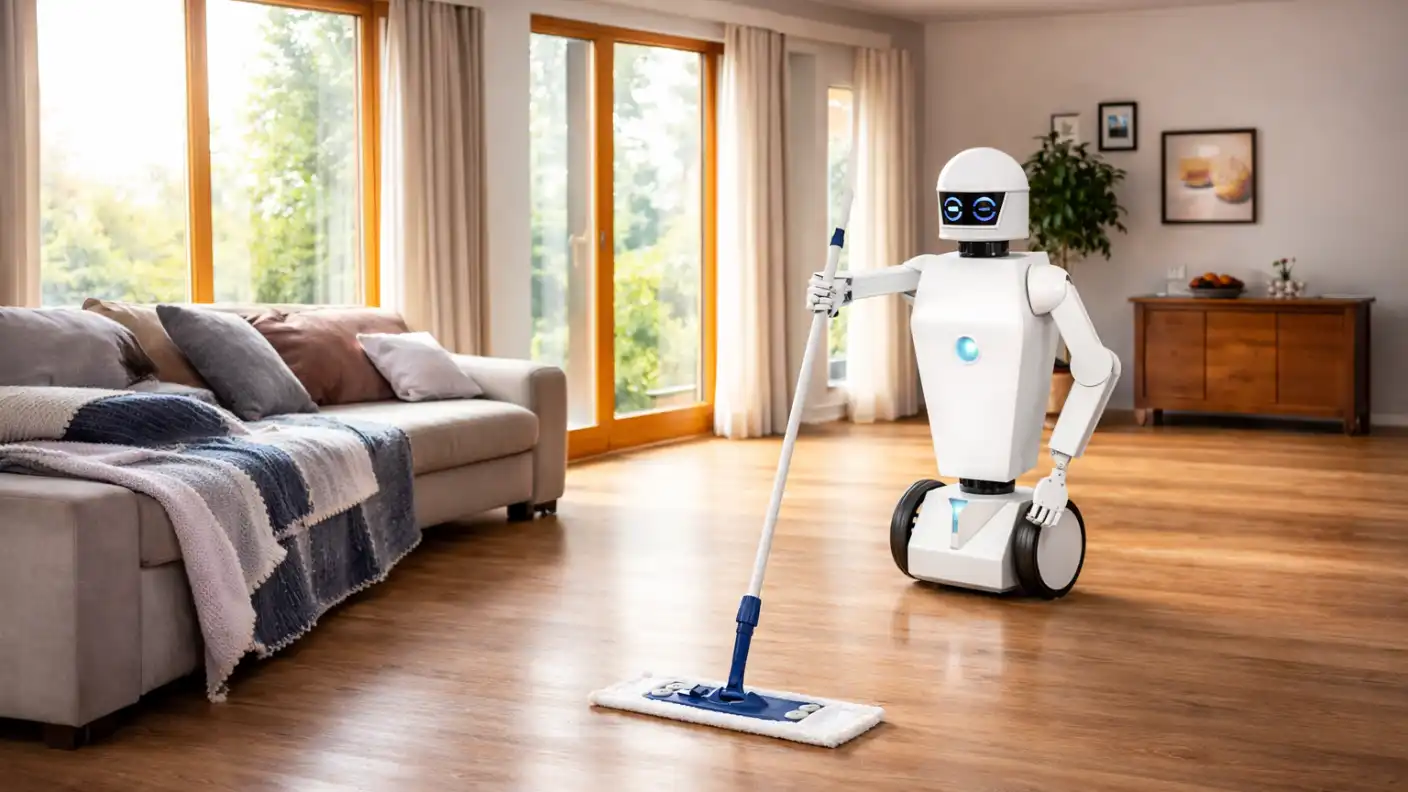
The world is undergoing a significant demographic transformation that is reshaping societies and economies. Across East Asia, Western Europe, and North America, birth rates continue to decline while life expectancy rises. The global population aged 65 and older is expanding at an unprecedented rate, projected to double to 1.7 billion by 2053.
This demographic shift is particularly pronounced among those aged 75 and older, who require the highest levels of medical and social support.
This aging population presents a major challenge for the global economy. As billions of baby boomers retire, they leave behind a shrinking pool of working-age citizens. This contraction of the workforce is driving severe labor shortages, particularly in manufacturing, logistics, and healthcare.
To manage this imbalance, technology developers and policymakers are turning to artificial intelligence and robotics.
While these technologies cannot reverse demographic trends, they are starting to serve as a critical bridge.
From humanoid robots taking over heavy manual labor to advanced voice-analysis algorithms screening for cognitive decline, AI is beginning to provide the tools necessary to support a graying world.
The Realities of the Global Demographic Squeeze
To understand why the technology sector is focusing so heavily on older adults, one must look at the physical limitations of the global labor market. The most acute pressure is felt in countries that are leading the aging trend.
The Japanese Government, for example, forecasts a 20% decline in the nation’s total labor force by 2040, a trend driven by decades of low birth rates and minimal immigration. Other industrialized nations, including South Korea, Germany, and Italy, are facing similar workforce contractions.
This labor shortage is especially severe in the healthcare and caregiving sectors.
In China, which is grappling with the legacy of its former one-child policy, industry models project a shortfall of more than 5 million professional caregivers by 2030.
On a global scale, the World Health Organization warns that a shortage of 11 million healthcare workers is looming.
This gap between care demand and labor supply is pushing existing medical systems to a breaking point.
In the United States, research indicates that 35% of practicing physicians plan to leave their clinical roles within the next five years, citing severe burnout.
Similarly, an estimated 900,000 registered nurses could exit the profession by 2027.
Traditional IT systems in hospitals and nursing homes often make these problems worse, forcing doctors and nurses to spend up to 39% of their daily shifts documenting patient data in electronic medical records rather than interacting with patients.
As the caregiver workforce shrinks and burnout rises, automated technologies are shifting from luxury additions to essential public health infrastructure.
Humanoid Robots and Factory Floor Automation
The most direct way artificial intelligence can address labor shortages is by replacing or assisting human workers in physical environments. While industrial automation has historically relied on stationary robotic arms, the integration of advanced AI is enabling a new class of mobile, adaptable machines.
The Advent of Humanoid Robotics with Northstar
In early July 2026, a significant milestone in physical AI occurred when Paris-based robotics startup UMA unveiled its general-purpose humanoid robot, Northstar.
Co-founded by Remi Cadene, a former lead engineer on Elon Musk’s Autopilot and Optimus programs, the startup designed Northstar to safely navigate and work alongside humans in manufacturing plants, logistics warehouses, and residential environments.
Northstar weighs just 40 kilograms (88 pounds), making it lightweight enough to interact with human workers without presenting a physical safety hazard.
The core innovation of the machine is its real-time demonstration-learning software.
Rather than requiring hours of complex computer programming to learn a new task, Northstar learns by watching.
A human worker demonstrates a physical movement once, and the robot’s neural network analyzes the demonstration, mimics the action, and refines its precision through practice.
By building lightweight, easily trainable robots, startups like UMA are aiming to build a scalable, cost-effective labor supply that can step into factories and warehouses as older workers retire.
Industrial Software and Strategic Labor Redistribution
This robotic transition is also supported by advanced automation software.
In Japan, startups like Mujin are developing intelligent software platforms that allow traditional industrial robots and unmanned guided vehicles to execute highly complex, heavy-muscle physical tasks without human intervention.
These automated systems handle heavy lifting, box sorting, and high-risk material transport.
Rather than replacing human workers entirely, this level of automation allows businesses to redistribute their remaining staff.
By delegating repetitive, dangerous, and physically exhausting tasks to intelligent machines, companies can move their aging workforces into lighter, supervisory roles.
This shift not only extends the working life of experienced employees but also ensures that limited human labor is reserved for tasks that require high levels of manual dexterity, cognitive problem-solving, and human judgment.
Companion Bots and AI Diagnostics in Care Facilities
Beyond the factory floor, artificial intelligence is moving into the highly sensitive, personal world of eldercare. As families and nursing homes struggle to find enough staff to care for elderly relatives, AI-powered companions and diagnostic tools are stepping in to fill the gap.
Companion Plushies in Tokyo Nursing Homes
In Japan, where over a quarter of the population is aged 65 or older, nursing homes are actively adopting AI companion robots to combat senior loneliness and assist overworked caregivers.
In facilities across Tokyo, seniors interact with baby-sized plushie robots and conversational dolls equipped with natural language processing models.
While these digital companions can initially seem like a clinical substitute for human relationships, real-world research shows positive outcomes.
A study of Japanese nursing homes found that the introduction of companion robots significantly reduced staff burnout and lowered employee quit rates.
Because the robots kept residents engaged, calm, and entertained, caregivers could focus their energy on tasks that required human touch, empathy, and medical expertise.
The technology does not replace the human element of care; instead, it automates social stimulation, allowing professional caregivers to manage their workloads more effectively and preserve their own mental health.
Voice-Based AI Cognitive Screening
Artificial intelligence is also transforming how clinicians detect and manage age-related cognitive decline. By 2040, an estimated 5.84 million seniors in Japan will live with dementia, while another 6.13 million will experience mild cognitive impairment.
Early detection is essential for slowing the progression of these conditions, yet traditional cognitive screening tests are often expensive, time-consuming, and highly stressful for patients.
To address this challenge, Japanese healthcare technology firm Nippontect Systems developed ONSEI, an AI-powered voice-analysis tool.
The ONSEI application allows users to speak into a mobile device, answering a single, simple question.
In less than 20 seconds, the underlying machine learning algorithms analyze the patient’s speech patterns, vocal fluctuations, and response latencies to identify subtle, early indicators of cognitive decline.
Crucially, the creators of ONSEI emphasize that the tool is not designed to issue a final medical diagnosis.
Instead, it acts as a non-invasive, accessible preliminary check, similar to taking a patient’s temperature.
By making cognitive screening as simple and unintimidating as a brief voice memo, the technology encourages seniors to seek medical guidance early, enabling families and healthcare systems to plan support structures long before acute symptoms manifest.
Digital Health, Telemedicine, and Remote Care
In addition to diagnostic tools, the integration of wearable health sensors and AI-enabled telemedicine platforms is allowing more older adults to age in place.
Connected home monitoring systems track a senior’s daily movements, sleep patterns, and vital signs, utilizing predictive analytics to identify potential health risks—such as an increased probability of falling or early signs of a cardiovascular event—before they become medical emergencies.
These remote patient monitoring tools are expanding the availability of personalized care at home, reducing the need for expensive, disruptive hospital visits and nursing home admissions.
For an overburdened healthcare system, this technology acts as a vital safety valve, allowing limited medical resources to be targeted to the highest-risk patients while keeping healthy seniors independent for longer.
The Risks: Digital Ageism, Financial Vulnerability, and Ethical Pitfalls
While the potential benefits of using artificial intelligence to support an aging population are substantial, the transition also introduces significant risks and ethical challenges that developers and regulators must carefully manage.
The primary technical challenge is the threat of digital ageism in algorithmic training.
Most consumer artificial intelligence models are trained on datasets derived from younger, tech-literate populations.
As a result, computer vision systems, voice recognition tools, and health diagnostics algorithms often perform poorly when interacting with older adults.
If an AI diagnostic tool is not trained on the vocal patterns, movement speeds, and physiological markers of seniors, it can produce highly inaccurate and potentially dangerous medical readouts.
Furthermore, the rising use of conversational AI exposes vulnerable older adults to new forms of financial exploitation and misinformation.
As more seniors turn to AI chatbots for personal finance and retirement planning advice, the risk of automated financial errors is rising.
A survey conducted by professional services platform Pearl.com found that 19% of U.S. adults lost more than $100 by following incorrect financial advice generated by AI chatbots.
For retired seniors living on fixed incomes, following flawed algorithmic advice regarding Social Security conversions or tax strategies can result in long-term financial damage.
Finally, there is a deep ethical concern regarding the potential loss of human dignity.
If public institutions and private care providers over-rely on robotics to manage the aging crisis, there is a risk that human interaction will be treated as a luxury.
Physical touch, emotional empathy, and genuine human connection are essential for mental and physical well-being.
If eldercare is reduced to a series of mechanical tasks executed by humanoid machines and conversational software, society risks isolating its oldest members, turning care into a process of automated management rather than human support.
Looking Ahead in a Graying World
The integration of artificial intelligence and robotics into the care of older adults is no longer a futuristic scenario; it is an active economic and social reality.
As the global working-age population contracts and care systems face unprecedented demand, technology represents the most practical tool available to manage this demographic transition.
Successfully navigating this shift will require a careful balance.
While humanoid robots like Northstar and diagnostic tools like ONSEI can dramatically increase productivity and ease the burden on human caregivers, they must remain tools of support, not total replacement.
By combining advanced technological capabilities with strong regulatory protections, inclusive dataset designs, and a commitment to preserving human touch, society can build an eldercare ecosystem that uses artificial intelligence to protect the health, independence, and dignity of its aging population.