The global transition to renewable energy is facing a major physical challenge: how to match unpredictable green power with the constant demands of the electrical grid. While wind and solar installations are expanding at a rapid pace, their output relies heavily on weather conditions. This unpredictability can cause grid instability and lead to “curtailment,” a scenario where operators deliberately shut off clean energy generators because the grid cannot absorb the sudden surge of electricity.
To address this challenge, clean energy developers are shifting from simple, standalone generation plants to multi-energy complementary complexes.
A prime example of this trend is located in Delingha City, situated on the high-altitude Qinghai-Tibet Plateau in northwest China’s Qinghai Province.
The joint complex containing the Huadian Delingha 1-gigawatt (GW) solar energy storage project and the 3-megawatt (MW) photovoltaic hydrogen production project has reached a major milestone, generating over 4 billion kilowatt-hours (kWh) of cumulative electricity.
The complex is operated by state-owned power giant China Huadian Corporation.
By combining massive solar photovoltaic arrays, utility-scale electrochemical battery storage, and advanced proton exchange membrane (PEM) water electrolysis into a single facility, the developer has built a highly resilient, zero-carbon microgrid.
The successful generation of 4 billion kWh of clean electricity proves that integrated renewable energy plants can operate reliably in harsh, high-altitude desert environments, providing a blueprint for the future of global grid stabilization.
The Engineering Triumph on the Roof of the World
Building and operating a utility-scale energy complex at 3,000 meters above sea level presents severe challenges for hardware engineering and physical logistics. Delingha City, located in the Haixi Mongol and Tibetan Autonomous Prefecture, features a cold, arid plateau climate.
While the region offers exceptional solar resource availability—averaging over 3,000 hours of bright sunshine annually—it also experiences extreme diurnal temperature variations that can exceed 30°C within a single 24-hour cycle, alongside intense dust storms and high UV radiation.
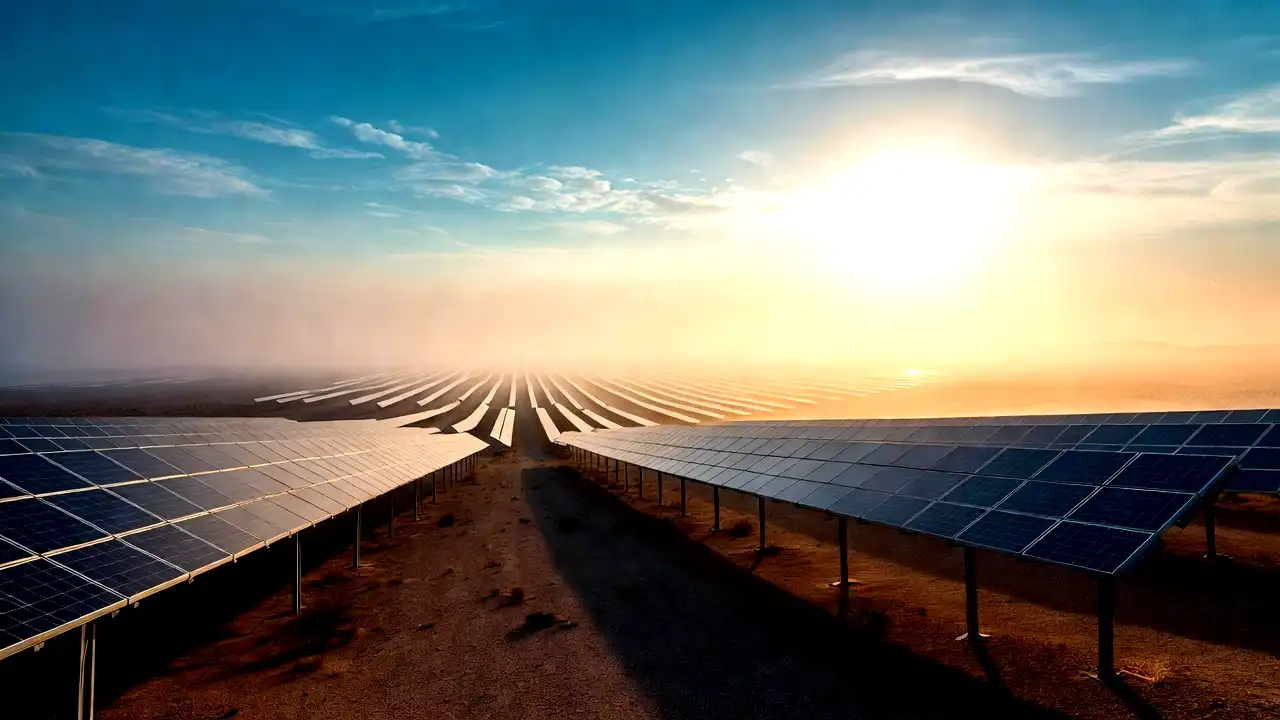
To harness these abundant solar resources, the solar generation segment of the complex was designed with a massive 1-gigawatt capacity.
The plant features millions of high-efficiency photovoltaic panels equipped with automated solar trackers that tilt the panels throughout the day, keeping them at the optimal angle to the sun and increasing overall energy yield by up to 15% compared to fixed-tilt installations.
To protect this sensitive equipment from the region’s intense high-altitude winds and rapid temperature swings, engineers utilized innovative construction techniques.
The solar arrays are anchored using micro-poured concrete piles and pre-fabricated structural cabins, minimizing soil disruption and avoiding ecological damage to the fragile desert plateau.
The electrical output is collected through an onsite 330 kV step-up substation, which stabilizes the current before transmitting it into the regional high-voltage grid or directing it to the complex’s localized energy storage and hydrogen production facilities.
Transforming the Grid with Electrochemical Energy Storage
The integration of a massive energy storage system is essential for managing the diurnal generation pattern of the 1 GW solar array. Solar panels only produce electricity during daylight hours, but cities and factories require power continuously.
To bridge this gap, the joint complex includes a large-scale electrochemical energy storage plant with a capacity of 270 megawatts / 1,080 megawatt-hours (MWh).
This storage facility acts as a giant shock absorber for the regional electrical grid.
During the middle of the day, when the high-altitude sun is at its brightest and solar generation peaks, the storage system absorbs excess electricity that would otherwise go unused due to transmission bottlenecks.
In the evening, as solar generation drops to zero and residential electricity demand surges, the battery plant discharges its stored energy back into the grid.
By utilizing high-capacity lithium-ion batteries, the Delingha complex can deliver a smooth, predictable, and continuous stream of electricity to the national grid.
This stabilizing effect is crucial for supporting the implementation of the country’s broader strategy to transmit green electricity from resource-rich western provinces to heavily populated industrial centers in the east, ensuring that remote desert installations can support the nation’s largest economic hubs.
The Role of Green Hydrogen and PEM Electrolysis
While battery storage is highly effective for short-term grid stabilization, long-term seasonal energy storage requires a different chemical approach.
To address this, the Huadian Delingha joint complex includes an integrated 3-megawatt photovoltaic-to-hydrogen production station, which recently achieved full commercial operation.
The hydrogen production facility represents a total investment of 150 million yuan (approximately $21 million) and features three sets of advanced Proton Exchange Membrane (PEM) water electrolysis systems.
Unlike traditional alkaline electrolyzers, which are slow to react and require steady power inputs, PEM electrolyzers utilize perfluorosulfonic acid proton exchange membranes.
This design allows the system to adjust its power consumption in real-time, matching the fluctuating output of the solar array perfectly.
The PEM facility has a production scale of 600 normal cubic meters per hour, translating to an annual green hydrogen output of 153 metric tons.
By using clean solar electricity to split water molecules, the plant produces green hydrogen with a purity level exceeding 99.999%.
This high-purity hydrogen is loaded into specialized high-pressure tube trailers and delivered to regional industrial buyers, establishing a complete local production, storage, and transport supply chain for zero-emission fuel.
The Collaborative Control System: The Brain of the Complex
The primary technological innovation of the Delingha facility is its proprietary, co-designed collaborative control system.
Managing three distinct energy technologies—solar generation, electrochemical battery storage, and hydrogen electrolysis—under volatile environmental conditions requires an exceptionally smart operating system.
The “PV-hydrogen-storage” control system constantly monitors real-time weather forecasts, grid capacity limits, battery state-of-charge, and electrolyzer temperatures.
Using advanced predictive algorithms, the software automatically decides the most efficient pathway for every kilowatt-hour of electricity generated by the solar panels.
If the batteries are fully charged and the regional transmission lines are running at maximum capacity, the control system instantly routes the excess power to the PEM electrolyzers to produce hydrogen.
This dynamic redirection prevents energy waste, optimizes the financial return on investment for the operator, and protects sensitive grid components from sudden overloads, showing how smart software can solve the physical limitations of renewable energy.
Desert Greening: Unintended Ecological Benefits
Beyond the impressive energy generation figures, the construction of the massive solar park has triggered positive ecological changes in the barren Delingha desert.
Before the project’s construction, the Tala tidal flats were characterized by shifting sands and sparse vegetation.
When millions of solar panels were installed across the flats, they acted as physical windbreaks, reducing wind speeds close to the ground and helping to fix the shifting desert sands.
Furthermore, the physical shade provided by the panels has reduced soil water evaporation by up to 20%, allowing the ground to retain moisture far longer.
This moisture retention is supported by routine maintenance operations.
The clean water used to wash dust from the solar panels seeps into the soil beneath, creating a microclimate that has prompted a rapid return of local grass and vegetation.
To manage this vegetation growth safely, local farmers are encouraged to graze sheep within the solar park.
This practice, known as solar grazing, provides a natural method for vegetation control while supporting the local agricultural economy, proving that large-scale clean energy projects can exist in harmony with ecological conservation.
Supporting National Dual-Carbon Commitments
The successful generation of 4 billion kWh of electricity at the Delingha complex aligns with the country’s national target to peak carbon dioxide emissions before 2030 and achieve carbon neutrality by 2060.
To reach these goals, the government is building massive clean energy bases in the Gobi Desert and other arid regions, where land is abundant and solar resources are exceptional.
Upon full, continuous operations, the Delingha joint complex is expected to save hundreds of thousands of tons of standard coal annually, reducing carbon dioxide emissions by approximately 1.93 million tons per year.
By demonstrating that high-altitude, integrated solar-hydrogen-storage projects are technically and economically viable, China Huadian Corporation has established a repeatable template for large-scale renewable deployment.
The project proves that combining generation, storage, and clean chemical conversion is the most effective path to decarbonize heavy industry, heat networks, and transportation, helping the global community move closer to a sustainable, low-carbon future.
Looking Ahead in an Integrated Energy Landscape
The milestone achieved by the Huadian Delingha joint complex represents a major step forward for the global green energy transition.
By proving that a 1 GW solar array can be integrated with battery storage and PEM hydrogen production under extreme environmental conditions, the project has solved the historic challenge of solar intermittency.
As the costs of battery storage and electrolyzer technologies continue to fall, this integrated design will become the standard for large-scale energy developments worldwide.
By turning volatile sunlight into a predictable stream of electricity and high-purity green hydrogen, facilities like the Delingha complex are transforming how we generate and store power, ensuring that remote, resource-rich deserts can serve as the clean energy engines of the modern world.