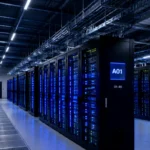
The investment narrative surrounding generative artificial intelligence has moved through several distinct, high-profile phases. In the early stages of the boom, Wall Street focused almost exclusively on the direct designers of advanced graphics processing units, driving the valuations of firms like Nvidia to multi-trillion-dollar heights.
As those trades became increasingly crowded, investors rotated capital into high-bandwidth memory manufacturers, specialized chip packaging foundries, and the utility companies responsible for supplying electricity to high-density data centers.
Recently, in mid-2026, the global hardware supply chain hit a new physical bottleneck.
This latest constraint centers on a passive electronic component that is smaller than a single grain of rice: the multilayer ceramic capacitor.
Often referred to as the “rice of the electronics industry,” these tiny ceramic blocks are essential for the operation of virtually every modern electronic circuit. While standard consumer devices like smartphones and laptops use these capacitors by the hundreds, the massive power requirements of advanced artificial intelligence servers have triggered a monumental spike in demand.
As a result, the global electronics supply chain is experiencing a severe high-end capacitor shortage. Spot prices for specialized models have surged, lead times have ballooned to over 24 weeks, and passive component giants are implementing double-digit price hikes to manage overwhelming order backlogs.
For global investors and hardware procurement teams, the humble capacitor has suddenly transformed from a low-cost commodity into a highly valued strategic asset.
Decoding the Physical Realities of AI Power
To understand why multilayer ceramic capacitors have emerged as a critical bottleneck in the artificial intelligence race, one must examine the physical challenges of managing high-performance computing hardware. Modern AI training and inference models run on clusters of advanced GPUs that operate differently than traditional enterprise processors.
These high-density chips require a massive, steady flow of electrical current at exceptionally low voltages to execute trillions of calculations per second.
This electrical environment is highly vulnerable to a phenomenon known as voltage droop. When an advanced GPU suddenly transitions from an idle state to processing a complex mathematical workload, its demand for electrical power spikes instantly.
If the local voltage drops even slightly during this sudden transition, the logic gates inside the processor will experience calculation errors, triggering catastrophic computational failures or system-wide crashes.
To prevent this, design engineers must place high-capacitance, low-resistance capacitors immediately adjacent to the processor.
In this configuration, these tiny components act as localized, ultra-fast energy reservoirs. They store electricity during periods of low activity and discharge it in a matter of nanoseconds whenever the GPU demands a sudden surge of current, stabilizing the local voltage and ensuring the integrity of the data processing loop.
Because next-generation AI platforms operate at power densities exceeding 120 kilowatts per server rack, the physical number of capacitors required to maintain voltage stability has grown exponentially, putting unprecedented pressure on global component manufacturing capacity.
The Staggering Multiplier: From Smartphones to Server Racks
The core driver of the current supply crunch is a massive multiplier effect. As technology platforms transition from traditional mobile and cloud architectures to advanced artificial intelligence networks, the physical volume of capacitors required per unit is escalating at a pace that has caught the market off guard.
The Consumer Device Baseline
To establish a baseline for this demand expansion, one can look at standard consumer electronics. A typical premium smartphone contains approximately 1,000 to 1,500 multilayer ceramic capacitors, while a mainstream laptop requires around 1,800 units.
In the automotive sector, a standard internal combustion engine vehicle utilizes roughly 3,000 capacitors.
An advanced battery electric vehicle equipped with Level 2+ autonomous driving features requires up to 10,000 units to support its onboard sensors and electronic control units.
The Server Escalation
In the enterprise computing market, the numbers are significantly higher. A standard, general-purpose enterprise server motherboard requires approximately 2,200 to 4,000 capacitors to manage power distribution.
When the industry transitioned to early-generation AI systems, such as servers utilizing Nvidia’s Hopper architecture, that requirement doubled, with each server board consuming several thousand high-grade, high-temperature units to handle the increased power loads.
The Blackwell and GB300 Boom
With the deployment of next-generation AI platforms, the demand curve has entered a vertical trajectory. According to technical specification documents from major passive component manufacturers, a single server node built on Nvidia’s Blackwell GB200 platform requires approximately 6,500 capacitors.
The advanced GB300 platform pushes this requirement to approximately 30,000 high-end capacitors per server unit—a staggering 12.5-fold increase over a standard enterprise server.
The Rack-Level Storm
When scaled to a full server rack, the physical volume of components becomes immense. A complete GB300 NVL72 computing cabinet requires up to 440,000 high-capacitance capacitors, while the upcoming Rubin NVL72 architecture is projected to consume between 570,000 and 600,000 units per rack.
This extreme concentration of passive hardware means that Nvidia and its primary server manufacturing partners are now consuming a massive portion of the world’s high-grade capacitor capacity.
Consequently, the physical capacitor has emerged as the third most expensive component in the entire AI server bill of materials, trailing only the highly specialized GPUs and high-bandwidth memory chips.
The Global Oligopoly and the Price Spike
The sudden shortage of high-end capacitors has triggered intense price volatility across global spot markets. This price reaction is amplified by a highly consolidated manufacturing landscape, where a small group of specialized East Asian firms controls the vast majority of the world’s advanced material science intellectual property.
The global market for high-performance, high-voltage capacitors is effectively structured as an oligopoly:
- Murata Manufacturing: Based in Japan, Murata is the undisputed benchmark of the passive components industry, controlling approximately 40% to 50% of the high-end market. The company possesses the deepest technological moat in ceramic formulation, allowing it to mass-produce ultra-thin dielectric layers under 0.5 micrometers.
- Samsung Electro-Mechanics: Based in South Korea, this technology giant has aggressively expanded its advanced production lines, capturing roughly 40% of the specialized AI server market.
- Taiyo Yuden and TDK Corporation: These Japanese component specialists control the remaining share of the premium, high-reliability market segments.
Because these manufacturers are running their advanced production lines at utilization rates exceeding 95%, they have virtually no spare capacity to absorb sudden demand surges. This tight supply environment has triggered a significant upward trend in prices.
Since late February, spot prices for high-capacity capacitors have risen by 15% to 20% across standard industrial grades.
More alarmingly, the prices for specialized, high-temperature, and ultra-high-capacitance models used exclusively in AI data centers have jumped by 50% to 60%, with some scarce models experiencing tenfold price spikes in the electronics trading hubs of Shenzhen and Shanghai.
To offset rising raw material costs, industry leader Murata implemented a broad price hike of 15% to 35% on its specialized components.
This move prompted immediate, matching price adjustments from competitors, including Samsung Electro-Mechanics, Taiwan’s Yageo, and Walsin Technology.
Because Chinese domestic manufacturers are currently limited to producing lower-end, commodity-grade capacitors and face a two-to-three-year qualification delay for automotive and AI-grade components, Western and East Asian server builders have no choice but to pay these premium prices, locking in high-margin revenue streams for the dominant Japanese and South Korean suppliers.
Supply Chain Bottlenecks and the Investment Horizon
The high-end capacitor shortage is expected to persist through the remainder of the year, with no meaningful relief projected until early 2027. The primary barrier to expanding supply is the extreme complexity of building new manufacturing facilities.
Constructing a high-grade passive component fabrication plant is a capital-intensive process that requires between 1.5 and 2 years for physical construction, with an additional 12 months needed to install, calibrate, and optimize precision equipment like high-temperature co-firing ovens and photolithography-grade cleanrooms.
While Murata has committed 56 billion yen (approximately $350 million) to a massive, server-focused capacity expansion, these new production lines are not scheduled to enter mass production until late in the fourth quarter.
Similarly, Samsung Electro-Mechanics’ planned capacity additions in South Korea have faced equipment delivery delays, pushing their full operational ramp into the first quarter of next year.
This prolonged supply lag means that hardware builders will continue to face tight component allocations, potentially delaying the physical shipping schedules of next-generation AI training clusters.
For Wall Street, this structural supply-demand mismatch represents an exceptional investment opportunity. As valuations for software and logic chip companies reach stretched levels, institutional investors are rotating capital into passive component manufacturers.
These firms trade at attractive valuations while serving as essential suppliers to the entire technology sector.
By controlling the upstream raw materials and manufacturing techniques required to produce these tiny, high-capacitance components, the leading capacitor makers are functioning as the ultimate pick-and-shovel plays of the artificial intelligence boom, capturing reliable profits regardless of which software model or logic chip design eventually dominates the market.
Looking Ahead in a Supply-Constrained Market
The emergence of multilayer ceramic capacitors as a critical bottleneck in the artificial intelligence race highlights a fundamental truth about the digital economy: the most advanced cloud software remains entirely dependent on physical hardware and material science.
As technology giants continue to design and deploy increasingly powerful processors, the physical demand for stable, high-density power management will only intensify.
The transition from standard, commodity-grade passive components to customized, high-capacitance silicon and ceramic architectures is no longer an optional optimization project; it has become a vital requirement for the continuation of the AI revolution.
Over the next year, the electronics sector will be defined by a scramble to secure these tiny, critical components.
The manufacturers that can maintain production efficiency, secure raw materials, and deliver reliable, high-voltage capacitors to data center builders will occupy a dominant position in the global supply chain, proving that in a high-tech gold rush, the smallest components often yield the largest returns.