The global automotive industry is witnessing a structural transformation that is redefining the very nature of car ownership. For more than a century, a passenger vehicle was viewed as a long-term capital asset—a durable piece of mechanical engineering built to last a decade or more. Today, in the world’s largest automotive market, that concept has completely evaporated. According to a groundbreaking industry report, electric vehicles on Chinese roads have an average age of just 1.8 years, a lifespan on the road that is shorter than the period many consumers keep their mobile phones.
This remarkable statistic comes from a joint report released by the China Association of Automobile Manufacturers and Hejun Consulting. The study revealed a staggering divergence between traditional and modern powertrains. While traditional internal combustion engine passenger vehicles in China maintain a mature average age of 8.2 years on the road, new energy vehicles—which include battery-electric and plug-in hybrid models—average less than two years.
This extremely low average age does not mean that Chinese electric cars are physically wearing out or being scrapped after eighteen months. Instead, it is the result of a massive, recent sales explosion paired with an unprecedented cycle of technological innovation. In China’s hyper-competitive automotive ecosystem, cars are no longer treated as legacy mechanical transport. Instead, they are being developed, marketed, and consumed as rapidly evolving consumer electronics, completely upending the traditional economics of car depreciation, product development, and global trade.
The Dual Engines of the 1.8-Year Phenomenon
To understand why the average age of electric vehicles on Chinese roads is so low, it is necessary to separate the statistical mathematics from actual consumer behavior. The 1.8-year figure is driven by two powerful, overlapping forces: a massive, recent surge in new vehicle registrations and an incredibly rapid product development cycle that makes older cars feel technologically obsolete in a matter of months.
The first major driver is the sheer volume of recent sales. China’s electric vehicle market entered a phase of explosive growth starting around 2021. By 2025, retail sales of new energy vehicles in China had surpassed 12.8 million units annually, accounting for over 60% of all passenger car sales in the country.
By the end of 2025, the national fleet of new energy vehicles reached 43.97 million units. Because nearly 30% of this entire national stock was registered in 2025 alone, a vast majority of the electric cars currently on Chinese roads have been in use for less than twelve months. This massive influx of newly registered vehicles heavily skews the mathematical average, creating a statistically youthful fleet that masks the physical durability of the underlying hardware.
The Sales Explosion: How New Registrations Distort the Statistical Average
The sheer velocity of China’s new energy vehicle adoption has created a unique statistical illusion. When a market transitions from niche adoption to a 60% retail penetration rate in less than five years, the sheer volume of brand-new cars entering the road network dwarfs the older, legacy models.
This statistical youth bias means that while there are older electric vehicles on the road, they represent a tiny fraction of the total fleet. As a result, the national average age drops to 1.8 years.
This data does not imply that owners are scrapping their cars after eighteen months; rather, it highlights that the market is expanding so rapidly that the vast majority of electric vehicle drivers are first-time buyers who acquired their cars within the last two years.
The 1.8-Year Model Cycle: Out-Innovating the Global Competition
While fleet growth explains the statistical average, the rapid pace of model replacement is a very real trend driven by technological innovation. According to research from global consulting firm AlixPartners, Chinese electric vehicle brands launch completely new models on average every 1.8 years. In comparison, non-Chinese legacy automakers and foreign brands like Tesla take an average of 5.2 years to refresh their product lineups.
This rapid iteration is made possible by China’s highly integrated, closed-loop supply chain. From raw lithium refining and battery cell manufacturing to software development and final assembly, the entire ecosystem is concentrated within local industrial clusters.
This close synergy allows Chinese automakers to bypass the lengthy, multi-year supply chain negotiations that slow down Western legacy brands. They can design, test, and deploy new battery chemistries, faster processor chips, and advanced software features in a fraction of the time, making speed and efficiency their most formidable competitive weapons.
The Software-Driven Consumer: Why Gen Z and Millennials Trade Up Early
The rapid turnover of the Chinese electric vehicle fleet is also heavily influenced by changing consumer demographics. Buyers under the age of 35 represent the core customer base for new energy vehicles in China, and these younger buyers hold a fundamentally different view of what a car should be compared to previous generations.
For these tech-native consumers, engine horsepower, transmission smoothness, and traditional mechanical metrics are secondary considerations. Instead, they view their vehicles as rolling digital platforms—essentially smartphones on wheels.
They expect their cars to offer the same level of digital integration, over-the-air software updates, and intuitive user experiences as their personal mobile devices. When a new car model launches with a faster central processor, a more responsive infotainment system, or advanced autonomous driving features, these younger buyers are highly eager to trade in their current vehicles to secure the latest technology.
Intelligent Driving Features as the Ultimate Consumer Priority
In the modern Chinese automotive market, digital features and smart-cabin experiences have become the primary battleground for customer loyalty. Young buyers prioritize advanced driver-assist systems, automated parking functions, in-car voice assistants, and seamless smartphone integration over raw mechanical performance.
Data from the Chinese automotive information platform Dongchedi confirmed this behavioral shift, revealing that 43% of electric vehicle owners replace their cars primarily to upgrade their intelligent systems and user experience, rather than because of physical wear and tear or mechanical failures.
This focus on software optimization means that a car built just three years ago can feel incredibly outdated to a tech-savvy consumer, prompting them to trade it in for a newer model with a faster computer chip and more advanced driver-assist features.
The Fast-Track Replacement Cycle: 3 to 5 Years vs. 8 Years
This tech-focused consumer mindset has dramatically compressed the vehicle replacement cycle. Traditional internal combustion engine passenger cars in China are typically replaced every six to eight years, as mechanical components like engines and transmissions can easily last for hundreds of thousands of kilometers with basic maintenance.
For electric vehicles, however, the replacement cycle has shrunk to between three and five years, with some early adopters trading in their cars after just one to three years.
According to data from the China Automobile Dealers Association, approximately 90% of new energy vehicle owners trade in their cars within five years of purchase, compared to only 70% of gasoline-powered car owners. This compressed replacement cycle treats the automobile as a rapidly depreciating personal gadget rather than a long-term household investment.
The Economic Hangover: Low Resale Values and the Depreciation Trap
While the rapid pace of technological innovation is exciting for consumers, it has created a severe economic challenge for the second-hand car market. Because new electric vehicle models are launched so quickly and at increasingly lower prices, older models depreciate at an alarming rate, trapping early adopters in a severe depreciation loop.
According to automotive industry data, the average three-year-old electric vehicle in China retains only 43.35% of its original purchase price. This residual value is significantly below the resale values of conventional internal combustion engine vehicles, which historically retain a much higher percentage of their value over the same period.
This rapid loss of value has made used car dealers highly cautious. Many dealers are increasingly reluctant to accept electric vehicles that are older than four years, labeling them as technologically obsolete and economically unviable to resell.
The Physics of Battery Degradation and the Expiration of Early Warranties
The primary source of anxiety in the second-hand electric vehicle market is the battery pack, which represents the single most expensive component of the car. Early-generation electric vehicles, particularly those manufactured between 2016 and 2018, suffered from relatively rapid battery degradation, limited driving ranges, and slow charging speeds.
As these early vehicles approach the expiration of their original manufacturer warranties, their resale value collapses. Replacing a degraded battery pack out of pocket can often cost more than the entire residual value of the car, making maintenance highly uneconomical for second-hand buyers.
Consequently, many of these early-generation electric cars are being forced out of the private passenger market entirely, either being diverted into low-cost ride-hailing fleets or scrapped prematurely, further widening the average age gap between electric and gasoline-powered cars on the road.
Changing the Math on Life Cycle Costs
This rapid depreciation is forcing consumers and fleet operators to completely recalculate their lifetime vehicle costs. In the era of gasoline-powered cars, buyers could recoup a significant portion of their initial investment by selling their used cars after five to seven years of reliable service.
For electric vehicles, this calculation no longer works. The rapid loss of residual value means that the total cost of ownership is increasingly front-loaded, with the primary expense being the massive depreciation hit taken in the first three years.
This financial reality is driving the rise of alternative ownership models, such as leasing programs, subscription services, and Battery-as-a-Service initiatives, which allow consumers to access the latest vehicle technologies without bearing the direct risk of rapid hardware depreciation.
Global Repercussions: The Threat of the Chinese Export Release Valve
The rapid domestic turnover and intense competition in China’s electric vehicle market are starting to have significant consequences for the global automotive industry. As the domestic market faces temporary sales slowdowns due to shrinking government subsidies and the scheduled reinstatement of a 5% purchase tax on new energy vehicles starting in January 2027, Chinese manufacturers are increasingly looking to international markets as a critical release valve.
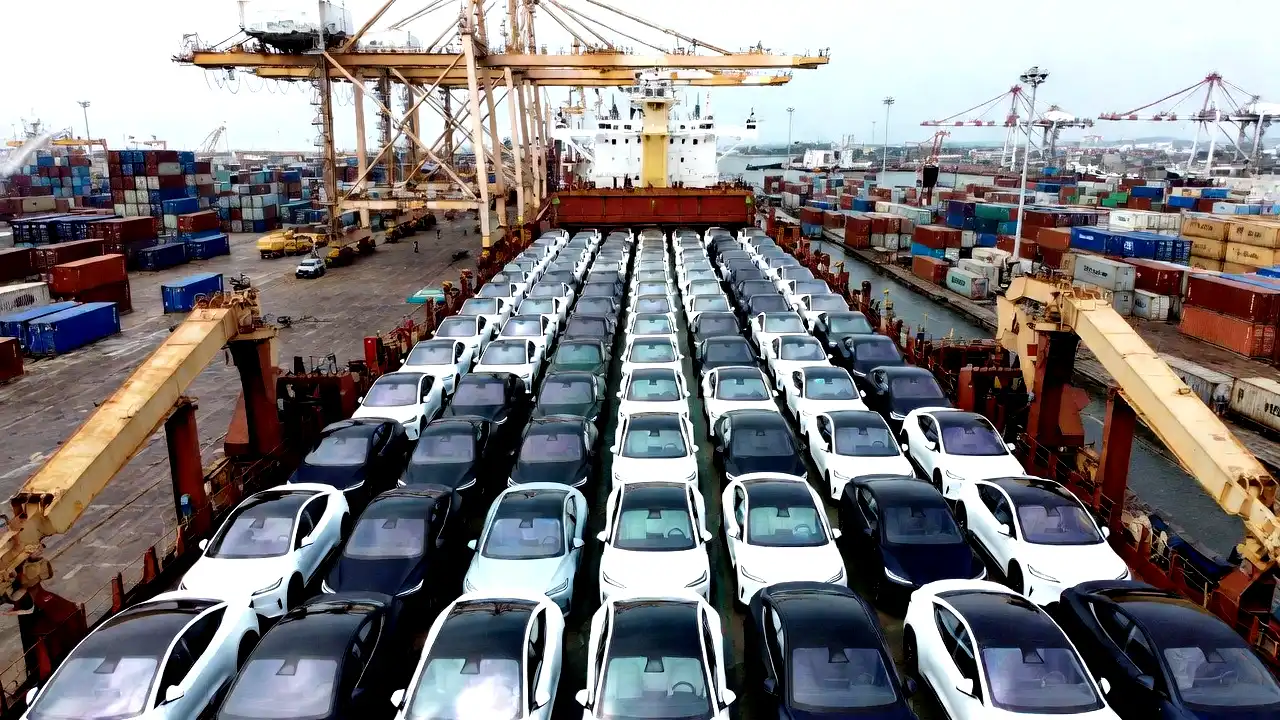
Chinese brands are expanding their export footprints rapidly across Europe, South America, the Middle East, and Southeast Asia. Five major Chinese automakers sold a combined 138,410 vehicles across 31 European countries in a single month recently, representing a massive 65% increase year-on-year.
By offering highly advanced, tech-laden vehicles at competitive prices, these brands are putting immense pressure on legacy Western and Japanese automakers, who are struggling to match the rapid development speeds and integrated supply chains of their Chinese competitors. This export surge is transforming the global automotive landscape, forcing legacy brands to accelerate their own electrification plans or risk losing critical market share.
Navigating the Future of Sustainable Mobility
As the average age of electric vehicles on the road drops to less than two years, the automotive industry must confront the environmental and sustainability implications of treating cars like disposable consumer electronics. While electric vehicles produce zero tailpipe emissions, manufacturing them requires a significant amount of raw materials, energy, and carbon-intensive industrial processes.
If cars are treated as short-lifecycle gadgets that are replaced every three years, the environmental benefits of the transition to electric mobility will be significantly undermined by the resource consumption of continuous manufacturing cycles.
To address this challenge, the industry must invest heavily in sustainable circular-economy initiatives, including standardized battery recycling systems, second-life battery recovery programs for grid energy storage, and modular vehicle designs that allow consumers to upgrade their software and processor chips without discarding the entire physical car.
Only by decoupling technological progress from material consumption can the automotive industry build a truly sustainable, long-term future for global mobility, ensuring that the electric vehicle transition delivers on its environmental promises without creating a massive e-waste crisis.