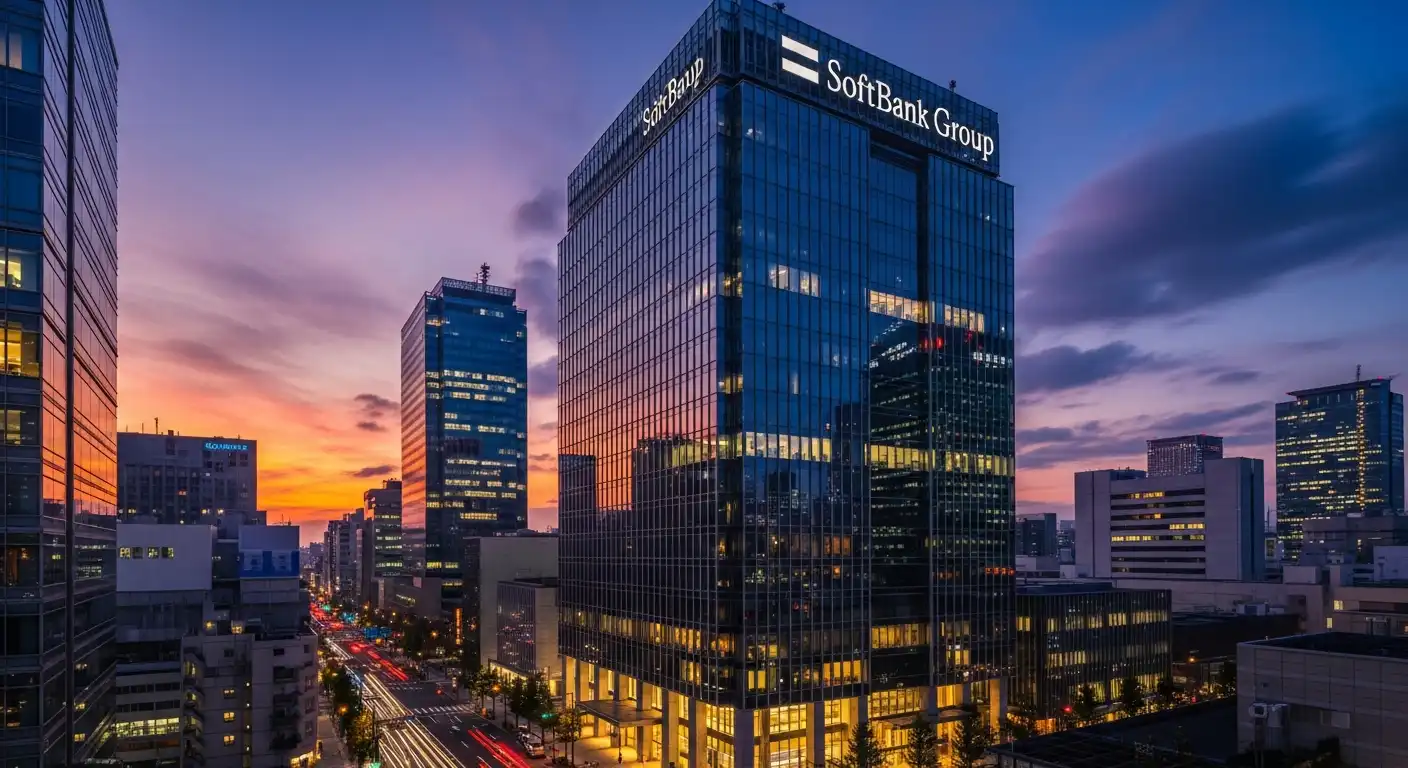
The global retail landscape is undergoing a massive realignment. Seven & i Holdings, the massive corporate parent behind the iconic 7-Eleven convenience store empire, is officially dropping its long-held independence strategy. The Japanese retail giant is engaging in advanced negotiations to sell a significant stake to telecommunications powerhouse SoftBank Corporation and its digital payments affiliate, PayPay. This strategic pivot signals a stunning willingness from the convenience store operator to surrender some control over its corporate future in exchange for the protective and technological benefits of a deep-pocketed strategic partner.
Financial insiders indicate the impending investment could reach 300 billion yen, or roughly $1.85 billion. The potential transaction involves Seven & i issuing new shares to be acquired directly by SoftBank and PayPay. Sumitomo Mitsui Financial Group’s credit card division is also weighing participation in the deal. The proposed alliance aims to unite Japan’s most dominant mobile payments operator with its largest physical convenience store network, creating a consumer ecosystem with unparalleled reach. This move effectively ends the retailer’s stubbornly independent approach, substituting it for a high-tech fortress designed to fend off unwanted foreign suitors and activist shareholders.
The Dawn of a New Retail Ecosystem: Inside the SoftBank Deal
The proposed investment represents much more than a simple capital injection. SoftBank and PayPay are maneuvering to embed themselves deeply into the daily purchasing habits of millions of consumers. If the companies finalize the agreement this summer, they will forge a consumer data and payments juggernaut that rivals the world’s largest digital ecosystems.
For SoftBank, the primary appeal is securing an anchor partner in the physical retail space. The telecommunications giant spent years building digital infrastructure but recognized the need for a massive brick-and-mortar footprint to fully realize its vision. Seven & i Holdings provides exactly that. The companies plan to merge PayPay’s massive digital infrastructure with the physical dominance of the convenience store chain. This strategy shifts the battlefield from pure telecommunications to holistic consumer lifestyle management, capturing revenue at the point of sale, the point of digital connection, and everywhere in between.
Integrating PayPay and 22,000 Convenience Stores
PayPay dominates the Japanese mobile payment market with approximately 74 million active users. However, digital payments require physical touchpoints to generate continuous transaction volume. By linking arms with Seven & i, PayPay gains preferential access to a nationwide network of roughly 22,000 7-Eleven locations across Japan. This physical network acts as an unassailable distribution channel for digital financial services.
This integration creates a seamless loop for consumer spending. Shoppers will see exclusive loyalty rewards, frictionless checkout experiences, and targeted digital marketing that bridges their smartphone screens with the physical store aisles. Sumitomo Mitsui Card joining the alliance adds another layer of financial muscle, integrating one of the country’s most established credit networks into the fold. Together, these entities can lock out rival payment platforms and capture an enormous share of daily consumer spending. The partnership mirrors successful models seen in other parts of Asia, where telecommunications, banking, and retail merge into a single “super-app” experience. The recent alliance between rival telecom KDDI and the Lawson convenience store chain set a precedent, proving that merging connectivity with convenience yields massive consumer engagement. SoftBank intends to scale this exact model to unprecedented heights using the larger 7-Eleven footprint.
Fending Off Activists and Hostile Takeovers
The strategic embrace of SoftBank serves a highly defensive purpose for Seven & i. The retail conglomerate spent the last several years under intense fire from activist investors who relentlessly criticized the company’s lackluster returns and bloated corporate structure. ValueAct Capital and other prominent funds repeatedly pressured management to break up the company and focus exclusively on the highly profitable convenience store business. These investors demanded aggressive restructuring, arguing that legacy supermarket operations drained value from the thriving 7-Eleven brand.
The pressure reached a boiling point when Alimentation Couche-Tard, the Canadian operator of Circle K, launched an unsolicited takeover proposal. The $47 billion bid represented the largest foreign buyout attempt in Japanese history. While Seven & i ultimately evaded the acquisition, the aggressive move exposed the company’s vulnerability on the global stage.
By bringing SoftBank and PayPay onto the capitalization table as friendly, stable domestic shareholders, Seven & i constructs a formidable defensive wall. SoftBank provides the deep pockets and corporate heft necessary to shield the retailer from unwanted external advances. This specific dynamic allows the current management team to execute their turnaround strategies without the constant threat of a hostile foreign takeover or a board-level proxy fight disrupting their operations. The presence of a Japanese technology titan acts as a definitive deterrent to foreign retail conglomerates hoping to swallow the 7-Eleven empire on the cheap.
The Tech Injection: Artificial Intelligence and Autonomous Robotics
While the financial defenses are critical, the most transformative aspect of this alliance lies in the technology. SoftBank does not simply want to buy retail shares; the company plans to turn 7-Eleven into a sprawling testing ground for its most advanced artificial intelligence and robotics ventures. The convenience store of the future is about to get a massive technological upgrade that completely redefines the customer experience and the back-end logistics network.
Retail operations require immense logistical precision. 7-Eleven built its empire on complex supply chain management and precise inventory forecasting. SoftBank intends to supercharge these systems by deploying enterprise-grade artificial intelligence tools designed to optimize every aspect of store management. From predicting consumer demand based on localized weather patterns to automating supply chain orders, artificial intelligence integration promises to drastically reduce food waste and boost profit margins across the entire 22,000-store network.
SoftBank’s $60 Billion AI Ambition Hits the Aisles
SoftBank Group aggressively positioned itself at the center of the global artificial intelligence boom. The conglomerate is advancing enterprise tools through high-profile collaborations with OpenAI, the creator of ChatGPT. Market projections indicate that SoftBank Group’s cumulative investment in generative intelligence initiatives will easily exceed $60 billion by the end of 2026. Founder Masayoshi Son views artificial intelligence as the ultimate economic multiplier, and physical retail provides the perfect canvas to prove this theory.
Partnering with Seven & i provides SoftBank with the perfect physical sandbox to test and deploy these massive investments. The convenience store network generates mountains of real-time purchasing data every single second of every day. SoftBank plans to feed this proprietary consumer data into advanced machine learning models. The resulting algorithms will help 7-Eleven anticipate customer needs, personalize digital promotions on the PayPay application, and dynamically adjust pricing models. This real-world application of artificial intelligence transforms 7-Eleven from a traditional retailer into a data-driven technology company capable of anticipating consumer desires before the customer even walks through the sliding glass doors.
Solving the Demographic Crisis with Automation
Japan faces a severe demographic crisis that threatens the viability of traditional retail models. A rapidly aging population and a shrinking workforce have created crippling labor shortages across the country. The retail sector feels this pain acutely, with convenience stores struggling to find enough workers to staff their famous 24-hour operations. Many franchise owners report working extreme hours simply because they cannot hire reliable night-shift employees.
SoftBank brings a suite of robotics solutions to address this exact problem. The alliance aims to introduce autonomous robots into 7-Eleven stores to handle labor-intensive tasks like stocking beverage refrigerators, cleaning floors, and managing inventory in the backrooms. By automating these routine chores, the companies can significantly reduce the manpower required to keep a store operational.
Furthermore, the integration of intelligent demand forecasting means store managers spend less time conducting manual inventory checks. SoftBank’s technological intervention acts as a direct countermeasure to the national labor shortage, ensuring that 7-Eleven can maintain its rigorous service standards without relying on an increasingly scarce pool of human workers. Autonomous delivery robots are also on the horizon, potentially allowing 7-Eleven to execute hyper-local neighborhood deliveries without relying on human courier services.
The Tumultuous Journey of Seven & i Holdings
To understand why Seven & i Holdings is willing to dilute its ownership and share power with SoftBank, observers must look at the retailer’s turbulent recent history. The company navigated a grueling obstacle course of corporate restructuring, leadership changes, and external threats that fundamentally altered its trajectory and shattered its traditional operating philosophy.
For decades, Seven & i operated as a sprawling conglomerate, managing not just convenience stores, but also massive supermarkets, department stores, and specialty retailers. Activist investors correctly pointed out that these non-core businesses dragged down the company’s overall valuation. The profitable 7-Eleven franchise effectively subsidized failing retail concepts, punishing shareholders and stifling growth.
Surviving the Alimentation Couche-Tard Takeover Attempt
The catalyst for real change arrived in the form of the Canadian convenience store rival Alimentation Couche-Tard. The massive $47 billion buyout offer forced Seven & i to confront its structural weaknesses. The founding family and the existing board realized that the status quo was no longer defensible. To reject the premium offer from the Canadians, the Japanese board had to prove they could unlock superior value on their own.
In response to the takeover threat and activist demands, Seven & i finally initiated the painful process of shedding its underperforming assets. The company agreed to sell off its domestic supermarket business to private equity firm Bain Capital for $5.3 billion. The firm also moved to reduce its ownership in its banking unit, Seven Bank, and launched a massive $13 billion share buyback program scheduled to run through 2030. These moves streamlined the company, but they also left the executive team in a state of operational flux. Creating this leaner corporate structure provided the perfect window for a strategic partner like SoftBank to step in, offering the stability and technological edge necessary to thrive in the new era.
A Leadership Shakeup Under CEO Stephen Dacus
The corporate transformation accelerated with a historic leadership change. Seven & i announced the appointment of Stephen Dacus as its new Chief Executive Officer, succeeding long-time leader Ryuichi Isaka. This move sent shockwaves through the Japanese business community. Dacus, an executive with an extensive background at Walmart and Fast Retailing, became the first foreign chief executive to helm the legendary Japanese retail group.
Dacus brought a mandate to modernize the company and execute a ruthless global growth strategy. He recognized that the old playbook of gradual, incremental improvement was insufficient to defend market share against nimble digital competitors. Embracing the SoftBank partnership aligns perfectly with his vision for a more agile, tech-forward retail enterprise. He understands that collaborating with a technology giant proves far more effective than trying to build cutting-edge artificial intelligence and payment infrastructure entirely in-house. Dacus is willing to trade absolute corporate sovereignty for the operational superiority that SoftBank guarantees.
A Changing Global Retail Landscape
The SoftBank investment strategy impacts Seven & i’s ambitious plans far beyond the borders of Japan. The retailer operates a massive global footprint, with North America standing as its most critical overseas market. The company manages thousands of stores across the United States and Canada, frequently acquiring regional chains like Speedway to expand its dominance and secure vital distribution logistics.
However, the path to global expansion presents numerous obstacles. The company faces intense competition, shifting consumer habits, and challenging macroeconomic conditions in North America. The influx of capital and technological expertise from SoftBank gives Seven & i the resources needed to navigate these global challenges, enabling the brand to deploy its new artificial intelligence efficiencies in American stores.
Delaying the North American IPO
A core component of Seven & i’s strategic restructuring involved a planned initial public offering for its North American convenience store operations. Initially, the company targeted the second half of 2026 for this massive market debut. However, the timeline shifted drastically amid the corporate turmoil. The company announced a delay, pushing the North American IPO back to 2027 or potentially later.
The delay reflects the complex reality of spinning off a massive international business unit while simultaneously fending off acquisition threats and executing domestic divestitures. The SoftBank investment provides a critical financial cushion during this volatile waiting period. By securing a $1.85 billion domestic investment, Seven & i reduces its immediate reliance on volatile global capital markets. The company can take the time needed to optimize the North American business, integrate the new automation technologies into its global operations, and eventually launch the public offering from a position of absolute operational strength.
Creating a Fortress Around Japanese Consumer Data
Ultimately, the alliance between Seven & i, SoftBank, PayPay, and Sumitomo Mitsui represents a massive consolidation of Japanese consumer data. In the modern digital economy, behavioral data acts as the most valuable commodity. Retailers and technology companies battle fiercely to understand exactly what consumers buy, when they buy it, and how they pay for it.
By joining forces, these companies create a closed-loop data fortress. PayPay handles the mobile transaction, 7-Eleven provides the physical product and location, Sumitomo Mitsui processes the credit network, and SoftBank’s algorithms analyze the entire sequence. This ecosystem becomes incredibly difficult for outside competitors—whether they are domestic rivals like Lawson and KDDI, or international tech giants like Amazon—to penetrate. The partners effectively capture the consumer at every point of the economic journey.
The Lawson-KDDI alliance demonstrated the viability of merging telecommunications and convenience retail earlier in the decade. Seven & i and SoftBank are attempting to replicate and scale that specific model to an unprecedented degree. They are building a digital and physical infrastructure that touches almost every citizen in Japan on a daily basis, locking in loyalty through convenience and technological superiority.
The decision by Seven & i Holdings to abandon its go-it-alone strategy marks a defining moment in the retail sector. By embracing SoftBank and PayPay, the 7-Eleven operator acknowledges that physical retail dominance alone cannot secure the future. Success in the next decade requires deep technological integration, autonomous operations, and a seamless digital payments ecosystem.
As the lines between retail, telecommunications, and finance continue to blur, this massive financial alliance sets a new standard for corporate partnerships. The combination of 22,000 physical storefronts, 74 million digital wallet users, and tens of billions in artificial intelligence investment creates an economic powerhouse designed to withstand any market disruption. Seven & i secures the defensive shield it needs against hostile takeovers, while SoftBank gains the ultimate physical arena to prove the value of its technological empire.