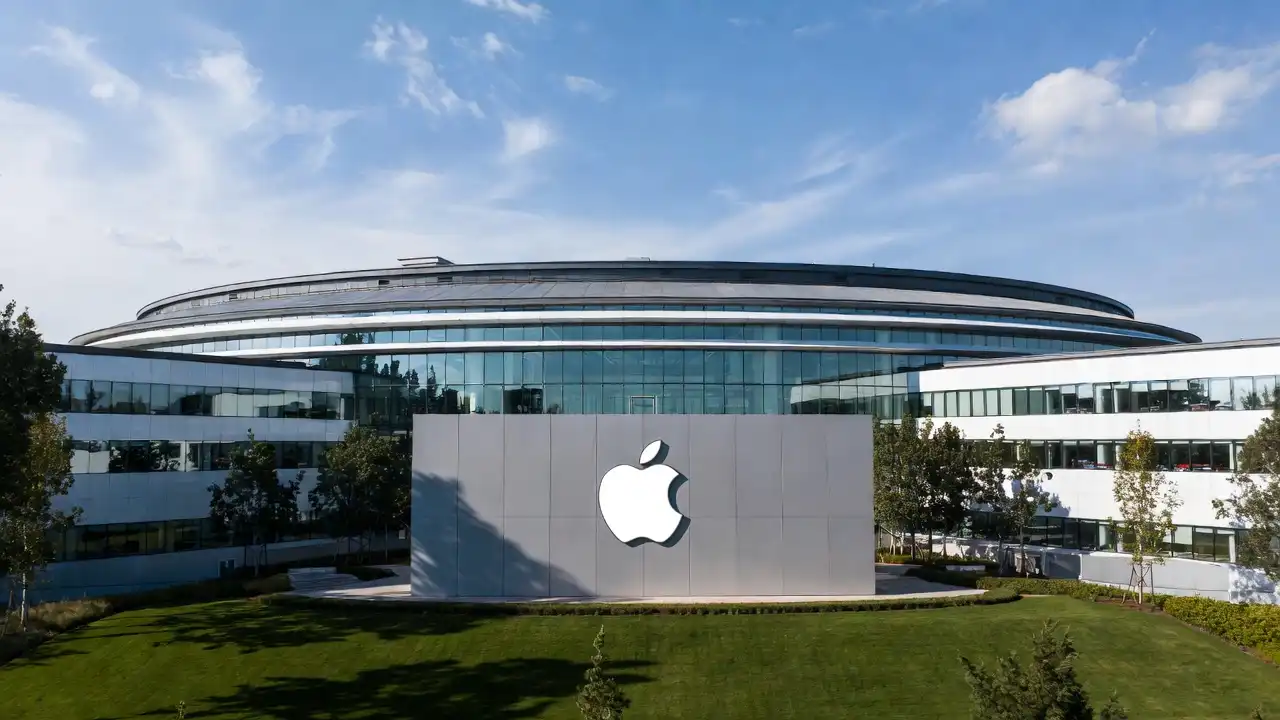
The global consumer technology sector is witnessing a massive, highly anticipated realignment. In a historic milestone that resolves one of the most complex geopolitical and regulatory hurdles in modern corporate history, the Chinese government has officially approved Apple’s on-device generative artificial intelligence service. The Cyberspace Administration of China announced that Apple Intelligence has completed its mandatory regulatory filing, clearing the final hurdle for its official, commercial launch in the world’s most competitive mobile arena.
This regulatory approval is a massive victory for Cupertino, coming after nearly two years of intense behind-the-scenes negotiations, technical adjustments, and joint-venture developments. Because China represents Apple’s largest international market outside the United States, bringing its high-profile AI features to Chinese consumers has been the primary strategic goal for Chief Executive Officer Tim Cook. The delay in securing this approval had previously forced Apple into a challenging holding pattern, as domestic Chinese smartphone rivals like Huawei, Xiaomi, and Vivo capitalized on the regulatory vacuum to launch their own pre-approved, on-device AI suites, driving down the American company’s market share.
The significance of the regulatory milestone was highlighted by an accidental technical leak. On the very day the filing was announced, Apple briefly opened access to a beta version of Apple Intelligence for iPhone users in mainland China. Although the company swiftly pulled the test version offline after approximately one hour, the brief rollout proved that the technical and compliance sprint is in its final stages. By partnering with local tech giant Alibaba Group to power its core features, Apple is preparing to unleash a massive, highly localized upgrade cycle that could permanently reshape the dynamics of the global smartphone market.
Reclaiming the Golden Goose: Inside Apple’s Two-Year Quest for Chinese AI Compliance
The strategic stakes of the Chinese market cannot be overstated. For more than a decade, the Chinese middle class served as the primary growth engine for the company’s hardware ecosystem, purchasing hundreds of millions of iPhones, iPads, and Mac computers. However, as the geopolitical rivalry between Washington and Beijing intensified, the company’s business model faced unprecedented pressure. The rise of nationalistic consumer sentiment, combined with government-backed bans on foreign technology inside state offices, led to a significant decline in domestic sales.
To reverse this downward trend, the company has heavily discounted its products and focused on expanding its local footprint. The strategy has yielded impressive short-term results; Apple reported a stellar 24.4% year-on-year increase in its Chinese smartphone shipments during the second quarter.
However, sustaining this momentum requires a long-term technological differentiator. In the modern smartphone market, that differentiator is artificial intelligence. By securing the regulatory green light for its on-device AI system, the company can finally offer Chinese consumers the same advanced features that are driving upgrades in Western markets, removing a major strategic bottleneck and unlocking what financial analysts call the “golden goose” of the mobile industry.
The Technological Architecture: Why Apple Chose Alibaba’s Qwen Model
To comply with China’s strict, non-negotiable data sovereignty laws, the company had to completely abandon its global artificial intelligence infrastructure. In Western markets, Apple Intelligence relies on private on-device processing and hybrid cloud networks, with a high-profile integration of OpenAI’s ChatGPT to handle complex, off-device queries.
In China, this Western-anchored architecture is completely illegal. Beijing requires that all generative artificial intelligence services deployed to its citizens run on pre-approved, domestic large language models hosted on physical servers located within the country.
This regulatory reality forced the company to search for a powerful domestic technology partner. After a highly selective evaluation process, the company chose to partner with e-commerce and cloud computing giant Alibaba Group.
Alibaba Group Chairman and co-founder Joe Tsai confirmed that the company chose Alibaba because of the high quality, speed, and cost-efficiency of its proprietary “Qwen” artificial intelligence models. Under the terms of the agreement, Qwen’s advanced conversational capabilities will be deeply integrated directly into the operating systems of Chinese iPhones, iPads, Macs, and the Vision Pro headset, offering users a highly responsive, localized digital assistant.
Alibaba’s Qwen Model as the Core Engine of iOS
The integration of Alibaba’s Qwen model is a major strategic victory for the Chinese e-commerce pioneer, which has spent years investing billions of dollars to build out its cloud-based artificial intelligence capabilities. Qwen, which has been widely praised by global developers for its exceptional performance on bilingual translation, natural language reasoning, and coding tasks, will serve as the primary engine for the localized version of Apple Intelligence.
By running Qwen directly on the iPhone’s advanced neural processing units, the company can deliver fast, highly secure AI features without relying on constant cloud connectivity.
The on-device model will handle routine tasks like drafting emails, summarizing long documents, organizing photo libraries, and generating creative images.
For more complex queries that require advanced computing power, the system will route the data to secure, localized Alibaba Cloud data centers, ensuring that all user data remains strictly protected under local residency mandates.
Baidu’s Secondary Role in Visual Intelligence and Search
While Alibaba serves as the primary partner for on-device reasoning, the company has also enlisted search giant Baidu to handle secondary, specialized AI features. This dual-vendor strategy allows the company to leverage the unique strengths of China’s two most dominant technology platforms.
Baidu will play a vital role in powering the company’s new Visual Intelligence feature, which allows users to point their iPhone camera at physical objects, landmarks, or text to instantly pull up relevant information, translations, and retail listings from the web.
Baidu’s involvement in this specific feature is a natural extension of its long-standing relationship with the American tech giant.
Baidu has served as the default search engine for Safari on Chinese iPhones since 2014, making it the ideal partner to manage the massive search queries generated by the new visual AI system.
Navigating China’s Strict AI Censorship Guidelines
The primary challenge of deploying generative artificial intelligence in China is complying with the state’s strict, highly complex censorship laws. Under the Interim Measures for the Management of Generative Artificial Intelligence Services enacted by the Cyberspace Administration of China, all AI-generated content must fully align with state-approved values and undergo intensive pre-market security reviews.
This means that Apple and Alibaba had to co-develop a highly customized version of Apple Intelligence that features built-in, real-time content filtration systems.
These filters are designed to intercept user queries, analyze them for politically sensitive keywords, and ensure that the AI does not generate or display restricted information.
While Chinese consumers will enjoy a highly advanced, useful digital assistant, they will experience a significantly different, heavily moderated version of Apple Intelligence compared to users in the West, with certain global features and search integrations completely omitted to satisfy local regulators.
The Engineering of Content Filtration Systems
Developing these content filters required an extraordinary level of co-engineering between Apple’s local development team in Shanghai and Alibaba’s safety researchers. The on-device neural networks must be trained to recognize the subtle nuances of Chinese language, political terminology, and cultural sensitivities.
If a user enters a query that touches on restricted historical events, sensitive geopolitical disputes, or banned political figures, the on-device model must recognize the risk instantly and redirect the conversation to a safe, generic response.
These safety guardrails must operate with near-zero latency to prevent disrupting the user experience, requiring the AI to balance strict political compliance with the fast, seamless performance that consumers expect from premium hardware.
Protecting User Data Under Local Residency Mandates
Data privacy is another area where the company had to make significant concessions to satisfy local regulators. Under the Chinese cybersecurity law, all personal data, financial records, and behavioral profiles collected from Chinese citizens must be stored on physical servers located within the territory of the People’s Republic of China.
To comply with these rules, the company is routing all off-device AI processing through a specialized cloud infrastructure operated by its local joint-venture partner, Guizhou-Cloud Big Data.
This infrastructure ensures that no raw user data or personal information ever crosses international borders, keeping the company’s operations in strict compliance with local national security laws.
While this localized storage model satisfies Beijing, it has drawn some criticism from international privacy advocates, who worry that local authorities could utilize local data access laws to monitor user activity, forcing the company to maintain a delicate balance between local compliance and its global brand promise of absolute user privacy.
The Battle for the Chinese Smartphone Market
The regulatory approval of Apple Intelligence arrives at a critical juncture for the global smartphone industry. For the past two years, local Chinese brands like Huawei, Xiaomi, Oppo, and Vivo have eroded Apple’s dominance by aggressively launching their own, pre-approved, on-device AI suites, driving down Apple’s market share in key premium segments.
These local competitors have used advanced AI tools to lure customers away from the iPhone, offering highly sophisticated digital assistants, real-time photo editing, and advanced translation features at much more affordable price points.
By securing the regulatory green light for its own AI system, the company can finally fight back, offering its loyal customer base a compelling reason to stay within the iOS ecosystem and upgrade their older devices.
The Domestic Threat of Huawei, Xiaomi, and Vivo
The threat from domestic competitors is particularly acute in China’s rapidly growing premium segment. Huawei, in particular, has experienced a spectacular resurgence, capturing massive market share with its high-end Mate and Pura series smartphones, which run on domestic Kirin processors and feature advanced, locally developed artificial intelligence systems.
These local brands have built a powerful competitive moat by deeply integrating their AI systems with popular domestic applications and local smart home ecosystems.
To compete, the American tech giant must prove that its Alibaba-powered system can offer a comparable or superior level of integration.
The company is working closely with major Chinese application developers to ensure that Apple Intelligence can interact seamlessly with local platforms like WeChat, Alipay, and Meituan, allowing users to execute complex tasks like booking a ride, ordering food, or transferring money using simple voice commands.
Wedbush Securities Analysis: Unlocking the Golden Goose
For Wall Street investors, the regulatory filing approval is a massive sigh of relief that removes one of the most significant overhangs on the stock’s valuation. Dan Ives, the senior equity analyst for Wedbush Securities, has consistently highlighted the China AI strategy as the single most critical factor for the company’s long-term growth.
Ives called the regulatory approval a major step in the right direction, noting that the Alibaba partnership successfully unlocks the massive China AI opportunity.
He characterized the Chinese market as the golden goose for the company, predicting that the launch of a fully localized, compliant version of Apple Intelligence will trigger a massive, multi-year upgrade cycle among hundreds of millions of Chinese iPhone users who have been holding onto older devices.
This upgrade wave is expected to drive substantial revenue growth, helping the company defend its premium valuation and solidifying its position as the leading global platform for consumer artificial intelligence.
The road to bringing AI to the Chinese market has been long, complex, and filled with difficult political compromises. By partnering with local champions like Alibaba and Baidu, and by modifying its software to comply with local censorship and data residency laws, the company has demonstrated a pragmatic willingness to adapt to local realities to protect its business.
As the technical sprint enters its final phase, the global technology sector will watch closely to see how Chinese consumers respond to this new, highly localized digital assistant. If successful, the launch of the Alibaba-powered Apple Intelligence will not only secure the company’s long-term future in its most critical international market, but it will also set a new standard for how multinational technology corporations can navigate the complex, deeply divided geopolitical landscape of the modern digital age.