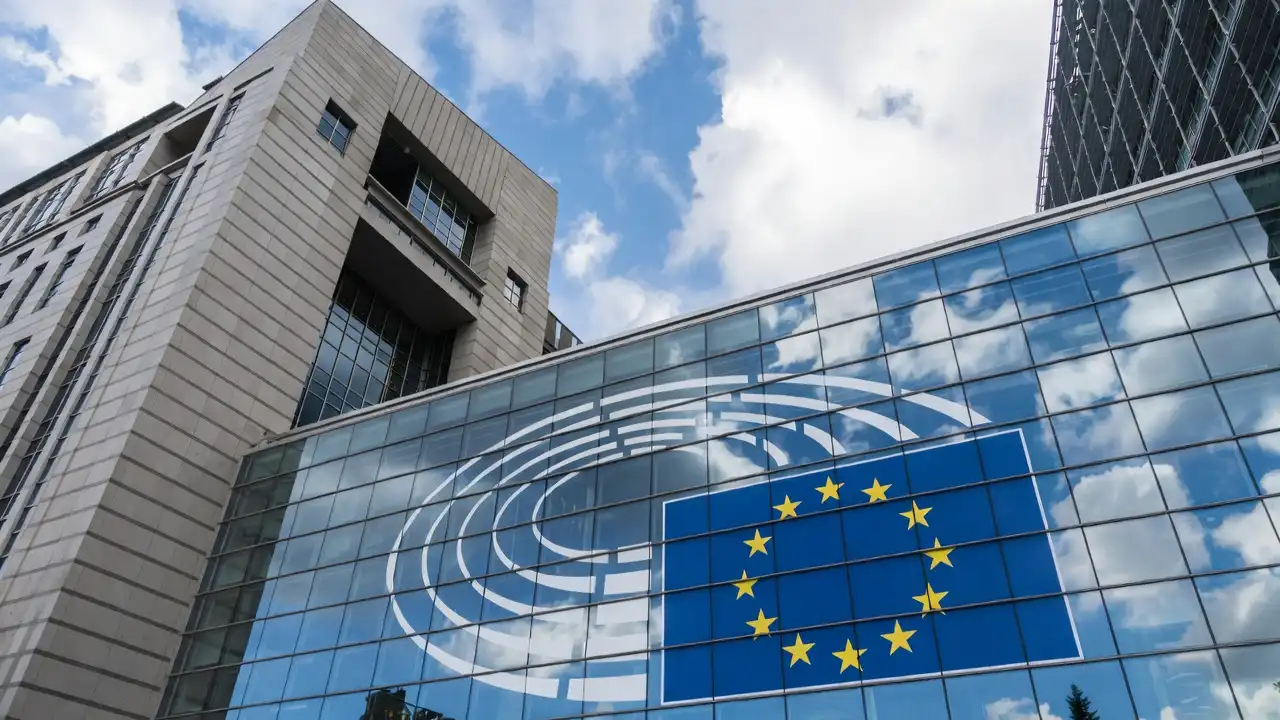
The European Union’s ambitious campaign to defend its democratic foundations is facing a critical moment of reckoning. In a highly anticipated move, the European Commission released its seventh annual Rule of Law Report. This comprehensive, country-by-country audit evaluates the state of judicial independence, media freedom, checks and balances, and anti-corruption frameworks across all twenty-seven member states.
The publication of this landmark report arrives at a time of deep geopolitical turbulence and rising domestic skepticism. While the European Commission celebrated historic breakthroughs over the past few months—most notably a massive legislative compromise that brought Hungary into the European Union’s joint anti-fraud prosecution framework—civil society organizations have delivered a sharp, highly critical reality check. A coalition of thirty-seven prominent human rights, media freedom, and civil liberties groups warned that the annual reporting cycle is rapidly becoming a toothless, routine exercise. They pointed out that a staggering 93 percent of previous recommendations have either stagnated or backslid, leaving Europe’s democratic pillars increasingly vulnerable to systemic decay.
The financial stakes of this democratic audit are immense. Concurrently with the report’s release, the European Parliament’s Civil Liberties Committee adopted a major draft resolution highlighting the devastating cost of corruption. The committee revealed that corruption diverts critical resources away from public services, costing the European economy between 179 billion and 990 billion euros annually. This multi-billion-euro drain has forced a growing group of lawmakers to demand that the European Union link all future community funding directly to strict, verifiable rule-of-law benchmarks, transforming what was once a passive monitoring exercise into a powerful financial weapon.
The Return of the Rule of Law Mechanism: Navigating the EU’s Annual Audit
The European Commission established the Annual Rule of Law Report in 2020 as a preventative tool to identify and address democratic backsliding before it could trigger systemic crises within the bloc. Unlike typical punitive measures, the reporting cycle was designed to foster an open, cooperative dialogue between national governments, European institutions, and civil society groups.
However, after seven years of reporting, the limits of this dialogue-based approach have become painfully clear. While the Commission meticulously documents judicial reforms, media concentration, and lobby transparency every summer, it has historically lacked the enforcement mechanisms necessary to compel non-compliant governments to implement its recommendations. This gap between monitoring and enforcement has allowed several member states to repeatedly ignore the Commission’s warnings, treating the annual report as a minor administrative hurdle rather than a binding legal mandate.
The current geopolitical climate has further complicated this dynamic. With active military conflicts at Europe’s borders and rising national security concerns dominating the political agenda, debates over judicial independence and media pluralism risk being pushed to the margins. Despite these challenges, European Union officials insist that defending the internal rule of law is a prerequisite for maintaining external security, arguing that a corrupt or politically compromised judicial system is the ultimate vulnerability that foreign adversaries can exploit to destabilize the West.
Hungary’s Dramatic About-Face: Unlocking Billions through Strategic Reform
The most significant, highly watched breakthrough in the current reporting cycle involves Hungary. For years, Budapest operated as the primary antagonist in Europe’s rule-of-law debates, with the European Commission blocking billions of euros in cohesion and recovery funds due to deep concerns over systemic corruption, public procurement fraud, and the independence of the Hungarian judiciary.
That long-standing deadlock officially broke following the rise of a new government led by Prime Minister Péter Magyar. In a rapid series of legislative maneuvers, Budapest passed Act XVIII of 2026, a comprehensive, fast-tracked anti-corruption package designed specifically to satisfy the European Union’s strict financial conditions. This legislative progress allowed European Commission President Ursula von der Leyen to announce a historic agreement, releasing up to 16.4 billion euros in frozen community funds to support Hungary’s economic recovery.
The Hungarian government described the agreement as a historic milestone, crediting its aggressive anti-corruption commitments for restoring its access to the European market. While the Commission welcomed the reforms, officials emphasized that the money will be released in phases, making each payout contingent on Budapest successfully implementing and maintaining the agreed-upon security safeguards, ensuring that Hungary cannot return to its previous, non-compliant habits once the cash begins to flow.
Joining the European Public Prosecutor’s Office (EPPO) as the Twenty-Fifth Member
The most symbolic and legally significant component of Hungary’s reform package was its historic decision to join the European Public Prosecutor’s Office. Established in 2021, the EPPO is an independent, non-governmental European body empowered to investigate, prosecute, and bring to judgment crimes affecting the financial interests of the European Union, including large-scale cross-border fraud, money laundering, and public corruption involving EU funds.
By formally joining the EPPO on July 10, 2026, Hungary ended its years of self-isolation from the European Union’s primary anti-fraud framework, becoming the twenty-fifth member state to participate in the joint prosecution network.
The EPPO will establish a permanent, active presence in Budapest, carrying the legal authority to investigate and prosecute any crimes affecting the European Union budget committed within Hungary.
This direct, independent oversight represents an extraordinary concession of national sovereignty by Budapest, providing European taxpayers with a powerful, permanent guarantee that community funds will be spent responsibly and transparently.
The Passage of Act XVIII of 2026 and the Overhauled Asset Declaration Regime
The domestic legislative package passed by the Hungarian Parliament on June 26, 2026, represents a complete restructuring of the country’s anti-corruption architecture. The new law overhauls the nation’s asset declaration regime, extending mandatory electronic disclosures to a wide range of public officials, political leaders, and board members of state-owned foundations.
Furthermore, the law significantly expands the investigative powers of the Integrity Authority, an independent anti-corruption body established in 2022 under intense pressure from Brussels.
The authority now holds the legal power to conduct regular, unannounced audits of public officials, access confidential tax and bank secrets, suspend public procurement processes where there is a risk of fraud, and impose substantial administrative fines for minor reporting irregularities.
To ensure absolute compliance, the law introduced a strict new criminal offense: the intentional concealment or omission of assets in public declarations now carries a penalty of up to two years of imprisonment, proving to global markets that Hungary is serious about enforcing financial transparency.
Spain’s Judicial Deadlock: The Long Road to Anti-Corruption Reform
While Hungary captured the headlines with its rapid legislative progress, the European Commission’s report delivered a sharp, highly critical assessment of the slow pace of reform in Spain. The commission expressed deep concern over the ongoing, highly politicized deadlock surrounding the country’s judicial governing body, the General Council of the Judiciary.
The Spanish judicial system has been trapped in a state of operational paralysis for years, as the ruling government and the conservative opposition have repeatedly failed to negotiate the required three-fifths majority in parliament to appoint new members to the council.
This deadlock has left dozens of senior judicial positions vacant across the country, creating severe administrative backlogs, delaying crucial court cases, and severely damaging the public’s trust in the absolute independence and neutrality of the judiciary.
The European Commission’s report urged Spanish lawmakers to put their political differences aside, finalize the long-stalled judicial appointments, and immediately implement reforms to insulate the council from future partisan interference.
Furthermore, the commission demanded that Spain enact stricter, harmonized standards governing lobbying registries, conflicts of interest, and the “revolving doors” that allow senior politicians to exit public office and immediately secure highly paid advisory roles with private corporations.
By pushing Spain to strengthen its ethical guardrails, the commission is attempting to ensure that Europe’s fourth-largest economy remains fully aligned with the democratic standards of the single market.
The Civil Society Backlash: Why the Report Risks Becoming a Box-Ticking Exercise
Despite the significant, highly publicized breakthroughs with Hungary, the broader message from the European civil society sector was one of deep frustration. A coalition of thirty-seven prominent human rights, media freedom, and civil liberties organizations issued a joint warning, claiming that the European Commission’s annual reporting cycle is rapidly degenerating into a toothless, routine exercise.
The coalition pointed to an alarming, highly comprehensive study published by the Liberties organization, which reviewed the implementation rate of previous European Commission recommendations.
The data revealed that an astonishing 93 percent of previous rule-of-law recommendations have either been completely ignored, stalled in committee, or regressed over the past year.
According to the study, 61 percent of the Commission’s recommendations showed absolutely no progress, while 13 percent had actually backslid, proving that several member state governments are treating the annual report as a mere box-ticking exercise with no real-world consequences.
Demanding Funding Conditionality in the Multiannual Financial Framework
To break this cycle of non-compliance, civil society groups and progressive lawmakers are demanding that the European Union integrate strict rule-of-law conditionality directly into all future budget allocations.
The battleground for this policy shift is the upcoming Multiannual Financial Framework, which will govern European Union spending from 2028 through 2034.
Advocates argue that the European Commission must stop handing out multi-billion-euro grants to countries that systematically dismantle their independent judiciaries or restrict media freedom.
By linking every single euro of European funding directly to verifiable democratic benchmarks, the EU can create a powerful, non-negotiable financial incentive for governments to respect the rule of law, ensuring that taxpayer money is never used to subsidize the rise of authoritarian-leaning regimes.
Protecting the Civic Space and Media Freedom
The civil society coalition also raised alarms over the rapid, highly dangerous contraction of civic space and media pluralism across several European Union member states. They documented a rising tide of physical and verbal attacks on independent journalists, a surge in predatory Strategic Lawsuits Against Public Participation designed to bankrupt investigative reporters, and growing administrative restrictions on non-governmental watchdogs.
The groups are calling on the European Commission to move beyond passive monitoring and use its full, active enforcement powers to defend the press.
They demand that the Commission aggressively enforce the newly enacted European Media Freedom Act and the Digital Services Act, using the threat of massive financial penalties to force non-compliant governments to protect the independence of public broadcasters, safeguard journalists from illegal surveillance, and ensure absolute transparency in media ownership.
A truly free, independent press is the ultimate line of defense against public corruption, and protecting the media is essential for maintaining the integrity of the entire European democratic project.
The release of the seventh annual Rule of Law Report has exposed the deep, structural tensions at the heart of the European Union. While the historic compromise with Hungary demonstrates that the threat of financial containment can successfully compel even the most resistant governments to implement sweeping anti-corruption reforms, the widespread stagnation of the rest of the continent proves that passive monitoring is no longer enough to protect Europe’s democratic foundations.
As the European Parliament prepares to vote on its new anti-corruption strategy and negotiators begin to draft the 2028-2034 Multiannual Financial Framework, the choice facing Brussels is clear: the European Union must transition from a state of passive observation to active, financial enforcement. By linking all community funding directly to democratic health and aggressively defending the independence of local judiciaries, journalists, and civic watchdogs, the European Union can successfully rebuild the public’s trust, secure its monetary sovereignty, and protect the foundational values of the single market for generations to come.