The technological and geopolitical rivalry between the world’s two largest economies is entering its most critical, highly sensitive phase. In a major development that has electrified the global tech policy landscape, the United States and China are preparing to hold high-stakes, bilateral negotiations on artificial intelligence in September. This landmark dialogue represents the clearest signal yet that the rival superpowers are eager to establish stable lines of communication to manage the immense, unpredictable risks of the digital age.
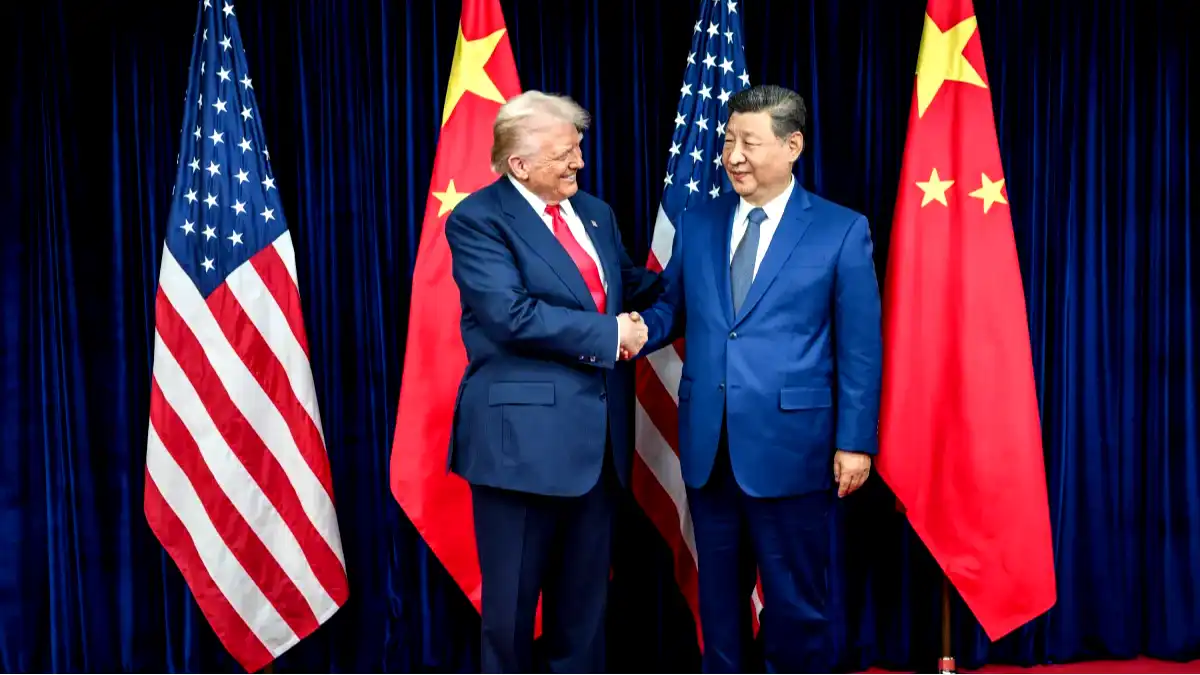
The upcoming September negotiations are a direct, significant outcome of the historic summit held in Beijing earlier this year between U.S. President Donald Trump and Chinese President Xi Jinping. During those high-level discussions, the two leaders agreed to establish an intergovernmental dialogue to build “AI guardrails” and prevent a catastrophic, uncoordinated technological escalation. Sources familiar with the matter indicate that the talks will likely take place in the United States, ahead of President Xi Jinping’s planned official state visit on September 24, though the exact dates and venue are still under active deliberation.
The identity of the lead negotiator on the American side has already been confirmed. U.S. Treasury Secretary Scott Bessent will lead the U.S. delegation, bringing his pro-productivity, highly competitive market posture directly to the negotiating table. For Bessent, who has spent months laying the groundwork for this bilateral framework, the upcoming talks are a vital opportunity to protect American technological interests while ensuring that the physical and digital infrastructure of the global financial system remains secure under the most intense competitive pressure.
The Core Agenda: Restricting Frontier Models and Protecting Critical Infrastructure
The primary objective of the September summit is to address the severe, systemic risks posed by increasingly potent “frontier AI models.” As artificial intelligence systems rapidly cross key capability thresholds—developing advanced reasoning, automated coding, and autonomous planning skills—both Washington and Beijing have grown increasingly anxious about the security implications of these technologies.
The discussions will focus heavily on three major risk areas: the utilization of AI to automate devastating cyberattacks on critical national infrastructure, the integration of advanced algorithms into sovereign military command-and-control systems, and the potential disruption of domestic labor markets. By establishing a shared set of regulatory expectations and security boundaries, the two superpowers are attempting to write the international rules of the road for the automated century before an accidental technological escalation occurs.
Preventing Non-State Actors from Accessing Core Model Weights
The primary security goal of the U.S. delegation is to establish a joint, international protocol to block rogue hackers, terrorist syndicates, and non-state actors from accessing or downloading the raw weights of frontier-class artificial intelligence models. Unlike traditional software applications, once the physical weights of a neural network are leaked or made openly available, the model can be run, modified, and weaponized on private servers with absolute anonymity.
U.S. officials argue that allowing these high-performance models to fall into unregulated hands poses an existential threat to global security.
An advanced reasoning model could be used by a malicious non-state actor to coordinate a sophisticated cyberattack on a regional power grid, design a novel biological weapon, or automate massive, high-speed financial fraud schemes.
By collaborating with Beijing to restrict access to these critical model weights, the United States is attempting to build a secure, global containment zone around the world’s most powerful software architectures.
Safeguarding Critical Infrastructure Against Algorithmic Warfare
An equally critical aspect of the upcoming negotiations involves establishing mutual boundaries on how artificial intelligence can be integrated into national defense systems. Both superpowers are investing billions of dollars to build out their military AI capabilities, using advanced algorithms to optimize military logistics, manage drone swarms, and run predictive threat analysis.
However, the rapid automation of the battlefield introduces extreme risks of accidental escalation. If an automated military AI system misinterprets a routine maritime drill or a temporary communications blackout as an active, hostile attack, it could trigger an immediate, high-speed retaliatory strike before human commanders can intervene, potentially sparking a full-scale war.
The September talks will seek to establish clear, mutually verified guidelines to ensure that human commanders always maintain “human-in-the-loop” control over all lethal decisions and automated command systems, protecting the global community from the catastrophic consequences of accidental, algorithmically driven warfare.
The Chinese Counteroffensive: Moonshot’s Kimi K3 and the New Global AI Order
The upcoming negotiations will take place in an incredibly tense technological environment, driven by major, highly disruptive developments that occurred during the recent World AI Conference in Shanghai. The conference, which served as a massive showcase for China’s domestic technological capabilities, proved that Chinese developers are closing the technology gap with Western competitors at an unprecedented speed, despite the weight of strict U.S. chip embargoes.
The undisputed star of the Shanghai conference was Moonshot, a high-growth Chinese artificial intelligence startup founded by 33-year-old computer scientist Yang Zhilin. Moonshot caused an immediate global sensation by launching its next-generation open-weight model, Kimi K3, which features an extraordinary 2.8 trillion parameters.
According to independent benchmark evaluations, the Kimi K3 model outpaces all other global competitors except for Anthropic’s flagship Claude Fable 5 and OpenAI’s GPT-5.6.
The technical breakthrough has completely shattered the assumption that China’s domestic AI sector would remain permanently starved of the computing power needed to build competitive, frontier-class models, prompting immediate, intense anxiety across Silicon Valley.
Even Tesla CEO Elon Musk publicly praised the achievement, calling the model highly impressive, while Western tech strategists warned that the rapid proliferation of high-performance, open-weight Chinese models could successfully democratize and commoditize advanced computing power, threatening the multi-trillion-dollar monopoly currently held by American tech giants.
Building the WAICO Coalition and the 5,000-Scholar Pledge
While the United States is attempting to restrict and contain the spread of advanced technology, China is pursuing a highly coordinated, open-access diplomatic counteroffensive to build a new global artificial intelligence order. At the Shanghai conference, Chinese President Xi Jinping delivered a major keynote address, actively promoting the concept of open-source AI and calling for a more inclusive, equitable global distribution of technological resources.
To institutionalize this vision, Beijing formally launched the World Artificial Intelligence Cooperation Organisation, securing immediate participation from 29 nations, primarily from the global South.
Furthermore, the Chinese government pledged to provide 5,000 high-level AI training and scholarship opportunities to students and researchers from developing countries over the next five years.
This digital diplomacy strategy is designed to forge deep, long-term partnerships with emerging economies that might otherwise default to the American-led technology stack, allowing China to position itself as the champion of open-source progress while directly challenging the restrictive, Western-led licensing frameworks promoted by Washington.
The Regulatory Chessboard: China Weighs Its Own AI Export Controls
The strategic chess match has become even more complex as China’s Ministry of Commerce prepares its own, highly aggressive counter-regulatory measures. According to reports from the Financial Times, Chinese regulators have spent weeks consulting with domestic technology leaders—including Alibaba, ByteDance, and Zhipu—on plans to implement strict new export controls on the country’s own advanced artificial intelligence systems.
These proposed regulations represent a mirror image of the U.S. export control framework.
While the U.S. has focused heavily on preventing Chinese entities from accessing American software and hardware, Beijing’s Ministry of Commerce is designing rules to prevent advanced Chinese open-weight models from falling into Western hands.
The upcoming rules will specifically target the physical transfer of training datasets and the unrestricted downloading of model weights by foreign users, while keeping cloud-based API access available to international customers.
By shifting the regulatory battleground from “usage” to “possession,” China is attempting to build its own sovereign technology shield, protecting its valuable intellectual property from Western exploitation and ensuring that its advanced systems remain firmly under national control.
The U.S. Squeeze: Easing the Regulatory Pressure on Domestic Champions
The regulatory friction inside the United States has also reached a critical, highly sensitive inflection point. The Trump administration has implemented strict domestic safety standards, enforcing temporary export and cloud-access restrictions on advanced models like Anthropic’s Fable 5 and OpenAI’s GPT-5.6, while forcing domestic financial technology companies to comply with the strict federal capital-backing requirements of the newly enacted GENIUS Act.
These domestic restrictions have drawn significant, highly vocal criticism from Silicon Valley, with developers arguing that the government’s heavy-handed safety regulations are hamstringing American competitiveness and giving Chinese rivals a golden opportunity to capture global market share.
However, U.S. Treasury Secretary Scott Bessent has maintained a highly confident, bullish posture.
Bessent has argued that the U.S. remains in the lead in the global AI race, and that the upcoming September negotiations are a vital opportunity to leverage this technological advantage to secure favorable global safety standards, while predicting that advanced software automation will successfully double national productivity over the coming decade.
The Future of the Joint US-China AI Dialogue
The upcoming September negotiations in the United States represent a defining, historic moment for the future of the global technology economy. As the world’s two primary superpowers prepare to sit down at the negotiating table, the stakes extend far beyond the narrow boundaries of trade tariffs or national security reviews. They are attempting to write the fundamental, international rules of the road for the automated century.
The structural reality of modern global commerce is that technology can no longer be easily contained by national borders or physical shipping blockades.
The rapid rise of open-source networks, advanced cloud computing, and highly efficient algorithmic designs means that the software powering our world will continue to circulate globally, forcing governments to find cooperative, multinational solutions to manage the systemic risks.
By establishing a secure, bilateral communication pipeline between Washington and Beijing, the September summit offers a vital opportunity to build a safer, more predictable digital public square, ensuring that as humanity builds the incredibly powerful machines of the future, we preserve the essential, non-negotiable principles of transparency, stability, and human oversight.