The physical foundations of the digital economy are preparing for an unprecedented, highly disruptive resource collision. For more than two decades, utility planners and grid operators across the United States mapped out their long-term strategies under a highly predictable assumption of flat, stagnant electricity load growth. They assumed that efficiency improvements in consumer appliances and the slow decline of heavy manufacturing would allow them to gradually transition away from fossil fuels without needing to rapidly expand the physical capacity of the electrical grid. Today, that entire paradigm of stability has collapsed under the weight of the artificial intelligence boom.
According to a comprehensive research report published by BloombergNEF, U.S. data centers are on track to consume an extraordinary 20 percent of the nation’s total electricity by 2035. This represents a massive, near-unbelievable increase from the 5.9 percent of national power currently consumed by the sector, and compares to an earlier estimate of 12 percent projected for 2030. The rapid, check-writing expansion of high-performance computing has forced analysts to make some of the largest upward revisions in energy forecasting history, reflecting the sheer, unstoppable physical scale of the artificial intelligence infrastructure buildout.
To put this energy grab in perspective, the report projects that U.S. data center power demand will reach a staggering 194 gigawatts by 2035. This represents a massive 83 percent upward revision from previous long-term forecasts published late last year. Because one gigawatt is equivalent to the generating capacity of a traditional, utility-scale commercial nuclear reactor, the United States will effectively need to dedicate the entire electrical output of nearly 200 nuclear reactors just to keep its artificial intelligence systems, large language models, and digital databases running. This massive draw is triggering a historic struggle for resources, pitting trillion-dollar technology giants against local utility providers, residential communities, and other critical industrial sectors.
The Physical and Macroeconomic Impact of the AI Power Grab
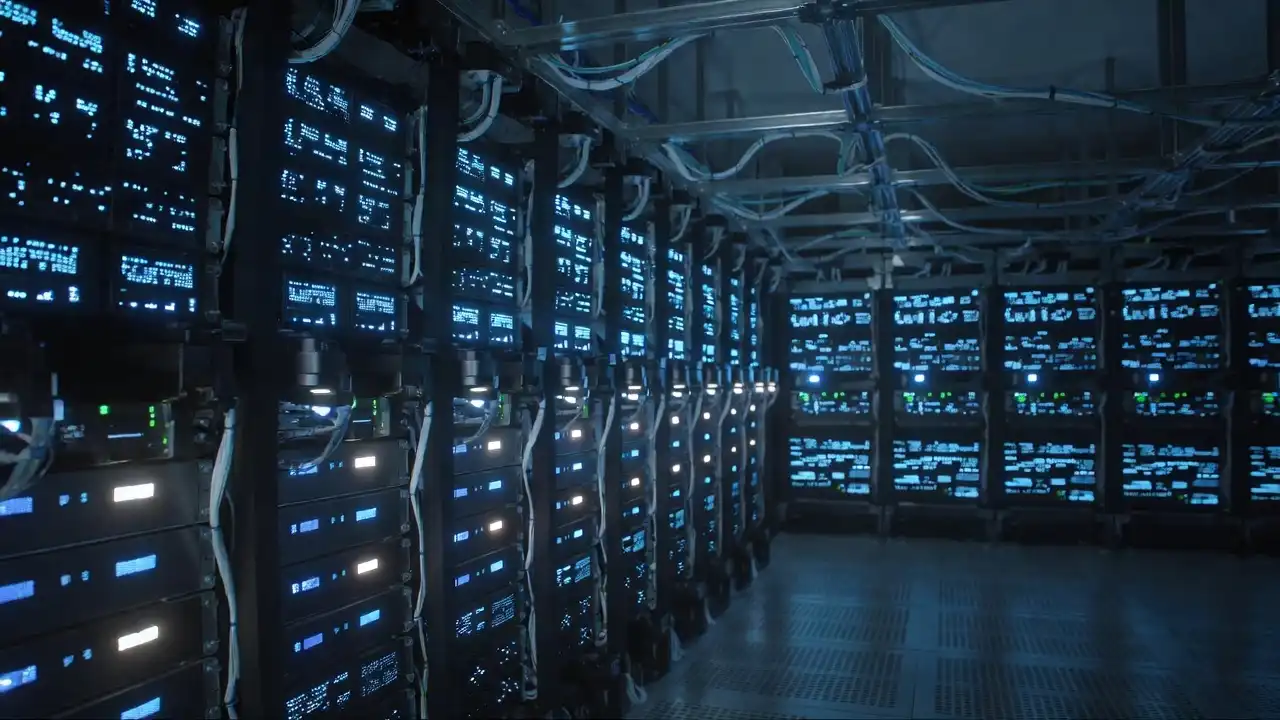
The fundamental challenge of the modern technology transition is that artificial intelligence is not merely a software-defined phenomenon; it is an asset-heavy, resource-intensive physical infrastructure project. To train, run, and scale next-generation models, companies must construct massive computing hubs packed with thousands of high-power graphics processing units.
The total consumption of these facilities is starting to crowd out other critical sectors of the economy. Lloyd Arnold, an energy analyst and one of the primary authors of the report, outlined the absolute gravity of the situation. Arnold warned that every coal plant, every natural gas facility, and every solar farm currently operating in the United States will eventually see one-fifth of its total generated energy diverted directly to power data centers. This means that the same green energy and grid capacity that policymakers originally planned to use to power electric vehicles, electrify domestic heating, and support municipal growth will instead be completely absorbed by the technology sector, forcing difficult national decisions regarding resource allocation and economic priorities.
This sudden, massive demand has shattered the historical stability of the American utility sector. For the past twenty years, total electricity demand in the United States grew at a meager annual rate of less than 0.5 percent, allowing utility companies to manage their transitions with minimal construction. Now, they face requests for gigawatts of new capacity, volumes they cannot easily deliver without constructing massive new fossil fuel power plants, directly threatening national climate goals and raising serious concerns about long-term grid reliability.
The Concentrated Strain on PJM and ERCOT
While the national average projection of 20 percent is alarming, the reality on the ground is even more critical in key regional markets. Because data center developers prioritize geographic locations with low taxes, cheap land, and proximity to major transcontinental fiber routes, their infrastructure is heavily concentrated in a few, highly vulnerable grid regions.
The most extreme example is Northern Virginia, commonly referred to as “Data Center Alley,” which is served by the massive PJM Interconnection network. The PJM grid, which coordinates the transmission of electricity across 13 states and the District of Columbia, is currently facing unprecedented, highly volatile demand spikes.
Similarly, the Electric Reliability Council of Texas, which manages the independent electrical grid of the Lone Star State, is fielding requests for gigawatts of new capacity.
In these specialized regions, data centers are projected to consume far more than the 20 percent national average by 2035, threatening to trigger localized power shortages and forcing utility companies to raise rates on residential households to fund the massive infrastructure expansions.
The Great Migration: From Crypto Mining to AI Infrastructure
To bypass the long wait times associated with securing new grid connections—which can stretch up to five years in major technology corridors—data center developers are executing a massive, highly creative corporate transition. They are partnering with and acquiring the physical assets of cryptocurrency mining companies, which already possess the massive, pre-negotiated electrical grid connections and land holdings required to run high-performance computing.
This transition has accelerated significantly following the quadrennial Bitcoin halving event, which cut miner rewards in half and compressed their operating margins.
Mining companies like Core Scientific and Riot Platforms have realized that acting as digital landlords for artificial intelligence developers is far more profitable and less volatile than mining cryptocurrency.
By retrofitting their massive, gigawatt-scale mining facilities in Texas and the Midwest to host liquid-cooled AI server racks under long-term leases with tech giants like Amazon Web Services and Google, these companies are successfully unlocking billions of dollars in recurring, high-margin revenue.
This conversion of power assets is accelerating the overall capacity of the AI buildout, but it also means that the physical power once used to secure decentralized blockchains is being permanently redirected to train corporate machine learning models.
The Gridlock: Local Permitting Freezes and Infrastructure Bottlenecks
As the tech industry’s energy appetite continues to grow, it is running into severe, highly coordinated legal and political resistance on the ground. Local communities, environmental protection groups, and state lawmakers are expressing deep concern over the resources these massive computing fortresses consume, leading to a wave of restrictive new regulations designed to protect local resources.
The New York Executive Order No. 62 and the Permitting Freeze
The most visible symbol of this political backlash is the sweeping executive order signed recently by New York Governor Kathy Hochul. Executive Order No. 62 placed a historic, one-year statewide moratorium on the issuance of environmental permits for new “hyperscale” data centers, defined as any facility using 50 megawatts of power or more.
The moratorium grew out of the Responsible Data Center Development Act, passed by the state legislature to protect local communities from rising utility bills and water depletion.
During the one-year pause, the Department of Environmental Conservation and the Department of Public Service will conduct a comprehensive, generic environmental impact statement to assess how these massive computing hubs affect regional energy grids, air quality, and local agricultural aquifers.
As other states consider similar bans, this regulatory freeze has introduced significant, long-term uncertainty for developers, proving that the tech industry can no longer rely on backroom deals and tax subsidies to build its physical networks.
The High-Voltage Transformer Shortage and Lead-Time Delays
Even in regions where local governments welcome data center development, the physical expansion of the network is facing a severe, highly disruptive industrial bottleneck: a global shortage of high-voltage transformers and electrical switchgear.
To connect a massive, 100-megawatt data center to the high-voltage transmission grid, utilities must install specialized transformers to step down the voltage and manage the massive power loads.
Currently, the waiting list to secure these large, utility-scale transformers has stretched from a few months to more than two years, with global manufacturers demanding steep price premiums to expedite orders.
This equipment shortage is a major, structural rate-limiting step that prevents developers from bringing completed data centers online on schedule, even if they have already secured their land and utility contracts.
For the tech sector, this physical hardware constraint is an inescapable reality, proving that the ultimate speed of the digital revolution is dictated not by the speed of software coding, but by the manufacturing capacity of heavy industrial factories.
Strategic Outlook: The Rise of Self-Sustaining “Off-Grid” Compute
Faced with long wait times for grid connections, rising utility bills, and spreading permitting freezes, the world’s largest technology companies are realizing that they can no longer rely entirely on the traditional, public electrical grid to power their artificial intelligence ambitions.
To survive and continue scaling, they must transition to a state-of-the-art, self-sustaining model of energy independence, constructing their own private microgrids and on-site power generation facilities directly adjacent to their data center campuses.
The Move Toward Dedicated On-Site Power Generation
This operational shift is driving a massive wave of private energy investment. Hyperscale operators are signing long-term, multi-decade Power Purchase Agreements directly with private nuclear power plants and natural gas developers to secure dedicated, off-grid electricity.
By securing this private, “behind-the-meter” power, tech companies can bypass the public transmission lines completely.
This structure allows them to bring their data centers online years faster, insulates them from the risk of public grid blackouts, and shields them from the political backlash of raising utility rates on residential households.
However, building these private microgrids is an incredibly expensive endeavor that only the wealthiest technology conglomerates can afford, further concentrating the power and control of the global AI sector in the hands of a few dominant players.
The Geopolitical Risk of the Energy Chokepoint
The long-term consequence of the energy crunch represents a major strategic threat to the national security of the United States. If the country cannot successfully upgrade its power grid, resolve its equipment shortages, and manage the massive energy demands of its computing infrastructure, the domestic artificial intelligence industry will face a severe bottleneck.
While U.S. developers currently lead the world in AI software, that lead cannot be maintained if they cannot find the physical space and electricity required to train their next-generation models, potentially allowing global rivals to close the technology gap.
To protect its technological leadership, the federal government must treat the modernization of the electrical grid as an absolute national priority, ensuring that the physical infrastructure of the country is fully prepared to support the limitless demands of the automated century.
The report serves as a blaring, historic warning to policymakers, utility executives, and technology companies alike. The artificial intelligence revolution is no longer a simple, digital software narrative; it is an asset-heavy, resource-intensive physical infrastructure project that is about to stress-test the nation’s electrical grid like never before.
By proving that data centers are on track to consume one-fifth of all electricity in the United States by 2035, the data has shattered the illusion of consequence-free technological growth.
To build a prosperous, sustainable, and secure future, the nation must quickly adapt, implementing bold energy policies, investing heavily in smart-grid infrastructure, and forcing technology companies to build their networks responsibly, ensuring that the digital tools of the future do not destroy the physical resources we need to survive.