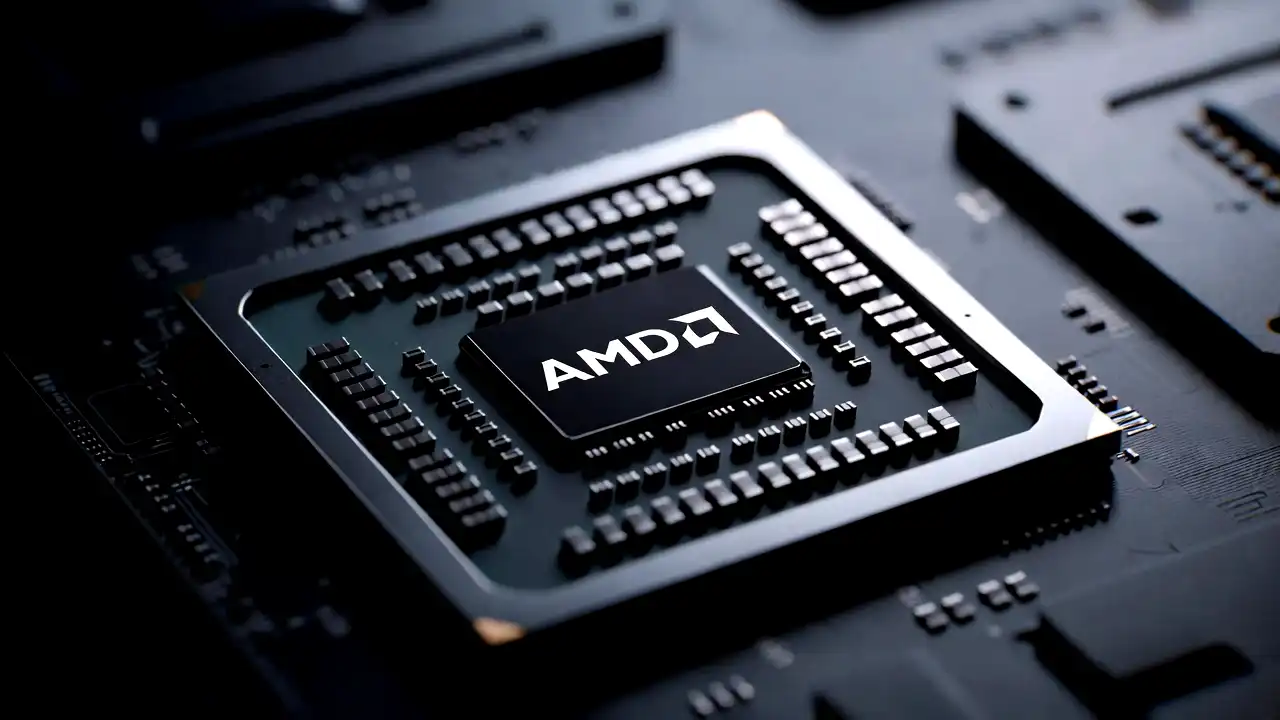
The artificial intelligence hardware industry just experienced a seismic shock that will ripple through the global economy for the next decade. Advanced Micro Devices officially entered a historic agreement to invest up to $5 billion into Anthropic, the San Francisco-based research laboratory famous for its highly capable Claude models. This deal pushes far beyond a traditional venture capital transaction. The two companies finalized an ironclad hardware pact that guarantees Anthropic will deploy up to 2 gigawatts of computing capacity powered entirely by AMD’s next-generation processors.
For readers following the market on TechGolly, this announcement signals the absolute end of the single-vendor silicon monopoly. Technology giants and agile startups spent the last three years scrambling to secure enough graphics processing units to train their massive foundation models, frequently bending the knee to a single dominant chipmaker. By teaming up with AMD on this colossal scale, Anthropic gains the financial and computational freedom to chart its own course. The startup secures the processing power necessary to build its next-generation frontier models while handing AMD the ultimate marquee customer to prove its hardware works at a massive scale.
Financial institutions realize the sheer gravity of this partnership. Wall Street analysts calculate that outfitting a 2-gigawatt data center footprint could generate an astonishing $27.2 billion in direct revenue for AMD. This massive cash flow will reshape the competitive balance in Silicon Valley. The agreement proves that the artificial intelligence transition requires deep, symbiotic relationships where chip designers, software labs, and financial institutions merge their operations into a single, cohesive ecosystem.
Shattering the Silicon Monopoly: The Strategic Logic Behind the Deal
Building a frontier artificial intelligence model costs a staggering amount of money. The industry moved past the point where a startup could train a competitive system using a few million dollars and a rented server rack. Today, competing at the highest levels of machine learning requires tens of thousands of advanced processors running continuously for months. This brutal physical reality forces artificial intelligence laboratories to raise unprecedented amounts of cash just to keep the lights on.
AMD’s commitment to inject $5 billion into Anthropic solves this massive capital problem immediately. The investment gives Anthropic a secure, multi-year financial runway right as the startup prepares to launch a highly anticipated initial public offering. Private market chatter currently values Anthropic near the $60 billion mark. Bringing an institutional heavyweight like AMD onto the capitalization table gives conservative public market investors the confidence they need to support that premium valuation.
Securing the Supply Chain Against Hardware Droughts
The real genius of this partnership lies in supply chain security. Tom Brown, the chief compute officer at Anthropic, explained that diversifying the company’s hardware portfolio remains the only way to protect its product roadmap. Before securing this deal, Anthropic operated its models across a fragmented mix of silicon, utilizing Amazon Trainium chips, Google Tensor Processing Units, and standard industry hardware.
Relying on multiple suppliers left the company vulnerable to severe capacity shortages. Every major technology company on earth wants to buy the same chips. When supply chains bottleneck, artificial intelligence developers have to wait months to receive their servers. By locking down a dedicated pipeline of AMD silicon, Anthropic ensures it will never face a hardware drought. The startup can train its massive Claude models on schedule, completely immune to the supply shocks that routinely cripple its smaller competitors.
The Financial Backstop and Favorable Leasing Terms
Filling a data center with advanced processors requires more than just buying the chips. The customer must lease the physical building, secure the electricity, and install liquid cooling systems. These infrastructure leases cost billions of dollars, and commercial real estate developers often demand strict financial guarantees before they break ground.
To help Anthropic shoulder this massive burden, AMD stepped up to provide a direct financial backstop. AMD plans to use its pristine, investment-grade corporate balance sheet to guarantee the data center leases for Anthropic. This financial maneuver acts as a massive competitive advantage. When a multi-billion-dollar chipmaker guarantees a lease, the commercial landlord offers significantly lower interest rates and better contract terms. AMD essentially operates as an investment bank in this scenario, risking its own capital to ensure its chips find a permanent home inside the world’s most advanced server farms.
Inside the Hardware Matrix: Helios, Venice, and the MI450 Series
The equipment powering this 2-gigawatt deployment represents the bleeding edge of computer science. AMD will not simply ship pallets of loose chips to Anthropic. The chipmaker will deliver fully integrated, factory-tested rack-scale systems known as the AMD Helios platform.
These massive server cabinets arrive ready to plug into the data center network, eliminating months of tedious manual assembly. Rack-scale engineering allows AMD to optimize the power delivery and thermal management for every single component inside the metal frame. This tight integration ensures the processors operate at maximum speeds without overheating, a critical requirement when training models that contain trillions of parameters.
Deploying the Instinct MI455X Accelerators
The beating heart of these Helios racks is the AMD Instinct MI455X graphics processing unit. This processor belongs to the highly anticipated MI450 series, representing AMD’s most aggressive response to the current market leaders. The MI455X boasts an extraordinary amount of high-bandwidth memory, allowing the chip to ingest and process massive datasets simultaneously.
Memory bandwidth serves as the ultimate bottleneck in modern artificial intelligence. When a large language model processes a query, the system constantly shuffles data between the memory modules and the processing cores. The MI455X solves this traffic jam by widening the data pathways, resulting in blistering inference speeds. Anthropic will use this extreme memory capacity to serve its enterprise customers faster, delivering complex coding and reasoning answers with a latency of just a few milliseconds.
Network Architecture and the Pensando Integration
A single graphics processing unit cannot train a frontier model. Developers must connect tens of thousands of chips to act as a single, unified supercomputer. If the network cables connecting these chips experience a delay, the entire system slows down. To prevent data congestion, the Helios racks utilize advanced AMD Pensando networking solutions.
The Pensando data processing units offload the heavy networking traffic from the main processors. By handling the complex routing protocols and security firewalls independently, the Pensando chips free up the main graphics processing units to focus entirely on mathematical calculations.
The Helios racks also integrate AMD’s next-generation EPYC central processing units, internally codenamed Venice. These CPUs act as the master traffic controllers for the server, feeding data to the graphics chips and managing the overall system stability. By controlling the graphics chips, the networking units, and the central processors, AMD provides Anthropic with a fully cohesive technology stack that rivals any proprietary system on the market.
The Software Battlefield: ROCm and the Power of Generative Coding
The biggest hurdle AMD faced in the artificial intelligence market never involved physical hardware. The company struggled against a massive software moat. For more than a decade, developers wrote their machine learning algorithms using a proprietary programming platform controlled by a single competitor. This proprietary language became the absolute industry standard, making it incredibly difficult for developers to port their code over to AMD hardware.
AMD fought back by developing ROCm, an open-source software stack designed to run complex artificial intelligence workloads. While ROCm made significant progress, convincing software engineers to rewrite their legacy codebases took an enormous amount of time and money. The partnership with Anthropic offers a brilliant, highly automated solution to this specific problem.
Claude Steps in to Write the Code
Anthropic and AMD established a deep, multi-year engineering collaboration to shatter the software barrier. They are using artificial intelligence to solve the artificial intelligence problem. Anthropic deployed its most advanced Claude models to actively write, debug, and optimize code specifically for the ROCm platform.
Instead of hiring thousands of human programmers to manually translate legacy code, AMD uses Claude to automate the translation process. Claude reads the old proprietary code and instantly converts it into highly optimized ROCm language. This automated system allows developers to migrate their massive training workloads onto AMD hardware in a matter of hours instead of months.
Furthermore, AMD integrated Claude broadly across its own internal product development teams. AMD engineers use the assistant to design better chip architectures, test silicon pathways, and manage supply chain logistics. By using a neural network to build better hardware to run neural networks, the two companies created a closed-loop, self-improving innovation engine that will rapidly close the software gap.
Lowering the Barrier to Entry for Open Ecosystems
This software breakthrough changes the fundamental economics of the technology sector. When developers can easily switch between different hardware platforms without completely rewriting their software, they gain immense pricing power. They can force chipmakers to compete on price and performance rather than relying on software lock-in.
Anthropic champions this open ecosystem approach. By proving that a massive, frontier-class model can run flawlessly on AMD silicon and the ROCm software stack, the startup gives every other technology company the confidence to follow suit. Enterprise software companies, financial institutions, and government research laboratories will look at the success of this 2-gigawatt deployment and realize they finally have a viable, high-performance alternative for their data centers. This dynamic forces the entire semiconductor market to lower prices, directly benefiting the consumers and businesses that ultimately purchase the software subscriptions.
The Logistics of a Two-Gigawatt Rollout
Deploying 2 gigawatts of computing hardware is an industrial megaproject that rivals the construction of a modern sports stadium or a commercial airport. A single gigawatt provides enough electricity to power a major city. Dedicating two gigawatts strictly to server racks highlights the profound physical demands of the modern digital economy.
Anthropic and AMD plan to bring the first gigawatt of capacity online during the first half of 2027. Meeting this aggressive deadline requires moving literal mountains of earth and laying miles of high-voltage transmission lines. The companies cannot simply lease empty warehouse space in crowded technology hubs like Northern Virginia or Silicon Valley. Those regional power grids reached their absolute maximum capacities years ago.
Bypassing the Grid with Neoclouds and Independent Infrastructure
To find the necessary electricity, Anthropic and AMD must look toward regions with abundant, untapped clean energy. They are scouting locations in the American Midwest, Texas, and the Pacific Northwest, actively searching for access to massive wind farms, solar arrays, and reliable nuclear power plants.
The companies plan to utilize a hybrid deployment strategy. They will install a portion of the Helios racks inside private, Anthropic-owned data centers. They will deploy the remaining hardware across a network of agile, highly specialized infrastructure providers known as neoclouds.
Neocloud companies focus exclusively on hosting high-density artificial intelligence hardware. They strip away the bloated, legacy enterprise services offered by traditional cloud providers. By focusing strictly on liquid-cooled, high-performance computing, neoclouds can bring new facilities online much faster. Distributing the 2-gigawatt load across multiple independent neoclouds protects Anthropic from localized power grid failures and ensures maximum operational uptime for its enterprise clients.
The Thermal Management Challenge
Running massive clusters of MI455X chips generates an astonishing amount of heat. Traditional air-conditioning systems cannot keep the server rooms cool enough to prevent the silicon from melting. Data center operators must utilize advanced direct-to-chip liquid cooling systems to manage the thermal load.
Liquid cooling pumps cold fluid directly over the hot processors, absorbing the heat and carrying it away to external heat exchangers. This method requires complex plumbing, specialized leak-detection software, and massive water reserves. AMD engineered the Helios racks to support these advanced cooling loops right out of the factory. This structural design ensures the hardware runs at peak efficiency, lowering the overall electricity consumption of the data center and saving Anthropic millions of dollars in monthly utility bills.
Reshaping the Trillion-Dollar Enterprise Market
The long-term impact of this $5 billion investment extends far beyond the server room. The global enterprise market desperately wants cheaper artificial intelligence. Companies across the healthcare, legal, and financial sectors want to use autonomous agents to summarize documents, write code, and manage customer service operations. However, the high cost of running these models frequently destroys the return on investment.
When chipmakers compete, the cost of computing falls. AMD provides Anthropic with the high-performance hardware it needs at a highly competitive price point. Anthropic then uses that cheap computing power to lower the subscription fees it charges its enterprise customers.
This cost reduction allows businesses to deploy Claude across thousands of employees rather than restricting the tool to a few senior executives. As the cost per token drops, the volume of artificial intelligence usage will explode. Industry analysts project that the enterprise AI market will surpass $1 trillion in annual spending by the end of the decade. The companies that provide the fastest, cheapest, and most secure infrastructure will capture the vast majority of that wealth.
The partnership between AMD and Anthropic proves that the technology industry operates on a constant cycle of disruption. No monopoly lasts forever when brilliant engineers and massive pools of capital decide to build an alternative. By committing $5 billion and launching a 2-gigawatt deployment, AMD established itself as a primary pillar of the global artificial intelligence economy. At the same time, Anthropic secured the physical resources necessary to maintain its lead at the frontier of machine learning. As the two companies bring their massive data centers online in 2027, they will rewrite the economic and physical rules of the automated century, proving that true innovation requires a perfect marriage of brilliant software and brutally efficient hardware.