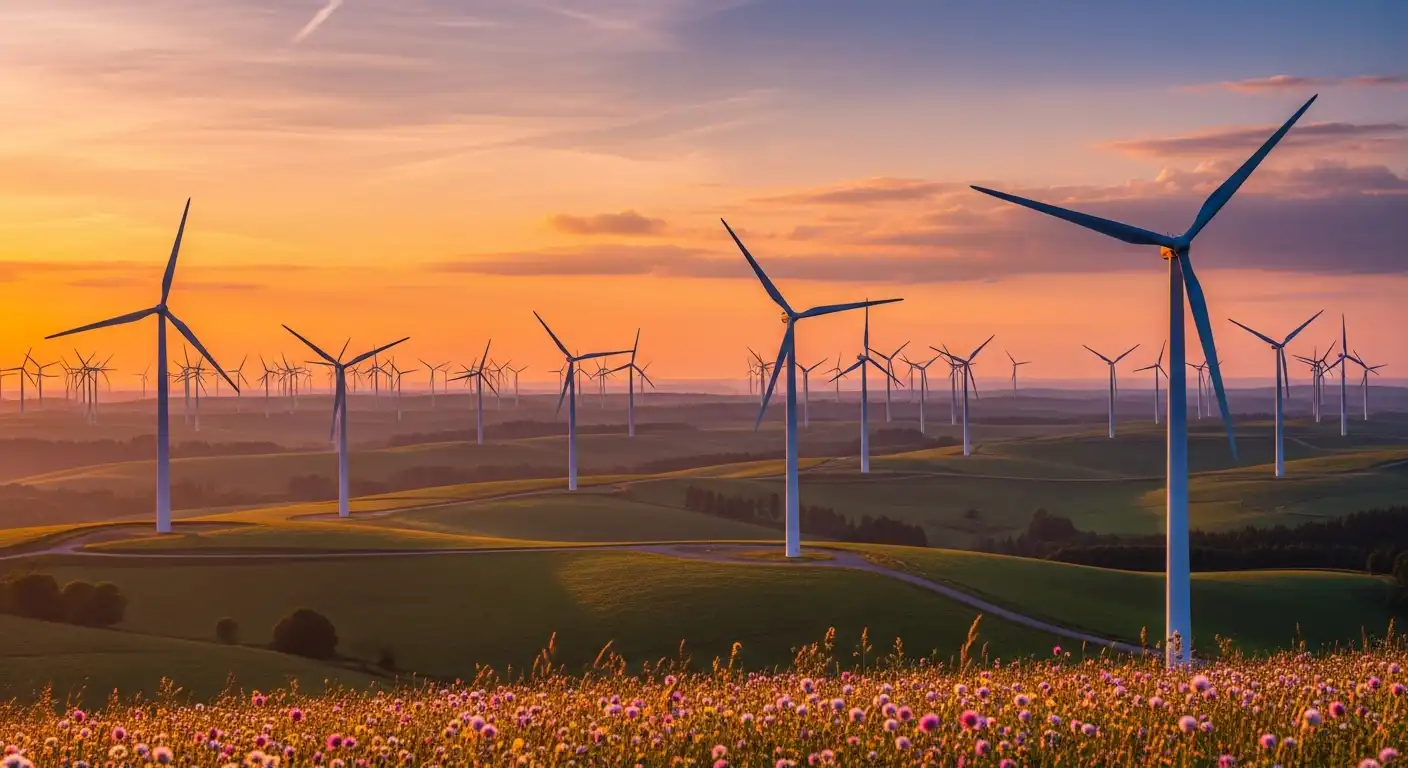
The transition toward renewable energy has reached a pivotal milestone in the United Kingdom. Energy developers are preparing to inject £1.5 billion into a massive overhaul of the country’s flagship onshore wind energy site. Located just south of Glasgow, Scotland, the Whitelee wind farm currently holds the title of the largest onshore wind facility in the UK. Now, project operators plan to strip away older, less efficient hardware and replace it with a new generation of towering, high-capacity machines.
This ambitious upgrade will push the site’s total generation capacity to a staggering one gigawatt. That output provides enough clean electricity to power roughly 650,000 homes, which represents an increase of 300,000 households compared to its current operational limits. The strategy highlights a crucial shift in how nations approach their climate goals. Instead of endlessly hunting for new plots of land to develop, energy companies are looking inward. They want to squeeze every possible megawatt out of the infrastructure they already control.
The project represents one of the most significant private capital investments in Scottish energy infrastructure in recent years. It promises to create hundreds of high-skilled jobs, deliver enormous economic value to local supply chains, and set a powerful precedent for the global renewable energy market. As wind farms built in the early 2000s begin to show their age, the practice of repowering existing sites is emerging as the ultimate solution for countries desperate to boost their energy security while minimizing their environmental footprint.
The Concept of Repowering Aging Energy Infrastructure
Wind turbine technology has evolved at a breathtaking pace over the last two decades. When operators first commissioned the Whitelee site in 2008, the hardware represented the pinnacle of renewable engineering. Today, those original machines look surprisingly outdated compared to the massive structures rolling off modern assembly lines. The physical lifespan of a standard commercial wind turbine hovers around 20 to 25 years. This timeline forces energy developers to make critical decisions about their aging fleets.
Instead of simply tearing down the old equipment and walking away, companies are embracing a strategy known as repowering. Repowering involves dismantling the obsolete turbines and replacing them with fewer, significantly more powerful models. This approach allows developers to multiply their electricity output without expanding the physical footprint of the wind farm. For a densely populated country like the United Kingdom, where land use often sparks intense political debate, repowering serves as a vital tool for achieving aggressive carbon reduction targets.
Why Taller Turbines Generate More Power
The physics of wind energy dictate a very simple rule: higher altitudes yield stronger, more consistent winds. To capture this abundant energy, modern turbines require taller towers and much longer rotor blades. The proposed expansion plan for the Scottish site illustrates this technological leap perfectly.
Operators plan to reduce the actual number of turbines on the site from 215 down to approximately 124. Despite cutting the machine count nearly in half, the overall power output will double. The secret lies in the sheer size of the new hardware. The current generation of turbines at the site measures up to 140 meters tall at the tip of the blade. The proposed replacements will tower over the landscape, reaching well above 250 meters at blade tip height.
These massive new blades sweep a much wider area of the sky, capturing significantly more kinetic energy with every rotation. They also operate far more efficiently across a wider range of weather conditions. Older turbines often shut down when wind speeds drop too low or spike too high. Modern variants use advanced sensors and pitch control systems to adjust their blade angles in real time, allowing them to continue generating electricity even during suboptimal weather events.
Bypassing the Need for New Wind Farm Sites
Securing permits to build a brand new wind farm from scratch involves navigating a labyrinth of regulatory hurdles. Developers must conduct years of environmental impact studies, negotiate land rights with multiple owners, and overcome inevitable resistance from local communities concerned about changing landscapes. Even if a company manages to secure the land, they still face the monumental challenge of connecting the new facility to the national power grid.
Repowering bypasses almost all of these logistical nightmares. The site already exists. The local communities are already accustomed to living near the turbines. Most importantly, the critical grid connection infrastructure—including substations and high-voltage transmission lines—is already built and operational.
By upgrading the turbines at an existing site, operators can rapidly inject hundreds of new megawatts into the power grid without waiting years in a connection queue. This efficiency makes repowering one of the most cost-effective and time-sensitive methods for scaling up national clean energy production.
Economic Windfalls and Supply Chain Opportunities
A £1.5 billion infrastructure project carries immense economic weight. The overhaul of the UK’s largest onshore wind farm will send a wave of capital cascading through the Scottish and broader British economies. Large-scale energy projects require vast networks of specialized contractors, manufacturers, and service providers to bring the vision to life.
Project leaders estimate that over the next ten years of development and construction, the expansion will generate approximately £330 million in Gross Value Added for the Scottish economy alone. This massive cash injection will support regional businesses, drive local tax revenues, and provide long-term financial stability for a region heavily invested in the renewable energy transition.
Boosting the Scottish and UK Economies
Building 250-meter-tall wind turbines requires heavy industrial expertise. The project operators anticipate creating around £500 million in direct supply chain opportunities. These contracts will cover everything from pouring massive concrete foundations to manufacturing advanced composite blades and assembling the complex electrical generators housed inside the turbine nacelles.
The company plans to implement a multi-port strategy to deliver the massive new components to the site. Transporting 100-meter-long blades across land requires highly coordinated logistics involving specialized heavy-haul trucking companies, port operators, and escort vehicles. By spreading this logistical work across multiple Scottish ports, the project developers ensure that the economic benefits ripple outward across the entire country, rather than remaining concentrated in a single local district.
The construction phase will create hundreds of immediate jobs for civil engineers, heavy machinery operators, and safety inspectors. Once the upgraded wind farm becomes operational, it will require a dedicated team of highly skilled maintenance technicians to keep the massive machines spinning for the next 40 years. These long-term, high-paying green-collar jobs represent the ultimate prize for communities navigating the transition away from fossil fuel industries.
Expanding Community Benefit Funds
Large-scale energy developers understand that maintaining a positive relationship with the surrounding communities is essential for long-term success. Since the original wind farm began operations, it has contributed more than £20 million to local councils through dedicated community benefit funds. These funds help pay for local infrastructure improvements, school programs, and civic initiatives.
The massive capacity upgrade will significantly increase these financial contributions. Project leaders anticipate that the new community benefit fund will deliver around £5 million every single year to the surrounding districts of East Renfrewshire, East Ayrshire, and South Lanarkshire.
Beyond direct cash contributions, the operators are exploring innovative financial models that include opportunities for partial community ownership. This model allows local residents to directly purchase equity in the wind farm, giving them a tangible financial stake in the project’s success. When local citizens receive regular dividend checks generated by the turbines spinning in their own backyards, public support for renewable energy development tends to skyrocket.
The Engineering and Development Timeline
Upgrading an active, 83-square-kilometer power plant while keeping the electricity flowing requires a meticulous, highly orchestrated development schedule. You cannot simply flip a switch, tear down 215 turbines, and erect 124 new ones overnight. The entire process will unfold over an ambitious ten-year timeline.
Engineers must carefully evaluate the structural integrity of the existing site. While some of the original access roads and underground cable trenches might remain viable, the massive size of the new turbines will require entirely new, deeply reinforced concrete foundations. The heavy lift cranes needed to assemble 250-meter-tall structures also demand highly stabilized staging areas.
Phased Construction and Grid Upgrades
To minimize disruption to the national power grid, the operators plan to execute the repowering project in carefully managed phases. They will decommission a small cluster of older turbines, prepare the ground, and install the new machines while the rest of the wind farm continues to generate power. This phased approach ensures a steady stream of electricity and revenue throughout the decade-long construction process.
The project developers intend to submit a formal planning application in December 2027. Following the regulatory review period and procurement phase, the heavy construction will commence. The overarching goal is to have the fully upgraded, one-gigawatt facility completely operational by 2035.
Throughout this massive industrial operation, the company aims to keep the site open to the public. The wind farm features an extensive network of trails used by hikers, cyclists, and horse riders, alongside a popular visitor center. Maintaining public access during a heavy construction project presents significant safety challenges, but project leaders view the site as a crucial educational tool. Allowing the public to witness the scale and complexity of the clean energy transition firsthand helps demystify the technology and build lasting support for future climate initiatives.
The National Strategy for Energy Security
The expansion of the UK’s largest onshore wind farm arrives at a critical moment for national energy policy. Global energy markets remain highly volatile. Relying on imported natural gas to heat homes and power industrial centers leaves countries incredibly vulnerable to sudden price spikes and geopolitical supply chain disruptions.
Building massive, domestic renewable energy assets serves as the ultimate defense against this volatility. Wind energy is entirely free, immune to foreign embargoes, and perfectly predictable over long-term seasonal averages. By doubling the output of its flagship wind farm, the United Kingdom takes a massive stride toward achieving true energy independence.
Rebuilding Britain’s Aging Wind Fleet
The repowering effort in Scotland represents just the beginning of a much larger national trend. Great Britain served as an early pioneer in commercial wind energy. As a result, the country now possesses one of the oldest wind fleets in Europe. Industry analysts report that more than 200 wind farms across the country, representing over 3.2 gigawatts of total generation capacity, face critical end-of-life decisions over the next few years.
If developers choose to decommission these sites without replacing the hardware, the UK will lose a massive chunk of its clean power capacity. Repowering these aging sites is not just an opportunity for growth; it is an absolute necessity for preventing a dangerous backward slide in national energy production.
The Scottish project will likely serve as the ultimate blueprint for this national rebuilding effort. By demonstrating how to successfully navigate the planning, logistical, and community engagement challenges of a massive repowering operation, the project developers will provide a clear roadmap for other operators across the country.
Powering the Future Economy
A one-gigawatt power plant fundamentally alters regional energy economics. Generating enough electricity to power 650,000 homes means the facility can support entire cities without burning a single ounce of coal or natural gas. This massive influx of clean power will play a critical role in supporting the next phase of economic growth.
As the country transitions toward electric vehicles and replaces gas boilers with electric heat pumps, base electricity demand will surge. Furthermore, the rapid growth of artificial intelligence and cloud computing requires massive new data centers, which consume extraordinary amounts of power. Expanding the capacity of existing wind farms ensures the national grid can handle these new demands without increasing carbon emissions.
The long-term operational plans for the site also include continued investment in maintenance and support for the next 40 years. This generational commitment guarantees that the wind farm will remain a vital pillar of the national energy infrastructure well into the second half of the 21st century.
Setting a Global Benchmark for Wind Energy
The £1.5 billion investment to double the capacity of the UK’s largest onshore wind farm perfectly illustrates the future of the global renewable energy industry. The era of focusing exclusively on greenfield development has ended. To meet aggressive climate targets, energy companies must maximize the efficiency of the land and grid connections they already possess.
Replacing 215 aging turbines with 124 massive, state-of-the-art machines proves that technological advancement can deliver exponential gains in power output while simultaneously reducing the physical footprint of industrial hardware. This project highlights the incredible potential of repowering, demonstrating that older wind farms are not liabilities nearing retirement, but highly valuable foundational assets primed for a massive upgrade.
As the world watches the Scottish expansion unfold over the next decade, the project will undoubtedly set a new global standard for energy development. It proves that with ambitious capital investment, advanced engineering, and deep community engagement, nations can secure their energy future, drive massive economic growth, and protect the environment simultaneously. The towering new blades preparing to sweep across the Eaglesham Moor represent far more than just upgraded machinery; they represent a bold, highly efficient vision for the future of global power generation.