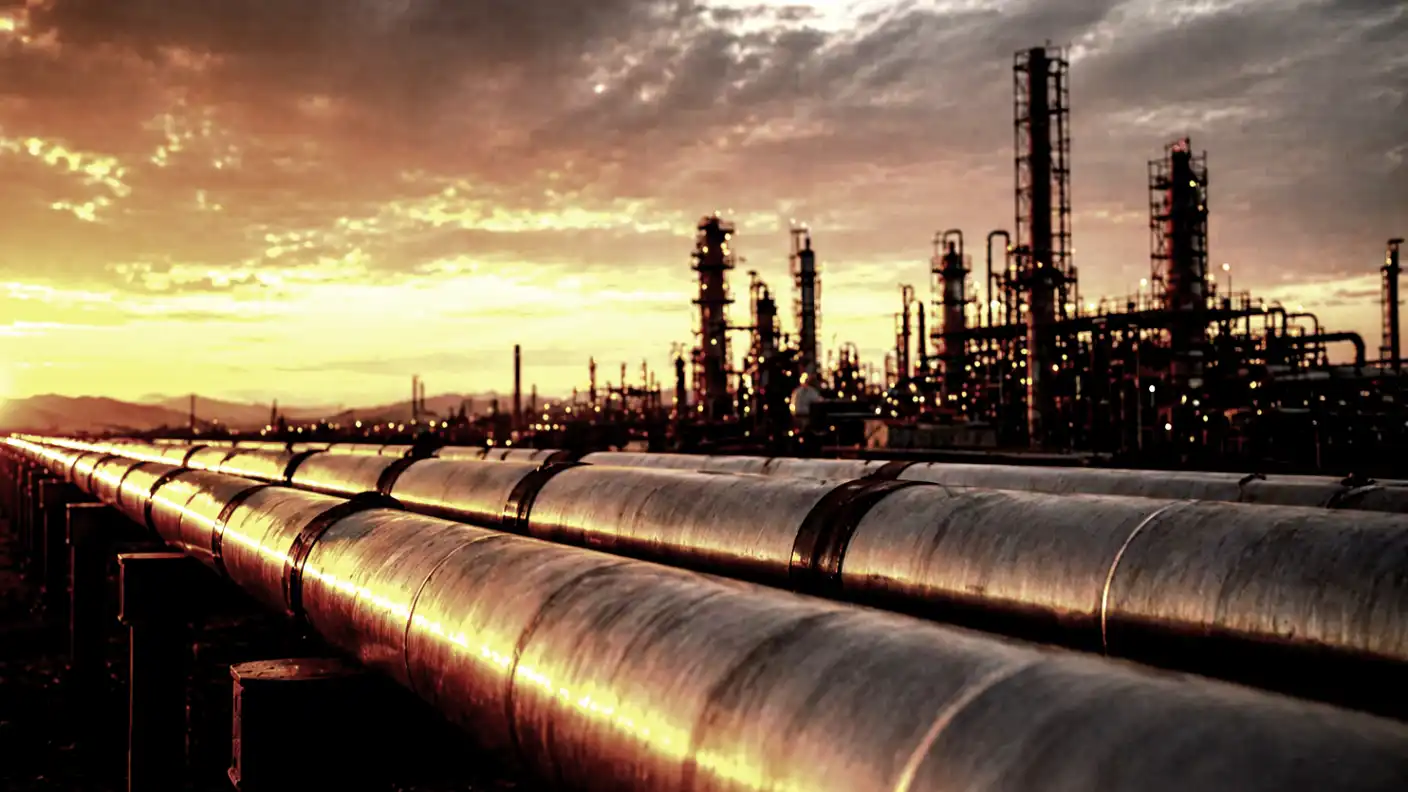
Efforts to revive the Constitution natural gas pipeline have hit a major financial roadblock as project sponsors struggle to secure binding long-term commitments from utility buyers and regional power generators. Supported by a strong federal policy push under President Donald Trump to expand domestic energy infrastructure and lower Northeast utility bills, the proposed 124-mile pipeline aims to unlock cheap natural gas from the Marcellus Shale in Pennsylvania and transport it directly into New York and New England. However, despite top-down executive backing and streamlined federal permitting initiatives, midstream developers are finding that utility companies refuse to sign the long-term shipping contracts required to finance construction.
The 30-inch diameter pipeline, designed to carry 650 million cubic feet of natural gas per day, carries an estimated construction price tag exceeding $1 billion. To secure project financing from Wall Street debt syndicates and commercial banks, developers typically must lock in 15-to-20-year “take-or-pay” contracts for at least 80% to 90% of the pipe’s total capacity. Local distribution utilities like Consolidated Edison, National Grid, and New York State Electric & Gas have refrained from committing corporate balance sheets to multi-decade fossil fuel contracts. Utility executives cite aggressive state climate mandates, long-term demand uncertainty, and the severe risk of creating stranded assets that state regulators might not allow them to recover through consumer rates.
This commercial impasse highlights a fundamental conflict defining the American energy landscape. While federal policy seeks to maximize domestic natural gas production and build interstate pipeline capacity to alleviate regional winter price spikes, state-level decarbonization laws and shifting utility business models are choking off the commercial demand necessary to build large greenfield infrastructure projects. TechGolly provides an in-depth analysis of the Constitution Pipeline revival effort, examining project engineering, market price differentials, legal hurdles, financial mechanics, and the strategic outlook for Northeast energy infrastructure.
Unpacking the Constitution Pipeline Infrastructure and Economic Blueprint
The technical blueprint for the Constitution Pipeline involves constructing 124 miles of high-pressure 30-inch steel pipeline stretching from Susquehanna County in northeastern Pennsylvania to an interconnect facility in Schoharie County, New York. At its northern terminus, the conduit would connect with two major existing interstate transmission networks: the Iroquois Gas Transmission System and the Tennessee Gas Pipeline. By delivering 650 million cubic feet of natural gas daily, the facility would supply enough energy to heat more than 3 million homes across New York and New England during peak winter demand periods.
The primary economic argument for the project rests on extreme regional price disparities created by pipeline bottlenecks. Northeastern Pennsylvania sits atop the Marcellus Shale, one of the largest and lowest-cost natural gas reserves in the world. During normal operating periods, spot natural gas at regional Pennsylvania trading hubs trades at deep discounts, often hovering between $1.50 and $2.20 per million British thermal units (MMBtu). However, because existing pipeline corridors out of Pennsylvania are full, natural gas cannot easily reach urban consumer markets in New York City and Boston during severe cold snaps.
During arctic winter cold snaps, spot natural gas prices in New York and New England routinely surge to $20, $30, or even $50 per MMBtu as power plants and home heating systems compete for limited deliverable fuel. Project developers argue that constructing the Constitution Pipeline would bridge this physical gap, allowing cheap Pennsylvania gas to flow directly into constrained Northeast markets, saving utility customers an estimated $1.2 billion annually in wholesale energy costs.
Despite these compelling arbitrage economics during peak winter periods, pipeline developers cannot build a $1 billion asset based solely on a few weeks of winter volatility. Midstream developers require steady, year-round revenue streams guaranteed by binding firm transportation agreements. Without local distribution utilities agreeing to pay monthly capacity reservation charges over 15 to 20 years, financial sponsors cannot satisfy the risk parameters set by institutional bondholders and infrastructure funds.
Federal Energy Policy Momentum versus Utility Hesitation
The push to rebuild and permit the Constitution Pipeline represents a central pillar of federal energy policy aimed at establishing national energy dominance and lowering consumer energy costs. Federal agencies, including the Federal Energy Regulatory Commission (FERC), have sought to expedite environmental reviews and exercise federal preemption under the Natural Gas Act to prevent individual states from blocking interstate energy corridors.
Federal officials argue that regional pipeline blockades artificially inflate utility bills for working-class families and strain electricity grid reliability during winter weather events. By issuing administrative orders and clarifying federal permitting timelines, Washington has attempted to clear the legal runway for pipeline developers to begin trenching and pipe laying.
However, federal policy support cannot compel private utility corporations to purchase pipeline capacity. Utility chief financial officers face strict regulatory oversight from state public utility commissions, which scrutinize long-term capital commitments. If a utility signs a 20-year contract for natural gas capacity and state energy laws subsequently force a transition away from fossil heating, the utility risks absorbing millions of dollars in unrecoverable contract expenses. Consequently, utility procurement teams are opting for short-term spot purchases and localized peak-shaving solutions rather than underwriting new interstate pipelines.
The Regulatory Wall: New York Climate Mandates and Legal Obstacles
The reluctance of utility companies to support the Constitution Pipeline stems directly from state statutory mandates, most notably New York’s Climate Leadership and Community Protection Act (CLCPA). Enacted in 2019, the CLCPA establishes legally binding targets requiring New York to generate 70% of its electricity from renewable sources by 2030, achieve a 100% zero-emission electricity grid by 2040, and reduce economy-wide greenhouse gas emissions by 85% below 1990 levels by 2050.
To meet these aggressive statutory targets, state utility regulators have placed immense pressure on local distribution companies to reduce natural gas throughput over time. State agencies actively discourage utilities from expanding natural gas infrastructure, encouraging them instead to fund non-pipe alternatives, such as commercial energy efficiency programs, geothermal heat networks, and targeted grid electrification.
Furthermore, municipal building codes across New York State have increasingly restricted fossil fuel hookups in new residential and commercial construction. New York City and state-level building mandates require new structures under seven stories to utilize all-electric heating and cooking systems, with larger commercial buildings following suit. These structural bans directly limit future customer growth for natural gas utilities, eroding the long-term volume projections that would otherwise justify subscribing to 20 years of new pipeline capacity.
Legal risk also remains a major deterrent for potential pipeline shippers. The original Constitution Pipeline project was cancelled in 2020 after an eight-year legal battle triggered when New York environmental regulators denied a critical Section 401 Water Quality Certification under the federal Clean Water Act. Although federal legal updates have tried to limit state veto power over water permits, environmental advocacy groups and state attorneys general stand ready to challenge revived permits in federal courts. Shippers recognize that any revived project faces years of costly litigation and potential court-ordered construction stays before a single cubic foot of gas flows.
Shifting Northeast Heating and Electricity Demand Metrics
Underlying the utility hesitation is a fundamental transformation in consumer heating demand and regional electricity generation profiles. Across New York and New England, adoption of cold-climate electric heat pumps is accelerating, supported by generous federal and state tax incentives, utility rebates, and improved compressor technology that operates efficiently in sub-zero temperatures.
As residential and commercial property owners replace aging oil and gas furnaces with electric heat pump systems, peak natural gas demand growth is slowing. While natural gas remains the dominant heating fuel across the Northeast today, heating utility projections indicate that total annual gas delivery volumes will plateau over the next decade before beginning a gradual decline.
Simultaneously, the regional electricity generation mix is undergoing a major structural shift. Massive offshore wind developments, large-scale solar installations, and Canadian hydroelectric import lines—such as the Champlain Hudson Power Express bringing 1,250 megawatts of clean power directly into New York City—are scheduled to come online over the next five years. This influx of non-fossil electricity will reduce the operating hours of gas-fired power plants, further eroding baseline natural gas demand across the power sector.
Financial Mechanics: Stranded Asset Risks and Capital Markets
The commercial struggles of the Constitution Pipeline reflect broader shifts in capital market underwriting for North American midstream energy projects. A decade ago, institutional investors routinely backed greenfield pipeline builds based on projected volume growth and speculative shipper demand. Today, equity analysts and bond rating agencies demand absolute capital discipline, requiring fully contracted order backlogs before approving project construction.
Inflation has also severely altered pipeline construction economics. Over the past five years, rising prices for American-made 30-inch steel pipe, specialized union labor, environmental monitoring, and compressor station machinery have pushed greenfield pipeline construction costs from an average of $5 million per mile to over $8 million to $10 million per mile. Consequently, the total capital outlay for the Constitution project has climbed from its original 2012 estimate of $683 million to well over $1 billion today.
To service the debt on a $1 billion asset, pipeline developers must charge higher tariff rates for firm transportation capacity. Shippers subscribing to the Constitution Pipeline would need to pay estimated reservation fees of $0.80 to $1.20 per MMBtu transferred. For a local distribution utility, paying those high fixed capacity charges 365 days a year—when the extra capacity is primarily needed during 30 to 40 peak cold winter days—creates an unsupportable financial burden.
The financial risk of stranded assets looms large over midstream capital markets. A stranded asset occurs when an infrastructure project loses its economic value or usefulness before the end of its physical operating lifespan due to regulatory changes, technological shifts, or market demand declines. If a 30-year pipeline asset becomes obsolete after 15 years due to state carbon bans, pipeline owners and subscribing utilities face massive equity write-downs and unrecoverable debt obligations.
Regional Market Price Spikes and Consumer Cost Impacts
The failure to secure utility contracts for the Constitution Pipeline leaves Northeast energy markets exposed to ongoing winter price volatility. Energy economists note that New York and New England consumers pay some of the highest retail electricity and heating rates in the continental United States, driven directly by pipeline capacity constraints during winter peak periods.
Proponents of the project point out that when winter polar vortex events strike, local grid operators are often forced to burn expensive fuel oil or import costly liquefied natural gas (LNG) on foreign tankers to keep power plants running and maintain system pressure. Imported LNG delivered to offshore terminals near Boston or New York can cost upwards of $20 to $30 per MMBtu during global demand squeezes, compared to $2.00 gas sitting trapped just 150 miles away in Pennsylvania.
Clean energy advocates and environmental analysts counter that paying $1 billion for a brand-new pipeline to solve a 30-day winter peak issue represents an inefficient use of ratepayer capital. They argue that regional energy reliability is better served by investing in localized peak-shaving solutions, such as battery storage installations, geothermal heat loops, demand-response programs, and expanded municipal LNG storage tanks that do not require constructing 124 miles of new interstate rights-of-way.
Strategic Outlook for Northeast Energy Infrastructure
Without firm transportation agreements signed by major regional utilities, the Constitution Pipeline remains commercially unviable in its current form. Midstream developers face a difficult strategic choice: delay the project indefinitely until energy market conditions shift, or attempt to restructure the project’s commercial model to attract non-traditional shippers.
One alternative path involves seeking commitments from independent power producers, industrial manufacturing plants, or merchant natural gas marketers rather than regulated utilities. However, merchant energy companies rarely possess the high credit ratings or balance sheet duration required by institutional project finance lenders, making it difficult to raise $1 billion in debt capital without utility anchors.
Another strategic approach focuses on brownfield expansions of existing pipeline corridors rather than building new greenfield routes. Expanding existing compressor stations or adding looping pipe along established rights-of-way—such as ongoing incremental expansions on the Transco, Algonquin, or Tennessee Gas systems—carries lower capital expenditure, fewer land acquisition battles, and reduced legal risk compared to carving out 124 miles of new pipeline corridor through rural Pennsylvania and New York.
The saga of the Constitution Pipeline serves as a stark precedent for interstate energy infrastructure across the United States. It demonstrates that top-down political endorsements and federal regulatory approvals are no longer sufficient to guarantee pipeline construction. In an era of state climate mandates and evolving utility models, commercial market demand and state regulatory alignment represent the ultimate gatekeepers for major energy infrastructure investments.
Key Takeaways for Energy Executives and Market Analysts
The commercial challenges facing the Constitution Pipeline offer several vital lessons for midstream developers, utility executive teams, financial analysts, and energy policymakers navigating the energy transition.
First, regulatory risk and climate mandates have permanently altered utility procurement behavior. Utilities operating in states with legally binding decarbonization goals can no longer act as reliable anchor tenants for multi-decade fossil fuel infrastructure projects, regardless of federal policy support.
Second, project finance markets have tightened underwriting criteria. Lenders and infrastructure funds will not deploy capital for greenfield midstream assets without fully binding, long-term contracts from creditworthy off-takers, eliminating the era of speculative pipeline construction.
Third, regional price arbitrage alone cannot overcome long-term volumetric risk. While high winter spot prices create compelling short-term economic arguments for new pipeline capacity, developers cannot monetize seasonal price spikes without year-round capacity reservation fees.
Finally, the future of Northeast energy reliability will increasingly depend on hybrid energy solutions. As new interstate pipelines face insurmountable commercial and legal hurdles, regional energy security will rely on a combination of expanded renewable generation, battery storage, localized LNG peak-shaving, and targeted demand-management technologies to bridge peak winter supply gaps.