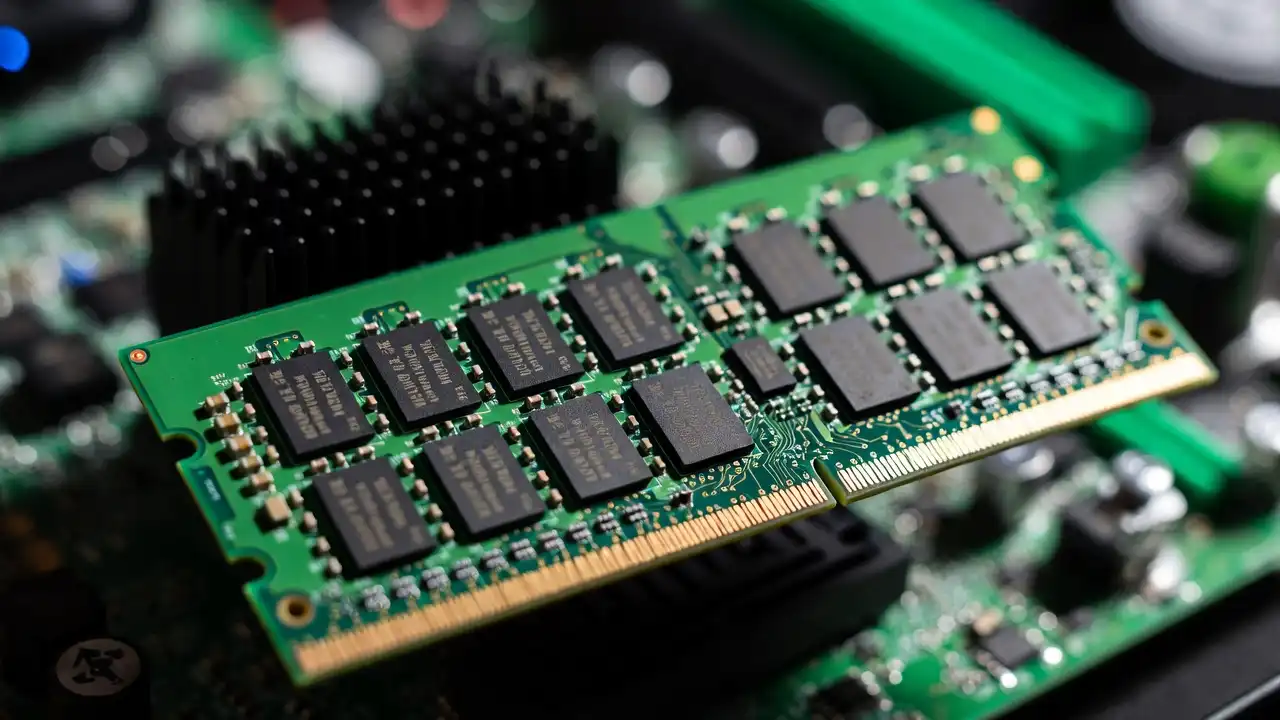
The global surge in artificial intelligence is transforming more than just corporate balance sheets and tech industry stock prices. In South Korea, home to the world’s leading memory chip producers, the AI hardware boom is rapidly rewriting the country’s social fabric. Landing a job at a major semiconductor manufacturer is no longer just a path to financial stability. Today, it represents the ultimate status symbol, completely altering the career paths of top university students, shifting dating preferences, and driving a luxury spending boom in local communities.
Online, communities have dubbed this cultural phenomenon “Samjeon-nix,” combining “Samjeon”—the common Korean shorthand for Samsung Electronics—with “SK Hynix”. For decades, the peak of social prestige in South Korea belonged exclusively to traditional professional tracks like medicine and law. However, the astronomical profits generated by the AI memory boom have pushed tech workers into the top tier of South Korea’s highly competitive social ladder.
Newly minted chip engineers are finding themselves at the center of this cultural shift. Armed with six-figure baseline salaries and historic profit-sharing bonuses, these tech workers have transformed into the most sought-after bachelors and bachelorettes in the country. From college admissions to elite matchmaking agencies, the rising fortunes of the country’s semiconductor giants are reshaping how South Koreans define success, secure partners, and plan their futures.
Redefining the Elite: The Rise of Samjeon-nix and the New Academic Ladder
For generations, South Korean parents pushed their children toward a singular goal: entering a prestigious medical or law school. In a society with a highly competitive educational system, these traditional elite professions guaranteed high social standing, wealth, and an elevated position in the marriage market. The AI boom has disrupted this long-standing hierarchy.
The Shift in College Admissions and High-Prestige Academic Tracks
To secure a pipeline of top-tier talent, South Korean universities collaborate directly with chipmakers to offer contract semiconductor departments. These highly specialized academic programs provide students with full tuition support, guaranteed internships, international study opportunities, and most importantly, a guaranteed job at Samsung or SK Hynix upon graduation.
Private education circles have reacted to this change by coining a new expression: “Ha-ui-chi-han-yak-su”. This complex phrase adds “Ha”—referring to SK Hynix—to the country’s traditional shorthand for elite professional tracks, which historically covered medical, dental, oriental medicine, pharmacy, and veterinary schools.
The admissions data reflects this massive shift in prestige. During the 2026 early university admissions cycle, the SK Hynix-linked contract departments at Sogang University, Korea University, and Hanyang University recorded an average competition ratio of 30.98 applicants per seat. By comparison, the Samsung-linked semiconductor departments at other elite institutions drew an average competition ratio of 18.33 applicants per seat. Top-performing high school students, who previously would have chosen medical school without hesitation, are now choosing engineering tracks, attracted by the immediate career prospects and financial rewards of the global chip race.
How Corporate Prestige Outpaces Traditional Social Hierarchies
South Korea’s intense corporate culture has long favored large conglomerates, known as chaebols, but the prestige associated with semiconductor roles has surpassed other industrial divisions. Working on high-bandwidth memory—the complex, multi-layered chip architecture that powers the latest AI servers—carries an intellectual aura comparable to advanced scientific research.
Young professionals wearing simple corporate jackets adorned with the SK Hynix logo have gone viral on social media platforms. Online parody posts frequently depict these corporate jackets as a golden ticket that guarantees priority service at luxury boutiques or instant success on blind dates. What was once considered plain workwear has transformed into a visible badge of modern wealth and intellectual achievement, demonstrating how deeply corporate branding has penetrated South Korean social hierarchies.
The Dating and Marriage Market: From Solid Candidates to Unconditional A-Grade Picks
The social rise of semiconductor workers is most visible in South Korea’s highly organized dating and marriage markets. In a country experiencing historically low birth rates, high housing costs, and intense financial competition, secure employment and strong cash flow have become the absolute baseline for romantic desirability.
How Lavish Bonuses Boost Matchmaking Success
The global shortage of memory chips has allowed South Korea’s semiconductor manufacturers to generate unprecedented profits. Because both Samsung and SK Hynix utilize generous profit-sharing models, these corporate riches flow directly into the bank accounts of their employees. Some seasoned Samsung workers received close to half a million dollars in bonuses, while SK Hynix employees received similar payouts, with rumors of even larger incentives scheduled for the coming years. At the same time, the average salary at SK Hynix reached 287 million Korean won, roughly equivalent to $210,000, making these engineers some of the highest-paid workers in East Asia.
Matchmaking agencies and elite dating platforms have adjusted their ranking indices to reflect these massive payouts. Matchmakers report that semiconductor professionals, who were historically categorized as solid “B+” candidates due to their long working hours and demanding schedules, are now classified as unconditional A-grade or A+ partners.
Desirability indices compiled by prominent agencies show that chip engineers have caught up with doctors and lawyers on the marriage market. Matchmakers have experienced a surge in requests from clients specifically seeking partners who work at Samsung or SK Hynix. In some instances, clients who previously went on blind dates with chip workers and did not feel a connection have contacted matchmakers, asking to be re-introduced now that the scale of the engineers’ financial fortunes has become common knowledge.
The Economic Security of Memory Work in an Expensive Society
This sudden focus on tech worker dating prospects might seem cynical, but it reflects the pragmatic economic realities of modern South Korean life. The country’s capital, Seoul, ranks as one of the most expensive real estate markets in the world, and raising a child requires substantial investment in private tutoring and after-school academies. Furthermore, South Korea’s social safety nets are not as extensive as those in some European nations, meaning that couples must rely almost entirely on their own personal wealth to secure their futures.
For young South Koreans, marrying an AI memory worker provides a vital shield against economic insecurity. The guarantee of a stable corporate job, combined with recurring, multi-thousand-dollar bonuses, offers couples the financial capacity to purchase a home, fund high-quality education for their children, and maintain a high standard of living. The AI boom has transformed what was once considered a dry, technical job into a golden passport to a comfortable, upper-middle-class lifestyle.
Splashing the Cash: Luxury Booms and Local Economies
The sudden influx of corporate wealth is not just altering bank accounts; it is actively transforming local economies, particularly in the geographic regions that host major semiconductor manufacturing hubs.
Gyeonggi Province, which forms South Korea’s semiconductor belt, is home to massive fabrication plants operated by Samsung and SK Hynix. In cities like Icheon and Yongin, the local economy has experienced an unprecedented retail boom driven entirely by tech worker spending. Luxury goods sales in Gyeonggi Province surged by nearly 150%, as newly minted engineers rushed to spend their lavish bonus payouts.
Local dealerships representing high-end foreign car brands like BMW, Mercedes-Benz, and Porsche have reported record-breaking sales volumes in these industrial cities. Upscale department stores, premium dining establishments, and high-end golf clubs have also experienced a massive surge in traffic.
This localized luxury spending boom represents a healthy redistribution of corporate wealth. Instead of the massive cash flows from HBM sales remaining locked inside corporate accounts or flowing exclusively to a small group of billionaire executives, the profit-sharing models ensure that the financial gains are distributed directly to the workers on the factory floor, who then reinvest that capital back into their local communities.
The Talent War: Samsung Engineers Eye the Exit
While the AI boom has elevated the social standing of all semiconductor workers, it has also triggered a fierce, high-stakes talent war between South Korea’s two chipmaking giants. This rivalry is reshaping corporate careers, with hundreds of highly skilled engineers attempting to jump ship from industry leader Samsung to its smaller, more agile competitor, SK Hynix.
Dissatisfaction and Defections Inside Samsung’s Ranks
Historically, Samsung Electronics was regarded as the undisputed crown jewel of South Korean corporate employment. It was the benchmark employer, offering the highest prestige and the largest salaries in the country. However, the rapid rise of generative AI has disrupted this traditional dynamic.
SK Hynix moved faster than Samsung to dominate the High-Bandwidth Memory market, capturing a dominant 58% global market share in HBM and securing a highly lucrative, exclusive partnership to supply advanced memory chips to AI pioneer Nvidia. This technological lead has allowed SK Hynix to outpay and out-prestige Samsung on many fronts, sparking immense frustration inside Samsung’s engineering ranks.
According to representatives from Samsung’s corporate unions, more than 200 experienced Samsung employees moved directly to SK Hynix between January and April. This quiet exodus is causing significant operational challenges.
One Samsung foundry engineer revealed that, excluding two senior team leaders, nearly his entire 30-person engineering team applied for jobs at SK Hynix during a single recruitment cycle in July. He noted that even a manager within the department had quietly encouraged the workers to leave, citing better career prospects and superior organizational culture at their competitor. A separate survey conducted by a Samsung union found that 37% of respondents were actively considering applying to a competitor, citing a deep distrust of senior management, inadequate compensation relative to SK Hynix’s payouts, and a rigid, high-pressure corporate culture.
SK Hynix’s Aggressive Talent Acquisition and HBM Recruitment Drives
Recognizing its competitive advantage, SK Hynix has launched highly aggressive experienced hiring campaigns to drain talent from its rival. In June, the company launched its “Monthly Hy-Way” recruitment program, opening up 54 distinct, highly specialized job positions.
This hiring push was nearly five times larger than the company’s average monthly experienced postings over the preceding year. The roles are heavily concentrated in technical research and development, focusing on advanced next-generation HBM design, circuit verification, frontend development, and foundry process integration.
By offering higher starting bonuses, superior workplace flexibility, and the prestige of working for the world’s leading AI memory supplier, SK Hynix is successfully building an elite engineering force. This aggressive hiring strategy has intensified the sibling rivalry between the two South Korean giants, turning the corporate talent market into a highly volatile battlefield where engineers hold all the leverage.
The Human Side of the Silicon Gold Rush
The dramatic cultural shifts playing out across South Korea prove that the artificial intelligence revolution is not just a technological or financial trend. While global stock markets obsess over GPU shipment numbers, corporate capital expenditure plans, and software adoption rates, the physical hardware required to power these advanced AI networks must still be designed, built, and verified by actual human beings.
In South Korea, the massive financial rewards generated by this hardware gold rush have created a new class of corporate elite, permanently altering how a highly modern, competitive society defines prestige, secures economic stability, and pursues happiness. As young engineers flash their SK Hynix corporate jackets at luxury boutiques, and matchmakers scramble to connect clients with Samjeon-nix workers, South Korea is demonstrating that the AI boom is successfully rewiring the daily lives, romantic hopes, and cultural expectations of the people building the future of global technology.