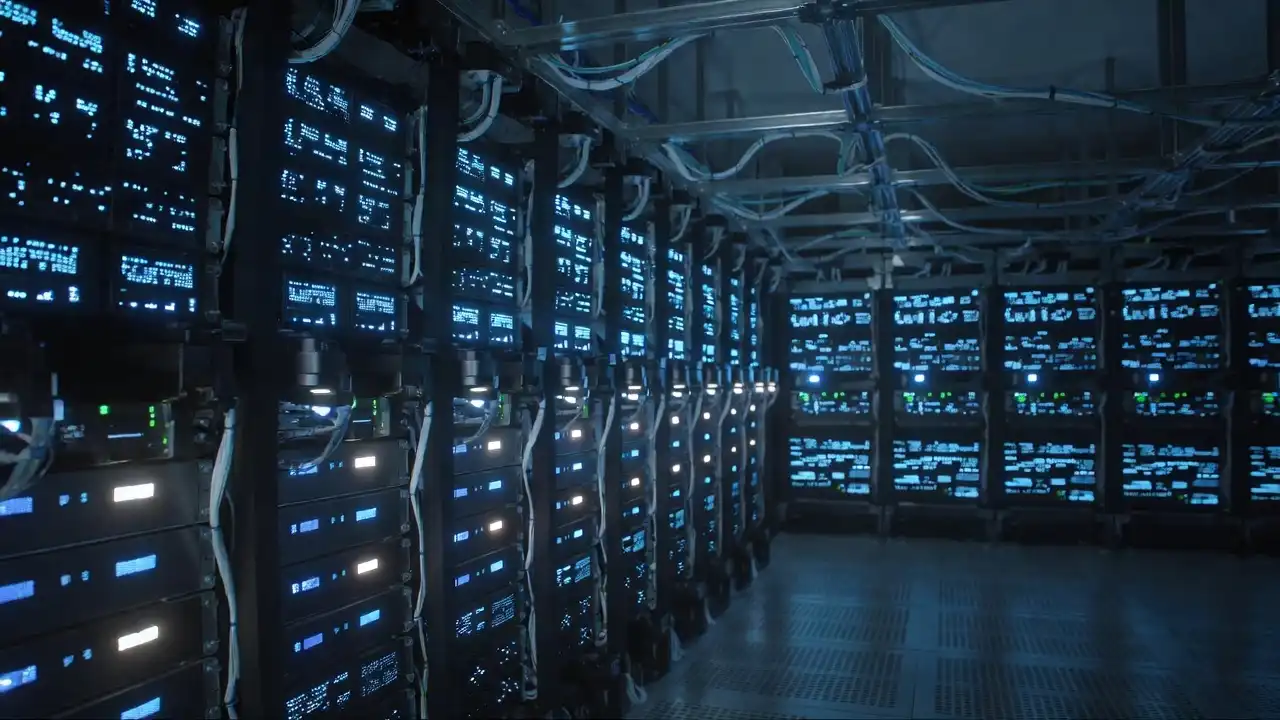
The physical infrastructure powering the artificial intelligence revolution is preparing for its most significant public-market debut. In August 2026, leading enterprise data center operator Switch Inc. filed confidentially for a United States initial public offering. The Las Vegas-based company, majority-owned by digital infrastructure investment firm DigitalBridge Group Inc., has tapped some of Wall Street’s largest investment banks to facilitate a listing that could rank among the biggest technology debuts in recent years.
The decision by Switch to return to the public markets marks a major turning point for the digital infrastructure sector. Over the past five years, massive private equity funds and pension managers acquired nearly every major pure-play data center operator, removing them from the public eye to fund their capital-intensive expansion plans privately. By transitioning back to a public listing, Switch is signaling that the capital requirements of the generative artificial intelligence era have grown too large for private sponsors to shoulder alone, forcing a return to public equity markets to fund the next generation of computing campuses.
As the offering moves closer to its official launch, expected as early as November 2026, the transaction is drawing intense scrutiny from institutional investors and technology analysts. The IPO represents a critical test of public-market appetite for the physical assets of the artificial intelligence boom, demonstrating how the financial rules of the digital economy are being reconfigured to support the massive infrastructure requirements of the machine age.
Deconstructing the Massive Listing: Sizing up the Valuations and Underwriters
The scale of the proposed listing is historic, reflecting the massive valuation premium that public and private markets are currently placing on high-performance data center assets.
The Multibillion-Dollar Fundraising Target and Wall Street Syndicate
According to sources familiar with the matter, Switch is working with a formidable syndicate of top-tier Wall Street underwriters to prepare for its stock market return. The company is collaborating with Goldman Sachs, JPMorgan Chase, Bank of America, Citigroup, and Morgan Stanley to facilitate the offering.
Initial reports indicate that Switch could raise to $10 billion in fresh capital through the public float, which is scheduled to take place as soon as the fourth quarter of 2026.
The listing could value the enterprise data center operator at a staggering $50 billion to $80 billion, including debt. This massive valuation represents a multi-fold increase from the company’s previous valuation metrics, showing the immense premium that high-performance computing assets now command. By raising to $10 billion, the offering will easily rank as one of the largest U.S. stock market debuts in recent years, serving as a powerful bellwether for the broader technology and capital markets.
The Andreessen Horowitz Connection and Board Changes
In addition to its public offering preparations, Switch is finalizing a massive, pre-IPO private funding round designed to secure immediate growth capital and lock in key strategic partners. The company has been working on a private equity round targeting approximately $2 billion.
This private fundraising campaign is being led by venture capital powerhouse Andreessen Horowitz, commonly known as a16z. The participation of a16z represents a highly strategic partnership, linking one of Silicon Valley’s most influential software and artificial intelligence investment firms with the physical computing infrastructure required to run those software models.
As part of this deepening relationship, Ben Horowitz, co-founder and general partner of Andreessen Horowitz, is expected to join Switch’s board of directors. This board-level appointment ensures that the company’s long-term technology and infrastructure roadmaps remain closely aligned with the emerging requirements of the generative AI developer community.
The Strategic Return to Public Markets: The Transition from Private Equity
The planned public listing of Switch marks a dramatic reversal of the corporate trends that defined the digital infrastructure sector over the first half of the decade.
Reversing the Take-Private Wave of the Early 2020s
Between 2021 and 2023, the public markets experienced a massive, unprecedented exodus of data center operators. Private equity firms, sovereign wealth funds, and infrastructure managers recognized that the rising demand for cloud compute would generate steady, highly predictable cash flows, making data centers the perfect asset class for long-term, low-cost capital.
During this take-private wave, major industry leaders were snapped up in multi-billion-dollar deals:
- Blackstone acquired QTS Realty Trust for $10 billion.
- KKR and Global Infrastructure Partners teamed up to acquire CyrusOne for $15 billion.
- American Tower acquired CoreSite for $10.1 billion.
- DigitalBridge Group and Australian infrastructure manager IFM Investors acquired Switch for $11 billion in 2022.
By the end of 2023, only Digital Realty Trust and Equinix remained as pure-play data center Real Estate Investment Trusts in the public markets. The sector’s heavy capital expenditure profiles aligned well with the deep pockets and patience of private equity sponsors, who were eager to fund the industry’s rapid expansion without facing the quarterly scrutiny of public stock markets.
The Squeeze on Private Capital and the Public Equity Pivot
The rapid emergence of generative artificial intelligence has completely disrupted this private-equity financing playbook. Training and running advanced, multi-trillion-parameter large language models requires a level of computing power and electrical infrastructure that is exponentially larger than traditional cloud hosting.
To build the gigawatt-scale data center campuses required to support these advanced AI workloads, operators must commit to massive capital expenditure budgets. As these annual capital spending requirements scale past tens of billions of dollars, even the largest private equity funds and infrastructure managers are hitting their concentration limits or seeking to recycle their capital.
By taking Switch public, DigitalBridge and IFM Investors are opening up a vital new channel of liquidity. The public equity markets represent a virtually limitless source of capital, allowing Switch to fund its massive expansion plans without putting further strain on the balance sheets of its private equity sponsors. This pivot back to the public markets suggests that the era of private-equity-dominated digital infrastructure is drawing to a close, as the sheer scale of the AI revolution forces a return to public capital.
Inside Switch’s Industrial Footprint: Powering the AI Compute Backbone
Switch is not an ordinary data center provider. The company’s unique architectural designs, massive power allocations, and commitments to environmental sustainability have made it a highly valued partner for the world’s leading technology companies.
The Power and Cooling Demands of Next-Generation GPU Clusters
Switch operates massive, highly secure enterprise data center campuses in critical technological hubs across the United States, including Nevada, Texas, Georgia, and Michigan. These facilities are engineered specifically to handle the extreme power densities and cooling requirements of modern artificial intelligence hardware.
Traditional cloud applications typically require 5 to 10 kilowatts of power per server rack. In sharp contrast, next-generation AI clusters, such as those utilizing Nvidia’s advanced Blackwell or GB300 systems, require upwards of 40 to 100 kilowatts per rack.
To prevent these high-density systems from overheating, Switch utilizes proprietary, highly advanced liquid-cooling and airflow management systems. This high-performance cooling infrastructure allows cloud providers and enterprise clients to deploy massive GPU clusters safely, ensuring that their AI training and inference workloads run continuously without operational disruptions. The company’s high-profile customer list includes some of the most influential names in technology and retail, including Nvidia, Dell Technologies, and FedEx.
Commitments to One-Hundred-Percent Renewable Power
As the data center industry faces growing public and regulatory criticism over its massive energy consumption, Switch has established a significant competitive advantage through its long-standing commitment to sustainability. The company’s entire national data center platform is powered by 100% renewable energy.
To achieve this goal, Switch does not simply purchase carbon offsets. Instead, the company directly finances and partners with local utility providers to construct massive solar, wind, and geothermal energy projects near its data center campuses.
This commitment to green energy is highly attractive to major technology companies, who face strict corporate mandates to reduce their carbon footprints. By hosting their AI workloads in Switch’s renewably powered facilities, technology giants can scale their computing capabilities rapidly without violating their environmental sustainability pledges, protecting their corporate brands from public backlash.
Macroeconomic Implications for Digital Infrastructure REITs
The public debut of Switch is expected to have a profound, long-term impact on how the financial markets value and regulate the digital infrastructure sector.
For the past several years, public investors seeking pure-play exposure to the data center industry were limited to just two major companies: Equinix and Digital Realty Trust. This lack of choice created a significant supply bottleneck, driving up the valuation multiples of these remaining public firms as institutional investors competed to allocate capital to the sector.
The entry of Switch as a massive, $50 billion to $80 billion public competitor will completely reconfigure this dynamic. By offering a third, highly liquid pure-play option, the IPO will provide institutional investors with a vital alternative, allowing them to diversify their technology portfolios and allocate capital more efficiently.
This increased competition could lead to a healthy normalization of valuation multiples across the sector, while forcing other private-equity-backed data center operators to accelerate their own public listing plans to compete for market share. Even a minor 1.5% adjustment in global interest rate expectations can alter capital allocations by billions of dollars, and the arrival of a major new public player will ensure that the capital flows supporting the digital economy remain highly active and competitive.
Shaping the Public Future of the AI Era
The confidential IPO filing by Switch Inc. represents a landmark moment in the financial evolution of the digital economy. By preparing for a massive $10 billion public listing that could value the company at up to $80 billion, the enterprise data center operator has proven that the capital demands of the artificial intelligence revolution are too large to be funded by private equity alone.
Through its strategic partnership with Andreessen Horowitz and its unwavering commitment to 100% renewable energy, Switch has established a resilient, high-performance computing platform that is perfectly positioned to serve as the physical backbone of the modern machine age.
As the company prepares to transition back to the public markets, the success of this offering will serve as a powerful signal to developers, competitors, and investors worldwide, demonstrating that the future of artificial intelligence will not be won purely in the realm of software and code, but on the concrete, renewably powered slabs of the global data center.