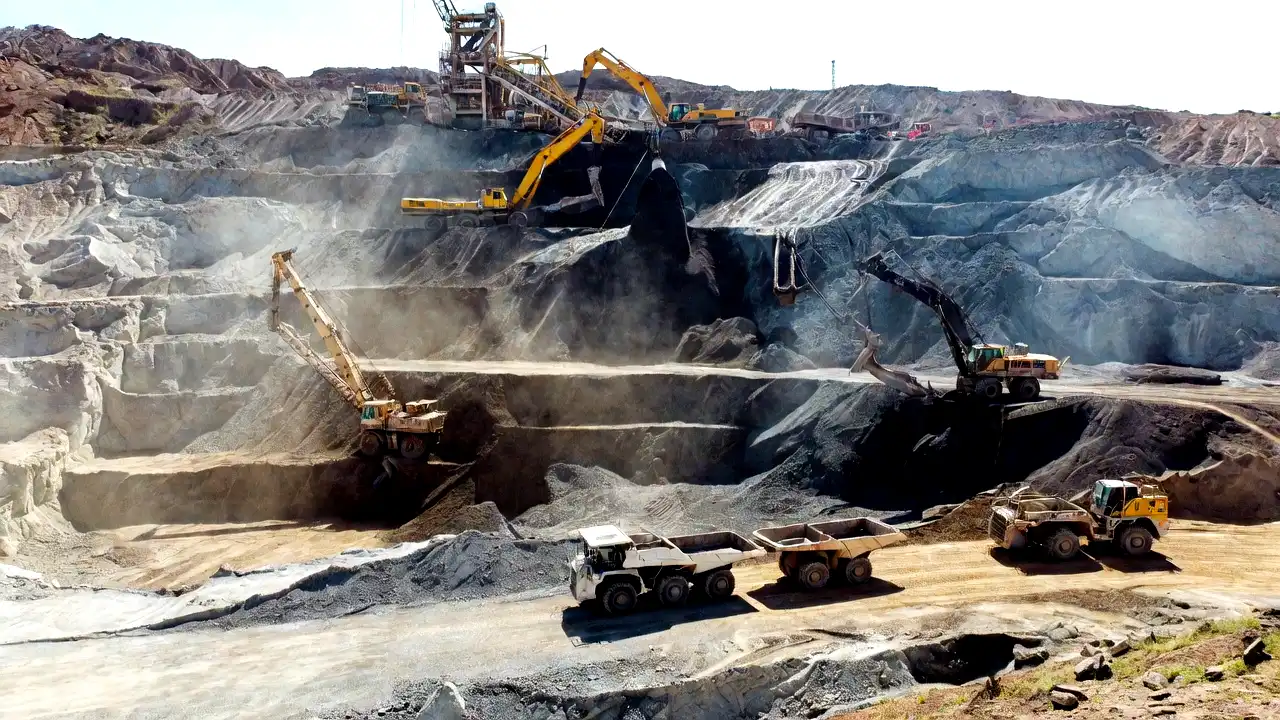
A silent, highly volatile resource war is unfolding across East Asia, threatening to paralyze the physical supply chains of the world’s most advanced technologies. In August 2026, a landmark industrial report published by Nikkei Asia revealed that Japan is struggling to secure critical rare earth elements essential for manufacturing electric vehicles and advanced semiconductor fabrication equipment. The primary source of this severe supply squeeze is a highly restrictive, state-enforced export control regime in China, which has forced Japanese materials manufacturers to rapidly exhaust their existing emergency inventories.
According to industry tracking data, Japan’s imports of key heavy rare earth elements—particularly dysprosium and yttrium—have plummeted by approximately 80% year-on-year. This dramatic collapse in shipments represents a calculated geopolitical maneuver by Beijing, which has increasingly utilized its near-monopoly over global mineral refining to assert diplomatic and economic pressure over Tokyo following regional security disputes. By blocking the export of these essential raw inputs, China is targeting the highly sensitive industrial sectors that drive Japan’s export economy.
Faced with a rapid depletion of their physical raw material reserves, Japanese materials makers and major conglomerates are executing a highly aggressive, multi-billion-dollar defensive strategy to secure alternative resources. From test-mining the ocean floor at extreme depths to developing revolutionary recycling technologies that extract high-purity metals from electronic waste, Tokyo is scrambling to build a resilient, domestic supply chain. Whether these expensive, high-risk initiatives can scale up quickly enough to prevent widespread production halts across Japan’s auto and semiconductor factories remains the defining question for the region’s economic security.
The Anatomy of the Eighty Percent Import Collapse
The massive contraction in Japan’s rare earth imports is a direct result of a highly targeted, legally binding trade enforcement campaign designed by Beijing to exploit the vulnerabilities of Western-aligned technology manufacturing.
The Zero-Export Crisis of Dysprosium and Yttrium
The primary targets of China’s export restrictions are heavy rare earth elements, which are geographically scarce and exceptionally difficult to refine outside of Chinese facilities. The recent trade data reveals a devastating picture of supply contraction, with imports of both dysprosium and yttrium plunging by roughly 80%.
This import collapse has created immediate, severe operational challenges for Japanese manufacturers. Dysprosium is an indispensable ingredient used to manufacture high-strength permanent magnets for electric vehicle motors, as the heavy metal prevents the magnets from losing their magnetic properties at high operating temperatures.
Yttrium is an equally critical, high-purity material used to coat the internal chambers of advanced semiconductor etching and deposition equipment, protecting the sensitive tools from corrosive gases during chip manufacturing.
Without a stable, continuous supply of these two heavy elements, Japanese automotive giants like Toyota and semiconductor equipment makers like Tokyo Electron cannot build or deliver their flagship products, threatening to paralyze key sectors of the global technology market.
Chinese Regulatory Levers and the Walled Garden Strategy
To execute this targeted squeeze, the Chinese government has utilized its newly expanded dual-use export control laws, which took effect in January 2026. Under these strict national security rules, any Chinese exporter wishing to ship critical minerals, processed oxides, or permanent magnets to foreign buyers must submit extensive documentation to the Ministry of Commerce, verifying the ultimate end-user and the final destination of every individual shipment.
By implementing these strict licensing requirements, Beijing has established a highly effective digital barrier.
Whenever a Japanese manufacturer submits an application to import dysprosium or yttrium, Chinese regulators utilize administrative reviews to delay, suspend, or outright deny the export license.
This selective licensing block has effectively closed the export pipeline, forcing Japanese materials firms to survive entirely on their dwindling domestic inventories while Chinese domestic manufacturers enjoy unlimited, cheap access to these same raw inputs, further consolidating China’s dominance over the global green technology supply chain.
The Deep-Sea Mining Gamble: Paying Twenty Times More for Sovereignty
To break free from this Chinese resource chokehold, the Japanese government is preparing for some of the most daring, technically challenging, and expensive resource extraction projects ever attempted in human history.
Mining the Abyssal Mud near Minamitorishima Island
The most ambitious component of Japan’s resource recovery program is its pioneering deep-sea mining project. The government-backed initiative has successfully extracted rare earth-rich mud from the ocean floor near Minamitorishima Island, a remote Japanese coral atoll located approximately 1,950 kilometers southeast of Tokyo.
Using the advanced scientific drilling ship Chikyu, engineers successfully executed a series of test-mining operations, vacuuming up mineral-rich sediment from an extreme depth of 5,600 meters below the ocean surface.
The successful extraction proved that the region’s abyssal clays host vast, high-purity deposits of heavy rare earth elements, giving Japan a massive, independent resource base within its own exclusive economic zone.
However, transforming this scientific success into a commercial-scale industrial mining operation requires overcoming enormous, unprecedented financial and technical barriers.
The Astronomical Two-Thousand Percent Price Penalty
The primary obstacle preventing the commercialization of deep-sea mining is the astronomical cost of operating at extreme ocean depths. A recent economic and geological analysis revealed that extracting, lifting, and refining rare earth mud from a depth of 5,600 meters will cost approximately 20 times more than importing raw minerals from land-based Chinese mines.
This represents an astronomical 2,000% price increase on a per-ton basis, which would normally make the project a complete financial non-starter for any private commercial enterprise.
Yet, the Japanese government and major industrial partners have pledged to move forward with the project, committing to fund a large-scale, continuous mining trial scheduled to begin as early as next year.
Officials and industry leaders maintain that paying 20 times more for domestic minerals is a necessary, realistic step to secure national sovereignty and protect critical industries from foreign economic coercion, proving that in the modern era of geopolitical competition, national security has become far more important than short-term corporate profitability.
The Recycling Revolution: Converting Electronic Waste into Urban Mines
Recognizing that deep-sea mining is a long-term, high-risk solution that will take years to achieve commercial scale, Japanese manufacturers are investing heavily in advanced recycling technologies to generate immediate, domestic supplies of rare earth elements.
Extracting Ninety-Eight Percent Purity from Discarded EV Motors
The rapid rise of electronic waste has turned the domestic consumer market into a highly valuable, untapped resource pool, commonly referred to as an “urban mine.”
To capture this hidden wealth, Japanese research institutes and heavy manufacturers have developed revolutionary recycling technologies designed specifically to recover rare earths from discarded electric vehicle motors and industrial machinery.
In a major technological breakthrough, researchers have successfully deployed automated dismantling robots and advanced chemical processing systems capable of extracting valuable permanent magnet materials—such as neodymium, dysprosium, and terbium—from used motors with an extraordinary recovery rate of up to 98% purity.
By utilizing specialized non-toxic chemical solvents, the recycling systems can dissolve and separate individual rare earth elements from the magnet alloys in minutes, providing local manufacturers with a high-purity, recycled raw material that matches the quality of newly mined Chinese imports.
Institutionalizing the Urban Mining Infrastructure
To scale up this recycling revolution, the Japanese government is actively funding and building a comprehensive, nationwide recycling infrastructure.
The Ministry of Economy, Trade and Industry has launched a series of subsidies and tax incentives to encourage automotive dealerships, scrap yards, and electronics recycling centers to collect and deliver discarded motors directly to specialized recycling hubs.
This coordinated recycling initiative has several major benefits:
- It provides Japanese materials makers with an immediate, reliable source of domestic rare earths, helping to offset the 80% drop in Chinese imports.
- It reduces the environmental impact of the clean-tech industry, as recycling old motors consumes only a fraction of the energy and water required to mine and refine raw ores.
- It protects domestic manufacturers from international supply disruptions, ensuring they have access to essential permanent magnet materials even if foreign markets are completely closed off.
By transforming discarded motors and electronic waste into a secure, domestic resource base, Japan is proving that recycling is no longer just an environmental sustainability goal, but a vital, strategic national defense mechanism in the high-tech age.
The Allied Counter-Offensive: The Quad’s Multi-Billion Dollar Procurement Alliance
As Japan battles to secure its own resource sovereignty, the United States and other allied nations are actively coordinating their diplomatic and financial resources to build an alternative, international critical mineral procurement network.
Building an Alternative Mineral Supply Chain on Bay Street
The severe resource squeeze facing Japan has fanned deep anxieties in Washington, as U.S. defense contractors and high-tech manufacturers realize that their own supply chains are highly vulnerable to Chinese export policies.
If Japanese factories run dry of rare earths, they cannot deliver the advanced sensors, permanent magnets, and laser components that American companies depend on to build their products.
In response, the members of the Quadrilateral Security Dialogue—consisting of the United States, Japan, Australia, and India—have stepped up their cooperation to build an alternative, resilient critical mineral procurement network.
The allied nations are actively investing in joint mining, refining, and processing projects in Australia and North America, aiming to build a secure supply chain that operates completely outside of China’s sphere of influence.
Investing in Australian and North American Refining Facilities
To fund these massive infrastructure projects, the Quad nations are deploying substantial public and private capital, with single projects easily requiring over $1 billion in upfront investment.
A primary target of this allied investment is Australia’s Lynas Rare Earths, which operates the world’s most advanced rare earth extraction and processing facilities outside of China.
With financial support from the Japanese government and U.S. defense grants, Lynas is expanding its processing facilities in Western Australia and constructing a state-of-the-art heavy rare earth separation plant in Texas.
By building these advanced refining facilities in secure allied nations, the Quad wants to break China’s monopoly over the advanced chemical separation process, ensuring that Western-aligned manufacturers can access high-purity rare earth oxides without relying on Beijing’s export approvals.
For global technology developers, even a 1.5% improvement in processing latency or a 1.5% reduction in import dependency can save manufacturers billions of dollars in annual operating and compliance costs, making this allied procurement alliance an absolute priority for the future of global innovation.
Restoring Balance to the Critical Mineral Market
The severe, ongoing squeeze on Japan’s rare earth supply represents a landmark watershed moment for the global technology and defense industries. By demonstrating that its 80% import collapse can successfully force a major economic power to spend billions of dollars on high-risk, 5,600-meter deep-sea mining and advanced recycling, China has proven that its processing monopoly remains one of the most powerful geopolitical leverage points of the modern era.
While Japan’s strategic countermeasures—including expanding its national stockpiles to 180 days, partnering with Quad allies to fund Australian and North American refining plants, and extracting high-purity metals from domestic electronic waste—will require years of sustained effort to completely eliminate its dependence on foreign imports, they have successfully established a resilient, self-reliant baseline for the country’s technological future.
As the competitive landscape of the digital age continues to mature, and as governments around the world prioritize supply chain independence, the success of these innovative, allied procurement strategies will ensure that the high-tech systems of the future can scale up safely, cleanly, and reliably, securing a more stable and predictable economic future for the global community.