The financial and operational rules of the artificial intelligence arms race are undergoing a significant recalibration. In August 2026, details emerged regarding a major strategic decision by graphics processor pioneer Nvidia Corporation. According to reports from the Wall Street Journal, the Santa Clara, California-based chip giant is significantly downsizing its planned financial guarantee for a massive, multi-billion-dollar data center project associated with OpenAI, cutting its potential commitment to less than $120 billion.
The decision to scale back the proposed backing marks a major milestone for the technology and corporate finance sectors. Initially, Nvidia had discussed providing an unprecedented credit guarantee of up to $250 billion to support the construction and long-term lease obligations of a massive 10-gigawatt computing campus in southern Ohio. However, as public market investors express growing anxiety over the high risk, massive capital expenditure, and potential overcapacity of the AI infrastructure boom, Nvidia’s management team decided to trim its exposure to mitigate risk and protect its corporate balance sheet.
By reducing its financial backstop by more than half, Nvidia is attempting to address mounting investor concerns regarding credit concentration and the potential for artificial demand. While the strategic partnership between the leading chipmaker and the creator of ChatGPT remains incredibly close, the downsized guarantee demonstrates that even the most powerful companies in the technology sector must maintain strict capital discipline as they build the physical foundations of the modern machine age.
The Downsized Guarantee: Risk Mitigation in Corporate Debt
The decision by Nvidia’s board of directors to scale back its planned financial guarantee is a direct, calculated response to the changing dynamics of the global corporate credit markets.
Reducing the Credit Wrap to Under One Hundred Twenty Billion
The proposed financial arrangement between Nvidia and OpenAI was designed as a highly specialized credit wrap. Because OpenAI is a privately held startup that continues to operate at a loss while relying primarily on equity financing, it lacks a public investment-grade credit rating. This lack of creditworthiness makes it exceptionally difficult for the startup to secure the massive, low-cost loans and long-term lease guarantees required to construct and operate its own physical computing infrastructure.
Under the initial, historic framework discussed by both companies, Nvidia agreed to step in as a major guarantor. By providing a $250 billion credit wrap, the semiconductor giant would have guaranteed OpenAI’s long-term lease payments and construction debts, allowing the project to secure financing from traditional commercial banks and private credit funds at significantly lower interest rates.
The revised plan, however, slashes this proposed guarantee to less than $120 billion, representing an immediate, massive reduction of over 50%.
While this downsized figure still ranks as one of the largest corporate backings of a single infrastructure project in history, it significantly reduces Nvidia’s direct exposure to potential cost overruns and default risks.
Addressing Investor Fears of High-Risk Infrastructure Debt
The decision to trim the credit backstop has been welcomed by institutional bond and equity investors, who have expressed growing concern over the rapid accumulation of technology-related debt. For months, market analysts have warned that the non-stop, multi-billion-dollar spending on AI data centers has begun to saturate the corporate credit markets, causing credit spreads to widen and fanning fears of a potential technological overbuild.
If Nvidia committed to a flat, $250 billion guarantee for a single corporate customer, it would have concentrated a massive amount of credit risk on its own balance sheet. If the commercial monetization of generative AI software eventually slowed down, or if OpenAI faced financial difficulties, Nvidia would have been legally obligated to cover those massive debt service payments, potentially harming its own financial stability and risking a downgrade of its corporate credit rating.
By scaling back the guarantee, Nvidia’s management is proving to its shareholders that it is actively managing its risks, ensuring that its massive cash flows are protected even during periods of broader market uncertainty.
The Ohio Mega-Campus: SoftBank, Stargate, and the Ten-Gigawatt Footprint
The physical scale of the data center project that Nvidia is backing is almost unprecedented, representing the largest and most ambitious digital infrastructure initiative ever pursued.
SoftBank’s Energy Subsidiary and the Stargate Connection
The massive, proposed 10-gigawatt computing campus in southern Ohio is being developed by SB Energy, the renewable energy subsidiary of Japanese conglomerate SoftBank Group Corp. SoftBank, led by founder Masayoshi Son, is a major shareholder in OpenAI and a key partner in the U.S. AI infrastructure project known as “Stargate.”
SoftBank views OpenAI not merely as a tenant, but as a principal stakeholder in the future of the global technology economy.
However, actually constructing a 10-gigawatt data center requires an astronomical capital expenditure that is expected to exceed $500 billion once the cost of the advanced graphics processors is included.
By partnering with Nvidia to secure the downsized $120 billion credit guarantee, SoftBank can access the massive private credit and bond markets to bankroll the early phases of construction, ensuring the project remains on schedule while sharing the immense financial burden with its allied partners.
The Ultimate Physical Footprint of the AI Era
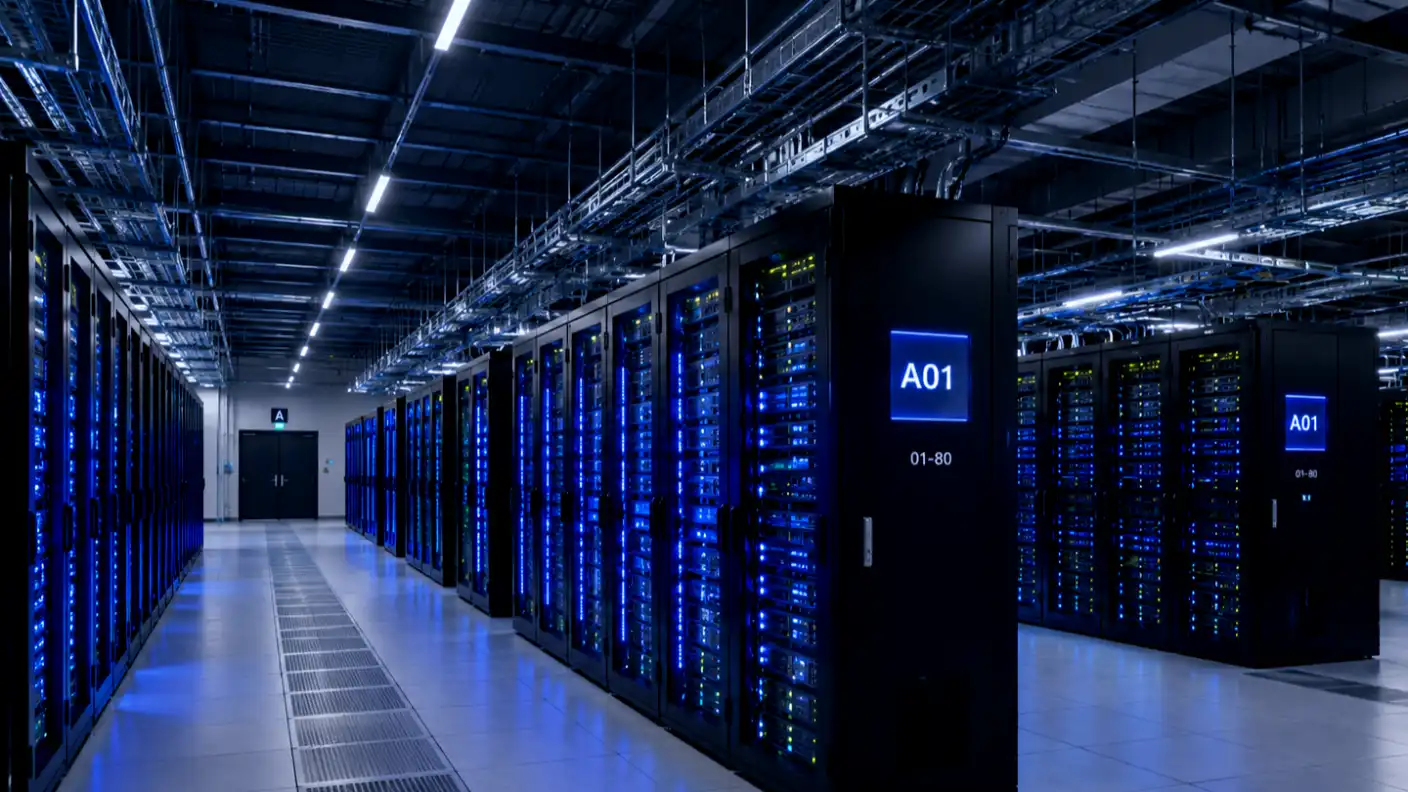
The planned 10-gigawatt southern Ohio data center complex represents a megasymbol of the massive power and infrastructure demands of the AI era. To put its scale in perspective, a 10-gigawatt campus requires enough electricity to support hundreds of thousands of traditional households, placing immense strain on the local electrical grid.
The development plan is structured in multiple, sequential phases to manage construction logistics:
- The first phase of the project consists of an 800-megawatt (MW) facility, scheduled for completion in 2028.
- OpenAI has also signed a separate, 1.2-gigawatt data center lease with SB Energy in Texas.
- If both the Ohio and Texas projects successfully reach completion, OpenAI’s total leased capacity will reach a massive 2 gigawatts.
- This massive power footprint is essential for training next-generation, high-reasoning frontier models, proving that the digital age remains completely dependent on the physical capacity of the electrical grid to expand.
The Squeeze on Private Markets: Circular Financing and Creditworthiness
The historic scale of the financial arrangements between Nvidia, OpenAI, and SoftBank has also triggered an intense, highly complex debate among credit analysts regarding the systemic risks of the technology boom.
Solving OpenAI’s Credit Rating Bottleneck
The primary reason why OpenAI requires Nvidia’s financial backing is its structural lack of creditworthiness. Because the startup operates as a private company, relies primarily on equity fundraising rounds, and continues to report substantial operational losses as it reinvests every dollar into research and computing power, it cannot secure the traditional, long-term bank loans needed to construct physical assets.
Under standard commercial real estate rules, a developer like SoftBank cannot easily sign a multi-decade, billion-dollar lease with a tenant that lacks an investment-grade credit rating.
By having Nvidia—which possesses massive cash reserves, a pristine credit rating, and a market capitalization exceeding $5 trillion—guarantee the lease payments, the project successfully bypasses this credit rating bottleneck.
This financial engineering allows the developers to secure the required construction financing at highly competitive interest rates, demonstrating how a creditworthy partner can bolster the financial standing of a less creditworthy party.
The Debate Over Skewed Incentives and Artificial Demand
While the credit wrap structure is highly logical, it has also fanned deep anxieties among credit analysts over the potential for circular financing. Circular financing represents a potential risk where a major hardware manufacturer artificially inflates the demand for its own products by directly or indirectly financing its own customers’ purchases.
Critics point out that by helping OpenAI secure the loans needed to build its data centers, Nvidia is essentially financing its own customers’ capacity.
OpenAI will then use those funded data centers to install hundreds of thousands of Nvidia’s own advanced processing chips, which directly increases Nvidia’s reported revenues and drives its stock price higher.
This self-reinforcing feedback loop has raised concerns over skewed incentives, with some market skeptics warning that the massive demand for AI hardware is being driven by complex financial engineering rather than genuine, organic consumer demand.
By scaling back the guarantee from $250 billion to less than $120 billion, Nvidia is attempting to distance itself from these circular financing criticisms, proving that its business is built on a foundation of independent, market-validated demand.
Geopolitical Coordination: US-Japan Sourcing and Federal Power Access
The massive, 10-gigawatt southern Ohio data center project is not just a corporate business venture; it represents a highly strategic, geopolitically coordinated infrastructure program that is being closely monitored by senior government officials in both Washington and Tokyo.
Howard Lutnick’s Hand in Power Allocations
Because the proposed data center complex will consume an enormous amount of electricity, securing access to the local power grid is a major, highly sensitive political challenge.
Deciding which companies gain access to the site’s power capacity has become a key priority for U.S. Commerce Secretary Howard Lutnick.
Lutnick and his department are actively managing the power allocations to ensure that critical national security assets, domestic semiconductor foundries, and strategic AI laboratories are prioritized over speculative developers.
By maintaining strict control over the grid’s capacity, the federal government wants to ensure that the physical infrastructure of the AI era is deployed in a way that protects national security, prevents automated cyberattacks, and secures America’s technological leadership against foreign adversaries.
The Multi-Billion Dollar US-Japan Trade Connection
The development of the Ohio mega-campus is also supported by a massive, multilateral trade and investment agreement between the United States and Japan.
The electricity needed to power the massive data center is being funded separately by Japan under a recent bilateral trade deal tied to Tokyo’s $33 billion investment in an advanced natural gas plant.
This massive international funding provides the physical infrastructure with a secure, highly reliable source of electricity, while bypassing the local funding and regulatory hurdles that frequently slow down other massive utility projects in the United States.
By combining Japanese capital, American grid allocations, SoftBank’s real estate development, and Nvidia’s scaled-back financial guarantees, the partners are constructing a highly resilient, geopolitically secure computing hub.
This collaborative effort proves that the battle for technological supremacy has moved far beyond the borders of Silicon Valley, transforming the physical data center into a vital, highly contested asset of international diplomacy, where even a 1.5% improvement in processing latency or a 1.5% reduction in energy overhead can save global developers millions of dollars in annual operating expenses.
Restoring Capital Discipline in the AI Era
The decision by Nvidia Corporation to scale back its planned financial guarantee for OpenAI’s massive southern Ohio data center from $250 billion to less than $120 billion represents a landmark moment in the corporate history of the technology sector. By cutting its potential commitment by more than half, the leading semiconductor manufacturer has demonstrated that even during a historic technological boom, corporate boards must maintain strict capital discipline and manage their credit exposure responsibly.
While the massive, 10-gigawatt computing campus in Ohio remains one of the most ambitious and strategic projects of the digital age, Nvidia’s downsized guarantee successfully protects its own corporate balance sheet from the risk of cost overruns and capacity oversupply.
As the regulatory departments in Washington continue to monitor the development of the AI infrastructure, and as developers like SoftBank and OpenAI navigate a highly complex, capital-intensive environment, this strategic reduction in financial leverage will ensure that the hardware boom remains grounded in real-world, market-validated demand.
By prioritizing risk management and capital efficiency over speculative, self-funded expansion, Nvidia is ensuring that the physical systems of the modern age can scale up safely, cleanly, and reliably, securing its own position as the undisputed leader of the global digital economy for decades to come.