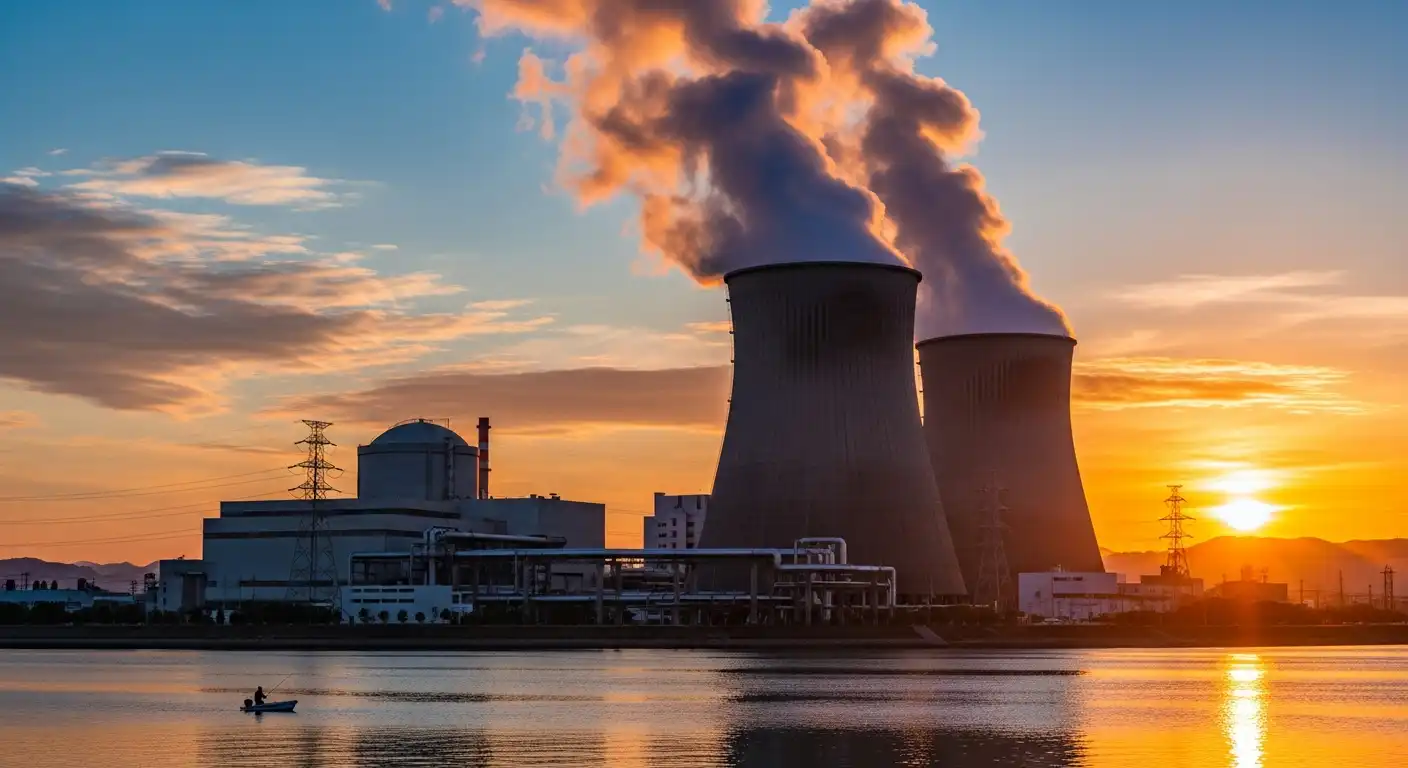
The global transition to artificial intelligence is permanently reconfiguring the world’s energy markets. As technology companies invest hundreds of billions of dollars to construct massive, gigawatt-scale data center campuses to power advanced neural networks, they are running into a severe, physical bottleneck: the capacity limits of traditional electrical grids. In August 2026, Bloomberg News reported that advanced nuclear energy startup TerraPower, backed by billionaire philanthropist Bill Gates, is preparing to announce its second commercial-scale nuclear power plant location later this year.
This upcoming announcement represents a major milestone in the global effort to commercialize fourth-generation nuclear technology. TerraPower’s unique “Natrium” reactor design, which utilizes liquid sodium and molten salt for cooling instead of high-pressure water, is widely recognized as one of the most promising solutions to the global energy crisis. By providing a safe, reliable, and entirely emissions-free source of continuous baseload electricity, these small modular reactors are perfectly positioned to satisfy the high-power requirements of the modern machine age.
The news comes at a time of intense geopolitical and corporate alignment. Bill Gates, who founded Bellevue, Washington-based TerraPower in 2008, recently traveled to South Korea to deepen strategic partnerships with major industrial conglomerates, securing massive engineering and manufacturing agreements to accelerate the global deployment of the Natrium fleet. As tech giants like Meta and Google actively buy up future nuclear capacity to power their data centers, the advanced nuclear sector has transitioned from a speculative research project into a multi-billion-dollar public utility.
The Strategic Pivot: Announcing a Second Natrium Plant to Fuel the AI Era
The decision by TerraPower’s management to select a second commercial-scale plant location is a direct response to a massive, structural increase in national power demand.
Expanding Beyond the Wyoming Demonstration Project
The company’s first commercial-scale advanced reactor is currently under active construction near a retiring coal-fired power station in Kemmerer, Wyoming. The $4 billion project, co-funded by the United States Department of Energy’s Advanced Reactor Demonstration Program, represents a massive technological step forward.
The Kemmerer facility utilizes a 345-megawatt Natrium sodium-cooled fast reactor, which is about one-third the size of traditional commercial plants.
Unlike conventional light-water reactors, which must operate under extreme pressure, the Natrium reactor operates near atmospheric pressure, utilizing the natural physics of liquid sodium to prevent overheating.
The system also incorporates a massive molten-salt thermal energy storage system, allowing the plant to temporarily boost its power output to 500 megawatts to meet peak-demand periods on the local grid.
Reaching the Goal of Ten International Reactors by Twenty Thirty-Five
TerraPower expects the Wyoming plant to enter full commercial service in 2031, but the company’s long-term corporate ambitions extend far beyond a single demonstration project.
The company’s Chief Executive Officer, Chris Levesque, recently revealed that TerraPower is targeting the delivery of 10 or more commercial-scale Natrium reactors internationally by 2035.
To achieve this goal, the company must rapidly transition from a single-project construction model to a high-volume, standardized manufacturing process.
Selecting a second plant location in the United States before the end of the year is a critical step in this roadmap.
By building multiple identical reactors across the country, TerraPower can significantly reduce its engineering, licensing, and supply chain costs, proving to investors that the cost of its tenth reactor will be nearly half the cost of its first, making advanced nuclear energy highly competitive with traditional fossil fuels.
The South Korean Alliance: Partnering with Hyundai and SK Group
To accelerate the commercialization and international deployment of its Natrium technology, TerraPower has forged a powerful, multilateral alliance with some of South Korea’s largest and most technologically advanced industrial conglomerates.
Selecting Hyundai Engineering & Construction as the Global EPC Contractor
In mid-August 2026, Bill Gates and Chris Levesque traveled to Seoul, South Korea, to conduct high-level strategic talks with South Korean Prime Minister Han Seong-sook and major business leaders.
The high-profile meetings culminated in the signing of a landmark framework agreement selecting Hyundai Engineering & Construction (HDEC) as the primary engineering, procurement, and construction contractor for up to eight of TerraPower’s future Natrium reactors.
This agreement represents a major breakthrough for the advanced nuclear industry.
By partnering with HDEC, which has over 50 years of experience building and operating complex nuclear facilities on schedule and within budget, TerraPower can offer its corporate clients legally binding price, performance, and completion guarantees.
These guarantees are essential for securing conventional commercial financing, allowing utility companies and technology giants to fund these multi-billion-dollar projects through standard debt and equity markets rather than relying entirely on government subsidies.
Partnering with SK Innovation for South Korea’s First Commercial Plant
Separately, TerraPower signed a comprehensive term sheet agreement with SK Innovation, one of South Korea’s largest energy conglomerates.
SK Innovation, alongside its parent company SK Inc., has been a primary backer of TerraPower, investing $250 million in the startup in 2022 to become its second-largest shareholder.
The new agreement calls for the two companies to jointly develop South Korea’s first commercial Natrium plant, while also exploring international projects in select global markets.
Furthermore, the partnership will focus on utilizing advanced digital and software innovations, such as digital twin technology and artificial intelligence modeling, to optimize the daily operations, safety systems, and predictive maintenance of the reactors, ensuring that the next generation of nuclear power operates with absolute reliability and safety.
This deep cooperation turns the alliance into a powerful, global manufacturing and construction engine, leveraging South Korea’s highly reliable, “foundry-grade” industrial supply chain to accelerate the global clean energy transition, where even a 1.5% improvement in operating efficiency can translate into millions of dollars in annual savings.
Tech Giants Squeeze the Nuclear Supply: Meta’s Eight-Reactor Deal
The rapid acceleration of the advanced nuclear industry is not being driven by traditional public utility companies, but by the massive, cash-rich technology platforms that require enormous amounts of carbon-free electricity to power their global operations.
Meta’s Massive Upfront Cash Injection for Eight Natrium Plants
In January 2026, Facebook and Instagram parent company Meta Platforms struck a major, long-term power purchase agreement with TerraPower and advanced nuclear developer Oklo Inc.
Under the terms of the agreement, Meta agreed to make a massive, upfront cash injection to support the physical development of the technology.
In exchange for this early-stage funding, Meta secured a guaranteed supply of clean, emissions-free electricity, with plans to deploy up to eight Natrium reactors across its global data center network by 2035.
For Meta, securing this long-term nuclear supply is a critical competitive necessity.
Running advanced generative AI models and hosting massive automated workflows consumes enormous amounts of electricity, and the company cannot meet its strict corporate carbon-neutrality pledges if it continues to rely on traditional, fossil-fuel-powered grids to run its servers.
This landmark contract provides TerraPower with a guaranteed, high-volume customer, ensuring that its massive construction projects are fully funded long before they break ground.
Google’s Partnership with Kairos Power in Tennessee
Other major technology platforms are pursuing similar, high-stakes nuclear strategies to protect their own supply chains.
Alphabet Inc.’s Google has partnered with advanced nuclear developer Kairos Power LLC to build a 50-megawatt demonstration system in Tennessee.
Under the terms of that agreement, Kairos Power will construct a smaller, molten-salt-cooled reactor designed to sell emissions-free electricity directly to Google to power its local, high-density data centers.
These coordinated investments prove that the virtual era of artificial intelligence has fanned a massive “power and capital suction” across the global energy markets, transforming the advanced nuclear reactor into one of the most highly prized and contested assets of the digital age, requiring large-scale industrial projects valued at over $1 billion to keep the world connected.
Federal Support: Trump’s Regulatory Revamp of the NRC
The rapid progress of the advanced nuclear sector in the United States is also being supported by an aggressive, highly supportive regulatory reform campaign led by policymakers in Washington.
Cutting Red Tape with the Eighteen-Month Permit Deadline
For decades, the primary barrier preventing the expansion of nuclear energy in the United States was the slow, highly risk-averse regulatory approval process managed by the Nuclear Regulatory Commission.
Securing a construction or operating license typically required years of bureaucratic reviews, expensive legal battles, and constant administrative delays, making the technology virtually non-viable for private developers.
To resolve this bottleneck and help the United States “win” the global technology and AI races, President Donald Trump signed a major executive order directing a complete overhaul of the NRC’s regulatory framework.
The executive order set a strict, non-negotiable 18-month deadline for the commission to complete its safety reviews and issue decisions on advanced reactor permit applications, forcing the agency to cut through decades of bureaucratic red tape and streamline its licensing procedures.
The Historic March Twenty-Six Construction Permit
The impact of this regulatory reform was clearly demonstrated on March 4, 2026, when the Nuclear Regulatory Commission officially granted TerraPower its first commercial construction permit for the Natrium reactor in Kemmerer, Wyoming.
This historic decision marked the first time in nearly 60 years that the United States government has approved a commercial, fourth-generation non-light-water reactor.
The NRC’s approval was a major, highly celebrated milestone for the entire nuclear industry, proving that developers who engage in rigorous, science-backed engineering can successfully navigate the federal regulatory system under a much faster, more predictable timeline.
While nuclear experts warn that TerraPower must still clear complex safety audits to secure its eventual operating license, the historic construction permit has provided other advanced developers with a clear, proven roadmap, encouraging private venture capital to flow back into the sector.
Shaping the Energy Future of the Digital Age
The upcoming announcement by TerraPower of its second nuclear power plant location represents a landmark milestone in the corporate and technological history of the advanced energy sector. By preparing to launch a second commercial-scale Natrium reactor and securing massive engineering, procurement, and construction agreements with South Korean industrial giants like Hyundai and SK Innovation, the Bill Gates-backed startup has proven that fourth-generation nuclear technology has successfully transitioned from experimental physics into a practical, highly profitable public utility.
While the massive $4 billion construction costs and the complex regulatory requirements of the Nuclear Regulatory Commission continue to present significant long-term challenges, the joint support provided by federal agencies and the forward-looking commitments of tech giants like Meta and Google ensure that the advanced nuclear sector has a secure financial runway.
As the construction of the Wyoming plant continues, and the company prepares to announce its second site later this year, this aggressive, private-sector-led nuclear offensive will ensure that the United States remains the undisputed leader of the global clean energy transition, providing the world with the safe, reliable, and entirely emissions-free baseload electricity required to power the advanced, automated, and connected world of the future.