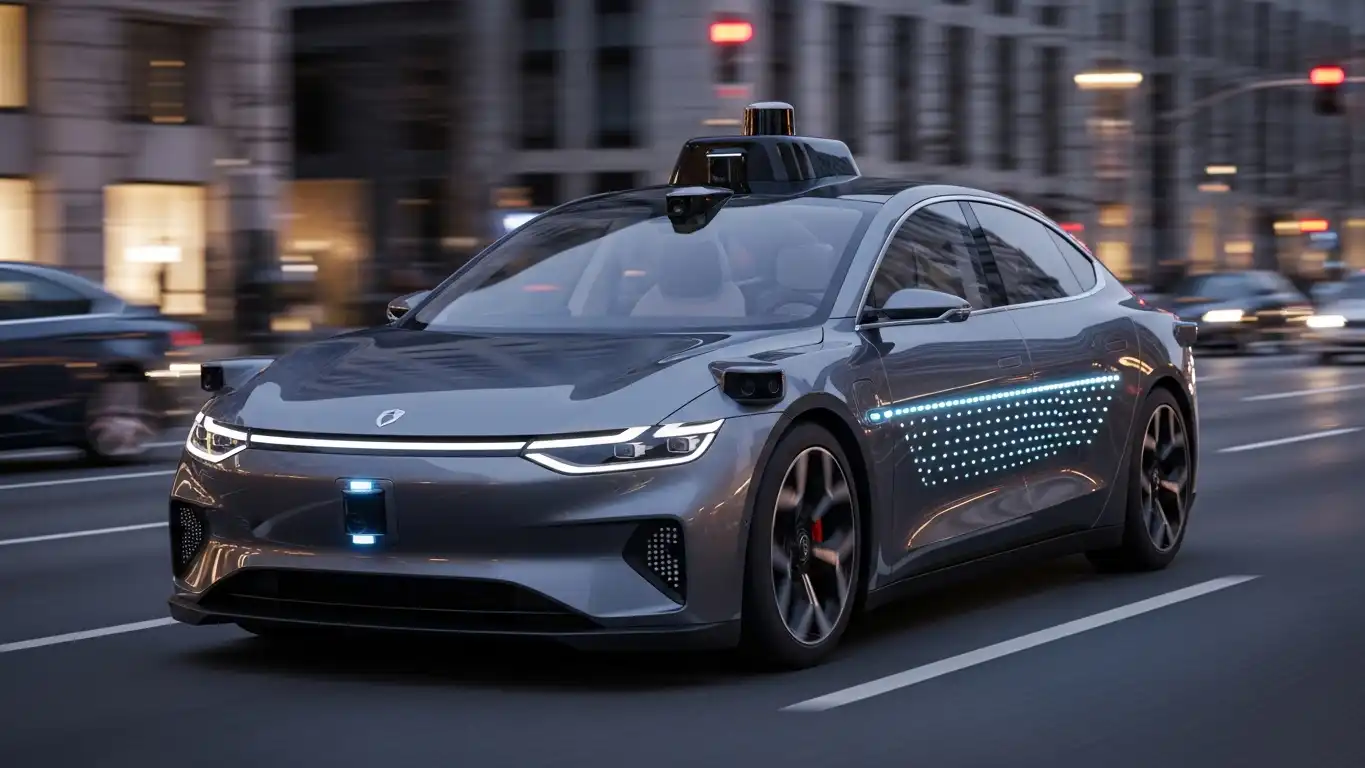
The global automotive and technology industries are experiencing an unprecedented, high-stakes structural realignment. In August 2026, Japanese car manufacturing giants Nissan Motor Co. and Honda Motor Co. finalized several key agreements to deepen their strategic partnership, actively co-developing a next-generation car operating system designed to power their future software-defined vehicles. This collaborative effort represents a major, long-term commitment to consolidate their engineering resources, cut research and development overhead, and aggressively chase American and Chinese rivals in the rapidly expanding autonomous vehicle market.
According to recent industry reports, the joint software project will utilize Nissan’s advanced technology as the baseline for the new operating system. By standardizing this core technology, the two companies want to improve their development efficiency and lower their production costs, ensuring they can remain competitive as the global car market transitions from traditional mechanical engineering to software-defined mobility. The announcement comes at a critical time, as do rising pressures from cheap, high-tech Chinese electric vehicles and aggressive automated offerings from Silicon Valley.
While the two companies previously explored a full-scale corporate merger in late 2025, those discussions collapsed in February 2026 due to disagreements over the internal balance of power and corporate control. Instead of a full union, the companies chose a highly flexible, project-by-project cooperation model. By pooling their financial resources to build this advanced operating system, Nissan and Honda are building a powerful, shared platform that can support their respective electric vehicle and self-driving lineups, turning a bitter rivalry into a highly effective defensive shield.
The Battle for the Two Trillion Dollar Market: Shifting from Bytes to AI-Defined Vehicles
The primary driver behind the massive joint investment is the rapid, irreversible growth of the global autonomous vehicle market, which is attracting trillions of dollars in public and private capital.
The Squeeze of the Two-Trillion-Dollar Autonomous Target
The financial scale of the self-driving future is historic. According to market research reports published by IndustryARC, the global market for autonomous and self-driving vehicles is on track to reach an extraordinary $2 trillion by 2030, driven by rapid advancements in artificial intelligence, sensor fusion, and high-frequency data processing.
For traditional carmakers, participating in this $2 trillion market is an absolute necessity to protect their long-term survival. As software takes over routine driving tasks, the primary value of a passenger vehicle is shifting away from its mechanical engine and directly to its software platform.
The company that can build the most reliable, secure, and user-friendly operating system will set the global standards, APIs, and protocols for the next century of transportation, capturing a massive share of the economic value generated by the automated transit revolution.
Why Japanese Automakers Are Lagging Behind US and Chinese Pioneers
Despite their historic manufacturing excellence, Japanese carmakers have struggled to keep pace with the rapid rate of innovation in the autonomous vehicle sector.
U.S. pioneers like Alphabet’s Waymo have already established a dominant lead, operating massive commercial robotaxi fleets across multiple major cities, while Amazon’s Zoox continues to scale its custom bipedal shuttles following its $1.2 billion acquisition.
At the same time, Chinese technology and automotive champions, including Baidu, BYD, and Geely, are rapidly flooding the global market with advanced, low-cost “smartphones on wheels” that feature high-speed local processing and fully autonomous capabilities.
Faced with this aggressive international competition, Japanese carmakers realize they can no longer operate in isolated corporate silos.
By standardizing their software systems, Nissan and Honda are building a unified, highly competitive regional platform, ensuring they can protect their market share from being completely eroded by more well-funded Western and Chinese competitors, where even a 1.5% improvement in processing latency can save developers millions of dollars in annual capital costs.
The Mechanics of the Nissan-Honda Partnership: From Merger Collapse to Software Alliance
The path to securing the new joint software agreement was exceptionally difficult, requiring both corporate boards to navigate severe disagreements over technology ownership and executive control.
The Brief Merger Talks and the February 2026 Standoff
The partnership began as a tentative memorandum of understanding signed in early 2024, designed to explore shared electric vehicle platforms and common battery procurement strategies.
As global competition intensified, the companies scaled up their discussions, entering into highly publicized negotiations in late 2025 to explore a full corporate merger or the creation of a joint holding company.
However, the merger talks collapsed in February 2026.
A primary source of friction was the development of autonomous driving technology.
Nissan had already spent years building its own proprietary self-driving systems in partnership with foreign startups, while Honda preferred to keep its technology development entirely in-house, viewing its proprietary software as a non-negotiable component of its brand identity.
Unable to resolve this fundamental strategic division, the companies chose to end their merger discussions, choosing instead to focus on flexible, project-by-project cooperation to protect their respective corporate autonomies.
Standardizing the Next-Generation SDV Operating System
The project-by-project model has proven to be highly successful, allowing the companies to coordinate their activities on a series of critical, high-impact projects.
The newly announced joint operating system is the most significant milestone of this cooperative strategy.
By standardizing the core software that controls the car’s engine, battery systems, thermal management, and in-cabin entertainment, the partners can achieve significant economies of scale.
Instead of both companies spending billions of dollars to write separate, redundant codebases, they can share the development costs, allowing their engineering teams to focus on customizing the user interface and designing specialized applications for their respective brands.
This collaborative approach reduces their overall R&D overhead, speeds up their product development cycles, and ensures they can deliver highly competitive, software-defined vehicles to the global marketplace at a much lower price point.
The Wayve and Uber Alliance: Launching Tokyo’s First Robotaxis
While the joint operating system with Honda provides the long-term software foundation, Nissan is also executing a highly active, parallel strategy to commercialize its autonomous vehicle technology through key partnerships with leading AI startups and ride-hailing networks.
Wayve’s “AI Driver” and the End of Expensive LiDAR Dominance
The primary spearhead of Nissan’s autonomous vehicle strategy is its close partnership with Wayve Technologies, a prominent British artificial intelligence startup founded in 2017 by Cambridge University researchers.
Wayve has built a highly successful reputation by developing an innovative, end-to-end deep learning system called the “AI Driver.”
Unlike traditional self-driving platforms like Waymo, which require expensive, high-density 3D mapping and massive, high-power LiDAR sensor arrays to navigate, Wayve’s system relies primarily on low-cost cameras and on-board machine learning.
The AI model learns how to drive by observing human behavior and generating its own synthetic world models, allowing the system to safely navigate congested, unpredictable city streets without requiring expensive pre-mapped data.
This low-cost, hardware-light approach significantly reduces the manufacturing costs of the vehicle, making it highly competitive for commercial fleet operators.
Preparing the Tokyo Robotaxi Pilot for Late Twenty-Six
In March 2026, Wayve, Uber, and Nissan signed a landmark memorandum of understanding to collaborate on the development and deployment of commercial robotaxi services.
The partners showcased their first global robotaxi prototype, built on the advanced Nvidia DRIVE Hyperion platform, at the Nvidia GTC 2026 conference in Las Vegas.
Under the terms of the agreement, the partners will begin a pilot deployment of autonomous robotaxis in Tokyo by late 2026.
The service will utilize Nissan LEAF electric vehicles powered by Wayve’s AI Driver, made available to riders directly through the Uber app.
This joint project represents a major milestone, establishing a near-term commercial footprint in one of Asia’s most lucrative and dense ride-hailing markets.
By partnering with Uber, Nissan can bypass the expensive customer acquisition phase, immediately feeding its autonomous vehicles into a massive, pre-existing pool of active users and generating a steady, reliable stream of cash flow to support its ongoing research.
Nissan’s Double-Track Strategy: The Yokohama and Tokyo Autonomy Tests
To support its international partnerships, Nissan is also conducting its own, highly rigorous testing programs within Japan, utilizing its domestic factories and engineering teams to build a highly resilient, local autonomous mobility service.
Testing Twenty Autonomous Vehicles in Yokohama
The primary testing ground for Nissan’s advanced self-driving technology is the busy, congested streets of Yokohama, located south of Tokyo.
The company is actively running a pilot program involving 20 fully autonomous vehicles, including its flagship electric Ariya SUV, on public roads throughout fiscal years 2025 and 2026.
These test vehicles are equipped with a highly advanced, redundant sensor suite, including 11 high-definition cameras, 5 radar systems, and next-generation, high-performance LiDAR sensors.
By testing these vehicles in real-world, unpredictable urban environments, the company can gather valuable, high-purity performance data, training its AI drivers to handle complex intersections, unexpected pedestrian crossings, and construction zones with absolute safety and precision, ensuring that the final commercial product meets the highest safety standards in the world.
Launching a Commercial Autonomous Mobility Service by Twenty-Twenty-Seven
The ultimate objective of the Yokohama pilot program is to prepare for the commercial launch of a fully autonomous mobility service.
Nissan announced that it aims to begin offering these self-driving passenger services in selected Japanese cities during fiscal year 2027.
This automated transit service represents a vital national priority for Japan, which is currently struggling with a severe structural labor shortage.
With an aging population and a shrinking workforce, local public transit systems are facing severe driver shortages, forcing many regional bus and taxi networks to cut their services.
By deploying fully autonomous robotaxis and automated shuttles, Nissan can help fill this labor gap, providing local communities with a reliable, clean, and affordable transportation option while establishing its brand as a key player in the national efforts to secure Japan’s economic and social future.
Squeezing the Turnaround: Ivan Espinosa’s Aggressive Cost Cuts
The massive technological investments and strategic partnerships executed by Nissan are closely connected to an aggressive, company-wide turnaround plan designed to restore the carmaker’s financial stability and corporate margins.
Slicing Fifteen Percent of the Global Workforce
In April, Nissan’s board appointed Ivan Espinosa as the company’s new Chief Executive Officer, charging him with the difficult task of restructuring the struggling automotive business.
Following his appointment, Espinosa launched a massive corporate turnaround plan designed to slash the company’s fixed overhead costs and redirect investments toward advanced electric and autonomous vehicle programs.
As part of this cost-saving campaign, the company has initiated a difficult, worldwide workforce reduction, cutting approximately 15% of its global headcount.
While these layoffs represent a painful operational consolidation, they are necessary to reduce administrative overhead and free up the capital needed to fund the company’s massive research and development programs, ensuring that the firm remains highly disciplined in its capital allocation.
Cutting Manufacturing Plants from Seventeen to Ten
At the same time, Espinosa is executing a major consolidation of the company’s physical manufacturing footprint.
The company plans to reduce its total number of active manufacturing plants from 17 down to 10 over the next several years, shutting down its most inefficient, high-cost assembly lines.
This physical consolidation is a necessary response to rising trade tensions and tariff threats from Western governments, which have made exporting vehicles from high-cost facilities increasingly unprofitable.
By concentrating its production in its 10 most efficient, low-cost plants, and pooling its software development costs with Honda through their new next-generation operating system alliance, Nissan can significantly lower its production costs.
This financial discipline ensures that the company can continue to fund its massive, large-scale industrial projects requiring over $1 billion in capital investments, protecting its corporate balance sheet and securing its long-term survival in the automated age.
Defining the Future of the Smart Vehicle
The finalized next-generation operating system agreement between Nissan and Honda is a landmark milestone in the corporate and technological history of the global automotive industry. By taking bold, decisive steps to standardize their core software and partner with advanced AI startups like Wayve, the two Japanese giants have proven that they are willing to completely restructure their legacy business models to survive.
While the competitive pressures from U.S. leaders like Waymo and Chinese giants like BYD remain intense, the joint software platform’s superior cost-efficiency, combined with its high-volume commercial pilot programs in Tokyo and Yokohama, provides a highly secure, profitable foundation for growth.
As the company continues to execute its massive corporate turnaround plan, cuts its manufacturing overhead, and prepares for its official commercial launch in 2027, this innovative, software-defined vehicle architecture will ensure that Nissan remains a dominant, highly resilient leader in the global mobility market.
The success of this program proves that the ultimate winners of the automated era will be the nations that can successfully integrate advanced, domestic engineering with the physical building blocks of daily life, securing a cleaner, healthier, and highly sovereign future for generations to come.