A major structural shift is taking place inside the Chinese financial markets as they enter the peak of the corporate earnings season. For the past decade, the dominant players of the consumer mobile era—including social media, gaming, and e-commerce giants like Tencent and Alibaba—have captured the vast majority of global investment capital. Today, however, as the country prioritizes national self-sufficiency and “hard technology,” advanced technology hardware, semiconductor, and embodied artificial intelligence companies have officially taken the helm of the public markets.
The scale of this transition, documented by financial analysts in August 2026, is historic. In 2020, online retailers and consumer software giants represented over 15% of the MSCI China All Shares Index, but that combined share has shrunk to just 7% in August 2026. At the same time, the hardware and semiconductor sectors have climbed from under 3% six years ago to over 12%, signaling a massive, permanent transition from “clicks to chips.”
This rapid, capital-heavy realignment is being driven by two massive, newly listed champions: memory chipmaker ChangXin Memory Technologies and humanoid robotics pioneer Unitree Robotics. By successfully completing record-breaking initial public offerings on Shanghai’s tech-focused STAR Market, these two companies have proven that investors are highly eager to back the physical building blocks of the AI era, turning the Shanghai Stock Exchange into the primary engine of China’s technological future.
The Phenomenon of CXMT: From a Domestic Startup to China’s Most Valuable Firm
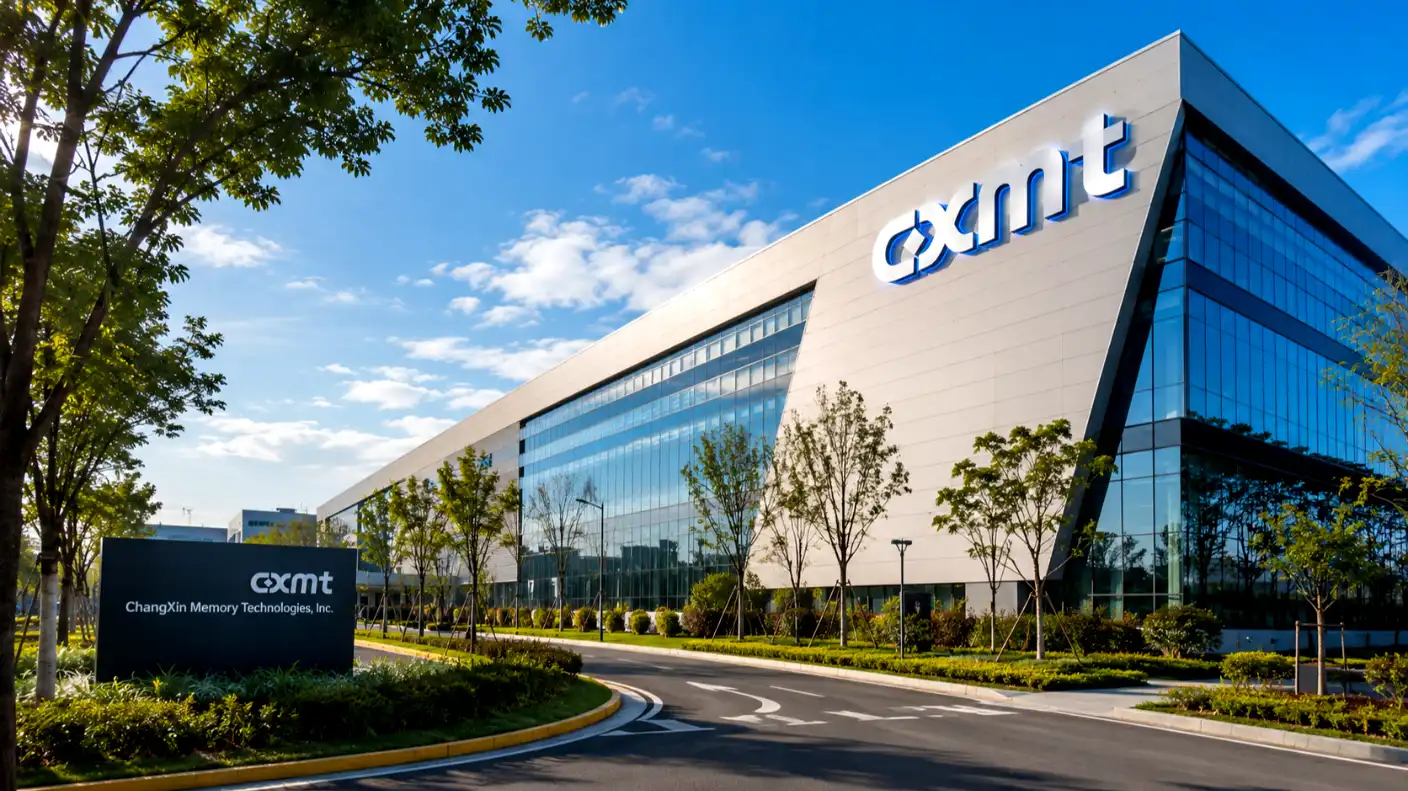
The rapid ascent of memory chipmaker ChangXin Memory Technologies, commonly known as CXMT, is one of the most remarkable stories in modern corporate finance, proving that physical hardware has become the ultimate source of wealth creation in the digital age.
Overtaking Tencent in a Seventeen-Day Market Sensation
On August 13, 2026, just 17 days after its blockbuster initial public offering on the Shanghai Stock Exchange’s STAR Market, CXMT’s market capitalization reached an extraordinary $524 billion (approximately 3.58 trillion yuan). This massive valuation successfully surpassed Tencent’s $510 billion market cap, making the young memory maker the most valuable Chinese company in the world.
The scale of the IPO itself was historic:
- The company officially launched its offering on July 27, 2026, under the ticker 688836.SH.
- It raised an extraordinary 57.92 billion yuan ($8.6 billion) in gross proceeds, making it the largest semiconductor offering in the history of mainland China’s capital markets.
- On its first day of trading, the stock closed 466% above its initial offering price of 8.66 yuan, ending at 49.00 yuan per share.
- The shares continued to experience massive buying pressure, trading above 55.00 yuan and putting the company’s valuation just behind Intel’s global market cap.
By nearly doubling its valuation in private markets and soaring over 500% from its debut price, CXMT has proven that the investment community is willing to place an immense premium on the companies that can build and secure the physical memory layers of the AI era, bypassing the traditional software valuations that dominated previous market cycles.
Spectacular Q1 2026 Earnings and Wafer Production Milestones
The primary factor allowing CXMT to justify its premium valuation is its extraordinary, record-breaking operational performance. The company reported that its revenue for the first quarter of the year skyrocketed by a massive 719% year-on-year, reaching 50.8 billion yuan ($7.4 billion).
This top-line revenue growth was accompanied by a highly encouraging transition to profitability. The company reported a net income attributable to shareholders of 33.01 billion yuan for the quarter, successfully reversing a loss of 2.83 billion yuan recorded during the same period last year.
To support this rapid growth, the company is operating its manufacturing facilities near full capacity, with its utilization rate climbing to an impressive 96%.
The firm plans to expand its monthly wafer output by 30% to over 300,000 wafers by the end of the year, backed by a planned $5 billion to $6 billion in equipment procurement, proving that its core operations are highly profitable and capable of generating the cash needed to fund its ongoing technology development.
Unitree Robotics and the Rise of Embodied AI on the STAR Market
While CXMT dominates the semiconductor space, another major, newly listed champion is demonstrating the massive investor appetite for the physical implementation of artificial intelligence.
The Blockbuster August Nineteenth Debut and the Six-Fold Stock Surge
On Wednesday, August 19, 2026, humanoid and quadruped robotics leader Unitree Robotics made its highly anticipated market debut on the Shanghai STAR Market. The public response to the offering was historic, demonstrating a frantic retail and institutional appetite for the company’s shares.
The company offered its stock at an initial IPO price of 150.80 yuan per share, raising $904 million in gross proceeds.
Individual retail investors submitted a massive 9.78 million valid subscription orders, oversubscribing the retail portion of the offering by a mind-blowing 5,526 times.
On its first day of trading, the stock price opened at a day’s high of 1,100 yuan before closing its first official session at 845 yuan, representing an extraordinary, nearly six-fold surge over its IPO price and valuing the company at over $50 billion.
DeepSeek’s Strategic Investment and the Joint AI Model Pact
To build a stable long-term shareholder base, Unitree allocated approximately 20% of its offering shares to a select group of strategic and cornerstone investors. This group included major state-owned enterprises like China National Petroleum Corporation and China Telecom, alongside prominent artificial intelligence startups.
Most notably, advanced Chinese AI research lab DeepSeek invested $20.8 million to secure a 2.31% stake in the company, agreeing to a strict three-year lock-up period.
The investment is backed by a comprehensive joint-development pact, under which the two companies will combine DeepSeek’s advanced, cost-effective AI models with Unitree’s mechanical design and joint motion-control systems.
By pairing the two companies’ technology roadmaps together, the partnership wants to build a fully integrated, self-reliant embodied AI ecosystem, ensuring that Unitree’s physical robots are guided by the most efficient software brains in the industry.
The Shanghai STAR Market: China’s Powerhouse Answer to NASDAQ
The rapid, record-breaking success of both CXMT and Unitree has positioned the Shanghai Stock Exchange’s sci-tech innovation board, the STAR Market, as the primary engine for China’s high-tech economic transition.
Outperforming the Hang Seng Tech Index by Wide Margins
In 2026, the performance of the STAR 50 index—which represents the 50 largest, most innovative technology companies listed on the STAR Market—has been historic. The index has risen by an extraordinary 23% to 28% since the beginning of the year, driven by intense investor enthusiasm for domestic hardware and semiconductor stocks.
This blistering performance stands in sharp contrast to the traditional technology indices of Hong Kong.
The Hang Seng Tech Index—which is heavily dominated by legacy, private-sector consumer giants like Tencent and Alibaba—has declined by nearly 15% over the same period.
This dramatic divergence proves that global and domestic capital is actively rotating away from consumer software and e-commerce platforms and moving directly into the “hard tech” companies that are building the physical baseline of the national economy.
Looser Profitability Requirements for “Hard Technology”
The primary regulatory advantage that has allowed the STAR Market to become a major technological powerhouse is its flexible listing framework. Established in 2019 to help finance domestic innovation as tensions with the United States over key technologies mounted, the exchange enforces looser profitability requirements for companies involved in “hard tech” sectors, including semiconductors, advanced materials, and robotics.
This flexible listing policy has proved to be highly successful, allowing young, high-growth technology companies to list and raise capital relatively quickly.
By providing these deep-tech startups with a highly liquid, public-market alternative to a relatively shallow domestic venture capital pool, the STAR Market has successfully accelerated the commercialization of advanced technologies, ensuring that the country’s top innovators can secure the capital they need to scale their operations while remaining under domestic control.
The Strategic Divergence: Why Capital Prefers Hardware Over Software
The massive, systemic capital rotation from software to hardware represents a major strategic divergence in how the financial markets view the growth prospects of the technology sector.
Kelvin Tay’s Analysis of the Technology Cycle
This market rotation is supported by a highly consistent historical pattern. Kelvin Tay, the Chief Investment Officer for Asia at Pictet Wealth Management in Singapore, explained that the transition is a natural feature of any major technological transition.
Tay noted that if you look at the tech cycle, it is always the hardware set that goes first before the software set can come in.
He added that while software platforms and consumer applications will eventually recover and generate strong profits once the technology is widely adopted, the current phase of the cycle belongs entirely to the companies that build the physical infrastructure.
For institutional fund managers looking to maximize their capital appreciation, investing in the hardware companies that make and test the advanced chips, data centers, and robots is the safest and most profitable strategy, as these firms have immediate, highly visible revenues and profit margins.
Protecting National Sovereignty Under International Chip Sanctions
The preference for hardware is also being driven by intense geopolitical and trade tensions between the United States and China. As Washington continues to enforce strict chip sanctions and export controls, Beijing is prioritizing the construction of a fully self-reliant, domestic semiconductor supply chain.
This political directive has fanned a massive premium on companies that produce “hard-to-get hardware” or develop real-world, automated applications:
- Valuations are propped up by the idea that self-sufficiency will create a larger total addressable market for those companies.
- If the country is legally barred from importing advanced foreign chips, local manufacturers like CXMT have a guaranteed domestic market, allowing them to scale their operations with absolute security.
- This domestic focus ensures that the country’s multi-billion-dollar investments in cleanroom facilities, advanced materials, and robotics remain highly secure, protecting the national economy from foreign export restrictions, where even a 1.5% margin improvement can yield massive savings, and where single deeptech projects require over $1 billion in capital investments to execute successfully.
Reforming the Capital Gateways of Asia
The completed transition of the Chinese stock market toward advanced technology hardware represents a historic milestone in the economic development of East Asia. By demonstrating a massive, record-breaking $524 billion valuation for memory chipmaker CXMT just 17 days after its blockbuster IPO, and a spectacular, nearly six-fold first-day stock surge for humanoid robotics leader Unitree, the Shanghai Stock Exchange has proven that the public markets are fully prepared to place an immense premium on the physical infrastructure of the AI era.
While traditional, private-sector consumer giants like Tencent and Alibaba struggle to manage their soaring AI capital expenditures and declining operating margins, these newly listed hardware champions are successfully translating the global tech boom into record-breaking corporate profits.
As they continue to expand their domestic manufacturing facilities, deploy their advanced physical AI systems, and secure their vertical component supply chains, this coordinated, state-supported technology offensive will ensure that China remains a dominant, highly independent, and highly competitive force in the global technology system.
This structural transition has permanently reshaped how the world values, finances, and builds the technologies of the digital age, proving that the ultimate winners of the machine era will be the nations that can successfully control, protect, and manufacture their own physical computing infrastructure.